


Major vascular surgery in the geriatric population: cardiac risk stratification
- University Clinical Center Niš, Clinic for Cardiac Surgery, Niš, Serbia
- University Clinical Center Niš, Clinic for Anesthesia and Intensive Care, Niš, Serbia
- Polyclinic Nikolić, Niš, Serbia
- University of Niš, Faculty of Medicine, Niš, Serbia
ABSTRACT
Reliance on surgery, improvements in surgical techniques, and perioperative management have led to a dramatic increase in the frequency of surgical procedures in the elderly population. According to the European Society of Cardiology and the European Society of Anaesthesiology and Intensive Care, major vascular surgery is defined as high-risk, considering the frequency of myocardial infarction and cardiac arrest, which is higher than 5%. Age is an independent predictor of myocardial infarction and cardiac arrest. Heart function alterations are primary changes that occur with advancing age. Risk stratification represents a set of procedures that include identifying chronic systemic diseases, determining their severity, stability and the need for further evaluation and/or therapy optimization, with the aim of reducing perioperative and postoperative mortality and morbidity. In addition to the application of risk scores, accurate risk stratification requires the combined application of both preoperative and postoperative biomarkers. The main idea of integrating biomarkers with scoring systems is to reveal those patients with clinically unmanifested disease, who carry a mortality risk and remain undetected by scoring systems. Biomarkers, such as NT-proBNP and highly sensitive C-reactive protein, have the greatest predictive influence in geriatric vascular surgery.
INTRODUCTION
It is estimated that, in the next eight years, there will be a total of 72 million Americans older than 65 years [1]. Reliance on surgery, improvements in surgical techniques, and perioperative management have led to a dramatic increase in the frequency of surgical procedures in the elderly population [2]. According to the European Society of Cardiology (ESC) and the European Society of Anaesthesiology and Intensive Care (ESAIC), major vascular surgery is defined as high-risk, since the incidence of myocardial infarction and cardiac arrest is higher than 5% [3]. Bearing in mind that atherosclerosis is a generalized process, less than a tenth of the patients prepared for major vascular surgery have intact coronary blood vessels [4].
PATHOPHYSIOLOGICAL ASPECT OF CARDIAC RISK
A high frequency of coronary artery disease (CAD), but also of hemodynamic, metabolic, and neuroendocrine disorders, and of oscillations in temperature, as well as the risk of ischemic damage to vital organs are all connected to perioperative recovery, causing higher mortality and morbidity in major vascular surgery, as compared to other non-cardiosurgical procedures.
Age is an independent predictor of myocardial infarction and cardiac arrest [5]. Changes in cardiac function are primary changes occurring with old age. These include the following: decreased contractility and weakening of the myocardium, increased cardiac filling pressure, low β-adrenergic sensitivity, increased activity of the sympathetic autonomous nervous system, and consequent increase in peripheral vascular resistance. Vascular ageing is stimulated by the presence of primary cardiovascular diseases and conditions, such as hypertension and atherosclerosis. Loss of functional organ reserve and the link between ageing and chronic systemic diseases, so called multimorbidity, are well known factors linked with perioperative and postoperative cardiac risk in elderly patients. The influence of multimorbidity on the progression of functional capacity loss is significantly higher than the expected sum of the individual effects [6]. Due to high risk of increased postoperative mortality, it is recommended to pronounce certain surgical procedures as high-risk in patients over 65 years, although they are not perceived as such for the general population [7]. A combination of all the risks that both major vascular surgery and advanced age carry creates a subgroup of patients with exceptional cardiac risk.
RISK STRATIFICATION MODELS
Risk stratification represents a set of procedures that include identifying chronic systemic diseases, determining their severity, stability, as well as determining the need for further evaluation and/or therapy optimization, with the aim of reducing perioperative and postoperative mortality and morbidity.
The lack of a universal definition for major adverse cardiovascular events (MACE), the differences among high sensitivity biomarker tests, the change in the way certain cardiovascular complications are defined in risk scores, the existence of a large number of stratification risk models, which have not been tested in this particular group, represent some of the major obstacles to comparing results among studies [8].
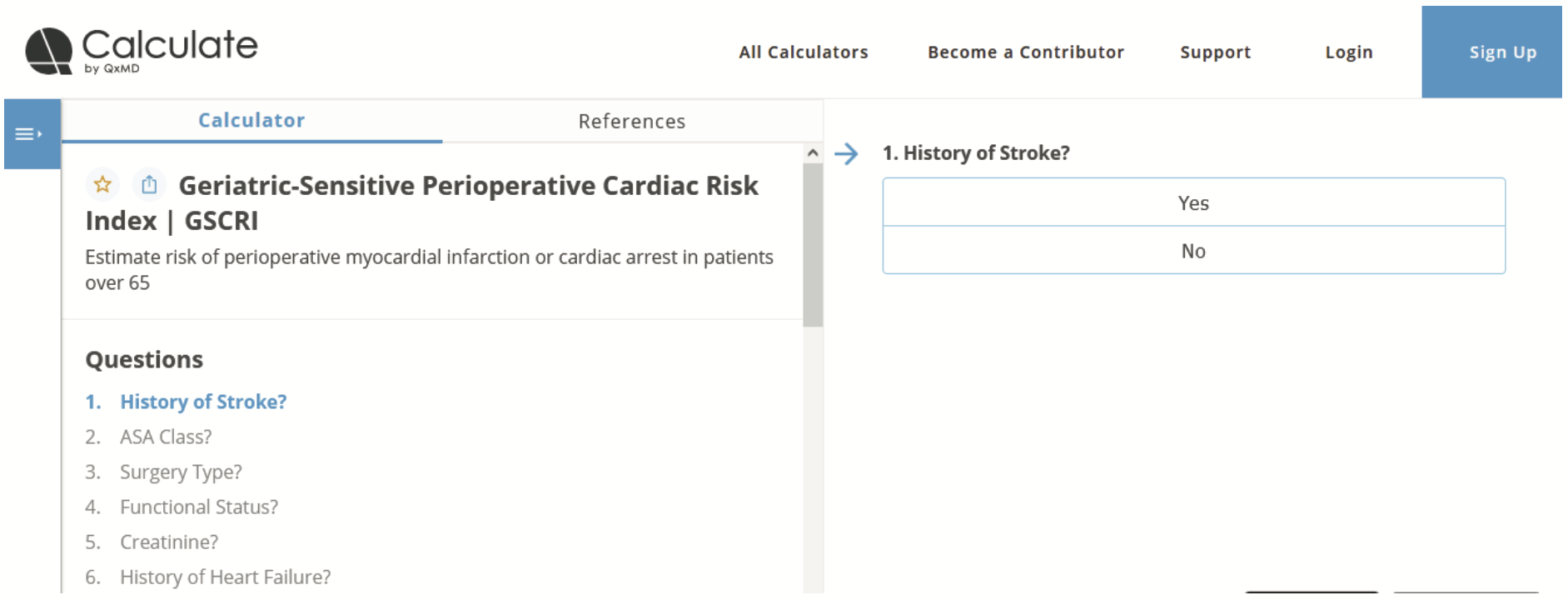
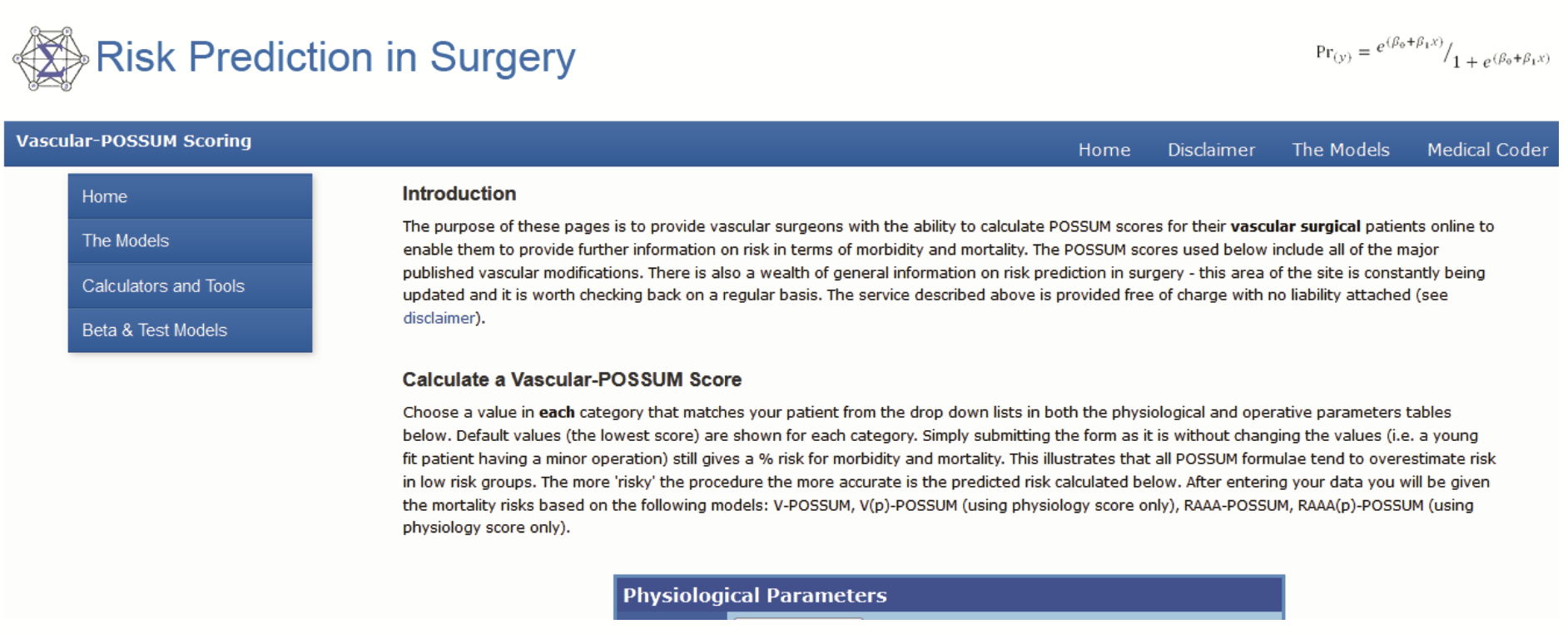
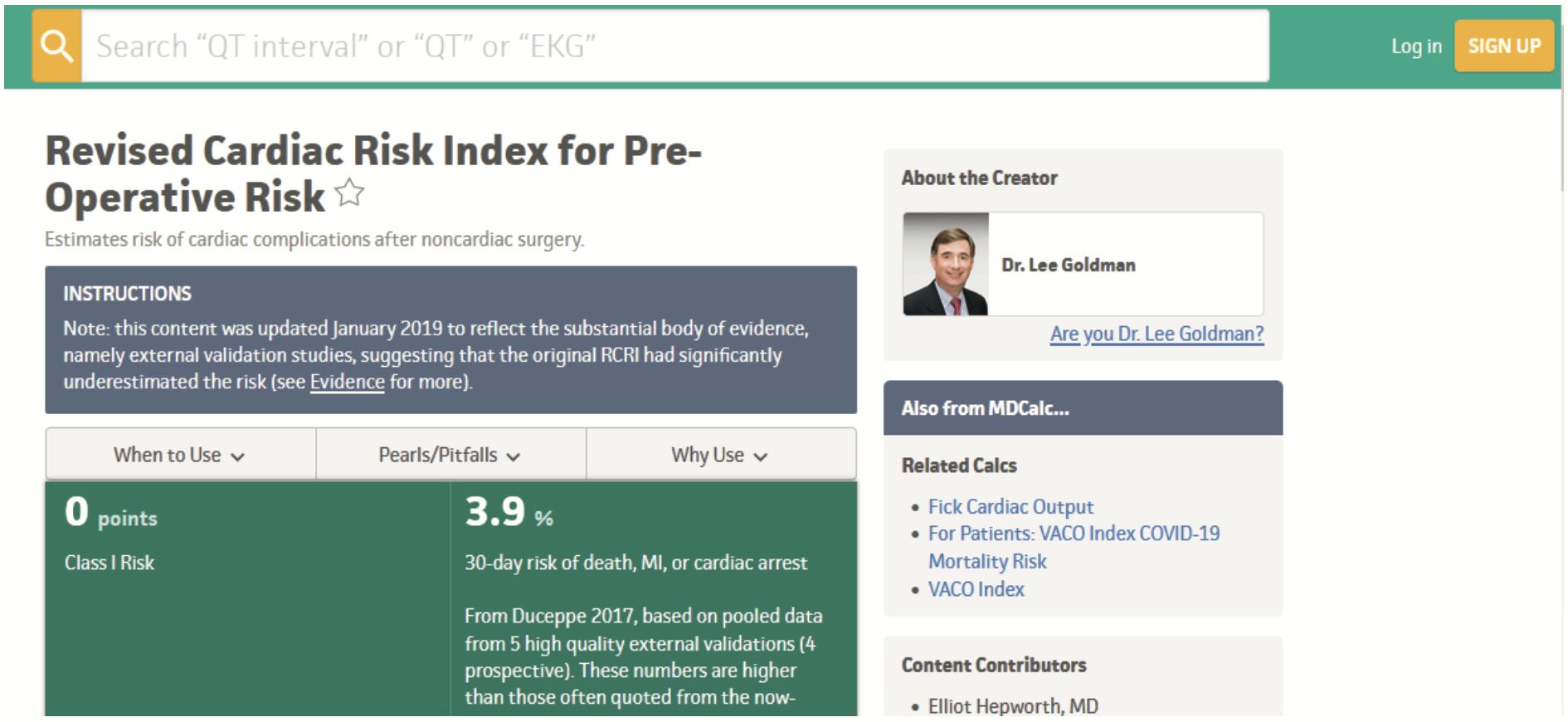
Risk stratification models may be specific to the type of surgery (Vascular Physiological and Operative Severity Score for the Enumeration of Mortality and Morbidity-V-POSSUM or Geriatric Sensitive Cardiac Risk Index – GSCRI), (Figure 1, Figure 2), or non-specific and widely used for non-cardiac surgery procedures (Revised Cardiac Risk Index – RCRI), (Figure 3), [8],[9],[10],[11],[13].
 9]" width="1883" height="720">
 10]" width="1884" height="762">
 11]" width="1890" height="870">
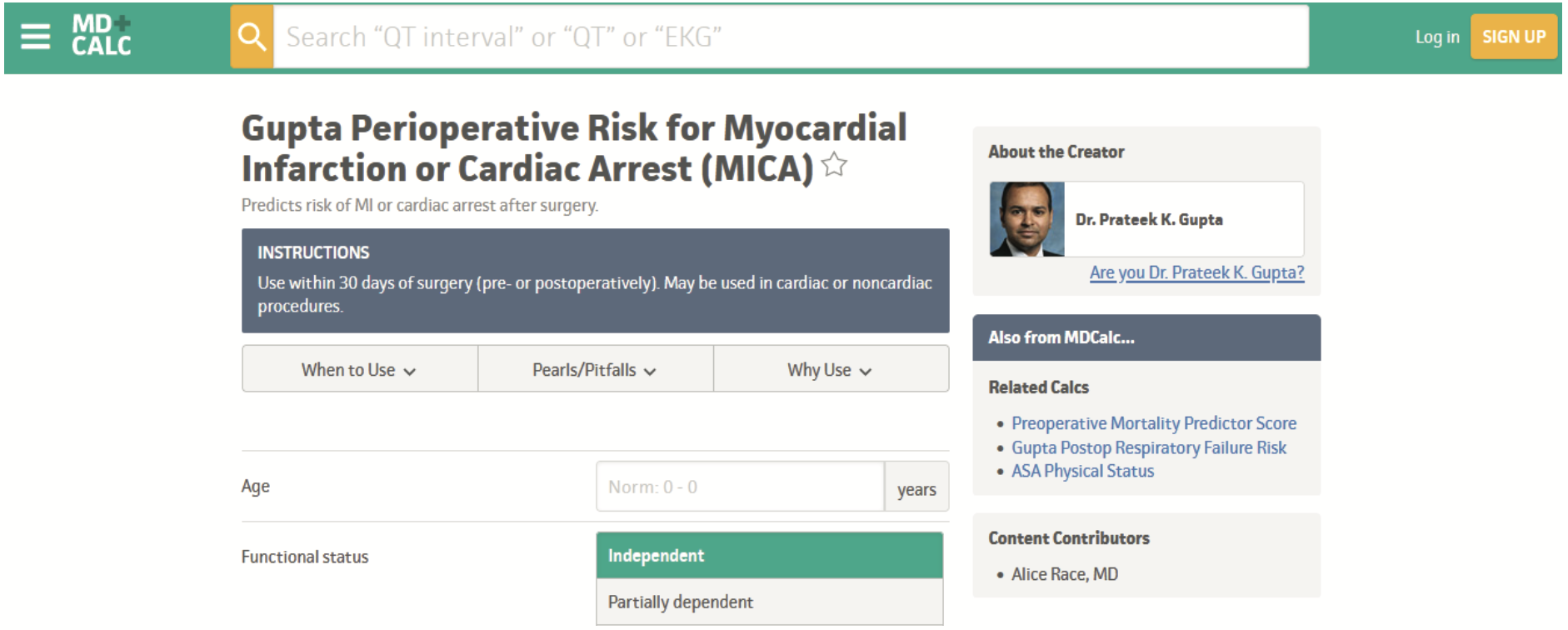
Some models are designed to discover a small number of complications, which limits their application in everyday clinical practice. Such is the Gupta MICA – Myocardial Infarction or Cardiac Arrest (Figure 4) score, which is widely used for noncardiac surgery procedures, but is designed to monitor only two cardiovascular complications – myocardial infarction (MI) and cardiac arrest (CA), which have proven not to be the first two most common complications in geriatric vascular surgery, during a follow-up period of six months [8],[12].
 12]" width="1882" height="756">
The American Society of Anesthesiology (ASA) score and the New York Heart Association (NYHA) Classification are some of the reliable clinical tools for assessing anesthesiological risk and the severity of cardiac insufficiency, i.e., heart failure, and are independent predictors of MICA, during the first six months after geriatric vascular surgery [14]. This predictive value of the ASA score is also applicable in noncardiac procedures and represents one of the reasons that it is used in defining some of the risk models (Gupta MICA, GSCRI). In geriatric vascular surgery, the most common cardiological complication, by far, is decompensation of cardiac insufficiency, which makes up for two thirds of all major adverse cardiovascular events. In our opinion, the main factors of the better predictive value of the GSCRI and RCRI scores, as compared to the Gupta MICA score, is that these two scores include data on the history of cardiac insufficiency. Consequently, a low ejection fraction and the NYHA class are connected with all MACE events during the first six months after vascular surgery, in older patients [8].
BIOMARKERS
In addition to applying the risk score, precise risk stratification requires a combined application of both preoperative and postoperative biomarkers. The reasons for this lie in the inability of any of the risk scores, by themselves, to exceed 0.8 of the area under the curve (AUC) in c-statistics and the ability of the biomarkers to discover most of the pathophysiological mechanisms which are at the foundation of cardiovascular complications, such as myocardial stretch and myocardial stress, inflammation, platelet activation, ischemia, plaque instability or rupture, and neurohormonal activation [15].
Unpredictability, which is generally linked to major vascular surgery, in the sense of the scope of the surgical procedure, its duration, the degree of blood loss and perioperative hemodynamic instability, may be avoided with postoperative biomarker detection [16].
The main idea of integrating biomarkers with scoring systems is to reveal those patients with clinically unmanifested disease, who carry a mortality risk and remain undetected by scoring systems. Examples of this are the N-terminal pro b-type natriuretic peptide (NT-proBNP) and the high-sensitive troponin test, which increase the number of patients who are reclassified as high-risk in noncardiac surgery [3],[17]. However, NT-proBNP and high-sensitivity C-reactive protein (hs-CRP) have the greatest predictive effect in geriatric vascular surgery [8]. The NT-proBNP biomarker reveals not only myocardial ischemia, but also a number of morphological and functional disorders of the left atrium (dilatation, fibrillation) and the left ventricle (increased myocardial mass, systolic/diastolic dysfunction). The main reason for the superiority of these two biomarkers is better correlation with the degree of inflammation, bearing in mind the following facts:
Inflammation plays a key role in the progression of cardiac heart failure, especially in heart failure with preserved ejection fraction (HFpEF), which we almost exclusively find in elderly patients, especially in elderly women, in whom 90% of all new cases of heart failure are HFpEF [18],[19];
Inflammation of the endothelium is a key factor in the occurrence of atherosclerotic plaque rupture, while the degree of stenosis is not linked to the location of the perioperative infarction;
NT-proBNP and hs-CRP are linked to other inflammatory biomarkers, such as
IL-6 and heart failure in older men [20],[21].
CONCLUSION
Major vascular surgery carries a very high risk of major adverse cardiovascular events, primarily the exacerbation of already existing heart failure. Predicting the occurrence of all cardiovascular complications as well as cardiovascular mortality is a challenging process. A predicative system has the highest probability of success if it is a combination of models that are already risk stratified and biomarkers, whose predictive potential has already been tested in vascular and/or geriatric patients.
Informations
-
Keywords:
-
Received:
-
Revised:
-
Accepted:
-
Online first:
-
DOI:
-
Cite this article:

Velimir Perić
Clinic for Cardiac Surgery, University Clinical Center Niš
48 Dr Zoran Đinđić Boulevard, 18000 Niš, Serbia
E-mail:
1. Vincent GK, Velkoff VA. The Next Four Decades: The Older Population in the United States: 2010 to 2050. Washington, DC: US Department of Commerce, Economics and Statistics Administration, US Census Bureau; 2010. [HTTP]
2. Mangano DT. Perioperative medicine: NHLBI working group deliberations and recommendations. J Cardiothorac Vasc Anesth. 2004 Feb;18(1):1-6. doi: 10.1053/j.jvca.2003.10.002. [CROSSREF]
3. Kristensen SD, Knuuti J, Saraste A, Anker S, Bøtker HE, De Hert S, et al.; Authors/Task Force Members. 2014 ESC/ESA Guidelines on non-cardiac surgery: cardiovascular assessment and management: The Joint Task Force on non-cardiac surgery: cardiovascular assessment and management of the European Society of Cardiology (ESC) and the European Society of Anaesthesiology (ESA). Eur J Anaesthesiol. 2014 Oct;31(10):517-73. doi: 10.1097/EJA.0000000000000150. [CROSSREF]
4. Hertzer NR, Beven EG, Young JR, O'Hara PJ, Ruschhaupt WF 3rd, Graor RA, et al. Coronary artery disease in peripheral vascular patients. A classification of 1000 coronary angiograms and results of surgical management. Ann Surg. 1984 Feb;199(2):223-33. doi: 10.1097/00000658-198402000-00016. [CROSSREF]
5. Priebe HJ. The aged cardiovascular risk patient. Br J Anaesth [Internet]. 2000;85(5):763-78. Dostupno na: http://www.ncbi.nlm.nih.gov/pubmed/11094595 [HTTP]
6. Marengoni A, Angleman S, Melis R, Mangialasche F, Karp A, Garmen A, et al. Aging with multimorbidity: a systematic review of the literature. Ageing Res Rev. 2011 Sep;10(4):430-9. doi: 10.1016/j.arr.2011.03.003. [CROSSREF]
7. Schwarze ML, Barnato AE, Rathouz PJ, Zhao Q, Neuman HB, Winslow ER, et al. Development of a list of high-risk operations for patients 65 years and older. JAMA Surg. 2015 Apr;150(4):325-31. doi: 10.1001/jamasurg.2014.1819. [CROSSREF]
8. Perić VS, Golubović MD, Lazarević MV, Kostić TL, Stokanović DS, Đorđević MN, et al. Predictive potential of biomarkers and risk scores for major adverse cardiac events in elderly patients undergoing major elective vascular surgery. Rev Cardiovasc Med. 2021 Sep 24;22(3):1053-1062. doi: 10.31083/j.rcm2203115. [CROSSREF]
9. QxMD. Geriatric-Sensitive Perioperative Cardiac Risk Index| GSCRI: Estimate risk of perioperative myocardial infarction or cardiac arrest in patients over 65. [Internet]. 2015. Dostupno na: https://qxmd.com/calculate/calculator_448/geriatric-sensitive-perioperative-cardiac-risk-index-gscri. [HTTP]
10. Prytherch DR, Ridler BM, Beard JD, Earnshaw JJ. A model for national outcome audit in vascular surgery. [Internet]. Eur J Vasc Endovasc Surg 2001; 21(6):477- 83. Dostupno na: http://www.riskprediction.org.uk/disclaimer.php. [HTTP]
11. Goldman L. Revised Cardiac Risk Index for Pre-Operative Risk: Estimates risk of cardiac complications after noncardiac surgery. [Internet]. 2019. Dostupno na: https://www.mdcalc.com/revised-cardiac-risk-index-pre-operative-risk. [HTTP]
12. Gupta KP. Gupta Perioperative Risk for Myocardial Infarction or Cardiac Arrest (MICA): Predicts risk of MI or cardiac arrest after surgery. [Internet]. 2018. Dostupno na: https://www.mdcalc.com/gupta-perioperative-risk-myocardial-infarction-cardiac-arrest-mica. [HTTP]
13. Golubović M, Perić V, Lazarević M, Jovanović N, Marjanović V, Stošic B, et al. Estimation of postoperative cardiac complications with V-POSSUM model in patients prepared for major elective vascular surgery. Acta Medica Medianae 2019;58(1):39-43. doi:10.5633/amm.2019.0107. [CROSSREF]
14. Perić V, Golubović M, Lazarević M, Kostić T, Stokanović D, Djordjević M, et al. Correlation of clinical and demographic factors with occurrence of myocardial infarction and cardiac arrest in older patients after major elective vascular surgery. Acta Medica Medianae. 2022;61(3):14-9. doi:10.5633/amm.2022.0302.
15. Golubovic M, Peric V, Stanojevic D, Lazarevic M, Jovanovic N, Ilic N, et al. Potential New Approaches in Predicting Adverse Cardiac Events One Month after Major Vascular Surgery. Med Princ Pract. 2019;28(1):63-69. doi: 10.1159/000495079. [CROSSREF]
16. Biccard BM, Rodseth RN. Utility of clinical risk predictors for preoperative cardiovascular risk prediction. Br J Anaesth. 2011 Aug;107(2):133-43. doi: 10.1093/bja/aer194. [CROSSREF]
17. Golubovic M, Stanojevic D, Lazarevic M, Peric V, Kostic T, Djordjevic M, et al. A Risk Stratification Model for Cardiovascular Complications during the 3-Month Period after Major Elective Vascular Surgery. Biomed Res Int. 2018 Sep 9;2018:4381527. doi: 10.1155/2018/4381527. [CROSSREF]
18. Gottdiener JS, Arnold AM, Aurigemma GP, Polak JF, Tracy RP, Kitzman DW, et al. Predictors of congestive heart failure in the elderly: the Cardiovascular Health Study. J Am Coll Cardiol. 2000 May;35(6):1628-37. doi: 10.1016/s0735- 1097(00)00582-9. [CROSSREF]
19. Riehle C, Bauersachs J. Key inflammatory mechanisms underlying heart failure. Herz. 2019 Apr;44(2):96-106. doi: 10.1007/s00059-019-4785-8. [CROSSREF]
20. Bauer SM, Cayne NS, Veith FJ. New developments in the preoperative evaluation and perioperative management of coronary artery disease in patients undergoing vascular surgery. J Vasc Surg. 2010 Jan;51(1):242-51. doi: 10.1016/j.jvs.2009.08.087. [CROSSREF]
21. McKechnie DG, Papacosta AO, Lennon LT, Welsh P, Whincup PH, Wannamethee SG. Inflammatory markers and incident heart failure in older men: the role of NT-proBNP. Biomark Med. 2021 Apr;15(6):413-425. doi: 10.2217/bmm2020-0669. [CROSSREF]
- Figure 1. Geriatric Sensitive Cardiac Risk Index (GSCRI) [9]
- Figure 2. Vascular Physiological and Operative Severity Score for the Enumeration of Mortality and Morbidity (V-POSSUM) [10]
- Figure 3. Revised Cardiac Risk Index (RCRI) [11]
- Figure 4. Gupta MICA (Myocardial Infarction or Cardiac Arrest) score [12]