


The role of hyperbaric oxygen therapy in treating progressive infection of the foot in a newly diagnosed diabetes mellitus patient – Case report
- Special Hospital for Hyperbaric Medicine, Belgrade, Serbia
- University of Belgrade, Faculty of Medicine, Institute of Medical Physiology "Richard Burian", Belgrade, Serbia
ABSTRACT
Introduction: Hyperbaric oxygen therapy (HBOT) is a therapeutic and diagnostic method wherein the patient breathes 100% oxygen gas at a pressure of more than one atmosphere absolute (ATA) in a hyperbaric chamber. Diabetes mellitus is a heterogenous group of metabolic disorders which manifest as elevated blood glucose levels resulting from either insufficient insulin secretion or an abnormality in insulin action. Diabetic foot is the most common chronic complication of diabetes mellitus.
Case report: We present the case of a fifty-three-year-old patient referred to our hospital for the purpose of receiving hyperbaric oxygen therapy due to wet gangrene and phlegmon of the right foot. The patient was newly diagnosed with diabetes. He was hospitalized at a tertiary healthcare institution where his wound was surgically treated. Appropriate antibiotic, antiaggregation, and insulin therapy was introduced for the purpose of achieving the best possible degree of glucoregulation. An X-ray of the right foot was performed verifying the presence of soft tissue gas. Due to the local finding on the foot, the progression and the propagation of the infection proximally, with the presence of gas, hyperbaric oxygen therapy was introduced immediately, according to the emergency protocol, for the purpose of saving the limb. After 30 hyperbaric oxygen therapy sessions, the local finding was significantly improved, and the limb was no longer in danger.
Conclusion: Any abnormality in the continuity of the skin, immunity, and vascularization may be considered a risk factor for the development of phlegmon in patients with diabetes. Diabetic foot is the consequence of neuroischemic changes, which occasionally become complicated with further infection. According to the Tenth European Consensus Conference on Hyperbaric Medicine recommendations, indications for the application of hyperbaric oxygen therapy are classified according to the strength of evidence, and there is a high level of consensus for the above-described pathology. With this case presentation we wanted to demonstrate that it is possible to resolve severe infections in diabetic foot through the application of hyperbaric oxygen therapy, with the implementation of a multidisciplinary approach.
INTRODUCTION
Hyperbaric oxygen therapy (HBOT) is a therapeutic and diagnostic method wherein the patient breathes 100% oxygen gas at a pressure of more than one atmosphere absolute (ATA) in a hyperbaric chamber [1]. Diabetes mellitus is a heterogenous group of metabolic disorders which manifest as elevated blood glucose levels resulting from either insufficient insulin secretion or an abnormality in insulin action [2]. Presently, hyperbaric oxygen therapy is a widely accepted therapeutic method applied in the treatment of a series of clinical conditions, such as the following: diabetes complications, chronic non-healing wounds, burns, resistant bacterial infections, compartment syndrome, compromised grafts, intracranial abscesses, radiation injuries, refractory osteomyelitis, and occlusion of the central retinal artery [3],[4]. Diabetic foot is the most common chronic complication of diabetes mellitus. Diabetic foot involves changes that occur as the result of the interaction of diabetic neuropathy and angiopathy. It clinically manifests in the form of ulcerations (with or without infection), typical foot deformity, chronic swelling, ischemic changes, and may even progress to necrosis and gangrene, consequently leading to possible amputation, which is a significant cause of morbidity and invalidity in the population of diabetes mellitus patients [5]. Foot ulcer disease precedes 80% of amputations [6].
Our goal was to demonstrate that the implementation of a multidisciplinary approach in the treatment of diabetic foot, with the application of HBOT, may preserve the patient’s limb, thereby avoiding amputation of a part or of the entire limb.
CASE REPORT
A fifty-three-year-old patient was urgently refereed to our hospital for hyperbaric oxygen therapy, due to wet gangrene and phlegmon of the right foot. He had been admitted to hospital on the previous day at a tertiary healthcare institution in Belgrade. The patient was newly diagnosed with diabetes. At hospital admission, his glucose blood level was 23 mmol/L, which is why insulin therapy was immediately prescribed by an endocrinologist. The patient complained of general malaise, increased thirst, and he reported a fever of 39 ºC. He also reported developing a blister on the big toe of his right foot, after wearing ill-fitting shoes. An arterial blood pressure of 130/75 mmHg was registered, his level of C-reactive protein (CRP) was CRP = 267, while his leukocyte count was Le = 15 x 109 /L.
The local finding revealed that the right foot was swollen, red, painful, with elevated local temperature, signs of phlegmon and with two ulcerous lesions. One of the lesions was on the dorsal aspect of the big toe, while the other one was located on the medial aspect of the foot, at the level of the head of the first metatarsal (MT) bone. As the result of pressure applied from the ankle (talocrural joint – TLC) and directed distally, a large quantity of foul, putrid smelling puss exuded from the ulcers. The necessary surgical treatment of the wound was performed (lateral and dorsal incision for the purpose of draining the puss) and antibiotic therapy was prescribed (ceftriaxone 2 g, i.m.; amikacin 500 mg, 2x1 i.m.; metronidazole 3 x 400 mg). Radiography of the foot revealed the following finding: osteolysis of the proximal distal phalange of the big toe and gas in the soft tissue of the foot – light zones on the X-ray image. Bearing in mind the local finding, the age of the patient, the complications of the underlying disease, and the severe infection of the right foot with the presence of gas, the patient was immediately put on the HBOT program, according to the emergency protocol. HBO therapy was carried out in the multiplace HAUX hyperbaric chamber, at a pressure of 2.8 ATA, lasting 90 minutes, every 8 hours (5 treatments), upon which the therapeutic protocol of 2.5 ATA, for 70 minutes, daily, was applied in the patient. A total of 30 HBO treatments was carried out, with regular changes of the wound dressing and regular follow-up by the doctors of the Special Hospital for Hyperbaric Medicine. At hospital discharge, the local finding was significantly improved and showed that the ulcers were filled out with pure granulation tissue, with no signs of infection in the healing phase. Patient follow-up was carried out regularly at our hospital until the lesions fully healed, while the patient was advised on strictly monitoring his blood glucose level and wearing appropriate footwear.
DISCUSSION
According to the data of the International Diabetes Federation (IDF), amputation in people with diabetes is 10 to 20 times more common than in people without diabetes [7]. The development of ulcerations on the foot, gangrene development, and consequent amputation are causes of morbidity and invalidity in patients suffering from diabetes.
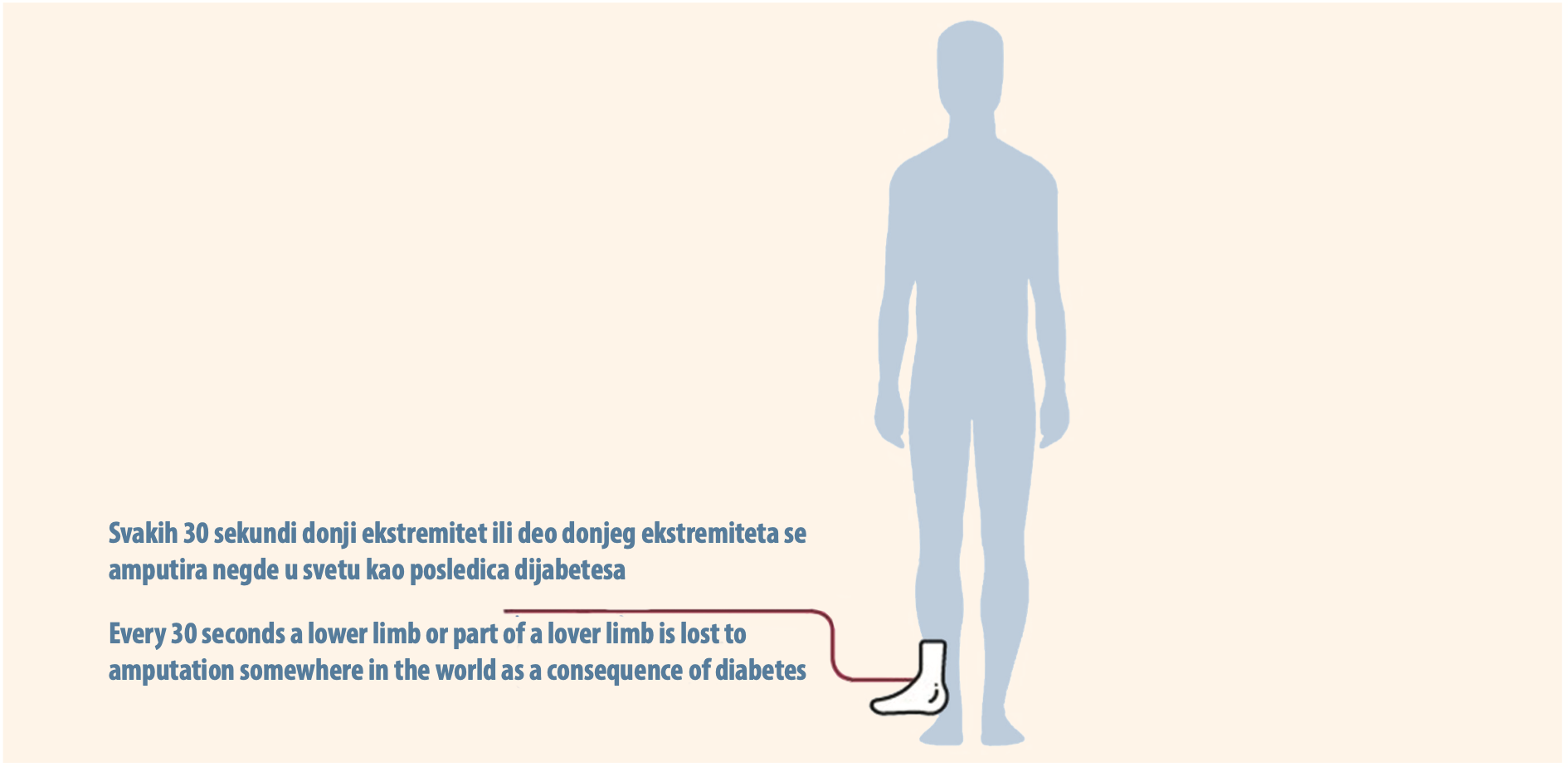
It is estimated that every 30 seconds a lower limb or part of a lower limb is lost somewhere in the world as a consequence of diabetes complications [7], (Figure 1).
The application of hyperbaric oxygen therapy stops and reduces the scope and progression of the infection process as well as the need for additional surgical treatment and amputation (Figure 2).
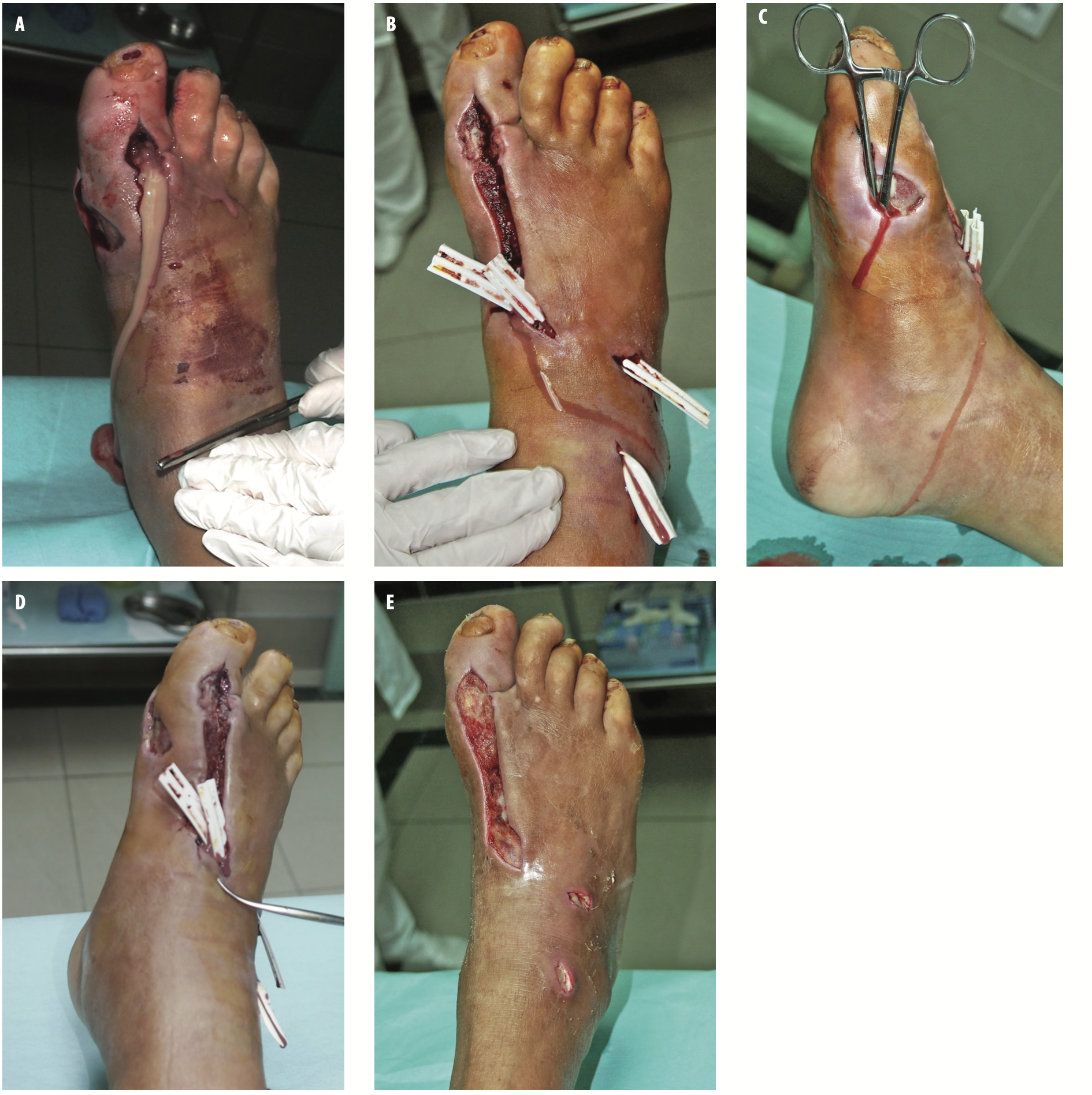
With this case presentation we aim to demonstrate that it is possible to successfully preserve a limb affected by progressive gas-forming infection of the diabetic foot with timely inclusion of the patient into the program of HBO therapy, with consultations and cooperation amongst all the specialists involved in the diagnostics and treatment of both the underlying disease and the condition resulting from it.
LIST OF ACRONYMS
HBOT – hyperbaric oxygen therapy
ATA – atmosphere absolute
CRP – C-reactive protein
Le – leukocytes
IDF - International Diabetes Federation
MT – metatarsal
TLC – talocrural
Informations
-
Keywords:
-
Received:
-
Revised:
-
Accepted:
-
Online first:
-
DOI:
-
Cite this article:

Dragana Danilović
Special Hospital for Hyperbaric Medicine
24 a Mačkov kamen Street, 11000 Belgrade, Serbia
E-mail:
1. Gill AL, Bell CN. Hyperbaric oxygen: its uses, mechanisms of action and outcomes. QJM. 2004 Jul;97(7):385-95. doi: 10.1093/qjmed/hch074. [CROSSREF]
2. German Diabetes Association: Clinical Practice Guideliness. 2019 :127 (Suppl 1). Thieme.
3. Björnsdóttir S, Gottfredsson M, Thórisdóttir AS, Gunnarsson GB, Ríkardsdóttir H, Kristjánsson M, et al. Risk factors for acute cellulitis of the lower limb: a prospective case-control study. Clin Infect Dis. 2005 Nov 15;41(10):1416-22. doi: 10.1086/497127. [CROSSREF]
4. Doctor N, Pandya S, Supe A. Hyperbaric oxygen therapy in diabetic foot. J Postgrad Med. 1992 Jul-Sep;38(3):112-4, 111.
5. Manojlović D. Interna medicina II. Beograd: Zavod za udžbenike i nastavna sredstva; 2000.
6. Jain KK. Textbook of Hyperbaric Medicine. [Internet]. Cham: Springer International Publishing; 2017. [HTTP]
7. International Diabetes Federation. IDF Diabetes Atlas. 8th ed. Brussels, Belgium: International Diabetes Federation; 2017.