


Intraoperative ultrasound in localizing nonpalpable breast lesions
- University Clinical Centre of Serbia, Clinic for Gynecology and Obstetrics, Belgrade, Serbia
- University Hospital Medical Center "Bežanijska kosa", Belgrade, Serbia
ABSTRACT
Introduction: Intraoperative ultrasound in breast tumor surgery is a relatively new technique used for localizing nonpalpable breast lesions. This procedure has multiple advantages over wire needle localization (WNL), which is a standard approach to localizing nonpalpable breast lesions. It has been shown that intraoperative application of ultrasound is presented with a decrease in tumor-infiltrated resection margins, and with less excised healthy tissue around the tumor.
Aim: The purpose of this article is to evaluate the success rate of nonpalpable breast lesion excisions by localizing them with intraoperative ultrasound.
Material and methods: This is a retrospective study, which involves patients from the Department of surgical oncology at “Bežanijska kosa” treated in the period between January 2013 and December 2017. Medical records of the patients who were not operated on for nonpalpable breast lesions using intraoperative ultrasound were isolated. Success rate of identifying and excising nonpalpable lesions is presented in percentages, so this finding can be compared to other published studies.
Results: Of the 2627 patients operated on during this period, 317 (11.9%) patients had nonpalpable lesions, of which 173 were localized by WNL, and 144 were localized by intraoperative ultrasound (IOUS).
Of 144 patients whose lesions were localized by IOUS, 61 patients had breast cancer, while 83 patients had benign lesions. Based on the medical records, all non-palpable lesions were successfully located and excised with intraoperative ultrasound (144/144- 100%).
Conclusion: Intraoperative ultrasound represents an optimal technique for localizing nonpalpable breast lesions that are visible on ultrasound and are an indication for surgical removal.
INTRODUCTION
The use of intraoperative ultrasound in breast tumor surgery is a relatively new approach in this field of surgical oncology, and the principles pertaining to the surgical technique are insufficiently defined. It was introduced into clinical practice as a localization technique for nonpalpable tumors [1],[2],[3],[4],[5],[6],[7],[8],[9],[10],[11],[12], and in all published studies, including recently conducted ones, it showed significant efficacy [13],[14],[15]. It also appeared to have significant advantages over WNL, which is still a standard approach to localizing nonpalpable breast lesions [3],[4],[5],[6],[10],[12],[16],[17].
Apart from these advantages, ultrasound-guided breast surgery has presented with a decreased rate of positive surgical margins and less excised healthy breast tissue around the tumor. In recent years, this has led to the use of intraoperative ultrasound in surgical management of palpable breast tumors as well [14],[18],[19],[20],[21],[22],[23],[24], with the aim of optimizing the resection procedure and overcoming the imperfections of classic palpation-guided surgery. Palpation-guided surgery is a subjective technique with up to 41% of positive surgical margins [24], and an unnecessarily large volume of excised tissue. Krekel and colleagues showed in the COBALT trial [24] that the use of intraoperative ultrasound in palpable tumors resulted in a 15%-decrease in positive surgical margins compared to palpation-guided surgery, as well as a significantly lower volume of the preparation (specimen), which should bring about a better esthetic result and better quality of life.
When describing the intraoperative ultrasound technique, most authors rely on projection-marking on the skin of the breast prior to surgery, and during surgery the relationship between the tumor and the surrounding healthy tissue is checked by inserting a probe in the wound. Upon excision, the specimen is examined ex vivo using ultrasound, followed by re-excisions of the walls of tumor bed if any surgical margin is too close to the tumor margin.
The surgical team of the University Hospital Medical Centre “Bežanijska kosa” have developed an original technique of additional intraoperative marking of nonpalpable lesions with specially designed needles [25],[26], which are intraoperatively inserted into the lesion under the control of ultrasound being stable markers of a nonpalpable lesion. This is how some inaccuracies and shortcomings of intraoperative ultrasound are overcome.
The aim of this paper is to evaluate the success rate of nonpalpable breast lesion excisions by localizing them with intraoperative ultrasound.
MATERIAL AND METHODS
A retrospective analysis included patients who were surgically treated at the Department of surgical oncology of the University Hospital Medical Centre “Bežanijska kosa“ in the period between January 2013 and December 2017. The inclusion criterion was a nonpalpable lesion localized only by means of intraoperative ultrasound. The evaluation of successful identification and excisions of nonpalpable lesions is expressed in percentages (intention/successful realization).
RESULTS
During the above-mentioned period, 2627 patients were operated on for malignant and benign breast tumors. A total of 317 (11.9%) patients had nonpalpable lesions out of which 173 were localized with WNL (wire needle localization) pre-operatively with the help of mammography (those were mostly microcalcifications that were difficult to visualize with ultrasound), and 144 were localized with intraoperative ultrasound.
Of the total number of 144 patients whose lesions were localized using intraoperative ultrasound, 61 patients had breast cancer, whereas 83 patients had benign lesions. Considering that there were six patients with two nonpalpable lesions, one patient with three lesions, and one patient with four nonpalpable lesions (all multiple lesions were benign – fibroadenomas), there was a total of 94 benign nonpalpable lesions in 83 patients (Appendix I).
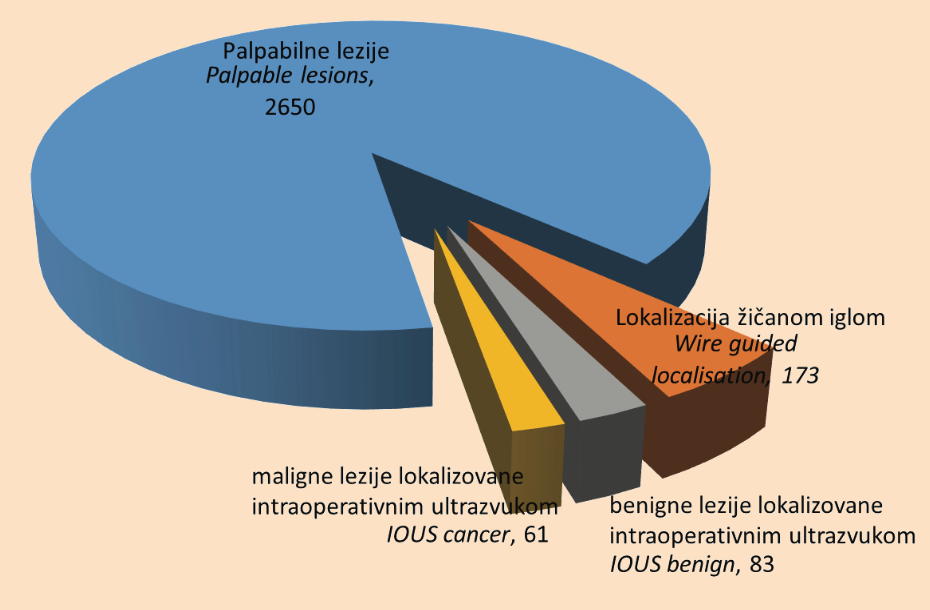
Based on operative findings, all nonpalpable breast lesions were successfully localized using intraoperative ultrasound and then excised (144/144 – 100%).
The smallest lesion was 4mm in diameter (a fibroadenoma), whereas the largest one was 12mm in diameter (nonpalpable carcinoma due to the volume of the breast).
DISCUSSION
The introduction of screening programs, as one of the most important recent achievements, was initiated in developed countries with high cancer incidence at the end of 1980s. The effect of screening on disease control is based on the detection and treatment of a tumor in its early stages, and it is stronger than the effect of any other therapeutic tool developed in the 20th century; breast cancer mortality has been reduced by around 30% in countries with screening programs. Apart from reduced mortality, the detection of tumors in early stages enables surgical treatment with fewer functional and esthetic consequences compared to classical therapeutic procedures, but at the same time it imposes the need to modify classical surgical techniques due to detecting proportionally larger number of breast lesions which are nonpalpable because of small dimensions. Palpation is the basic means of localizing and performing breast lesion excisions in classical surgery.
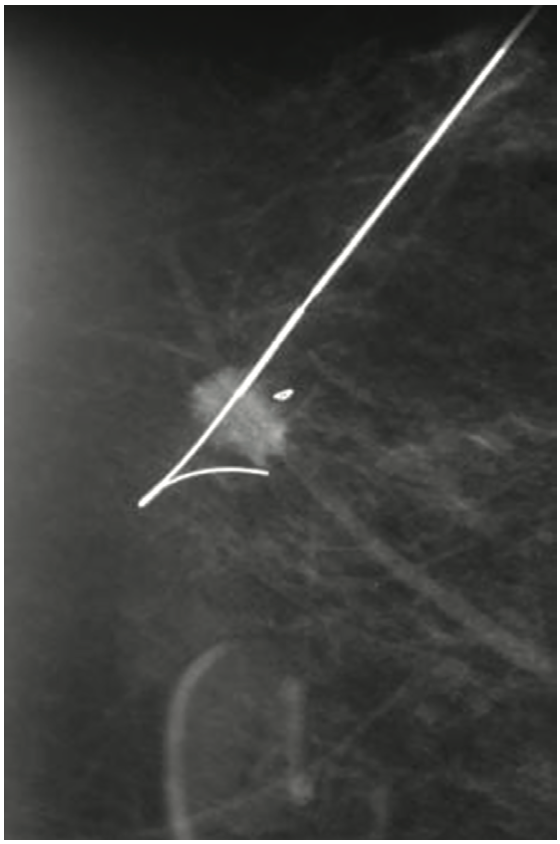
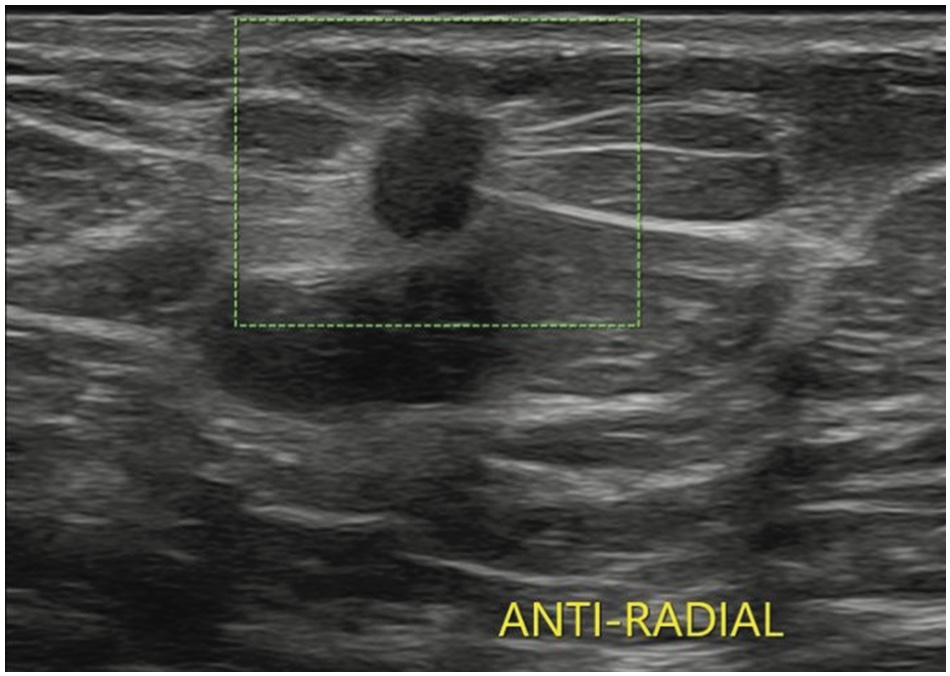
Nonpalpable breast tumor surgery is a new chapter in the field of breast tumor surgery as it involves visualization support unknown to classical surgery. Visualization techniques used for this purpose are the same techniques that are used for diagnosing breast cancer: mammography and ultrasound. Mammographic localization of nonpalpable breast lesions is a dominant approach, it is carried out by preoperatively introducing a wire needle or a radiographic marker into the lesion during mammography, and surgeons use these markers as orientation regarding the location of the lesion during surgery. Intraoperative ultrasound is less frequently used for localizing nonpalpable breast lesions, but it has significant advantages over mammographic localization as it overcomes the problems and imperfections of mammographic (preoperative) localization: in-hospital stress, coordinating the activities in the mammography room and the ones in the operating theatre, the possibility of marker-migration from the moment of marking to the moment of surgery. The only limitations regarding the application of ultrasound are associated with the surgeon’s knowledge and the availability of an ultrasound in the operating theatre, as well as lesions that are not ultrasound-visible.
In this study, we analyzed the use of intraoperative ultrasound in localizing nonpalpable breast lesions over the five-year period in a medical center where intraoperative ultrasound is used routinely. Our aim was to determine the success rate in detecting and adequately removing nonpalpable lesions.
All 155 (100%) preoperatively diagnosed ultrasound-visible nonpalpable lesions in 144 patients (61 malignant and 94 benign) who were operated on using intraoperative ultrasound were successfully identified and surgically removed. This result is consistent with the results of most published studies [1],[2],[3],[4],[5],[6],[7],[8],[9],[10],[11],[12],[13],[14],[15], where the success rate of localizing nonpalpable lesions using intraoperative ultrasound was 100% or 99%. This success rate is better than in preoperative mammographic localization, which is, according to literature, unsuccessful in 2%-10% of cases [3],[8].
CONCLUSION
Alternative modalities of image-guided localization of nonpalpable breast lesions include preoperative localization and marking the site of the lesion by inserting a marker (a wire needle or a radiographic marker), or projection-marking on the skin of the breast under the control of ultrasound or mammography.
Intraoperative ultrasound localization of nonpalpable lesions has multiple advantages over preoperative marking: 1) real-time vizualization, during the surgical procedure; 2) unlimited possibility of repeating and checking the accuracy of the localization of a nonpalpable breast lesion; 3) the absence of the marker-migration risk in the period of time between preoperative marking and the surgical procedure; 4) the absence of the risk of inaccurate preoperative marking due to, for example, a partially different position of the patient during preoperative marking compared to the position of the patient on the operative table.
Even a slight disturbance of the preoperative marking position cannot be corrected by any subsequent intervention on the operative table, and it could lead to inadequate surgery, i.e., a failed attempt to remove the nonpalpable lesion from the breast, which was the initial aim of the surgery.
A limitation in using intraoperative ultrasound in surgical management of nonpalpable breast lesions refers to the lesions that are difficult to visualize with ultrasound due to their morphological characteristics (primarily microcalcifications – DCIS). In these cases, it is necessary to preoperatively localize such lesions using mammography as a diagnostic technique that visualizes such changes well, marking the lesion location with a wire needle.
The optimal quality of nonpalpable breast lesion surgery is achieved by an adequate choice of a localizing technique, whereby intraoperative ultrasound has absolute advantages over preoperative ultrasound localization, except in the case of a lesion that is not ultrasound-visible and is detected by mammography when preoperative marking with the help of mammography should be applied.
Informations

-
Keywords:
-
Received:
-
Revised:
-
Accepted:
-
Online first:
-
DOI:
-
Cite this article:

Katarina Zečić
Clinic for Gynecology and Obstetrics, University Clinical Center of Serbia
26 Dr Koste Todorovića Street, 11000 Belgrade, Serbia
E-mail:
1. Schwartz GF, Goldberg BB, Rifkin MD, D’Orazio SE. Ultrasonography: an alternative to x-ray-guided needle localization of nonpalpable breast masses. Surgery. 1988 Nov;104(5):870-3.
2. Rahusen FD, Taets van Amerongen AH, van Diest PJ, Borgstein PJ, Bleichrodt RP, Meijer S. Ultrasound-guided lumpectomy of nonpalpable breast cancers: A feasibility study looking at the accuracy of obtained margins. J Surg Oncol. 1999 Oct;72(2):72-6. doi: 10.1002/(sici)1096-9098(199910)72:23.0.co;2-m. [CROSSREF]
3. Snider HC Jr, Morrison DG. Intraoperative ultrasound localization of nonpalpable breast lesions. Ann Surg Oncol. 1999 Apr-May;6(3):308-14. doi: 10.1007/s10434-999-0308-9. [CROSSREF]
4. Harlow SP, Krag DN, Ames SE, Weaver DL. Intraoperative ultrasound localization to guide surgical excision of nonpalpable breast carcinoma. J Am Coll Surg. 1999 Sep;189(3):241-6. doi: 10.1016/s1072-7515(99)00156-8. [CROSSREF]
5. Smith LF, Rubio IT, Henry-Tillman R, Korourian S, Klimberg VS. Intraoperative ultrasound-guided breast biopsy. Am J Surg. 2000 Dec;180(6):419-23. doi: 10.1016/s0002-9610(00)00500-6. [CROSSREF]
6. Rahusen FD, Bremers AJ, Fabry HF, van Amerongen AH, Boom RP, Meijer S. Ultrasound-guided lumpectomy of nonpalpable breast cancer versus wire-guided resection: a randomized clinical trial. Ann Surg Oncol. 2002 Dec;9(10):994-8. doi: 10.1007/BF02574518. [CROSSREF]
7. Kaufman CS, Jacobson L, Bachman B, Kaufman LB. Intraoperative ultrasonography guidance is accurate and efficient according to results in 100 breast cancer patients. Am J Surg. 2003 Oct;186(4):378-82. doi: 10.1016/s0002- 9610(03)00278-2. [CROSSREF]
8. Bennett IC, Greenslade J, Chiam H. Intraoperative ultrasound-guided excision of nonpalpable breast lesions. World J Surg. 2005 Mar;29(3):369-74. doi: 10.1007/s00268-004-7554-6. [CROSSREF]
9. Haid A, Knauer M, Dunzinger S, Jasarevic Z, Köberle-Wührer R, Schuster A, et al. Intra-operative sonography: a valuable aid during breast-conserving surgery for occult breast cancer. Ann Surg Oncol. 2007 Nov;14(11):3090-101. doi: 10.1245/s10434-007-9490-9. [CROSSREF]
10. Potter S, Govindarajulu S, Cawthorn SJ, Sahu AK. Accuracy of sonographic localisation and specimen ultrasound performed by surgeons in impalpable screen-detected breast lesions. Breast. 2007 Aug;16(4):425-8. doi: 10.1016/j. breast.2007.02.001. [CROSSREF]
11. Ngô C, Pollet AG, Laperrelle J, Ackerman G, Gomme S, Thibault F, et al. Intraoperative ultrasound localization of nonpalpable breast cancers. Ann Surg Oncol. 2007 Sep;14(9):2485-9. doi: 10.1245/s10434-007-9420-x. [CROSSREF]
12. Fortunato L, Penteriani R, Farina M, Vitelli CE, Piro FR. Intraoperative ultrasound is an effective and preferable technique to localize non-palpable breast tumors. Eur J Surg Oncol. 2008 Dec;34(12):1289-92. doi: 10.1016/j. ejso.2007.11.011. [CROSSREF]
13. Barentsz MW, van Dalen T, Gobardhan PD, Bongers V, Perre CI, Pijnappel RM, et al. Intraoperative ultrasound guidance for excision of non-palpable invasive breast cancer: a hospital-based series and an overview of the literature. Breast Cancer Res Treat. 2012 Aug;135(1):209-19. doi: 10.1007/s10549-012- 2165-7. [CROSSREF]
14. Yu CC, Chiang KC, Kuo WL, Shen SC, Lo YF, Chen SC. Low re-excision rate for positive margins in patients treated with ultrasound-guided breast-conserving surgery. Breast. 2013 Oct;22(5):698-702. doi: 10.1016/j.breast.2012.12.019. [CROSSREF]
15. Ramos M, Díaz JC, Ramos T, Ruano R, Aparicio M, Sancho M, et al. Ultrasound-guided excision combined with intraoperative assessment of gross macroscopic margins decreases the rate of reoperations for non-palpable invasive breast cancer. Breast. 2013 Aug;22(4):520-4. doi: 10.1016/j.breast.2012.10.006. [CROSSREF]
16. James TA, Harlow S, Sheehey-Jones J, Hart M, Gaspari C, Stanley M, et al. Intraoperative ultrasound versus mammographic needle localization for ductal carcinoma in situ. Ann Surg Oncol. 2009 May;16(5):1164-9. doi: 10.1245/ s10434-009-0388-6. [CROSSREF]
17. Bouton ME, Wilhelmson KL, Komenaka IK. Intraoperative ultrasound can facilitate the wire guided breast procedure for mammographic abnormalities. Am Surg. 2011 May;77(5):640-6.
18. Moore MM, Whitney LA, Cerilli L, Imbrie JZ, Bunch M, Simpson VB, et al. Intraoperative ultrasound is associated with clear lumpectomy margins for palpable infiltrating ductal breast cancer. Ann Surg. 2001 Jun;233(6):761-8. doi: 10.1097/00000658-200106000-00005. [CROSSREF]
19. Olsha O, Shemesh D, Carmon M, Sibirsky O, Abu Dalo R, Rivkin L, et al. Resection margins in ultrasound-guided breast-conserving surgery. Ann Surg Oncol. 2011 Feb;18(2):447-52. doi: 10.1245/s10434-010-1280-0. [CROSSREF]
20. Davis KM, Hsu CH, Bouton ME, Wilhelmson KL, Komenaka IK. Intraoperative ultrasound can decrease the re-excision lumpectomy rate in patients with palpable breast cancers. Am Surg. 2011 Jun;77(6):720-5.
21. Fisher CS, Mushawah FA, Cyr AE, Gao F, Margenthaler JA. Ultrasound-guided lumpectomy for palpable breast cancers. Ann Surg Oncol. 2011 Oct;18(11):3198-203. doi: 10.1245/s10434-011-1958-y. [CROSSREF]
22. Krekel NM, Lopes Cardozo AM, Muller S, Bergers E, Meijer S, van den Tol MP. Optimising surgical accuracy in palpable breast cancer with intra-operative breast ultrasound--feasibility and surgeons’ learning curve. Eur J Surg Oncol. 2011 Dec;37(12):1044-50. doi: 10.1016/j.ejso.2011.08.127. [CROSSREF]
23. Eichler C, Hübbel A, Zarghooni V, Thomas A, Gluz O, Stoff-Khalili M, et al. Intraoperative ultrasound: improved resection rates in breast-conserving surgery. Anticancer Res. 2012 Mar;32(3):1051-6.
24. Krekel NM, Haloua MH, Lopes Cardozo AM, de Wit RH, Bosch AM, de Widt-Levert LM, et al. Intraoperative ultrasound guidance for palpable breast cancer excision (COBALT trial): a multicentre, randomised controlled trial. Lancet Oncol. 2013 Jan;14(1):48-54. doi: 10.1016/S1470-2045(12)70527-2. [CROSSREF]
25. Ivanovic N. Vizuelizacija nepalpabilnih lezija u dojci tokom hirurškog rada. In: Andrejević T, editor. Intraoperativni ultrazvuk u hirurgiji tumora dojke. Beograd: Zadužbina Andrejević; 2013. p. 61-6.
26. Ivanovic NS, Zdravkovic DD, Skuric Z, Kostic J, Colakovic N, Stojiljkovic M, et al. Optimization of breast cancer excision by intraoperative ultrasound and marking needle - technique description and feasibility. World J Surg Oncol. 2015 Apr 18;13:153. doi: 10.1186/s12957-015-0568-8. [CROSSREF]