


Situs inversus totalis: an overview of the mirror image
- Institute of Public Health, Pančevo, Serbia
- Pančevo General Hospital, Pančevo, Serbia
ABSTRACT
Introduction: Situs inversus totalis (SIT) is a rare phenomenon and the incidence of this condition ranges from 1:10.000 to 1:20.000 people. It is a condition in which the arrangement of internal organs is a mirror image of normal anatomy. It can occur independently or as part of a syndrome with other abnormalities. Congenital heart defects are present in about 5-10% of such individuals. The underlying cause and genetics of situs inversus are complex.
Case report: A 69-year-old female patient was referred to the Department of General Surgery in May 2023 for ventral hernia surgery. This was her third admission to the same department; in 1998, she had appendectomy, and in 2018, the patient underwent a cholecystectomy due to gallbladder calculus.
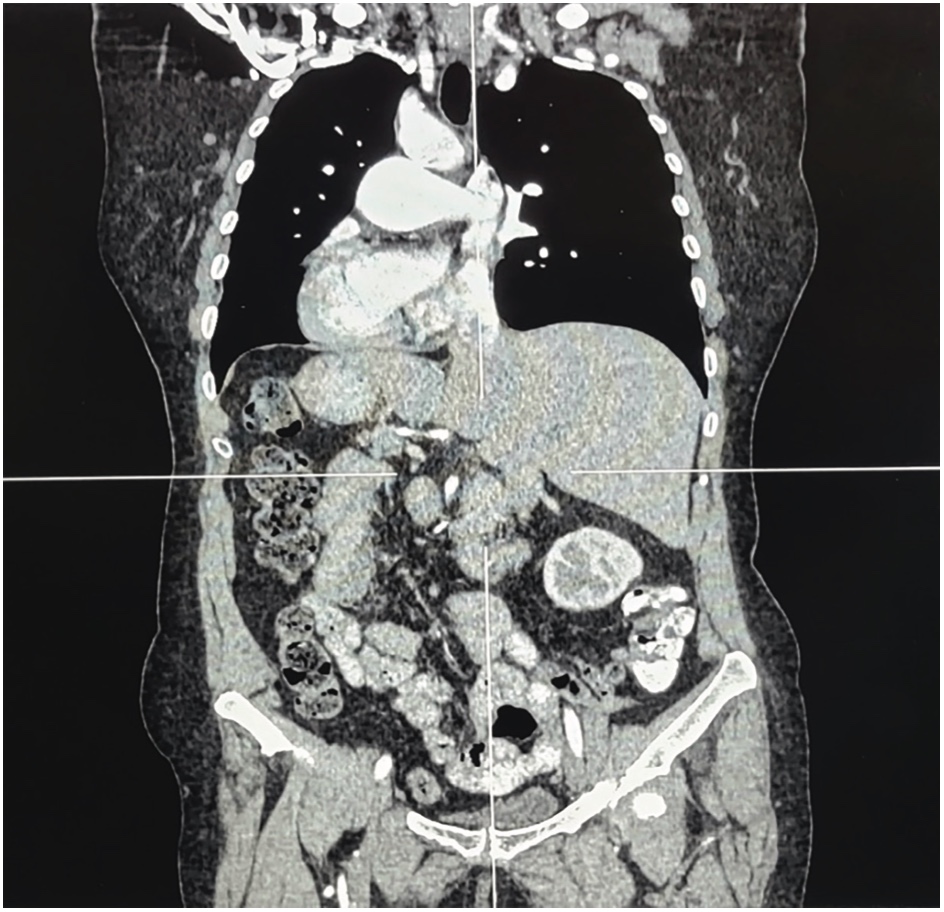
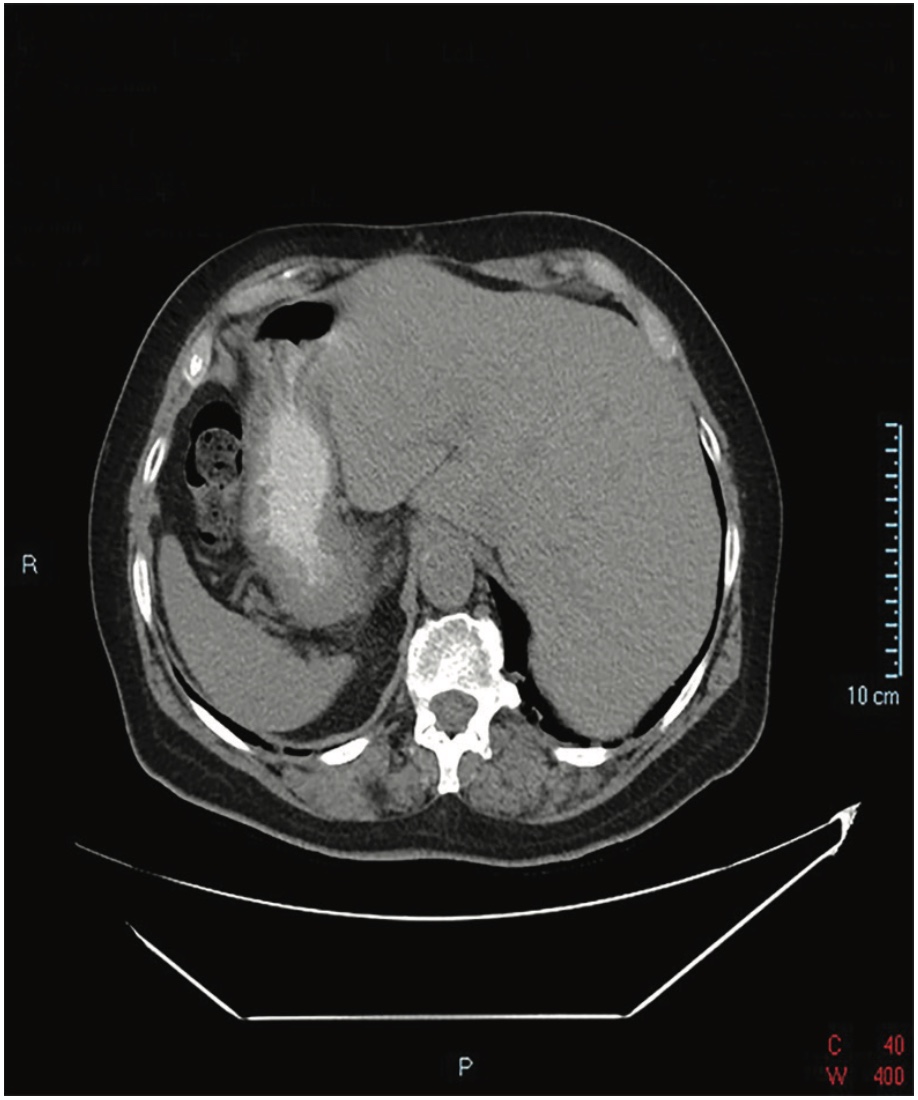
Upon admission, the patient was referred for a CT scan of the thorax and the abdomen, in order to confirm the correct anatomy, given that she was already familiar with her condition and the existence of situs inversus. During the CT examination, the arrangement of the abdominal organs was confirmed as a mirror image of normal anatomy with the heart on the right side of the chest.
Conclusion: Most people with SIT live completely normal lives. Life expectancy and risk of acquired diseases are similar to those of the general population. In a certain number of cases, there is a connection with certain pathological entities. In patients with SIT, common causes of acute abdominal pain often lead to wrong conclusions, and the localization of the cause of abdominal pain is extremely complicated and difficult. Identifying people with SIT makes it possible to reduce risks during surgical procedures and interventional procedures.
INTRODUCTION
In medical literature, the term situs implies the position of the heart, i.e. its atria and the internal organs of the human body [1].
This concept also refers to the configuration of an asymmetrical anatomical structure in an individual, and there are three possible forms: situs solitus (normal anatomy), situs inversus (the arrangement of the internal organs is a mirror image of the usual, normal anatomy), and situs ambiguous. In situs solitus, the right lung has three lobes and a bronchus above the pulmonary artery, whereas the left lung has two lobes and a bronchus below the pulmonary artery. The larger lobe of the liver is on the right, and the stomach and spleen are located on the left side of the abdomen. The morphological left atrium is to the left of the morphological right atrium. In situs inversus, the left lung has three lobes, and the right lung has two lobes; the larger lobe of the liver is on the left, and the stomach and the spleen are located on the right side of the body; the morphological left atrium is to the right of the morphological right atrium [2].
Between these two entities, situs solitus (the normal anatomical arrangement) and situs inversus totalis (reversed internal organs, a mirror image of the normal anatomy), there lies the spectrum of situs ambiguous (indeterminate anatomical arrangement), which is characterzed by isomerism, heterotaxy and multiple malformations in one or more thoracic or abdominal organs [3].
Situs inversus is categorized as heterotaxy syndrome, which results from a failure to form normal asymmetry along the left-right axis during the embryonic development and it is associated with a number of cardiac and extracardiac congenital anomalies. The 270-degree clockwise rotation instead of the normal 270-degree counterclockwise rotation during the development of the thoraco-abdominal organs of the embryo results in their mirror-image positioning in the thorax and the abdomen [4].
The arrangement of the internal organs in situs inversus is a mirror-image of normal anatomy. It can occur independently (isolated, without any other anomalies or conditions), or as part of a syndrome with various other abnormalities. Congenital heart defects are present in about 5-10% of such individuals. The underlying cause and genetics of situs inversus is complex, and some familial cases have been described in literature as well [5].
It is an extremely rare phenomenon and, according to literature data, the incidence of this condition ranges from 1:10.000 to 1:20.000 individuals [6], with no difference in frequency in males and females and in members of different races [7],[8].
Among other genes, a gene on the long arm of chromosome 14, which is inherited as autosomal recessive with incomplete penetration, is involved in the origin of this phenomenon [9].
Researchers currently believe that the rotation of organs and their migration during embryonic development are the result of a chain of signals. The secretion of a protein called “Sonic hedgehog“ (Shh) affects the expression of two transforming growth factors, Nodal and Lefty. When these proteins are secreted on the left side of the embryo, the heart turns to the right, resulting in situs solitus. If Shh protein is secreted on the right side, the heart turns to the left, bringing about situs inversus. When this protein is secreted on both sides, the signal is unclear; 50% of such cases will result in situs solitus, and 50% of cases will result in situs inversus. However, it remains unclear what causes Shh to be produced. A gene called PITX2, which controls the secretion of Shh and Nodal proteins, has been identified recently [10].
Herrera Ortiz and colleagues confirmed the presence of a hereditary component and the existence of familial cases; they described a 46-year-old patient with SIT and acute inflammation of the gallbladder whose sister had also been diagnosed with this condition [11].
SIT can also be associated with other entities such as vena caval interruption, Kartagener’s syndrome, Ivemark syndrome, and Joshikawa syndrome. It is estimated that approximately 25% of patients with SIT and dextrocardia also have Kartagener’s syndrome [11].
Primary ciliary dyskinesia (PCD), also known as Kartagener’s syndrome, is characterized by the following conditions: dextrocardia, recurrent sinusitis and bronchiectasis; male patients are almost infertile due to lower sperm motility. The incidence of this autosomal recessive syndrome is around 1/30.000 live births [12].
In primary ciliary dyskinesia there are mutations that disrupt the motility of cilia, hair-like organelles, which plunge from the cell surface to the extracellular space. They are found in a variety of tissues including the respiratory epithelium, and disruption of their motility can cause symptoms such as chronic bronchitis, inflamed or infected sinuses [13].
Patients with this syndrome often have several episodes of respiratory tract infections and exacerbation of bronchiectasis due to poor mucociliary clearance during the year, and some male patients also experience infertility due to sperm dyskinesia [14].
Ivemark syndrome is a rare congenital condition that affects multiple organ systems in the body. It is classified as heterotaxy syndrome or laterality disorder. These terms refer to the failure of the internal organs of the thorax and the abdomen to be arranged in their appropriate positions in the body. This syndrome is characterized by complete absence (asplenia) or underdevelopment (hypoplasia) of the spleen, cardiac malformations, and abnormal arrangement of the internal organs of the thorax and the abdomen [15].
Yoshikawa’s syndrome is characterized by the presence of SIT, bilateral renal dysplasia, pancreatic fibrosis, and meconium ileus [16].
Situs inversus totalis may be linked to a number of other associated congenital anomalies such as duodenal atresia, asplenia, multiple spleens, ectopic and horseshoe kidneys, and other pulmonary and vascular abnormalities [1].
CASE REPORT
A 69-year-old female patient, in good general condition, has been referred to the Department of General Surgery for postoperative incisional ventral hernia surgery.
She was admitted for the third time to the same ward; through history taking it was found out that she had had appendectomy in 1998 due to acute pain. The patient had no medical documentation about the first admission.
During her second stay at the department in 2018, the patient was informed of the existence of SIT and the reverse anatomy after she had experienced epigastric pain due to gallbladder calculus and undergone ultrasound examination of the abdomen. She was 64 years old then. Gallbladder surgery was planned and started as a laparoscopic procedure, but for better visualization and orientation, a decision was made to perform a midline laparotomy and turn the procedure into classical, “open” cholecystectomy. The postoperative course was accompanied by mild subcutaneous infection, and three weeks later she was discharged fully recovered.
In May 2023 she was admitted to the Department of General Surgery for the third time, for surgical treatment of non-strangulated, non-gangrenous postoperative incisional hernia on the anterior abdominal wall, at the site of the surgical incision from the previous surgery. Laboratory tests showed that the patient’s hematological and biochemical parameters were within reference ranges. A preoperative chest CT showed dextrocardia, with no bronchiestasis. The patient denied chronic cough, nasal congestion and frequent sinus infections, which rulled out the presence of Kartagener’s syndrome.
At the same time, a CT scan of the abdomen was performed in order to determine the correct anatomy as the patient had been aware of her condition and the presence of situs inversus totalis since her previous hospital stay. During the CT scan, the arrangement of the internal organs was confirmed, being a mirror image of normal anatomy, with the liver on the left and the spleen on the right side of the hypochondrium (Image 1 and Image 2). No other congenital anomaly was observed, nor was there any vascular abnormality.
An informed consent was obtained from the patient for the planned surgical procedure and the risk of potential complications was explained to her in detail. Herniotomy and reconctruction of the abdominal wall were performed using a Prolene mesh following the Rives-Stoppa, “sublay”, technique under general anesthesia having previously informed all the members of the surgical and anesthesiological team of the patient’s specific condition. The established SIT did not have a direct impact on the process of anesthesia, the organization of the surgical procedure, and the selection of the surgical technique.
Postoperatively, the patient was treated with infusion, analgesics, antibiotics, and antiplatelet therapy. Having spent ten days in hospital, the patient was discharged home fully recovered and in good general condition.
DISCUSSION
People who have situs inversus with dextrocardia and with no accompanying congenital anomalies, have normal life expectancy and a similar risk of acquired diseases like other people of the same age and sex. In rare cases, in people who have additional cardiac anomalies, life expectancy is decreased depending on the severity of the defect [17].
An individual may be born with SIT which is not associated with any accompanying syndrome, so it may remain unnoticed for a long time, with no symptoms whatsoever, and then be accidentally discovered and diagnosed during radiological examination due to a disease or a patological condition [18].
Lakshman and colleagues described a female person who had been diagnosed with situs inversus totalis only in her old age (when she was 84 years old), completely accidentally, as part of clinical and radiological diagnostics for bladder cancer [19].
Additionally, Lochman and colleagues presented a female patient who had no prior knowledge of the existence of situs inversus and who had been diagnosed with this condition as late as the age of 75, when she was admitted to hospital due to acute cholecystitis and pain in the left hypochondrium [20].
The patient from our case report also found out about her condition accidentally, in later life, at the age of 64. Before this planned and scheduled admission for ventral hernia surgery, she had been treated and operated on twice at the same department as an emergency case suffering from abdominal pain due to appendicitis and gallbladder calculus.
SIT can be a real diagnostic challenge in diseases where organ location is crucial, such as acute cholecystitis or appendicitis [21].
Common causes of acute abdominal pain in a patient with SIT can lead to a misdiagnosis. For example, if such a person suffers from appendicitis, pain may be localized in the left iliac fossa, so the condition may be misdiagnosed as acute diverticulitis. In cholecystitis, in individuals with SIT pain can be located in the left upper quadrant and it can be easily misdiagnosed as gastritis. Therefore, the doctor must remain suspicious to a certain extent, think about the possible presence of SIT, and perform subsequent radiological diagnostic procedures based on physical examnation [11].
It is also interesting that only 50% of all patients with left-sided appendicitis feel pain on the left side of the abdomen. This complicated clinical presentation can be explained by the fact that in the constellation of situs inversus the abdominal organs are transposed, but the components of the peripheral nervous system are not, so patients in such cases experience confusing and diffuse abdominal pain [11].
Therefore, the diagnosis of acute appendicitis is not always simple, and mortality and morbidity of this condition can increase if surgical treatment is delayed. A misdiagnosis is more likely if the patient has atypical symptoms such as pain in an unexpected location. This is a realistic scenario because the appendix has diverse anatomical positions: retrocecal, subcecal, preileal, postileal, pelvic, subhepatic, mesoceliac, left-sided, and there is also right-sided long appendix projecting into the left lower quadrant area [12]. In their systematic literature review, these authors have analiyzed 70 published papers including a total of 73 patients with acute appendicitis and SIT or bowel malrotation.
Because of the atypical “mirror image” anatomy, the diagnosis of gallbladder calculus in patients with situs inversus is extremely difficult, especially in those who have not been aware of this condition. Due to the unusual anatomy of the gallbladder, the clinical presentation of these patients usually includes the left upper quadrant pain, while 30% of patients will develop epigastric pain. Approximately 10% of such patients complain of feeling pain in the right upper quadrant, which is a classic presentation of pain in patients with normal anatomy, and it further complicates the recognition of etiology and localization of pain [22].
Despite low incidence and the fact that it occurs rarely, during the pre-laparoscopic era there were below 40 published cases of “open” cholecystectomies in patients with situs inversus (20), and in their paper from 2019, AlKhlaiwy and colleagues systematized a total of 92 laparoscopic cholecystectomies and the published case reports of patients with situs inversus [16].
Basically, the principles of treating cholelithiasis are the same in individuals with SIT and those with normal anatomy. Laparoscopic cholecystectomy is not contraindicated in patients with situs inversus and cholelithiasis, only there is a need for very careful preoperative and intraoperative planning of the surgical procedure when these patients are referred for laparoscopic cholecystectomy. The monitor positioning, the position of the operator and the assistants, as well as port placing are crucial for a safe and successful completion of laparoscopic cholecystectomy [23].
The configuration and the organization of the operating theatre as a mirror image during laparoscopic cholecystectomy is achieved by positioning the surgeon and the nurse to the right and the assistant to the left of the patient. When it comes to the most difficult part of dissection in the presence of situs inversus, left-handed or ambidextrous surgeons have an advantage over right-handed surgeons in such situations. A right-handed surgeon’s motor skills in the left hand can be insufficient for precise dissection and safety assessment. The most critical point of surgery in such a constellation is the placemet of clips, which requires the surgeon to be precise and strong at the same time [24].
In addition to appendectomy and cholecystectomy surgeries, many other surgical interventions in the field of abdominal surgery in patients with SIT have been described in literature, including sleeve gastrectomy in morbid obesity, proximal gastrectomy, distal gastrectomy, total gastrestomy due to malignancy, laparoscopic pancreaticoduodenectomy, nephrectomy, complicated choledochal cyst, various colorectal surgeries, sigmoid colectomy, rectal resection, etc. After the initial disorientation, experienced surgeons can perform all these procedures successfully and safely [25].
Medical application of modern diagnostic methods in the field of radiology (ultrasound, CT, MRI) is of great help in determining the basic anatomy, especially before any surgical interventions in individuals with situs inversus in order to avoid potential accidents and ensure a good clinical course[26].
CONCLUSION
Situs inversus totalis is a rare anatomical variation, whose prevalence in literature ranges from 1:10.000 to 1:20.000. It is believed that most of these cases are the result of a sporadic genetic mutation, but certain inheritance patterns have also been described (autosomal dominant, autosomal recessive, and X-linked recessive inheritance).
Most people with this condition live completely normal lives without any health problems and find out about their anatomical variation by accident when they undergo radiological diagnostics due to a disease or a patological condition. Life expectancy and the risk of acquired diseases are similar to those of general population of the same age and sex. In some cases, SIT can be associated with certain patological entities, conditions, and syndromes. It is estimated that around 1 in 20 patients can have some type of cardiac anomaly, whereas 1 in 5 patients may have coexisting Kartagener’s syndrome.
In patients with SIT, common causes of acute abdominal pain can easily lead to misconclusions. Due to the unusual anatomy, recognition of appendicitis, pain due to a gastric pathology or gallstones in patients with situs inversus is extremely complicated and difficult, especially if the history of this condition is unknown to the patient.
Timely identification of indivisuals with SIT can help reduce risks and prevent errors during surgical procedures and interventional procedures, especially in emergency situations in the field of abdominal surgery, endoscopy, and interventional radiology. The presence of dextrocardia in a routine chest X-ray should immediately arouse suspicion of unusual anatomy.
“Mirror image” is certainly an unusual sight in medicine and a great challenge as well, which even very experienced doctors may encounter only once during their entire career. Surgical interventions are completely feasible and possible with careful planning of every single step and a high level of flexibility of the entire surgical team.
We, undersigned, declare under full criminal accountability and liability that this paper has not been published in any medical journal and that it has not been simultaneously submitted for publication in another journal, that the manuscript has been read and approved by all authors who meet the authorship criteria, that the contact information are correct for all authors, as well as that the corresponding author, on behalf of other authors, signs the Copyright Agreement, by means of which all authors transfer their copyright to the publisher of this journal.
Informations

-
Keywords:
-
Received:
-
Revised:
-
Accepted:
-
Online first:
-
DOI:
-
Cite this article:

Jasmina Pavlović Stojanović
Institute of Public Health Pančevo
2 Pasterova Street, 26000 Pančevo, Serbia
E-mail:
1. Yilmaz S, Demirtas A, Tokpinar A, Acer N. Dextrocardia y situs inversus totalis en un sujeto turco: reporte de un caso. Int. J. Morphol. 2019 Sep;37(3):900-2. doi: 10.4067/S0717-95022019000300900.
2. Maldjian PD, Saric M. Approach to dextrocardia in adults: review. AJR Am J Roentgenol. 2007 Jun;188(6 Suppl): S39-49; quiz S35-8. doi: 10.2214/AJR.06.1179. [CROSSREF]
3. Aylsworth AS. Clinical aspects of defects in the determination of laterality. Am J Med Genet. 2001 Jul 15;101(4):345-55.
4. Koç A. Anaesthesia recommendations for situs inversus totalis. OrphanAnesthesia [Internet]. Nürnberg, Germany: Deutschen Gesellschaft für Anästhesiologie und Intensivmedizin e.V; 2020 Feb [cited 2023 Nov]. 10 p. Available from: https://www.orphananesthesia.eu/en/rare-diseases/published-guidelines/situs-inversus-totalis/914-situs-inversus-totalis/file.html. [HTTP]
5. National Center for Advancing Translational Sciences. Situs inversus totalis [Internet]. Gaithersburg (MD): Genetic and Rare Diseases Information Center; 2023 Nov [cited 2023 Nov]. Available from: https://rarediseases.info.nih.gov/diseases/4883/situs-inversus. [HTTP]
6. He T, Zou J, Song H, Yi B, Sun K, Yang J, et al. Laparoscopic cholecystectomy in a patient with situs inversus totalis presenting with cholelithiasis: a case report. Front Surg. 2022 Apr 14; 9:874494. doi: 10.3389/fsurg.2022.874494. [CROSSREF]
7. Tavassoli A., Zandbaf T., Rezapanah A. Laparoscopic cholecystectomy in situs inversus, a novel port placement technique, two case reports, and review of literature. Iran. Red Crescent Med. J. 2021;23(10). doi: 10.32592/ ircmj.2021.23.10.1168.
8. Aziz I, Albina. Open cholecystectomy in situs inversus totalis: a case report. Int J Health Sci Res. 2018; 8(1):292-7.
9. Jang JY, Lee W, Cho J, Jeong C, Hong S. Laparoscopic cholecystectomy in two patients with situs inversus totalis: a case report. J Minim Invasive Surg 2018; 21:82-5. doi: 10.7602/jmis.2018.21.2.82.
10. Kaushik R, Chandrakar K, Shirsagar DD, Mishra P, Mishra D. Situs inversus totalis – a case report. J Cont Med A Dent. 2015 Apr;3(1):97-9. doi: 10.18049/ jcmad/319a23.
11. Herrera Ortiz AF, Lacouture JC, Sandoval Medina D, Gómez Meléndez LJ, Uscategui R. Acute cholecystitis in a patient with situs inversus totalis: an unexpected finding. Cureus. 2021 Jun 21;13(6):e15799. doi: 10.7759/cureus.15799. [CROSSREF]
12. Di Buono G, Buscemi S, Galia M, Maienza E, Amato G, Bonventre G, et al. Acute appendicitis and situs viscerum inversus: radiological and surgical approach-a systematic review. Eur J Med Res. 2023 Feb 20;28(1):85. doi: 10.1186/ s40001-023-01059-w. [CROSSREF]
13. Postema MC, Carrion-Castillo A, Fisher SE, Vingerhoets G, Francks C. The genetics of situs inversus without primary ciliary dyskinesia. Sci Rep. 2020 Feb 28;10(1):3677. doi: 10.1038/s41598-020-60589-z. [CROSSREF]
14. Queiroz RM, Filho FB. Kartagener’s syndrome. Pan Afr Med J. 2018 Mar 19; 29:160. doi: 10.11604/pamj.2018.29.160.14927. [CROSSREF]
15. National Organization for Rare Disorders (NORD). Ivemark syndrome [Internet]. Quincy (MA): National Organization for Rare Disorders; 2023 [cited 2023 Nov]. Available from: https://rarediseases.org/gard-rare-disease/ivemark-syndrome/. [HTTP]
16. AlKhlaiwy O, AlMuhsin AM, Zakarneh E, Taha MY. Laparoscopic cholecystectomy in situs inversus totalis: Case report with review of techniques. Int J Surg Case Rep. 2019; 59:208-12. doi: 10.1016/j.ijscr.2019.05.050. [CROSSREF]17. Bohun CM, Potts JE, Casey BM, Sandor GG. A population-based study of cardiac malformations and outcomes associated with dextrocardia. Am J Cardiol. 2007 Jul 15;100(2):305-9. doi: 10.1016/j.amjcard.2007.02.095. [CROSSREF]
18. Edzie EKM, Dzefi-Tettey K, Cudjoe O, Gorleku PN, Adu P. Incidental finding of dextrocardia with situs inversus in a 59-year-old man. Case Rep Radiol. 2019 Dec 1; 2019:7107293. doi: 10.1155/2019/7107293. [CROSSREF]
19. Lakshman VB, Revannasiddaiah S, Ganganna R. Situs inversus totalis discovered incidentally at the age of 84 years. BMJ Case Rep. 2013 Mar 12;2013: bcr2013008611. doi: 10.1136/bcr-2013-008611. [CROSSREF]
20. Lochman P, Hoffmann P, Kočí J. Elective laparoscopic cholecystectomy in a 75-year-old woman with situs viscerum inversus totalis. Wideochir Inne Tech Maloinwazyjne. 2012 Aug;7(3):216-9. doi: 10.5114/wiitm.2011.26842. [CROSSREF]
21. Antozzi L, Renda P. Laparoscopic Nissen fundoplication for gastroesophageal reflux disease in situs inversus totalis: a “self-solving puzzle” – a case report. Ann Esophagus 2021; 4:32. doi: 10.21037/aoe-20-63.
22. Bodh V, Sharma R, Jhobta RS, Sharma B, Aggarwal N. Situs inversus totalis with symptomatic cholelithiasis: A diagnostic dilemma. CHRISMED J Health Res 2019; 6:262-4. doi: 10.4103/cjhr.cjhr_96_18.
23. Bendre M, Kshirsagar V, Jadhav S, Puvvada P. Challenges of laparoscopic cholecystectomy in a case of situs inversus totalis. Eur. J. Mol. Clin. Med. 2022;(9) 9:323-6.
24. Gelevski R, Jota G, Todorović L, Trajkovski G, Joksimović V, Trenčić B. Laparoscopic cholecystectomy in situs inversus totalis: a case report. Acta facultatis medicae Naissensis. 2021;38(2):183-8. doi: 10.5937/afmnai38-30172.
25. Eitler K, Bibok A, Telkes G. Situs inversus totalis: a clinical review. Int J Gen Med. 2022 Mar 3; 15:2437-49. doi: 10.2147/IJGM.S295444. [CROSSREF]
26. Ramavathu KVM. Imaging findings in a case of situs inversus totalis. BJR Case Rep. 2021 Mar 4;7(4):20200202. doi: 10.1259/bjrcr.20200202. [CROSSREF]