


Reversible ocular adverse effects in melanoma treatment with MEK/BRAF inhibitors
- University Clinical Center of Serbia, Eye Hospital, Belgrade, Serbia
- University of Belgrade, Faculty of Medicine, Belgrade, Serbia
ABSTRACT
Introduction: MEK/BRAF inhibitors, including cobimetinib and vemurafenib, are effective in managing BRAF-mutant melanoma. Despite their efficacy, these therapies may cause adverse effects, including ocular toxicities. Although uncommon, these complications can significantly impact a patient’s quality of life and adherence to treatment. This case report highlights a 57-year-old female who developed ocular side effects during MEK/BRAF inhibitor therapy, underscoring the need for early recognition and management.
Case report: A 57-year-old female received MEK/BRAF inhibitors (cobimetinib and vemurafenib) for eight months after surgery for skin melanoma. During treatment, she developed significant ocular adverse effects, including bilateral pigmented keratic precipitates, anterior chamber inflammation, and vitritis, resulting in reduced visual acuity. Ophthalmologic examination revealed signs of inflammation, prompting a three-week suspension of the therapy. After discontinuing the treatment, the patient experienced marked improvement, with her visual acuity returning to 20/20. Subsequent examinations confirmed the resolution of ocular symptoms, indicating that the adverse events were linked to the therapy rather than metastatic disease.
Conclusion: This case highlights the importance of identifying and managing ocular toxicities associated with MEK/BRAF inhibitors. Although rare, these complications can severely affect quality of life and treatment continuation. A multidisciplinary approach, involving both oncologists and ophthalmologists, is essential for monitoring and addressing these issues. Further research is needed to better understand the mechanisms behind these adverse effects and to improve management strategies for patients on targeted melanoma therapy.
INTRODUCTION
Melanoma, a malignant tumor of melanocytes, presents significant treatment challenges due to its aggressive nature and tendency to metastasize. The advent of targeted therapies, particularly BRAF and MEK inhibitors, has revolutionized the management of BRAF-mutant melanoma, leading to marked improvements in survival rates and disease control. BRAF (B-Raf proto-oncogene) plays a crucial role in the MAPK (mitogen-activated protein kinase) signaling pathway, which is integral to regulating cell growth and division. Mutations in the BRAF gene, notably the V600E mutation, occur in approximately 40-60% of melanoma cases [1],[2]. BRAF inhibitors, such as vemurafenib and dabrafenib, specifically target this mutated protein, resulting in decreased tumor cell proliferation and increased apoptosis. By selectively binding to the mutated BRAF protein, these inhibitors inhibit its kinase activity, thereby blocking the phosphorylation and activation of downstream effectors in the MAPK pathway [3].
MEK (mitogen-activated protein kinase kinase), located downstream of BRAF, is another key player in the MAPK pathway. MEK inhibitors, including trametinib and cobimetinib, further disrupt the signaling cascade that promotes cancer cell survival and growth [4]. When combined with BRAF inhibitors, MEK inhibitors enhance therapeutic efficacy and mitigate resistance often seen with BRAF monotherapy. This dual blockade has improved response rates and progression-free survival in patients with BRAF-mutant melanoma [5].
Despite their effectiveness, these therapies are associated with various side effects. Common adverse effects include skin toxicities, such as rash and photosensitivity, gastrointestinal symptoms like diarrhea and nausea, and metabolic changes, including elevated liver enzymes [6]. Among these side effects, ocular complications, though relatively rare, have garnered attention due to their potential to significantly impact patients’ quality of life. Ocular complications associated with MEK/BRAF inhibitors can include uveitis, characterized by inflammation of the uveal tract, leading to symptoms such as blurred vision, eye pain, and redness [7]. Patients may also experience dry eye syndrome, characterized by reduced tear production or altered tear composition, resulting in discomfort and visual disturbances. Additionally, retinal toxicity poses a risk, potentially affecting retinal function or structure and leading to vision changes.
Recognizing and managing these ocular adverse effects is crucial for optimizing treatment outcomes and maintaining adherence to therapy. The introduction of MEK and BRAF inhibitors has indeed transformed the treatment landscape for melanoma, providing substantial benefits for patients with BRAF mutations. However, ongoing awareness of potential adverse effects, particularly ocular complications, is essential for comprehensive patient care. Continued research and case studies will further elucidate these effects and enhance management strategies, ultimately improving the overall treatment experience for melanoma patients.
This case report aims to highlight the occurrence of reversible ocular adverse effects in a patient undergoing treatment with MEK/BRAF inhibitors for BRAF-mutant melanoma. By documenting the patient’s clinical presentation and response to therapy, we seek to raise awareness among healthcare providers about the potential ocular toxicities associated with these targeted treatments. Additionally, this report emphasizes the importance of multidisciplinary monitoring and management to optimize patient outcomes and maintain quality of life during therapy.
CASE REPORT
This case report documents the clinical experience of a 57-year-old female patient undergoing treatment with the MEK/BRAF inhibitors cobimetinib and vemurafenib for eight months following surgery for skin melanoma. The initiation of targeted therapy was part of her management plan due to the presence of BRAF mutations, which are commonly associated with aggressive melanoma behavior.
The patient initially presented with complaints of reduced visual acuity, with measurements of 20/40 in her right eye and 20/30 in her left eye. Clinical assessment revealed notable findings, including bilateral pigmented keratic precipitates (KPs) on the corneal endothelium, raising concerns about potential inflammation or toxicity resulting from the ongoing melanoma treatment. Additionally, the examination indicated (2+) anterior chamber cells, suggesting inflammatory changes in the eye. Posterior synechia, characterized by the adhesion of the iris to the lens, was also noted (Figure 1). The presence of (3+) vitritis pointed to significant inflammation within the vitreous cavity, while subretinal fluid in the macula raised concerns about serious ocular complications or potential metastasis. Further diagnostic imaging and testing, including optical coherence tomography (OCT) and ultrasound B-scan, ruled out metastasis, indicating that the subretinal fluid was likely a result of treatment-related inflammation rather than a new tumor.
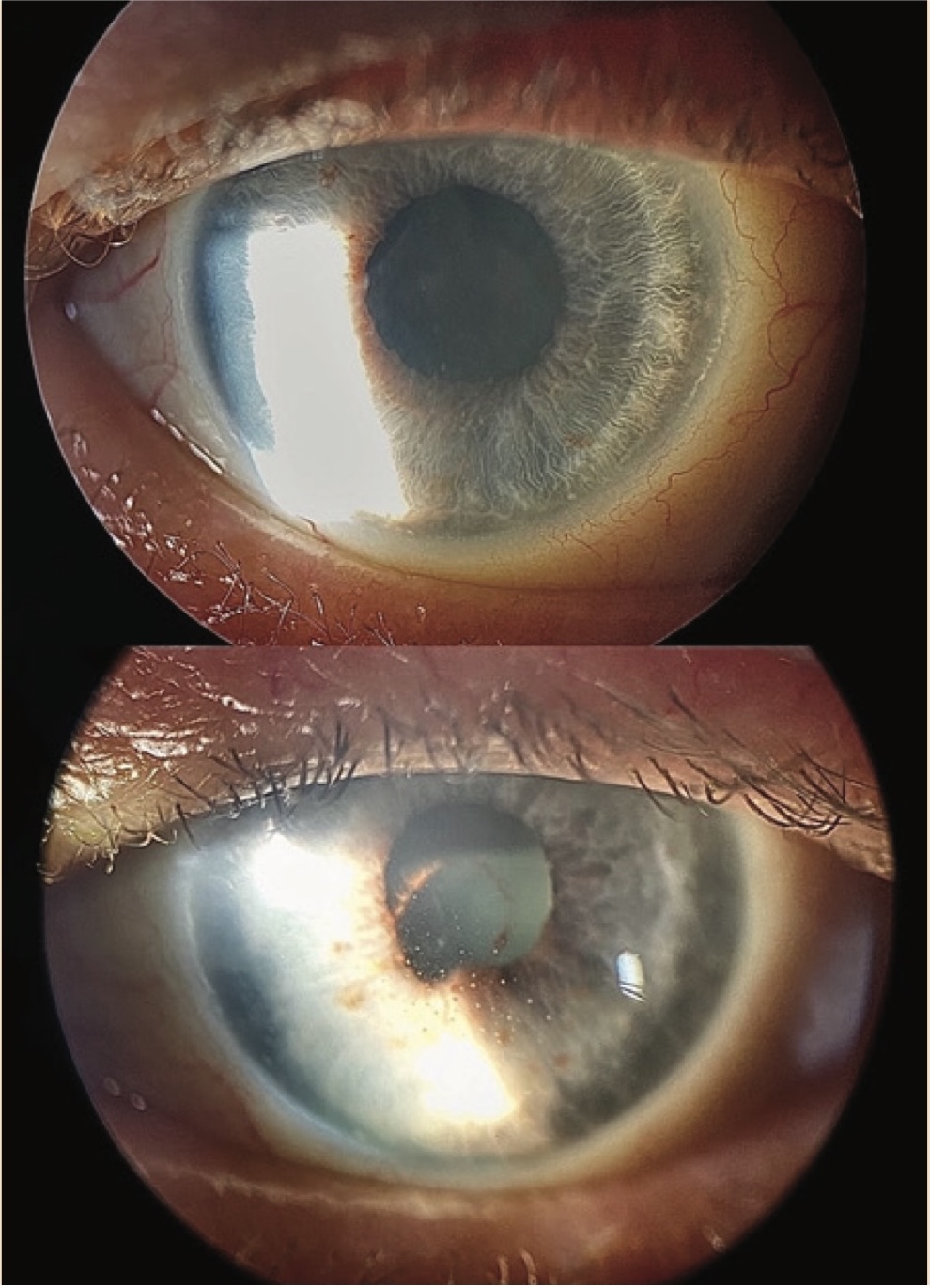
Given these findings, a decision was made to temporarily suspend the administration of cobimetinib and vemurafenib for three weeks. This pause in therapy was critical to assess whether the ocular symptoms were related to the treatment. Following the three-week suspension, the patient experienced a significant improvement in her symptoms. Upon reevaluation, visual acuity had returned to 20/20 in both eyes, indicating a remarkable recovery. Follow-up assessments showed a marked reduction in bilateral pigmented keratic precipitates and resolution of anterior chamber inflammation, with decreased or absent anterior chamber cells. Improvement in vitritis and the absence of subretinal fluid further suggested that the inflammation had subsided.
During subsequent follow-up appointments over a six-month period after therapy was reintroduced at a reduced dosage, the patient remained in good health with no indication of disease progression, and the ocular symptoms continued to resolve without recurrence. This case highlights the importance of early recognition of ocular adverse effects and the reversibility of symptoms with timely management, such as temporary discontinuation of targeted therapy. Close multidisciplinary monitoring, including ophthalmologic evaluations, is essential for optimizing patient outcomes while ensuring that treatment for melanoma remains effective and tolerable.
DISCUSSION
The case of the 57-year-old female patient highlights significant ocular adverse effects associated with MEK/ BRAF inhibitors, specifically cobimetinib and vemurafenib, in the treatment of melanoma. As the use of targeted therapies has increased, so has the recognition of their potential ocular toxicities, which can profoundly affect patients’ quality of life and treatment adherence.
Several studies have documented ocular complications related to targeted therapies in melanoma patients. For instance, a review by Martens et al. (2023) noted that ocular adverse effects such as uveitis, dry eye syndrome, and retinal toxicity have been observed in patients treated with BRAF and MEK inhibitors [8]. These findings are corroborated by case reports indicating similar complications, including bilateral keratic precipitates and inflammatory changes in the anterior chamber [7]. The mechanism underlying these ocular effects may involve the immune-modulating properties of these agents, which can elicit inflammatory responses in susceptible patients.
In the literature, there are multiple documented cases of patients experiencing significant ocular adverse effects during treatment with MEK/BRAF inhibitors. For example, a case reported by Sarny et al. (2017) described a patient who developed uveitis and keratitis while on dabrafenib and trametinib, requiring the temporary suspension of therapy [9]. This approach mirrors the management strategy used in our case, underscoring the importance of careful monitoring and timely intervention in managing ocular toxicities within this patient population [9].
The reversibility of ocular symptoms upon discontinuation of therapy, as observed in our patient, aligns with findings from other studies. In a case series by Nguyen et al. (2021), patients reported resolution of visual disturbances and inflammatory signs after halting BRAF/MEK inhibitor treatment, highlighting the necessity of early recognition and appropriate management of these adverse effects [10].
In managing ocular side effects associated specifically with cobimetinib and vemurafenib, temporary discontinuation is a commonly recommended approach. The duration of these pauses in therapy varies depending on the severity of symptoms and the individual response of each patient. For instance, one case report described a patient who developed uveitis after six weeks of cobimetinib and vemurafenib treatment. Therapy was paused for three weeks, during which the patient’s ocular symptoms improved, and upon resuming at a reduced dosage, no recurrence of symptoms was observed over a six-month follow-up period. This case suggests that a three-week suspension can effectively resolve ocular adverse effects without compromising the long-term efficacy of the treatment [11].
Moreover, a study reviewing ocular toxicities associated with MEK inhibitors, including cobimetinib, noted that while many ocular side effects are self-limiting, some may require temporary discontinuation. The exact duration of these therapy interruptions is often individualized based on patient response and the severity of symptoms, further supporting a flexible, patient-centered approach.
The successful recovery of our patient’s visual acuity to 20/20, along with the resolution of ocular symptoms, reinforces the necessity for a multidisciplinary approach in managing melanoma patients on targeted therapies. Oncologists and ophthalmologists should collaborate closely to monitor for ocular complications, particularly in patients presenting with visual changes.
CONCLUSION
In conclusion, while MEK/BRAF inhibitors have significantly improved outcomes for patients with BRAF-mutant melanoma, awareness of potential ocular adverse effects is essential. Our case adds to the growing body of literature that underscores the importance of vigilance and proactive management of ocular complications in this treatment landscape. Further research is warranted to better understand the mechanisms behind these adverse effects and to develop strategies for prevention and management.
Informations

-
Keywords:
-
Received:
-
Revised:
-
Accepted:
-
Online first:
-
DOI:
-
Cite this article:

Dolika D. Vasović
Eye Hospital, University Clinical Center of Serbia
2 Pasterova Street, 11000 Belgrade, Serbia
E-mail:
1. Tímár J, Ladányi A. Molecular pathology of skin melanoma: epidemiology, differential diagnostics, prognosis and therapy prediction. Int J Mol Sci. 2022 May 11;23(10):5384. doi: 10.3390/ijms23105384. [CROSSREF]
2. Ottaviano M, Giunta EF, Tortora M, Curvietto M, Attademo L, Bosso D, et al. BRAF gene and melanoma: back to the future. Int J Mol Sci. 2021 Mar 27;22(7):3474. doi: 10.3390/ijms22073474. [CROSSREF]
3. Flaherty KT, Puzanov I, Kim KB, Ribas A, McArthur GA, Sosman JA, et al. Inhibition of mutated, activated BRAF in metastatic melanoma. N Engl J Med. 2010 Aug 26;363(9):809-19. doi: 10.1056/NEJMoa1002011. [CROSSREF]
4. Long GV, Stroyakovskiy D, Gogas H, Levchenko E, de Braud F, Larkin J, et al. Combined BRAF and MEK inhibition versus BRAF inhibition alone in melanoma. N Engl J Med. 2014 Nov 13;371(20):1877-88. doi: 10.1056/NEJMoa1406037. [CROSSREF]
5. Dummer R, Ascierto PA, Gogas HJ, Arance A, Mandala M, Liszkay G, et al. Encorafenib plus binimetinib versus vemurafenib or encorafenib in patients with BRAF-mutant melanoma (COLUMBUS): a multicentre, open-label, randomised phase 3 trial. Lancet Oncol. 2018 May;19(5):603-15. doi: 10.1016/ S1470-2045(18)30142-6. [CROSSREF]
6. Robert C, Schachter J, Long GV, Arance A, Grob JJ, Mortier L, et al. Pembrolizumab versus ipilimumab in advanced melanoma. N Engl J Med. 2015 Jun 25;372(26):2521-32. doi: 10.1056/NEJMoa1503093. [CROSSREF]
7. Hecht M, Zimmer L, Loquai C, Weishaupt C, Gutzmer R, Schuster B, et al. Radiosensitization by BRAF inhibitor therapy-mechanism and frequency of toxicity in melanoma patients. Ann Oncol. 2015 Jun;26(6):1238-44. doi: 10.1093/annonc/mdv139. [CROSSREF]
8. Martens A, Schauwvlieghe PP, Madoe A, Casteels I, Aspeslagh S. Ocular adverse events associated with immune checkpoint inhibitors, a scoping review. J Ophthalmic Inflamm Infect. 2023 Feb 22;13(1):5. doi: 10.1186/s12348- 022-00321-2. [CROSSREF]
9. Sarny S, Neumayer M, Kofler J, El-Shabrawi Y. Ocular toxicity due to trametinib and dabrafenib. BMC Ophthalmol. 2017 Aug 17;17(1):146. doi: 10.1186/ s12886-017-0541-0. [CROSSREF]
10. Gavric AU, Ocvirk J, Mekjavic PJ. Ocular changes in metastatic melanoma patients treated with mek inhibitor cobimetinib and braf inhibitor vemurafenib. Radiol Oncol. 2018 Jan 24;52(2):213-9. doi: 10.2478/raon-2018-0002. [CROSSREF]
11. Jeng-Miller KW, Miller MA, Heier JS. Ocular effects of MEK inhibitor therapy: Literature review, clinical presentation, and best practices for mitigation. Oncologist. 2024;29(5): e616-21. doi:10.1093/oncolo/oyae014. [CROSSREF]