


Incidence of infections during the application of high-dose chemotherapy with autologous stem cell transplantation
- Community Health Care Center "Voždovac", Belgrade, Serbia
- Clinic for Hematology, University Clinical Center of Serbia, Belgrade, Serbia
- Faculty of Medicine, University of Belgrade, Belgrade, Serbia
- Institute of Medical Statistics and Informatics
ABSTRACT
Introduction: Autologous stem cell transplantation (AHSCT) is a well-established therapy for hematologic malignancies. Changes in transplantation strategies and improvement in supportive care have significantly altered the incidence and pattern of infections in these patients.
Aim: Evaluating the frequency of infections in the first 30 days after AHSCT, as well as the possible influence of the number of CD34 + stem cells in the graft and of the engraftment parameters: ALC500_20 (absolute lymphocyte count 0.5x10⁹ / L per day + 20), ANC500_11 (absolute neutrophil count 0.5x10⁹ / L per day + 11), and PLT20_13 (platelets 20x109 / L per day + 13), on the occurrence of infections.
Materials and methods: The retrospective cohort study examined 80 patients above the age of 20 years, diagnosed with multiple myeloma (MM), non-Hodgkin's (NHL) or Hodgkin's lymphoma (HL), treated at the Clinic for Hematology of the Clinical Center of Serbia, in the period between July 2006 and December 2017. All episodes of fever and/or documented infection during neutropenia have been reported.
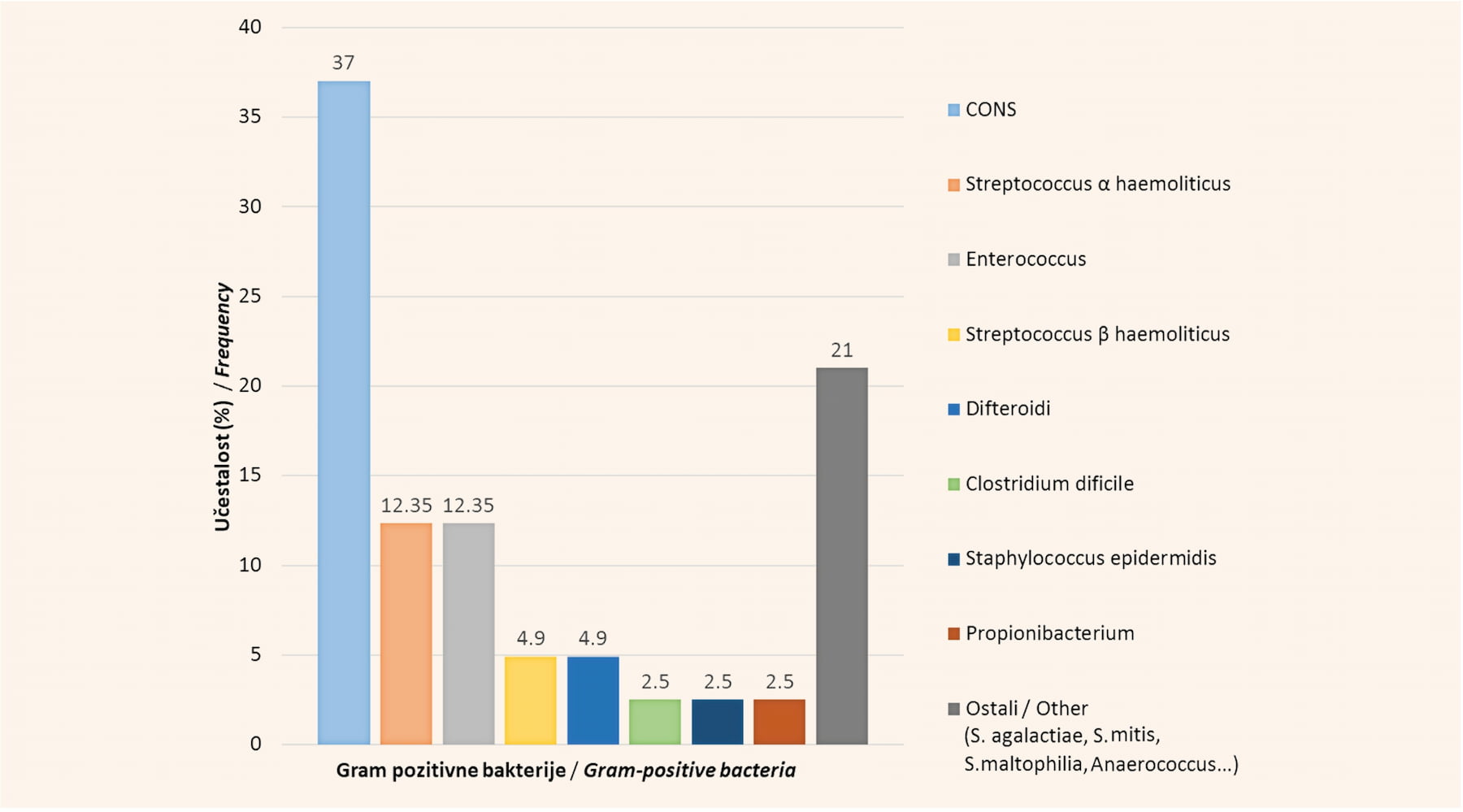
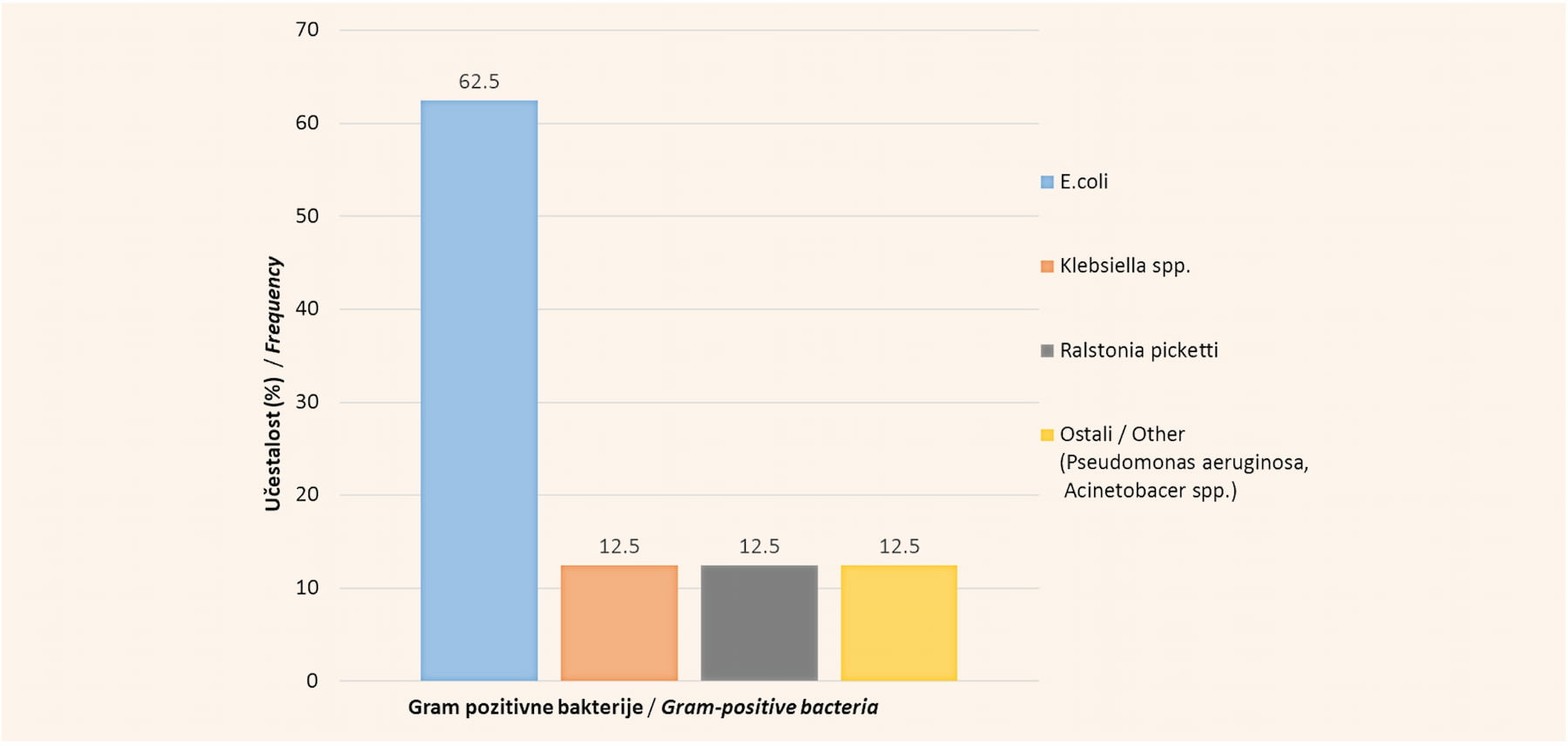
Results: The average survival after AHSCT was 34.5 months. A total of 54 patients (67.5%) had a documented infection. Gram-positive infections were five times more common than gram-negative. In gram-positive isolates, coagulase-negative staphylococcus – CoNS was the most common (37.0%) pathogen, followed by Streptococcus α haemolyticus (12.4%). Among gram-negative isolates, Escherichia coli was present in 62.5% of the cases, while Klebsiellaspp. and Ralstonia pickettii were represented with an equal frequency of 12.5%. Fungal infections were rare (Candida spp., 10.0%). Viral infections were verified in 5 (6.3%) patients (Herpes zoster virus 3.8% and H1N1 2.5%).
Conclusion: The number of CD34+ stem cells in the graft, as well as the rate of hematopoietic reconstitution, i.e., the achievement of ALC500_20, ANC500_11, and PLT20_13, were not statistically significant for the development of infections in the early phase after AHSCT.
INTRODUCTION
Autologous hematopoietic stem cell transplantation (AHSCT) represents the standard approach to the treatment of hematological malignancies. The main indications for AHSCT are multiple myeloma and lymphoma. As of late, this approach has shown a growing potential in the treatment of solid tumors, as well as in the treatment of some neurological and autoimmune diseases [1],[2],[3],[4].
Patient follow-up, in the initial phase following transplantation, has provided data showing that infections are a significant cause of mortality in 2.0% of the cases. Infection is defined as the isolation and detection of pathological microorganisms, associated with symptoms of disease [5]. In adults, it has been detected that gram-positive bacterial infections (GP) outnumber the number of infections caused by gram-negative bacteria (GN), as well as that bacteriaemia occurs in one fifth of the subjects [6],[7],[8],[9]. Invasive fungal infections, usually caused by Candida or Aspergillus, are unusual [10]. However, if they do occur, they are predominant causative agents in the pre-engraftment phase [11]. Duration of neutropenia ≥10 days following AHSCT has been linked to early infections following AHSCT [12].
Apart from data on infections in the first few days following AHSCT, data related to complications during the first year following the procedure should be taken into consideration, as an important implication of long-term survival.
The most common viral infections include the respiratory tract and the skin, and are caused by the reactivation of the Herpes zoster virus. According to Barton and Collis, during the first two years following AHSCT, patients have low risk of a lethal outcome caused by infection [5]. Over the past two decades, significant changes have been made in treatment strategy, with improvements in antiviral and antifungal prophylaxis, which has led to significant changes in the incidence of post-transplant infections. The use of the growth factor with autologous stem cell support has significantly shortened the duration of neutropenia. The understanding of infection etiology and of the frequency of infection is important for planning the appropriate prevention strategy and for empirical treatment of infection.
The aim of this paper was analyzing the frequency of infections in the first 30 days following AHSCT, as well as investigating the possible influence of the number of CD34+ stem cells in the graft and of the engraftment parameters: ALC500_20 (absolute lymphocyte count 0.5x10⁹ /L per day +20), ANC500_11 (absolute neuthrophil count 0.5x10⁹ /L per day +11), and PLT20_13 (platelets 20x109 /L per day +13), on the occurrence of infections.
MATERIALS AND METHODS
In this retrospective cohort study, 80 patients older than 20 years, diagnosed with multiple myeloma (MM), non-Hodgkin lymphoma (NHL), or Hodgkin’s lymphoma (HL), treated at the Clinic for Hematology of the Clinical Center of Serbia (CCS), in the period between July 2006 and December 2017, were examined.
Microbiology methods
After AHSCT, infections were diagnosed by isolating the pathogens from tissue cultures (bacteria, fungi), by proving fungal antigens and antibodies (fungi), and with the technique of polymerase chain reaction (PCR) (viruses). Bacterial infection exists when there is bacteremia and/ or a positive skin or mucosal swab result. Only infections occurring 0 to 30 days following transplantation, in the absence of complications, were included in the analysis. All episodes of elevated body temperature and/or documented infections during neutropenia were recorded. The duration of neutropenia is defined as the number of days during which the neutrophil count is <500/mm3 , i.e., < 0.5x10⁹ /L. According to the Infectious Diseases Society of America (IDSA) guidelines, fever is defined as a single episode of elevated body temperature of >38.3°C, or body temperature of >38.0°C, measured at least twice in the space of 12 hours, and it requires repeated clinical examinations, radiographic imaging of the thorax, and laboratory and microbiological analyses of peripheral venous blood [13]. A positive microbiological culture is considered significant, if accidental contamination of the sample is not noted. The diagnosis of the coagulase-negative staphylococcus (CoNS) entails two positive microbiological cultures. For diagnosing pneumonia, it is necessary to confirm elevated body temperature as well as to have a radiologically confirmed finding of the lungs. Successful response to therapy entails the lowering of body temperature of <37.5°C, with clinically visible signs of improvement within the first 24 hours.
Prophylaxis
All of the patients received antiviral prophylaxis – acyclovir, 2 x 400 mg p.o., 3 weeks, in the post-transplant period. As antifungal prophylaxis, fluconazole was administered, 150 mg p.o. until +30 days (d) following transplantation.
Statistical analysis
Data was processed with the use of the SPSS 17.0 software package. Statistical analysis included the formation of a database, with the grouping and presentation of results in tables, according to the analyzed characteristics of the patients. Descriptive statistical parameters are presented as the arithmetic mean with dispersion measurements (standard deviation – SD, standard error – SE), the median, mode, and the distribution of relative frequencies. The Chi-square test was used for assessing the significance of the difference in the frequencies of the observed markers. Patient overall survival covered the period from the moment of diagnosis until the lethal outcome, or ending with data from December 2017, in living patients. The treatment outcome was considered favorable if complete remission (CR) or partial remission (PR) was achieved. Patient survival in relation to treatment was calculated with the Kaplan-Meier method. The criterion for statistical significance was p < 0.05.
RESULTS
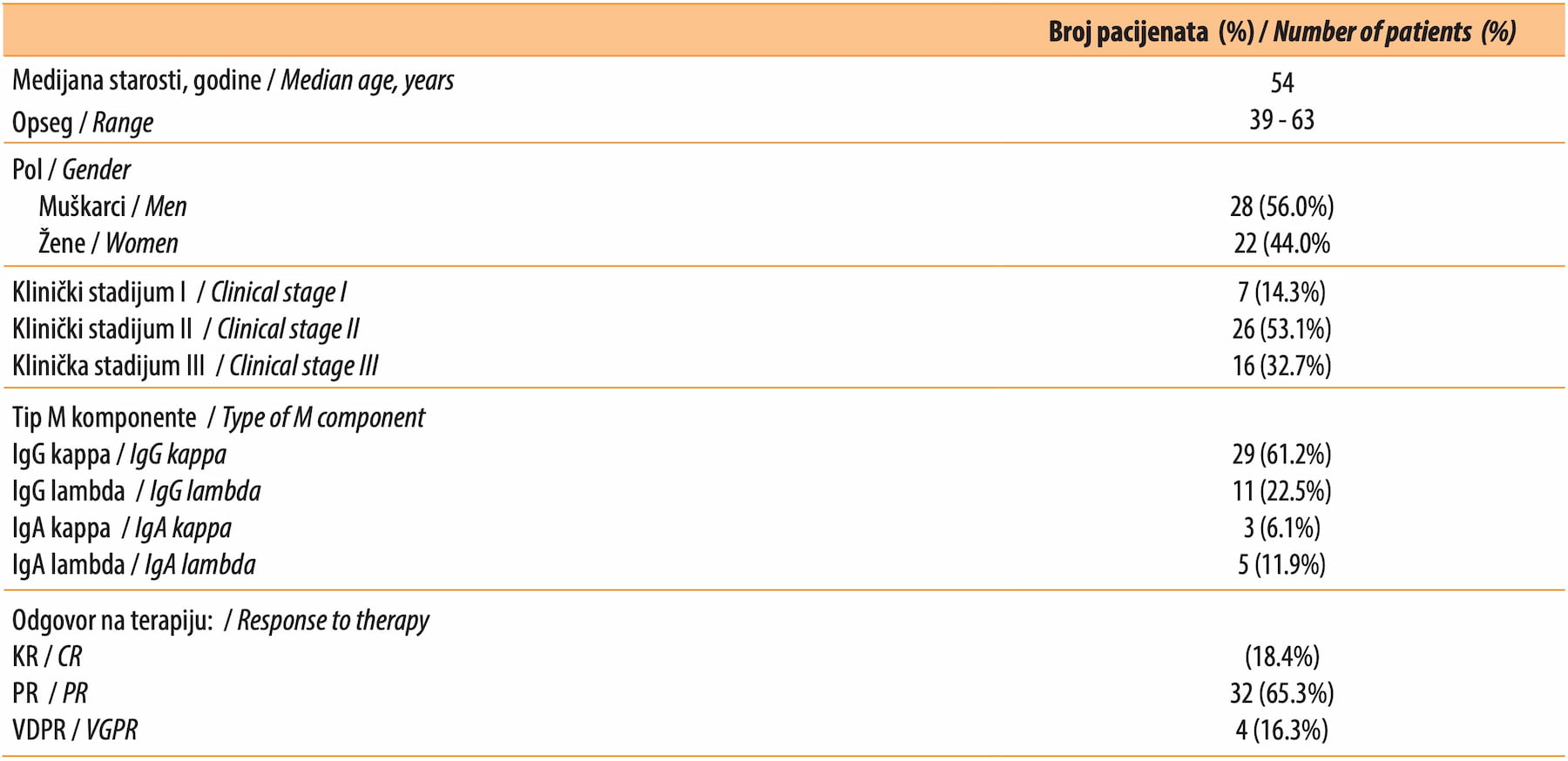
The study included 80 patients, whose average age was 35.4±12.2 years, within the age range of 20 - 62 years. The group of patients with multiple myeloma included 50 people, 28 (56%) men and 22 (44.0%) women. The average age at the time of the diagnosis of MM was 53.6±7 years, while the average age at the time of AHSCT was 55.6±6.8 years. (Table 1).
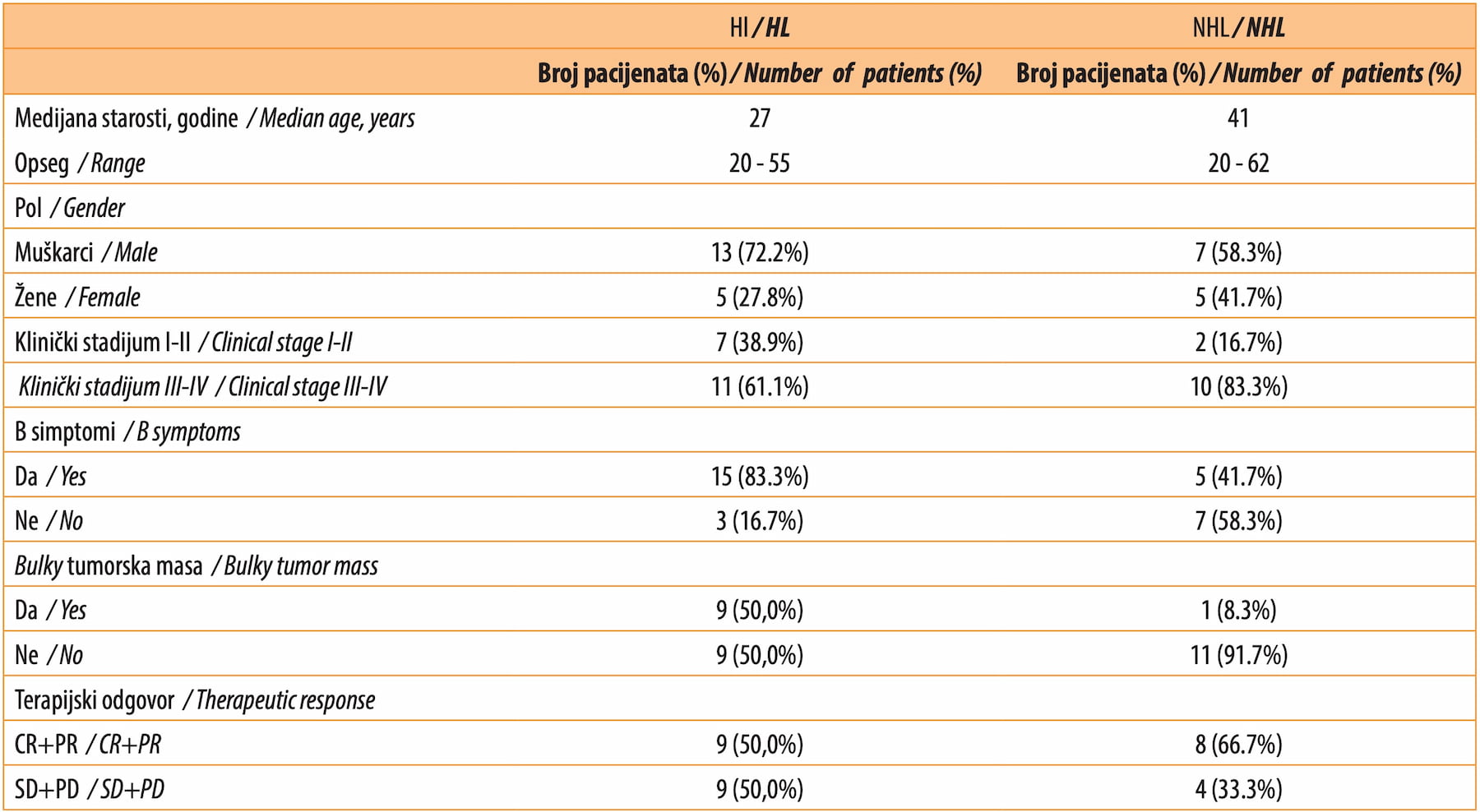
Of the total number of subjects, 30 belonged to the group of lymphoma patients, namely 20 (66.7%) women and 10 (33.3%) men. There were 18 (60,0%) patients suffering from Hodgkin lymphoma, and 12 (40.0%) patients suffering from non-Hodgkin lymphoma. The average age at the time of the diagnosis of lymphoma was 35.4±12.1 years, while the average age at the time of AHSCT was 37.6±11.6 years. At the time of diagnosis, 9 (30.0%) patients were in clinical stage (CS) I and II, while 21 (70.0%) were in CS III-V. The demographic and clinical characteristics of patients with HL and NHL are presented in the tables (Table 2).
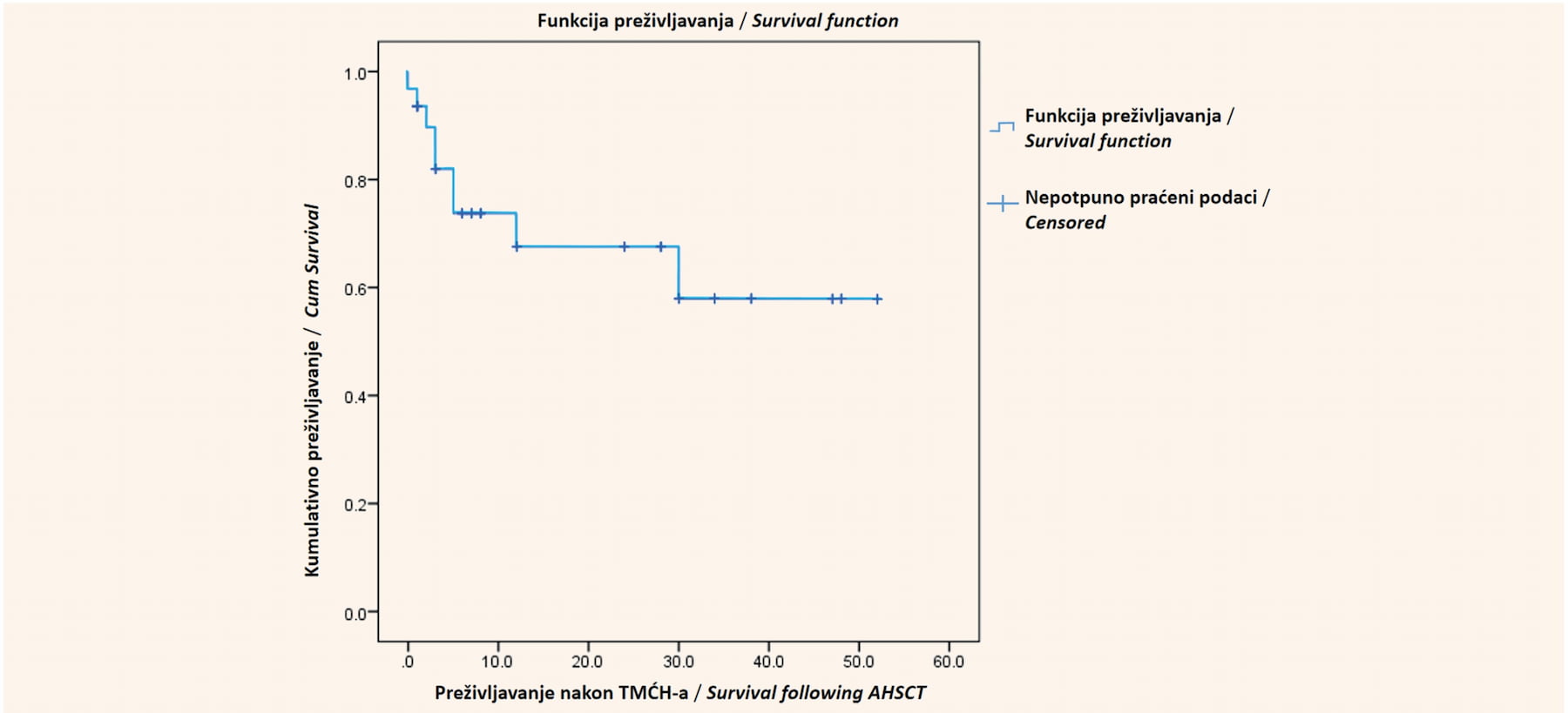
Based on the Kaplan-Meier analysis, the expected length of survival following AHSCT was 34.5 months (Graph 1), Clinical characteristics of patients with multiple myeloma).
Observing the engraftment parameters through the reconstitution of the lymphocyte lineage, i.e., ALC500_20 (absolute lymphocyte count 0,5x10⁹ /L per day +20), we have come to the conclusion that there was no statistically significant link between the said parameter and survival (p = 0.547). Expected survival following AHSCT, in patients who had reached ALC500_20 was 34.7 months, and in those patients who had not reached this value, it was 35.6 months. The influence of reaching ANC500_11 (absolute neutrophil count 0.5x10⁹ /L per day +11) on survival following AHSCT also failed to demonstrate statistical significance (p = 0.550). The reconstitution of the megakaryocyte lineage, i.e., reaching PLT20_13 (platelet count 20x109 /L per day +13) demonstrated no statistically significant impact on post-transplant survival (p = 0.070).
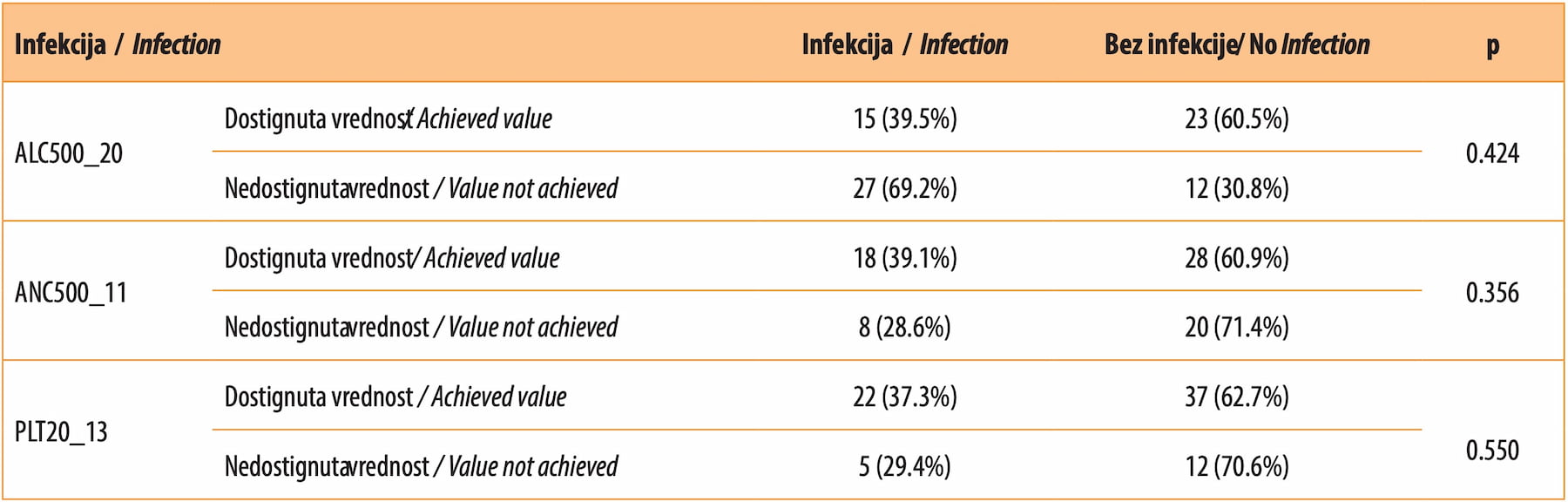
The median value of the number of CD34+ stem cells in the graft was 6.7x10⁶ kg body mass (bm), (range: 2.3 – 15.5x10⁶ /kg bm). No difference was confirmed between the number of CD34+ stem cells present in the graft and the reconstitution of autologous hematopoiesis, i.e., achieving the values of ALC500_20, ANC500_11, and PLT20_13. The link between hematopoiesis reconstitution, i.e., reaching the values ALC500_20, ANC500_11, and PLT20_13 and the development of infection also showed no statistical significance (Table 3).
Regarding the frequency of infections, we obtained data confirming that the dominant pathogens in the infections were bacteria, while fungal and viral infections were rare. Following AHSCT, 29 (36.3%) patients did not have a bacterial infection, in 25 (31.6%) patients, one pathogen was isolated, while in 26 (32.5%) patients ≥2 bacterial pathogens were isolated. Of the total number of positive bacterial cultures, GP bacteria were found in 83.5% cases of infection, which was as much as five time the frequency of GN bacteria. The most common GP pathogens were the coagulase-negative staphylococcus, found in 37.0% of isolates, and Streptococcus α haemoliticus, found in 12.4% of isolates. The remaining important GP pathogens are presented in Graph 2 (Graph 2).
Amongst GN bacteria, the most common agents of infection were Escherichia coli, 62.5%, Klebsiella spp., and Ralstonia pickettii, with the same frequency of occurrence of 12.5% (Graph 3).
Fungal infections occurred in 8 (10.0%) patients, and the only infectious agent isolated was Candida spp. Viral infections occurred less frequently, in only 5 (6.3%) patients, and the Herpes zoster virus(HZV), in 3 (3.8%) cases, and the H1N1 virus, in 2 (2.5%) were isolated. No parasitic infections were registered.
The lethal outcome was registered in 11 patients, of whom 9 patients died due to the development of infection. Six patients died due to bacterial infection, 2 patients suffering from lymphoma died as the result of H1N1 viral infection, due to the development of respiratory insufficiency. Sepsis caused by Candida spp. was the cause of death in one female patient suffering from lymphoma. By comparing the vital status in patients with infection we obtained data on the lethal outcome in 6 (21.4%) persons, while, in the group without infection, the lethal outcome was registered in 5 (10.0%) patients. The Chi-square test showed no statistically significant difference, related to survival, between patients with and without infection (p = 0.164).
DISCUSSION
Our study retrospectively evaluated the development of infections following AHSCT, in 80 adult patients, of whom 50 (62.5%) analyzed patients were suffering from MM while 30 (37.5%) patients had lymphoma.
The prevalence of GP infections is higher than the prevalence of GN infections, in patients with solid tumors, lymphoma, and MM [1],[6],[7],[8],[9]. Bacteriemia occurred in 63.8% of our patients. This value is by ~10,0% lower as compared to the bacteriemia incidence in patients with lymphoma and MM registered in a study by Collin et al. [12]. In their sample, in 63.6% of the patients no pathogen bacterial culture was isolated, in 26.6% of the patients, only one bacterial pathogen was isolated, while the remaining 9.8% of patients had ≥2 bacterial isolates [12]. A low frequency of bacterial infections (21.3%) was described in patients with MM, lymphoma and solid tumors [14].
Coagulase-negative staphylococcus (CoNS) and Streptococcus α haemoliticus were the most common GP pathogens, while E. coli and Klebsiella spp. were the most common causes of bacteriemia in our group of patients, which correlates with the results of other studies [15]. Clostridium difficile is the cause of 10.0% of infections, which is five times more frequent than was the case in our study [5]. Following high-dose chemotherapy and AHSCT, invasive fungal infections are extremely rare in patients and can rarely be proven. All of the patients in our group received antifungal prophylaxis. However, in 8 (10.0%) patients Candida spp. was confirmed with a throat swab, though a positive Candida mannan antigen test was noted in just one patient. In their study, Gilbert et al. state that fungi was registered in the blood in 4.0% of patients who had not used antifungal prophylaxis [16]. Reich et al. described infection with Candida glabrata, resistant to azole antimycotics [17]. Aspergillus flavus was isolated in the lungs of one patient [15]. As to viral infections, HZV infection occurred in 28.0% of the subjects, which is seven times more frequent than was the case with our patients. However, in this study, the average time of reactivation of the virus was 5 months, i.e., in 91.0% of the cases, reactivation occurred in the first year following transplantation [18]. Antiviral prophylaxis with acyclovir has reduced the occurrence of the HSV virus.
There is no statistically significant difference in the occurrence of infection between MM and lymphoma [17]. This information is important as most patients, prior to AHSCT, go through multiple cycles of chemotherapy, which are followed by severe neutropenia lasting >10 days. According to the clinical results reported by Bodey et al., the duration of neutropenia is the main risk factor for the development of infection, independently of the underlying disease [19]. In a study by Mossad et al., a low incidence of febrile complications was registered [20]. On the other hand, some studies have confirmed the occurrence of febrile neutropenia with an incidence of 100% in the post-transplant period [9].
Weaver et al. registered a 1.5% mortality rate, in a group of 1,000 patients who had been subjected to high-dose chemotherapy and AHSCT, which could directly be attributed to infection [21]. In patients with MM, lymphoma, and solid tumors, a decreased number of CD34+ stem cells in the graft has not been connected to an increased risk of infection following transplantation [22]. Due to a small number of CD34+ cells, after autologous transplantation, patients may be at risk of developing similar infections, such as the fatal HSV pneumonia or CMV retinitis, to those occurring in patients after allogenic HSCT, as the result of delayed hematopoietic reconstitution [23].
Our study has several limitations. The population of patients analyzed was heterogenous, and the analysis was performed retrospectively. Only microbiologically confirmed infections were included in the study. Early infections, occurring 0 – 30 days following transplantation were analyzed.
CONCLUSION
In our study, after AHSCT, patients had a low risk of lethal outcome due to infection. The occurrence of infection did not correlate with the number of CD34+ cells infused in the graft. The reconstitution of autologous hematopoiesis, i.e., the number of ALC500_20, ANC500_11, and PLT20_13, did not significantly affect the occurrence of infection. Bacteria were the predominant cause of infection, with GP bacteria being around five times more common than GN bacteria. The most common pathogens from the GP group of bacteria were CoNS and Streptococcus α haemoliticus. The most common GN pathogens were Escherichia coli, Klebsiella spp., and Ralstonia. The incidence of infectious complications following transplantation did not significantly differ between patients with lymphoma and MM patients.
The application of prophylactic therapy has led to a decrease in the occurrence of viral and fungal infections.
Informations

-
Keywords:
-
Received:
-
Revised:
-
Accepted:
-
Online first:
-
DOI:
-
Cite this article:

Milica Miloševic
Community Health Care Center Voždovac, Belgrade, Serbia
32/3 Nikšićka Street, 11000 Belgrade, Serbia
E-mail:
1. Srinivasan A, Wang C, Srivastava DK, Burnette K, Shenep JL, Leung W, et al. Timeline, epidemiology, and risk factors for bacterial, fungal, and viral infections in children and adolescents after allogeneic hematopoietic stem cell transplantation. Biol Blood Marrow Transplant. 2013 Jan;19(1):94-101. doi: 10.1016/j.bbmt.2012.08.012.[CROSSREF]
2. Farge D, Labopin M, Tyndall A, Fassas A, Mancardi GL, Van Laar J, et al. Autologous hematopoietic stem cell transplantation for autoimmune diseases: an observational study on 12 years' experience from the European Group for Blood and Marrow Transplantation Working Party on Autoimmune Diseases. Haematologica. 2010 Feb;95(2):284-92. doi: 10.3324/haematol.2009.013458.[CROSSREF]
3. Burman J, Tolf A, Hägglund H, Askmark H. Autologous haematopoietic stem cell transplantation for neurological diseases. J Neurol Neurosurg Psychiatry. 2018 Feb;89(2):147-55. doi: 10.1136/jnnp-2017-316271.[CROSSREF]
4. Gratwohl A, Passweg J, Baldomero H, Hermans J. Blood and marrow transplantation activity in Europe 1997. European Group for Blood and Marrow Transplantation (EBMT). Bone Marrow Transplant. 1999 Aug;24(3):231-45. doi: 10.1038/sj.bmt.1701866.[CROSSREF]
5. Barton T, Collis T, Stadtmauer E, Schuster M. Infectious complications the year after autologous bone marrow transplantation or peripheral stem cell transplantation for treatment of breast cancer. Clin Infect Dis. 2001 Feb 1;32(3):391-5. doi: 10.1086/318491.[CROSSREF]
6. Auner HW, Zebisch A, Ofner P, Sill H, Linkesch W, Krause R. Evaluation of potential risk factors for early infectious complications after autologous peripheral blood stem cell transplantation in patients with lymphoproliferative diseases. Ann Hematol. 2005 Aug;84(8):532-7. doi: 10.1007/s00277-005-1025-5.[CROSSREF]
7. Kolbe K, Domkin D, Derigs HG, Bhakdi S, Huber C, Aulitzky WE. Infectious complications during neutropenia subsequent to peripheral blood stem cell transplantation. Bone Marrow Transplant. 1997 Jan;19(2):143-7. doi: 10.1038/sj.bmt.1700621.[CROSSREF]
8. Salazar R, Solá C, Maroto P, Tabernero JM, Brunet J, Verger G, et al. Infectious complications in 126 patients treated with high-dose chemotherapy and autologous peripheral blood stem cell transplantation. Bone Marrow Transplant. 1999 Jan;23(1):27-33. doi: 10.1038/sj.bmt.1701520.[CROSSREF]
9. Nosanchuk JD, Sepkowitz KA, Pearse RN, White MH, Nimer SD, Armstrong D. Infectious complications of autologous bone marrow and peripheral stem cell transplantation for refractory leukemia and lymphoma. Bone Marrow Transplant. 1996 Aug;18(2):355-9.
10. Pagano L, Caira M, Nosari A, Van Lint MT, Candoni A, Offidani M, et al. Fungal infections in recipients of hematopoietic stem cell transplants: results of the SEIFEM B-2004 study--Sorveglianza Epidemiologica Infezioni Fungine Nelle Emopatie Maligne. Clin Infect Dis. 2007 Nov 1;45(9):1161-70. doi: 10.1086/522189.[CROSSREF]
11. Kontoyiannis DP, Marr KA, Park BJ, Alexander BD, Anaissie EJ, Walsh TJ, et al. Prospective surveillance for invasive fungal infections in hematopoietic stem cell transplant recipients, 2001-2006: overview of the Transplant-Associated Infection Surveillance Network (TRANSNET) Database. Clin Infect Dis. 2010 Apr 15;50(8):1091-100. doi: 10.1086/651263.[CROSSREF]
12. Collin BA, Leather HL, Wingard JR, Ramphal R. Evolution, incidence, and susceptibility of bacterial bloodstream isolates from 519 bone marrow transplant patients. Clin Infect Dis. 2001 Oct 1;33(7):947-53. doi: 10.1086/322604.[CROSSREF]
13. Hughes WT, Armstrong D, Bodey GP, Brown AE, Edwards JE, Feld R, et al. 1997 guidelines for the use of antimicrobial agents in neutropenic patients with unexplained fever. Infectious Diseases Society of America. Clin Infect Dis. 1997 Sep;25(3):551-73. doi: 10.1086/513764.[CROSSREF]
14. Mossad SB, Longworth DL, Goormastic M, Serkey JM, Keys TF, Bolwell BJ. Early infectious complications in autologous bone marrow transplantation: a review of 219 patients. Bone Marrow Transplant. 1996 Aug;18(2):265-71.
15. Srinivasan A, McLaughlin L, Wang C, Srivastava DK, Shook DR, Leung W, et al. Early infections after autologous hematopoietic stem cell transplantation in children and adolescents: the St. Jude experience. Transpl Infect Dis. 2014 Feb;16(1):90-7. doi: 10.1111/tid.12165.[CROSSREF]
16. Gilbert C, Meisenberg B, Vredenburgh J, Ross M, Hussein A, Perfect J, et al. Sequential prophylactic oral and empiric once-daily parenteral antibiotics for neutropenia and fever after high-dose chemotherapy and autologous bone marrow support. J Clin Oncol. 1994 May;12(5):1005-11. doi: 10.1200/JCO.1994.12.5.1005.[CROSSREF]
17. Reich G, Mapara MY, Reichardt P, Dörken B, Maschmeyer G. Infectious complications after high-dose chemotherapy and autologous stem cell transplantation: comparison between patients with lymphoma or multiple myeloma and patients with solid tumors. Bone Marrow Transplant. 2001 Mar;27(5):525-9. doi: 10.1038/sj.bmt.1702822.[CROSSREF]
18. Schuchter LM, Wingard JR, Piantadosi S, Burns WH, Santos GW, Saral R. Herpes zoster infection after autologous bone marrow transplantation. Blood. 1989 Sep;74(4):1424-7.
19. Bodey GP, Buckley M, Sathe YS, Freireich EJ. Quantitative relationships between circulating leukocytes and infection in patients with acute leukemia. Ann Intern Med. 1966 Feb;64(2):328-40. doi: 10.7326/0003-4819-64-2-328.[CROSSREF]
20. Mossad SB, Longworth DL, Goormastic M, Serkey JM, Keys TF, Bolwell BJ. Early infectious complications in autologous bone marrow transplantation: a review of 219 patients. Bone Marrow Transplant. 1996 Aug;18(2):265-71.
21. Weaver CH, Schwartzberg LS, Hainsworth J, Greco FA, Li W, Buckner CD, et al. Treatment-related mortality in 1000 consecutive patients receiving highdose chemotherapy and peripheral blood progenitor cell transplantation in community cancer centers. Bone Marrow Transplant. 1997 Apr;19(7):671-8. doi: 10.1038/sj.bmt.1700713.[CROSSREF]
22. Frère P, Pereira M, Fillet G, Beguin Y. Infections after CD34-selected or unmanipulated autologous hematopoietic stem cell transplantation. Eur J Haematol. 2006 Feb;76(2):102-8. doi: 10.1111/j.1600-0609.2005.00569.x.[CROSSREF]
23. Miyamoto T, Gondo H, Miyoshi Y, Shigematsu H, Minematsu T, Takenaka K, et al. Early viral complications following CD34-selected autologous peripheral blood stem cell transplantation for non-Hodgkin's lymphoma. Br J Haematol. 1998 Feb;100(2):348-50. doi: 10.1046/j.1365-2141.1998.00572.x.[CROSSREF]
- Table 1. Clinical characteristics of patients with multiple myeloma
- Table 2. Clinical features of patients with Hodgkin's lymphoma (HL) and nonHodgkin's lymphoma (NHL)
- Graph 1. Overall survival following AHSCT
- Table 3. Influence of ALC500_20, ANC500_11, PLT20_13 on the occurrence of infection
- Graph 2. Frequency of gram-positive bacteria as the cause of infection in autologous transplant patients up to d + 30
- Graph 3. Frequency of gram-negative bacteria as the cause of infection in autologous transplant patients, up to d + 30