


A stem cell overview – from evolving hemobiological concepts to (auto)grafting in clinical practice
- Department of Medical Sciences, Serbian Academy of Sciences and Arts
- Dedinje Cardiovascular Institute, Belgrade, Serbia
- Department of Computer and Electrical Engineering and Computer Science, Florida Atlantic University, Boca Raton, USA
- Department of Hematology with Oncohematology, Clinic of Internal Medicine, Clinical-Hospital Center "Bezanijska kosa", Belgrade, Serbia
- Faculty of Medicine, University of Belgrade, Serbia
- Clinic for Hematology, University Clinical Center of Serbia, Belgrade, Serbia
ABSTRACT
Conventional hematopoietic stem cell transplantation is a well-known treatment method for numerous acquired and congenital hematopoietic disorders, disorders of the immune system, as well as certain metabolic disorders. Stem cells (SCs) can be defined as cells capable of self-renewal with a high proliferative capacity and the potential to differentiate into functionally competent mature cells. Stem cells can be divided into embryonic SCs (ESCs) and tissue-specific or adult SCs – such as bone marrow (BM) stem cells, peripheral blood (PB) stem cells, and SCs derived from umbilical cord blood (UCB), as well as other non-hematopoietic or somatic SCs. SCs in adults are characteristically considered to be restricted in their regenerative and differentiative potential, while embryonic stem cells are ‘true’ totipotent/pluripotent cells, due to their ability to develop into endoderm, ectoderm, or mesoderm – all three embryonic tissue types in the human body. They are the most promising, but also the most controversial type of potentially transplantable SCs. Immature hematopoietic SCs have the potential of differentiating, not only into all blood cells, but also into some somatic cell types (SC plasticity). In different clinical settings, the transplantation of immature stem cells leads to the repopulation of recipient bone marrow, with subsequent complete, stable, and long-term reconstitution of hematopoiesis. Given that immature stem cells are also capable of homing to different tissues, autologous stem cell implantation into a damaged and/or ischemic area induces their colonizing and consecutive transdifferentiating into cell lineages of the host organ, including neovascularization. Thus, they are clinically applicable in the field of regenerative medicine for the treatment of myocardial, brain, vascular, liver, pancreatic, and other tissue damage. The purpose of this overview is to recapitulate the key developments in the rapidly evolving area of stem cell research, as well as to review the use of SCs in conventional transplantations and in regenerative medicine. Additionally, a brief critical evaluation of our own stem cell research will be summarized.
INTRODUCTION
Multicyclic and permanent cytopoiesis is the process of cell development or expansion of a large number of progenitors and precursors, as well as mature cells, from a small number of undifferentiated (immature) stem cells (SCs), in vivo or ex vivo [1],[2],[3]. Generally, SCs guarantee steady-state homeostasis in every tissue-generating system. It has been believed for a long time that only embryonic SCs (ESCs) are totipotent/ pluripotent, since SC plasticity is essential in early development. Thus, for a long time, cellular totipotency/ pluripotency was considered a property of only specific ESCs. However, the most primitive adult SC compartments also have comparatively ‘limitless’ self-renewal potential, as well as the ability to ‘switch’ into other cell lineages (inter-systemic SC plasticity) [2],[3],[4],[5],[6].
During cytopoiesis, a complex system of interactive substances, cytokines, growth factors, and inhibitors is regulated and balanced. A partial or complete loss of balanced control can lead to uncontrolled cell growth or death. Over time, i.e., with ageing, SC activity leads to gradual deterioration of the regenerative potential of cells and tissues and the decline of organ repair/renewal capacity, manifesting as disease and tissue defects, including cancer [2],[3],[4].
Hematopoiesis is a dynamic hemobiological process, wherein a large quantity of all the types of blood cells is produced from very primitive hematopoietic SCs (HSCs). HCSs are distributed to different hematopoietic compartments throughout the body, during fetal development and adult life. The bone marrow (BM) of adults, as a primary location, has a high potential of differentiation into pluripotent and committed progenitors, which finally transform into various mature blood cells, necessary for blood turnover and the fight against infections [7],[8],[9],[10],[11],[12],[13],[14],[15].
Intrinsic genetic pathways control hematopoiesis. Interactive extrinsic signals from the extracellular matrix (ECM) and other signaling molecular pathways, as well as the stromal cell microenvironment are regulated by basic genetic pathways [2],[11],[12],[13],[14]. The role of stromal cells, including macrophages, fibroblasts, dendritic, endothelial, and other cells, is to stimulate SCs. Namely, these stromal cells stimulate SCs by producing specific growth factors, such as the Flt3-ligand, c-kit-ligand or SC-factor, as well as interleukins, granulocyte-macrophage colony-stimulating factor and granulocyte colony-stimulating factor (GM-CSF and G-CSF). In addition to secreting cytokines, stromal cells regulate the adhesion of SC molecules and allow them to stay in the BM or migrate to the area where the respective cell type is needed [14],[15],[16],[17],[18],[19].
Populations of HSCs, also named CD34+ cells, express the CD34 antigen. Namely, CD34 is the name given to a transmembrane glycoprotein present on the surface of HSCs and some stromal cells. Adult cells expressing the CD34 antigen, obtained from BM or peripheral blood (PB), stimulate complete and long-term repopulation of the recipient's bone marrow (following engraftment), with subsequent hematopoietic reconstitution [16],[17],[18],[19],[20],[21].
Traditionally, SC transplantation involves intensive radiochemotherapy (myeloablation) coupled with infusion of collected cells, which is done in order to achieve the eradication of the underlying disease and/ or eliminate certain disorders, as well as improve the clinical status of the patient. Patients who are ineligible for high-dose radio-chemotherapy because of their age or comorbidity, may be offered a similar procedure with reduced-intensity conditioning (RIC) [1],[2],[3],[8],[9]. In order to be administered immediately after harvesting or after long-term storage in the frozen state – cryopreservation [2],[3],[4],[5], SCs can be collected in three ways [8],[17],[18],[19],[20],[21],[22]:
a) multiple aspirations from BM;
b) harvesting from PB after mobilization with chemotherapy and/or growth factors (rHuG-CSF);
c) processing from umbilical cord blood (UCB).
Hematological diseases (mostly malignant) and certain benign diseases (severe combined immunodeficiency – SCID, severe aplastic anemia, and different autoimmune or metabolic disorders) have thus far been the most common indication for SC transplantation. Nowadays, SC transplants derived from PB and BM are more common in adult allogeneic or autologous transplantation. UCB-derived SC transplantations have achieved encouraging results in the pediatric setting, mainly when a matched unrelated SC donor is not available [2],[3],[4],[8].
SC plasticity is a phenomenon of inter-systemic cell plasticity, which reflects the wide-ranging phenotypic potential of very primitive SCs, capable of homing to different tissues during the implantation of autologous SCs into the damaged area, with subsequent transdifferentiation into cell lineages of the host tissue/organ and the development of therapeutic micro-angiogenesis i.e., neovascularization stimulated by angiogenesis growth factors [11],[12],[13],[14],[15],[23],[24],[25].
Both the intensification of SC transplantations and the introduction of innovative cell-mediated restorative or regenerative therapy, increase the need for SCs and for practical operating procedures and manipulation methods in relation to these cells. Therefore, this paper summarizes the SC hemobiology and the practical aspects of the optimization of cell harvesting, purification, and clinical use.
EMBRYONIC VERSUS ADULT STEM CELL COMPARTMENTS
SC compartments include cell populations characteristic of both ESCs and adult tissue. Generally, only ESCs are ‘true’ totipotent/pluripotent cells, because the phenomenon of inter-systemic SC plasticity during early development of living organisms is critical. It is the ability of ESCs to develop into all three embryonic tissue types. Conversely, SCs in adults are characteristically considered to be restricted, in their regenerative as well as their differentiative potential, to tissues where they reside [6]. Therefore, hepatocytes can proliferate (and more or less differentiate) following partial hepatectomy; HSCs can reconstitute blood cells after BM damage (due to chemotherapy and/or irradiation); keratinocyte progenitors can participate in wound healing; and certain ‘satellite’ cells can repair injured skeletal muscles. In addition to their role in the regeneration of damaged tissues, SCs have an important function in maintaining tissue homeostasis. For example, SCs have a specific role in maintaining tissue homeostasis throughout the entire life of an individual [2],[3],[4],[5],[6].
Embryonic stem cells
As stated above, only ESCs are valid or ‘authentic’ totipotent/pluripotent SCs, due to their potential to differentiate into any of the cell lineages, i.e., their ability to mature into any of the three tissue types/germ layers in the human body – the endoderm, ectoderm, or mesoderm. Conversely, SCs in adults are considered limited in their developmental and regenerative potential, typically to the tissues where they reside, despite the current findings that some adult SCs have SC plasticity, similar to the biological potential of ESCs. Namely, very primitive BM-derived cells, such as very small embryonic-like SCs (VSELs), are also able to develop into a variety of somatic cells, due to the aforementioned SC plasticity [2],[26],[27],[28],[29],[30],[31],[32],[33],[34].
The age of innovation in ESC physiology began at the end of the last century, with the separation of cells, which possess totipotency (the potential to differentiate into any of the cell lineages in the human body), from human blastocysts and fetal tissue. Subsequently, researchers described the important hemobiological and molecular characteristics of these cells and improved methods for their cultivation [2],[3],[4],[5],[6].
Due to the highest degree of cell plasticity, the zygote is considered to be the ‘authentic’ totipotent/ pluripotent SC. By the end of the fifth or sixth day of division, it further develops from the older cells of the blastocyte that initiate the expansion of the coding sequence for specific functions, which makes it possible to isolate ESCs. Accumulation of fetal SCs in the fetal liver makes them hypothetically suitable to be extracted from the blastocyte and to be cultured ex vivo into SCs. After their transplantation into an individual, the possibility of rejection is reduced, since these SCs have little or no immunity-triggering proteins on their cell surface [2],[3],[5].
Despite strong ethical arguments that ESC research, and especially potential clinical use, border on negligent manslaughter [3],[5], ESCs are the most promising potentially transplantable SCs. Namely, basic research and some preclinical investigations with ESCs have proven to be important for the development of new cell-replacement methods and strategies to restore damaged tissues and re-establish critical functions of the diseased human body [2],[26],[27],[28],[29],[30],[31],[32],[33],[34].
Adult stem cells – concept and functionality
Adult SCs identified in various tissues/organs (BM, PB, dental pulp, adipose tissue, fetal liver, blood vessels, brain, heart, skeletal muscle, skin, pancreas, and the gastrointestinal tract) are usually more mature than ESCs [2],[3],[4],[5],[6]. Previously, adult SCs were considered ‘incapable’ of producing cell lineages of the three abovementioned tissue types (endoderm, ectoderm and mesoderm) because they could not be ‘rejuvenated’ (in the earlier cell phase) by the process of cell dedifferentiation – accompanied by transdifferentiation. Adult SCs are capable of self-renewal, but divide more frequently to produce progenitors and precursors, as well as mature cells of specific cell lineages.
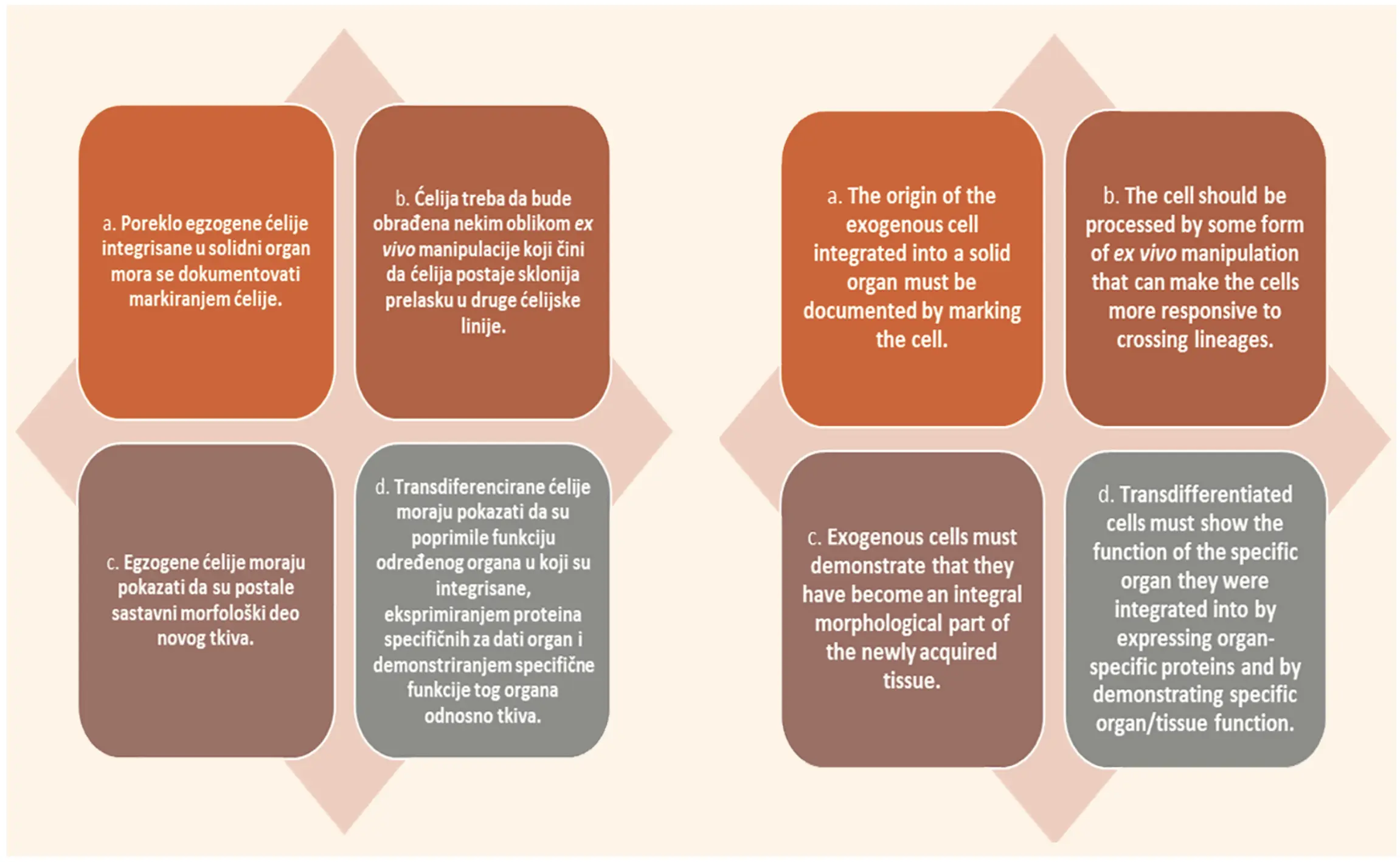
Figure 1 shows that only the combination of several conditions can be used to confirm that some SCs, derived from BM, have in fact transformed into somatic cells (cells specific to solid organs) [2],[4],[23],[24],[25].
HSCs are undoubtedly the most thoroughly understood specific type of SCs in adults which have the potential to reconstitute all blood cells. Both identified classes of HSCs, short-term HSCs (ST-HSCs) and long-term HSCs (LT-HSCs), can reconstitute the blood of experimental animals for one to two months, and more than 6 months, respectively [2],[5]. After homing, BM-derived SCs can undergo a multistep process involving migration, conversion to a new cellular phenotype, and expression of functions characteristic of the tissue where they reside [4],[23],[24].
BM-derived SCs are a heterogeneous population of cells with morphological and functional characteristics of tissue committed SCs (TCSCs). They may be in charge of healing minor tissue damage; their number among mononuclear cells (MNCs) is very low – approximately one cell per 1,000 to 10,000 total nucleated cells (TNCs) in BM [2],[19]. However, in severe injuries (heart infarction or stroke), they have the possibility to express their full therapeutic potential. The migration of these cells to the damaged areas depends on the ‘homing signal’, which might be inefficient in the presence of cytokines or proteolytic enzymes released from injured leukocytes and/or macrophages [23]. Nonetheless, these cells while ‘captured’ or ‘encapsulated’ in BM might be in a particular ‘latent stage’ – not fully functional, and in need of the appropriate activation signals [2],[3],[4],[23].
Mesenchymal stem cells/stromal cells
Compared to ESCs and induced pluripotent SCs (iPSCs), mesenchymal stem cells/stromal cells (MSCs) have a high-quality therapeutic potential and safety profile [2],[3],[4],[5],[6]. The molecular and functional characteristics of the dental pulp make it an important source of dental pulp SCs, including adult MSCs [2],[34],[35],[36],[37],[38]. MSCs of ectomesenchymal origin located in the perivascular niche are considered highly proliferative, multipotent, and similar to BM-derived SCs. Other dental pulp SCs (DPSCs), stem cells from human exfoliated deciduous teeth (SHED), and immature dental pulp cells (IDPC) can transdifferentiate into various cells, such as odontoblasts, chondrocytes, osteoblasts, adipocytes, neuron/glial cells, smooth muscle cells, skeletal muscle cells, and other cells. Future research should provide us with complex data on many human tissues, in addition to DPSCs, as potential sources of SCs responsible for tissue development/regeneration.
The concept of very small embryonic-like stem cells (VSELs)
A specific type of cells, isolated initially from BM, look like ESCs and appear to mimic their ability to transdifferentiate into other cell types. Furthermore, these cells can transdifferentiate into novel cell lineages from more than one germ layer – into nerve, heart, pancreatic and cells of other tissues/organs. Ratajczak et al. were the first to identify VSELs, a special type of SC that acts differently than other SCs derived from adult BM [26],[27],[28],[29],[30]. Although VSELs have basically very similar or the same ultrastructure and protein markers as ESCs [2],[27],[28],[29], they are considered ‘contaminants’, which, in fact, contribute to a positive regenerative clinical outcome [26],[27],[28],[29],[30],[31],[32]. Finally, there are data confirming that VSELs regenerate, whereas MSCs rejuvenate diseased reproductive tissues [33]. However, the authors of such studies supposed that MSC implantation may simply release growth factors or specific cytokines critical for tissue-resident SCs to differentiate into sperm cells or ova [33]. This is an interesting concept in regenerative medicine, which should be seriously considered in future research and preclinical studies on humans.
The concept and application of induced pluripotent stem cells (iPSCs)
An incredible contribution to SC research and application came from the Nobel prize awarded work of John Gurdon and ShinyaYamanaka (2012), which has shown that, with the use of crucial molecules, mature adult cells/fibroblasts can dedifferentiate into pluripotent SCs and transdifferentiate or convert into different mature cellular lines (e.g., cardiac muscle cells) [39]. Although limited in pluripotency and capable of inducing malignant cells, these iPSCs are a potential source with which clinicians can circumvent certain source-related problems. The future will show their implications and impact on SC therapy.
STEM CELL CATEGORY AND INFLUENCE
The traditional primary cell source for SC transplantation is the bone marrow. Approximately 1 – 3% of TNCs in BM express the CD34 antigen. The CD34+ cells have been found in PB, but in an extremely small number in steady-state hematopoiesis – only 0.01 – 0.05% of TNCs [2],[19].
For transplantation, the SC quantity is a critical issue. Different populations of TNCs and MNCs (including SCs) can be obtained by multiple aspirations from BM, harvesting from PB after mobilization (chemotherapy and/or rHuG-CSF), and processing from UCB. These cells can be clinically applied (transplanted) immediately after collection or cryopreservation [1],[2],[3],[4],[10].
When the donor is anesthetized, cells can be collected by multiple aspirations from the posterior (seldom anterior) iliac crests, using the maximal target aspirate volume of up to 15 ml/kg of body mass (kgbm) of the donor. Marrow aspirate must be filtered to remove bone or lipid particles and cell aggregates. Citrate solution and heparin diluted in saline (5,000 IU/500 ml) are used for anticoagulation [2],[3],[4],[5].
For ABO incompatible SC transplantations, red blood cell (RBC) count and plasma quantity reduction is required (by aspirate processing). Depletion of T-cells is achieved by ex vivo purging (positive or negative immune-magnetic cell selection). Procedures of processing and purging SCs enable the reduction of RBC total quantity by 90% as well as T-cell depletion by 3 – 4 Log10 [2],[3],[4],[5].
Nowadays, the number of patients treated with PB-derived SCs is constantly growing, and PB-derived SCs are used for about 80% of allogeneic and practically for all autologous transplants. The characteristics of SC transplantations are the following [2],[3],[4],[5],[19]:
a) minimally invasive cell harvesting method and absence of general anesthesia risks;
b) small harvesting volume (250 ml) with a better yield of CD34+;
c) high engraftment rate (rapid hematopoietic reconstruction) and low transplant-related morbidity (TRM).
Regarding the timing of stem cell harvesting, the CD34+ cell count in the circulation is maximal, i.e., it peaks on the 5th day of rHuG-CSF administration (5 – 10 μg/kgbm per day for allogeneic donors). However, the optimal timing of autologous SC harvesting is more complex, and these patients receive a higher rHuG-CSF dose (12 – 16 μg/kgbm or more, daily) combined with chemotherapy [2],[3],[4],[5]. It is important that the count of circulating CD34+ cells should correlate with a high CD34+ yield in the graft. It is estimated that when the number of CD34+ cells in PB is higher than 40/μl, the possibility of obtaining CD34+ ≥ 2.5x10⁶ per kgbm in the recipient is 60%, after performing one large-volume leukapheresis (LVL) [2],[3],[4],[5],[21].
An innovative harvesting protocol uses plerixafor (mozobil) to obtain a sufficient SC quantity from ‘poor-mobilizers’. The stromal derived factor 1 (SDF-1) retains SCs in the BM due to its physiological interaction with chemokine receptor CXCR. Plerixafor is a potent antagonist of the alpha chemokine receptor CXCR4 as it effectively inhibits CXCR4 – SDF-1 interaction. There are data on an improved mobilizing regimen which uses plerixafor with rHuG-CSF on account of a higher immature SC count in the circulation and a high CD34+ yield in the graft [2],[3],[4],[20]. A successful transplantation can be expected when the target: CD34+ cells ≥ 2–4x10⁶ /kgbm of the recipient, is achieved. Our preclinical investigation has confirmed that the relative frequency of the very primitive SC subset (CD34+/CD90+) in circulation could be a practical and potentially objective mobilization predictive factor for optimized timing of cell harvesting and a predictor of the harvest quality [1],[2],[3],[4],[5],[20].
A possibility ≤ 30% (for related donors) and ≤ 85% (for unrelated donors) of finding an adult allogeneic donor, indicates limited donor availability [2],[3],[4],[5],[18]. In the previous decades, UCB has been used as a viable alternative source of 1HLA-typed (matching) SCs for allogeneic transplantation [2],[3],[4],[5],[17].
Neonatal SCs are obtained from UCB, immediately after birth, by a painless and non-invasive method of collection. These cells are less mature than those in BM. The ‘naïve’ nature of UCB lymphocytes allows the use of partially HLA-mismatched SC grafts without an increased risk of severe graft versus host disease (GvHD), as compared to BM transplantation from a completely matched unrelated donor [2],[3],[4],[5],[17]. Due to a limited number of SCs, the UCB is a cell source accepted for pediatric patients and patients for whom a matched unrelated SC donor is unavailable. Unfortunately, children weighing ≥ 45 kgbm have a higher risk of graft failure [2],[3],[4],[5],[17].
More recently, SC transplantation from haploidentical donors for the treatment of patients who do not have HLA-matched donors has continued to increase [40],[41].
CLINICAL PRACTICE: STEM CELL TRANSPLANTATIONS VERSUS REGENERATIVE MEDICINE
The standard treatment for hematological malignancies and certain benign disorders is the infusion of allogeneic or autologous SCs, collected for the hematopoietic and clinical recovery of patients after high-dose radio-chemotherapy. A similar procedure with RIC may be offered to patients who are ineligible for high dose conditioning due to age or comorbidity. The idea of treating immune-mediated diseases, such as multiple sclerosis and immune-mediated enteropathy, by using SC transplants, is based on the principle that immunoablative treatment can destroy the patient’s anti-self lymphocytes [2],[3],[4],[5].
Table 1 presents the most common indications for SC transplantation, such as hematological diseases and certain immune-mediated disorders [1],[2],[3],[4],[5],[11],[12],[13],[14],[15],[18],[19],[20],[21],[22].
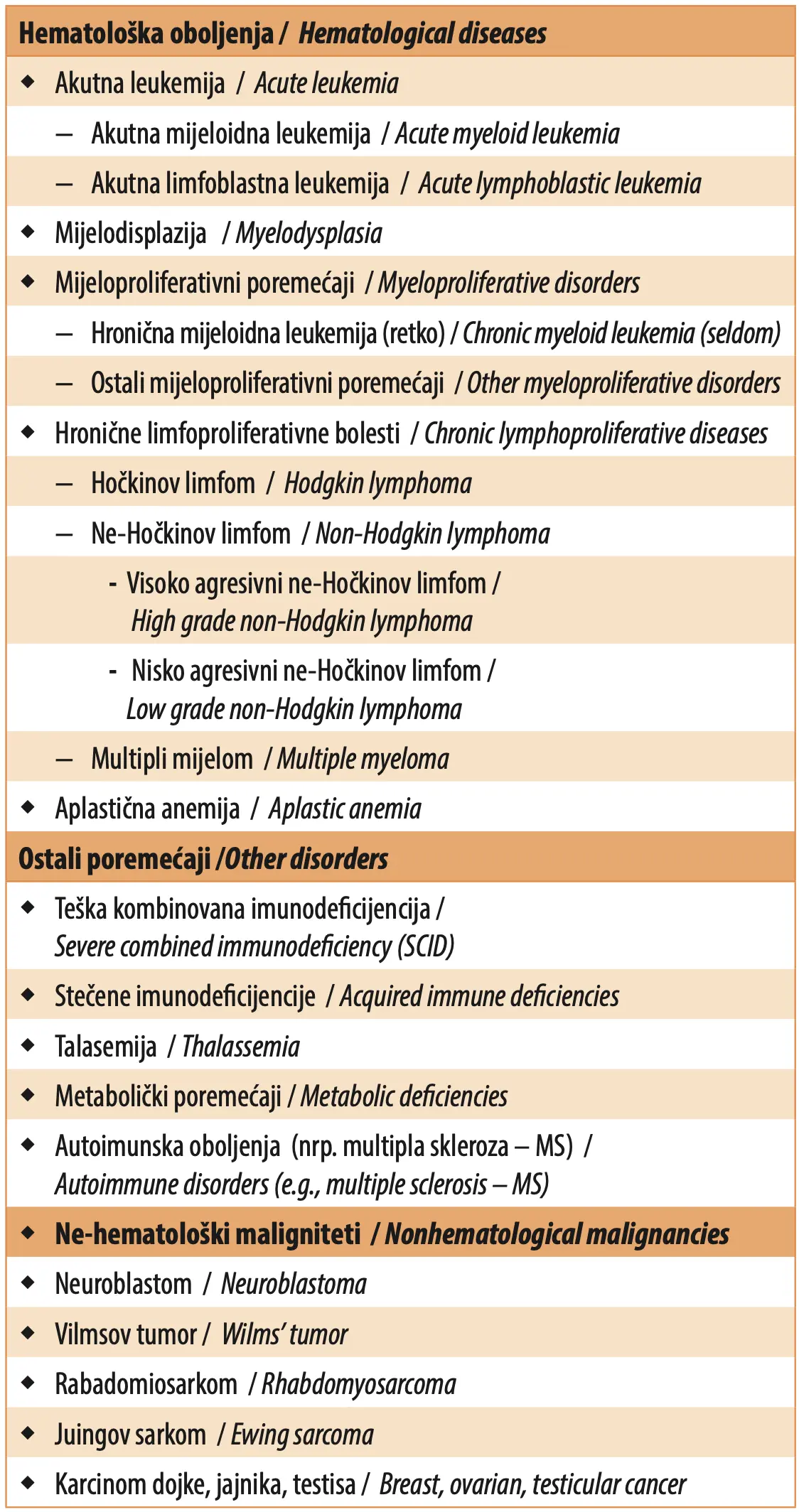
In our Center, we use SC transplantations to treat patients with acute leukemia (lymphoblastic and non-lymphoblastic), chronic myeloid leukemia, multiple myeloma, Hodgkin and non-Hodgkin lymphoma, as well as patients with breast and ovarian cancer, extragonadal non-seminal germ cell tumors, severe aplastic anemia, and severe multiple sclerosis [2],[3],[4],[5],[20],[21],[22].
However, specific clinical aspects of SC transplantation in the treatment of various hemato-oncological and other disorders, such as optimal transplantation timing, therapeutic efficacy, and complications, are not described and discussed in this paper in detail. In brief, the efficacy of SC transplantations depends on the type of disease, its stage, its sensitivity to chemotherapy, the patient’s age, and their general health status, as well as the degree of HLA-matching [2],[3],[4],[20],[21],[22].
The well-known beneficial effects of allogeneic SC transplantation in hemato-oncology have only recently been applied in designing a system that separates the positive effects of graft versus leukemia (GvL) from the negative effects of graft versus host disease (GvHD). In addition to the already known favorable results in the treatment of patients with multiple myeloma and leukemia [2],[42], we have also found donor-specific lymphocyte infusion (DLI) to be effective in patients with Philadelphia chromosome-positive CML (relapsed after SC transplantation), and we have introduced an original in vitro test, the so called ‘Test of Mixed Progenitors’, to predict the clinical outcome of DLI treatment [2],[5],[42]. Although TRM and mortality have been radically reduced, SC transplantations can involve a number of complications, including the most common ones – engrafting failure, viral or opportunistic infections, and acute or chronic GvHD [1],[2],[3],[4],[5].
In the field of regenerative medicine, intersystemic SC plasticity provides a rationale for the use of immature SCs in the treatment of patients with damage to the heart, liver, pancreas, and other organs/tissues. Findings from clinical studies indicate transdifferentiation in cardiomyocytes after the administration and homing of SCs in the damaged or ischemic region of the myocardium. BM was the most frequently used source of cells for clinical cardiac repair, due to its complex mixture of progenitors, including HSCs, but also different non-hematopoietic cells (e.g., TCSCs, MSCs and VSELs) which can transdifferentiate into various cell lineages [14],[23],[43],[44],[45].
Our Center of Regenerative Medicine began applying intracoronary injection (cardiology) and intramyocardial implantation (cardiac surgery) of MNC/SCs in 2003 and 2006, respectively [14],[23],[24],[25]. Preliminary results have shown that treatment of acute ST-elevation myocardial infarction (STEMI) with intracoronary injection (on the 5th day upon infarction) of autologous MNC/SCs, collected from primed/activated BM (BM activated by G-CSF, single dose; 3 – 5 mg/kgbm), was effective and safe. The left ventricular ejection fraction (LVEF) improved (increase = 5.5 ± 6.6%; 4-month follow-up period) and the infarction size (IS) decreased (decrease = 6.2 ± 5.0%). The long-term positive LVEF/IS effects were moderate. No cardiovascular mortality, reinfarction, clinically manifest heart failure, malignant arrhythmia, or other adverse events were detected [14],[23],[24].
Our initial results in coronary artery bypass grafting (CABG) followed by MNC/SC intramyocardial implantation (the CABG plus MNC/SC group) showed the undoubted superiority of this method. LVEF significantly improved (increase = 5.0 ± 4.2) in these patients. Also, a significantly improved functional capacity (p < 0.001) was confirmed with the 6-minute walk test (6-MWT; 6-months follow-up period; p < 0.001) in the CABG plus MNC/SC versus the control (CABG alone) group. This treatment also proved to be a safe therapeutic approach – cardiovascular mortality was significantly lower (5-year follow-up period; p = 0.049) in CABG plus MNC/SC patients [2],[25],[45].
CONCLUSION
SC transplantation is undoubtedly an effective treatment for hematological malignancies and certain immune-mediated disorders. The intensification of the clinical use of cell-mediated therapies (SC transplantation and regenerative medicine) has increased the need for a higher quantity/quality of SCs (better cell yields and viability). Improved SC collection, purification and cryopreservation protocols, as well as improved extracorporeal operating procedures, have minimized mechanical and thermal cell damage during ex vivo manipulations. However, it is necessary to have optimized SC extracorporeal manipulations. The implementation of the concept of SC plasticity has stimulated the ever-increasing therapeutic application of immature SCs for organ regeneration/repair. We still need much more fundamental research and a greater number of randomized, controlled and larger clinical trials of SC transplantations, especially in the field of regenerative medicine, in order to investigate the possible role of this revolutionary therapy in treating ischemic heart disease and other tissue/organ damage.
HIGHLIGHTS
The use of conventional SC transplantations is undoubtedly effective in the treatment of hematological patients. The well-known beneficial effects of allogeneic SC transplantations in hemato-oncology have only recently been used to design a system that separates the positive effects of GvL from the negative effects of GvHD.
SC plasticity is a phenomenon of inter-systemic cell plasticity, which represents a wide-ranging phenotypic potential of very primitive SCs capable of homing to different tissues following implantation into a damaged area, with a subsequent transdifferentiation into the cell lineages of the host tissue/organ.
Intersystemic SC plasticity provides a rationale for the use of immature SCs in the treatment of patients with damage to the heart, liver, pancreas, and other organs/tissues.
Informations

-
Keywords:
-
Received:
-
Revised:
-
Accepted:
-
Online first:
-
DOI:
-
Cite this article:

Bela Balint
Serbian Academy Of Sciences And Arts
35 Kneza Mihaila Street, 11000 Belgrade, Serbia
E-mail:
1. Apperly J, Carreras E, Gluckman E, Grathwohl A, Maszi T. Haematopoietic Stem Cell Transplantation. The EBMT Handbook, 5th edition. Paris: ESH; 2008.
2. Pavlovic M, Balint B. Stem cells and tissue engineering. New York: Springer; 2013.[CROSSREF]
3. Pavlovic M, Balint B. Bioengineering and cancer stem cell concept. New York: Springer; 2015.[CROSSREF]
4. Balint B, Obradovic S, Todorovic M, Pavlovic M, Mihaljevic B. Stem cell-based (auto)grafting: from innovative research toward clinical use in regenerative medicine. In: Alimoghaddam K, editor. Stem Cell Biology in Normal Life and Diseases. London: InTechOpen. 2013;111–35.[CROSSREF]
5. Balint B, Vučetić D, Ostojić G, Ljubenov M. Osnovi transfuziologije sa hemobiologijom. Beograd: Medicinski fakultet VMA – Medija centar Odbrana; 2015.[HTTP]
6. Blau HM, Brazelton TR, Weimann JM. The evolving concept of a stem cell: entity or function? Cell. 2001 Jun 29;105(7):829-41. doi: 10.1016/s0092- 8674(01)00409-3.[CROSSREF]
7. Smith A. A glossary for stem-cell biology. Nature 2006; 441:1060.[CROSSREF]
8. D'Souza A, Fretham C, Lee SJ, Arora M, Brunner J, Chhabra S, et al. Current Use of and Trends in Hematopoietic Cell Transplantation in the United States. Biol Blood Marrow Transplant. 2020 Aug;26(8):e177-e182. doi: 10.1016/j. bbmt.2020.04.013.[CROSSREF]
9. Kanate AS, Majhail NS, Savani BN, Bredeson C, Champlin RE, Crawford S, et al. Indications for Hematopoietic Cell Transplantation and Immune Effector Cell Therapy: Guidelines from the American Society for Transplantation and Cellular Therapy. Biol Blood Marrow Transplant. 2020 Jul;26(7):1247-1256. doi: 10.1016/j.bbmt.2020.03.002.[CROSSREF]
10. Balint B, Ivanovic Z, Petakov M, Taseski J, Jovcic G, Stojanovic N, et al. The cryopreservation protocol optimal for progenitor recovery is not optimal for preservation of MRA. Bone Marrow Transpl 1999; 23:613–9.[CROSSREF]
11. Balint B, Pavlovic M, Todorovic M. Stem cells: Hemobiology and clinical data summarizing: a critical review. Scr Med 2020; 51(4):61-71.[CROSSREF]
12. Balint B, Pavlovic M, Todorovic M. From nucleated to ex vivo manipulated stem cells – an updated biological and clinical synopsis. Medical Word 2020; 1(1):1–9.[CROSSREF]
13. Balint B, Todorovic M, Ostojic G, Ljubenov M, Dusan Vucetic, Aleksandar Jevtic et al. Hematopoietic stem cells – from hemobiology to the extracorporeal manipulative viewpoints. Anest Reanim Transf 2017; 43(1–2):9–22.
14. Balint B, Stamatovic D, Todorovic M, Jevtic M, Ostojic G, Pavlovic M, et al. Stem cells in the arrangement of bone marrow repopulation and regenerative medicine. Vojnosanit Pregl 2007; 64(7):481–4.[CROSSREF]
15. Balint B, Kanjuh V, Todorovic-Balint M, Petkovic S, Balint V, Pavlovic M. Stem cell harvesting and ex vivo manipulations. Bilt Transfuziol 2015; 61 (1–2):37–42.[HTTP]
16. Ivanovic Z, Petakov M, Jovcic G, Biljanovic–Paunovic L, Balint B, Milenkovic P. Pluripotent and committed haematopoietic progenitor cells in rat. Comp Haematol Int 1997; 7:1–6.[CROSSREF]
17. Skoric D, Balint B, Petakov M, Sindjic M, Rodic P. Collection strategies and cryopreservation of umbilical cord blood. Transfusion Medicine 2007; 17(2):107–13.[CROSSREF]
18. Balint B, Stamatovic D, Todorovic M, Elez M, Vojvodic D, Pavlovic M, et al. Autologous transplant in aplastic anemia: quantity of CD34+/CD90+ subset as the predictor of clinical outcome. Transf Apher Sci 2011; 45:137–41.[CROSSREF]
19. Balint B, Stanojevic I, Todorovic M, Stamatovic D, Pavlovic M, Vojvodic D. Relative frequency of immature CD34+/CD90+ subset in peripheral blood following mobilization correlates narrowly and inversely with the absolute count of harvested stem cells in multiple myeloma patients. Vojnosanit Pregl 2017; 74(11):1071–7.[CROSSREF]
20. Todorovic Balint M, Jelicic J, Bila J, Balint B, Antic D, Trajkovic G, et al. Influence of applied CD34+ cell dose on the survival of Hodgkin's lymphoma and multiple myeloma patients following autologous stem cell transplants. Vojnosanit Pregl 2020; 77(8): 844–51.[CROSSREF]
21. Balint B, Ljubenov M, Stamatovic D, Todorovic M, Pavlovic M, Ostojic G, et al. Stem cell harvesting protocol research in autologous transplantation setting: large volume vs. conventional cytapheresis Vojnosanit Pregl 2008; 65(7):545–51.[CROSSREF]
22. Savic A, Balint B, Urosevic I, Rajic N, Todorovic M, Percic, et al. Syngeneic peripheral blood stem cell transplantation with immunosuppression for hepatitis– associated severe aplastic anemia. Turkish J Hematology 2010; 27(4):294–8.[CROSSREF]
23. Obradovic S, Balint B, Romanovic R, Trifunovic Z, Rusovic S, Baskot B, et al. Influence of intracoronary injections of bone-marrow-derived mononuclear cells on large myocardial infarction outcome: quantum of initial necrosis is the key. Vojnosanit Pregl 2009; 66(12):998–1004.[CROSSREF]
24. Obradovic S, Balint B, Trifunovic Z. Stem cell therapy in myocardial infarction clinical point of view and the results of the REANIMA Study (REgenerAtion of Myocardium with boNe Marrow Mononuclear Cells in MyocArdial Infarction). In: Gholamrezanezhad A, editor. Stem cells in clinic and research. London: InTechOpen. 2011; 233–58.[CROSSREF]
25. Trifunovic Z, Obradovic Z, Balint B, Ilic R, Vukic Z, Sisic M, et al. Ischemic cardiomyopathy treated with coronary bypass surgery and concomitant intramyocardial bone marrow mononuclear cell implantation – long term follow-up study. Vojnosanit Pregl 2015; 72(3):225–32.[CROSSREF]
26. Ratajzcak MZ, Kucia M, Reca R, Majka M, et al. Stem cell plasticity revised: CXR4 positive cells expressing mRNA for earlu muscle, liver and neural cells “hide out” in the bone marrow. Leukemia 2004; 19(1):29–40.[CROSSREF]
27. Kucia M, Wojakowski W, Reca R, Machalinski B, Gozdzik J, Majka M, et al. The migration of bone marrow-derived non-hematopoietic tissue-committed stem cells is regulated in an SDF-1-, HGF-, and LIF-dependent manner. Arch Immunol Ther Exp (Warsz). 2006 Mar-Apr;54(2):121-35. doi: 10.1007/s00005-006-0015-1.[CROSSREF]
28. Kucia M, Reca R, Campbell FR, Zuba-Surma E, Majka M, Ratajczak J, et al. A population of very small embryonic-like (VSEL) CXCR4(+)SSEA-1(+)Oct-4+ stem cells identified in adult bone marrow. Leukemia. 2006 May;20(5):857- 69. doi: 10.1038/sj.leu.2404171.[CROSSREF]
29. Shin DM, Zuba-Surma EK, Wu W, Ratajczak J, Wysoczynski M, Ratajczak MZ, et al. Novel epigenetic mechanisms that control pluripotency and quiescence of adult bone marrow-derived Oct4(+) very small embryonic-like stem cells. Leukemia. 2009 Nov;23(11):2042-51. doi: 10.1038/leu.2009.153.[CROSSREF]
30. Ratajczak MZ, Ratajczak J, Kucia M. Very Small Embryonic-Like Stem Cells (VSELs). Circ Res. 2019 Jan 18;124(2):208-210. doi: 10.1161/CIRCRESAHA.118.314287.[CROSSREF]
31. Wojakowski W, Kucia M, Zuba-Surma E, Jadczyk T, Książek B, Ratajczak MZ, Tendera M. Very small embryonic-like stem cells in cardiovascular repair. Pharmacol Ther. 2011 Jan;129(1):21-8. doi: 10.1016/j.pharmthera.2010.09.012.[CROSSREF]
32. Zuba-Surma EK, Wu W, Ratajczak J, Kucia M, Ratajczak MZ. Very small embryonic-like stem cells in adult tissues-potential implications for aging. Mech Ageing Dev. 2009 Jan-Feb;130(1-2):58-66. doi: 10.1016/j.mad.2008.02.003.[CROSSREF]
33. Bhartiya D, Singh P, Sharma D, Kaushik A. Very small embryonic-like stem cells (VSELs) regenerate whereas mesenchymal stromal cells (MSCs) rejuvenate diseased reproductive tissues. Stem Cell Rev Rep. 2021 Aug 19. doi: 10.1007/s12015-021-10243-6.[CROSSREF]
34. Wen C, Xie L, Hu C. Roles of mesenchymal stem cells and exosomes in interstitial cystitis/bladder pain syndrome. J Cell Mol Med. 2022 Feb;26(3):624-635. doi: 10.1111/jcmm.17132.[CROSSREF]
35. Rodríguez-Fuentes DE, Fernández-Garza LE, Samia-Meza JA, Barrera-Barrera SA, Caplan AI, Barrera-Saldaña HA. Mesenchymal Stem Cells Current Clinical Applications: A Systematic Review. Arch Med Res. 2021 Jan;52(1):93-101. doi: 10.1016/j.arcmed.2020.08.006.[CROSSREF]
36. Todorovic V, Markovic D, Milosevic–Jovcic N, Petakov M, Balint B, Colic M, et al. Dental pulp stem cells – potential significance in regenerative medicine. Stom Glas S 2008; 55:170–9.[CROSSREF]
37. Jo H, Brito S, Kwak BM, Park S, Lee MG, Bin BH. Applications of Mesenchymal Stem Cells in Skin Regeneration and Rejuvenation. Int J Mol Sci. 2021 Feb 27;22(5):2410. doi: 10.3390/ijms22052410.[CROSSREF]
38. Zhou T, Yuan Z, Weng J, Pei D, Du X, He C, et al. Challenges and advances in clinical applications of mesenchymal stromal cells. J Hematol Oncol. 2021 Feb 12;14(1):24. doi: 10.1186/s13045-021-01037-x.[CROSSREF]
39. Colman A. Profile of John Gurdon and Shinya Yamanaka, 2012 Nobel laureates in medicine or physiology. Proc Natl Acad Sci U S A. 2013 Apr 9;110(15):5740- 1. doi: 10.1073/pnas.1221823110.[CROSSREF]
40. Xu ZL, Huang XJ. Haploidentical stem cell transplantation for aplastic anemia: the current advances and future challenges. Bone Marrow Transplant. 2021 Apr;56(4):779-785. doi: 10.1038/s41409-020-01169-7.[CROSSREF]
41. Gulbas Z. Haploidentical stem cell transplantation-bone marrow vs peripheral blood. Transfus Apher Sci. 2018 Apr;57(2):168-170. doi: 10.1016/j.transci.2018.04.015.[CROSSREF]
42. Petakov M, Balint B, Bugarski D, Jovčić G, Stojanović N, Vojvodić D, et al. Donor leukocyte infusion – the effect of mutual reactivity of donor´s and recipietnt´s peripheral blood mononuclear cell on hematopoietic progenitor cells growth. Vojnosanit Pregl 2000; 57 (5 Suppl):89–93.[HTTP]
43. Balint B, Kanjuh V, Ostojić M, Obradović S, Todorović M, Rafajlovski S. Matične ćelije – biologija i primena u regenerativnoj medicini kod bolesti srca. In: Ostojić M, Kanjuh V, Nedeljković S, editors. Kardiologija. Beograd: Medicinski fakultet; 2011.
44. Balint B. Stem cells – unselected or selected, unfrozen or cryopreserved: marrow repopulation capacity and plasticity potential in experimental and clinical settings. Mac Med Review 2004; 58 (Suppl 63):22–4.
45. Balint B, Todorovic M, Pavlovic M. Stem cells – hemobiological events and clinical applications. Mac Med Review 2019; 73(Supl 106): 19–22.
- INTRODUCTION
- EMBRYONIC VERSUS ADULT STEM CELL COMPARTMENTS
- Embryonic stem cells
- Adult stem cells – concept and functionality
- Mesenchymal stem cells/stromal cells
- The concept of very small embryonic-like stem cells (VSELs)
- The concept and application of induced pluripotent stem cells (iPSCs)
- STEM CELL CATEGORY AND INFLUENCE
- CLINICAL PRACTICE: STEM CELL TRANSPLANTATIONS VERSUS REGENERATIVE MEDICINE
- CONCLUSION
- HIGHLIGHTS
- REFERENCES