


Acquired hemophilia in patients on oral anticoagulant therapy – case report
- General hospital "Studenica", Kraljevo, Serbia
ABSTRACT
Introduction: Acquired hemophilia is a severe, sometimes even fatal condition of impaired coagulation. It most often leads to severe mucocutaneous, gastrointestinal, urinary, and, rarely, intracranial bleeding. This disorder occurs due to the production of antibodies against clotting factor VIII (F VIII), which interfere with its normal function. In laboratory analyses, prolonged activated partial thromboplastin time (aPTT), which cannot be normalized after being mixed with pooled normal plasma, is noticeable.
Case report: In this article, the clinical course of the disease is described in a patient with acquired hemophilia, who was treated with oral anticoagulant therapy, and who initially also had prolonged prothrombin time, measured in international normalized ratio (INR) units, which measure how long it takes for a clot to form in a blood sample. Hemorrhagic syndrome was explained by iatrogenic effect. However, since bleeding continued after INR normalization, it was suspected that there was a different cause of hemorrhagic syndrome. The aPTT mixing test was performed (mixing an equal volume of the patient's plasma and normal pooled plasma (NPP) and repeating the aPTT test immediately and after one-hour incubation), after which the aPTT remained prolonged. This proved the presence of coagulation inhibitors, which is why acquired hemophilia was suspected. The patient was referred to a tertiary medical institution for further diagnostics and treatment.
Conclusion: The objective of this case report is to show that patients with hemorrhagic syndrome, who are on anticoagulant therapy, may develop hemorrhagic syndrome for a different, non-iatrogenic reason. The purpose of the study is to draw the attention of medical doctors to various causes of hemorrhagic syndrome in patients receiving anticoagulant therapy.
INTRODUCTION
Acquired hemophilia is a rare condition of impaired coagulation with a yearly incidence of around 0.2 to 1 case per 1,000,000 population. The cause of the disease is the presence of antibodies to an essential blood-clotting protein, the so-called factor VIII (F VIII), also known as antihemophilic factor VIII. The production of antibodies to F VIII leads to clotting inefficiency [1],[2],[3],[4],[5],[6],[7]. It occurs in individuals who had previously not had any bleeding disorder. The incidence is similar in both genders, with a biphasic incidence distribution curve, between 20 and 40 years (more common in women) and between 60 and 80 years (more common in men). The most commonly occurring antibodies are polyclonal IgG4. In about 50% of cases, the cause of the disease is idiopathic, and in 50% of cases it is associated with various conditions [1],[2],[3],[4].
The conditions that are referred to as the most common causes of the presence of antibodies against factor VIII within acquired hemophilia are the following: autoimmune diseases (rheumatoid arthritis, systemic lupus erythematosus, Sjogren syndrome, myasthenia gravis, multiple sclerosis, autoimmune hypothyroidism, Graves’ disease), inflammatory bowel diseases, asthma, graft versus host disease (GVHD) after bone marrow transplantation, pregnancy, as well as the period of 4 months to one year after delivery. The secondary cause are malignancies - hematological malignancies (lymphproliferative diseases, osteomyelofibrosis, erythroleukemia) and solid tumors (prostate, breast, renal, gastrointestinal, pancreatic, melanoma). Sometimes antibodies are retained even after the tumor has been removed. Drugs that affect prothrombin time are the following: penicillin, sulfonamides, quinolones, chloramphenicol, fludarabine, phenytoin, clopidogrel, levodopa, as well as the BCG vaccine. Cases associated with direct oral anticoagulants, as well as surgical procedures, have also been described in good clinical practice guides [1],[2],[3],[4],[5],[8],[9].
The clinical manifestation is usually severe mucocutaneous bleeding, as well as soft tissue bleeding (with the development of the compartment syndrome), gastrointestinal and urogenital bleeding, sometimes even intracranial bleeding. Unlike congenital hemophilia, bleeding in the joints is very rare [2],[3],[5]. The laboratory results may show reduced levels of hemoglobin, while the platelet count, prothrombin time (INR), and fibrinogen remain within the normal range. However, activated partial thromboplastin time (aPTT) is prolonged. The presence of antibodies is proven by the mixing test. An easily performed mixing test of the patient’s plasma and the plasma of a healthy person at 37 °C for 2 hours, wherein the patient's aPTT is not normalized, indicates the presence of coagulation factor inhibitors as well as the presence of acquired hemophilia [6],[10],[11]. After a positive test is established, the Bethesda method is used to determine the level of clotting factor VIII and the level of F VIII inhibitors. Treatment involves bleeding control and therapy aimed at reducing the level of inhibitors. In order to stop the bleeding, treatment with bypassing agents, such as recombinant factor VII (rVII NovoSeven) or the activated prothrombin complex FEIBA (factor eight inhibitor bypassing activity) is necessary – if the level of inhibitors is higher than 5 Bethesda units. If the level of inhibitors is lower than 5 Bethesda units, clotting factor VIII concentrate or DDAVP (desmopressin) is prescribed [1],[6],[8].
At the same time, treatment with corticosteroids or even cyclophosphamide, aimed at reducing the synthesis of coagulation inhibitors, is introduced. In resistant forms, rituximab, tacrolimus, cyclosporine, and mycophenolat mofetil may be administered, and extracorporeal plasmapheresis and immunoadsorption may be applied. Usually, the level of inhibitors gradually decreases over the following months [6],[8],[10],[11]. In patients on oral anticoagulant therapy who have hemorrhagic syndrome, this condition can be overlooked, since, usually, only the prothrombin time is monitored [12],[13],[14],[15].
The aim of this case report is to show that patients with hemorrhagic syndrome who are on oral anticoagulant therapy can develop hemorrhagic syndrome for a different, non-iatrogenic, reason. Such a possibility should be especially considered when, despite the correction of INR, hemorrhagic syndrome still persists, clinically [15].
CASE PRESENTATION
We present a 66-year-old patient who had previously been treated for dilated cardiomyopathy for two years (ejection fraction = 30%, mitral regurgitation = 3+, left ventricular end-diastolic diameter = 71 mm). Due to the presence of persistent atrial fibrillation, oral anticoagulant therapy with coumarin derivatives was introduced. He was regularly monitored for two years with no sign of hemorrhagic syndrome and without a significant increase in prothrombin time (PT). Four weeks before the presentation described in this paper, the patient noticed fresh blood in his stool with pain in the lower abdomen. He was hospitalized in the surgery department with the following laboratory results: INR = 4.84 (0.70 – 1.2), aPTT = 83.9 s (26.00 s – 36.00 s). The patient received three units of fresh frozen plasma, upon which INR was 2.8, aPTT was not repeated, bleeding was stopped, and there was no decrease in the hemoglobin level. Colonoscopy was scheduled for the patient, and he was released to recover at home.
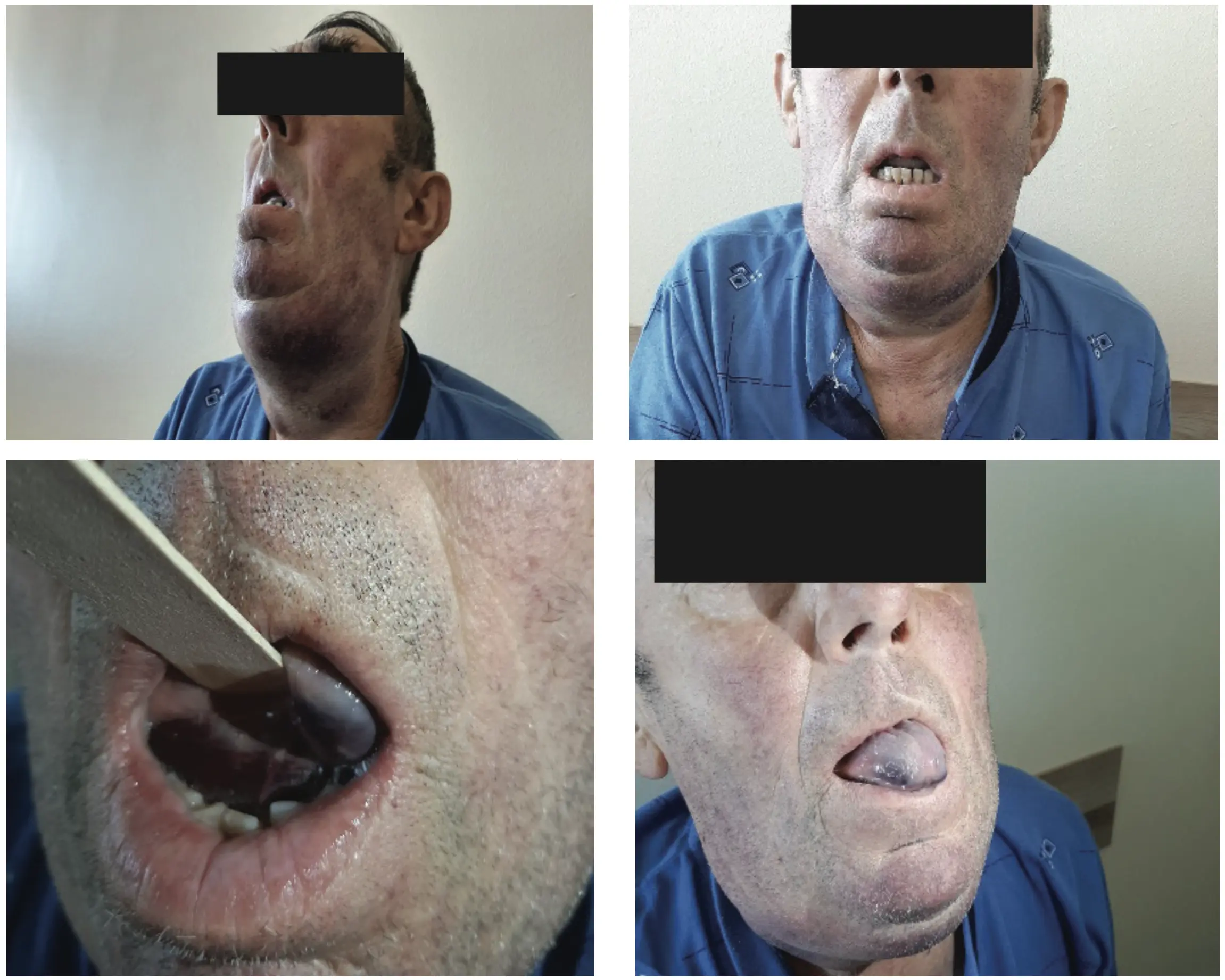
When the patient came in for coronary angiography, scheduled at a tertiary healthcare facility, he had an elevated C reactive protein level of 30 mg/L. Coronary angiography was, therefore, postponed and he was again hospitalized for further examination, this time at the internal medicine department. Due to the poor condition of his teeth, the patient was examined by a maxillofacial surgeon. Due to previously registered blood in his stool, gastroscopy was also performed. At that point, the INR level was within the normal therapeutic range, while aPTT was not tested, and all other parameters were normal, including the hemoglobin level. On the third day of hospitalization, a hematoma was registered on the left thigh, and the patient stated that he had previously received an intramuscular injection. Oral anticoagulant therapy was discontinued and replaced with low molecular weight heparin (LMWH). The INR level was within the normal range, while aPTT was not tested. On the fourth day of the patient’s hospital stay, there was copious bleeding at the site where a cannula had been placed on the patient’s left forearm. The bleeding had to be surgically stopped. Over the next two days, the patient complained of progressively greater and greater difficulty swallowing. Five days after gastroscopy, it was evident that it was almost impossible for the patient to swallow, stridor was present, as well as a massive hematoma of the front wall of the neck, floor of the oral cavity, and tongue (Figures 1a, 1b). Ultrasound of the neck revealed extremely edematous tissue of virtually all compartments of the neck. The CT of the neck showed – supraglottically, on the posterior wall of the neck, with propagation to the right – an irregular formation (hematoma), 25 x 20 mm in diameter, which almost completely narrowed the airway in the described region. Both submandibular glands were swollen, enlarged, heterodense, compressing the surrounding soft tissue structures and muscular structures. It was difficult to differentiate the glands from the surrounding tissue and they were narrowing the lumen of the airway. Laboratory test results showed a drop in the level of hemoglobin by 30 g, the INR value was normal, aPTT was tested for the first time, and was 58.3 s (26.00 s – 36.00 s). The mixing test with normal plasma was then performed showing that aPTT was still prolonged, which led to the suspicion that coagulation inhibitors were present in the patient’s plasma.
Given the recommended treatment, as well as the fact that it was not possible to perform further diagnostics (determining F VIII levels and inhibitor levels with the Bethesda method) within the facility that the patient was hospitalized in, the patient was referred to a tertiary medical facility, where a decreased level of F VIII was found, as well as an increased level of F VIII inhibitors, measuring 9 Bethesda units. FEIBA was administered and the patient was also started on prednisone and cyclophosphamide at the same time. Detailed clinical and immunological examinations and analyses could not identify a secondary condition that could be the cause of acquired hemophilia. Due to persistent atrial fibrillation, the patient continued with oral anticoagulant therapy after the normalization of F VIII levels, about 6 weeks after the beginning of treatment.
DISCUSSION
Coumarin derivatives are known to prolong INR and aPTT due to their combined effect on coagulation factor IX levels. [6],[10],[11]. Cases have been reported of hemorrhagic syndrome occurring in patients on oral anticoagulant therapy in the form of coumarin derivatives, in whom both INR and aPTT are usually monitored only on presentation of the disease, while only INR is further monitored on follow-up [15],[16],[17],[18]. If the bleeding is significant, fresh frozen plasma or vitamin K is prescribed, with usually only INR being controlled in the further course of the disease. Given the large number of patients on this therapy and the relatively rare occurrence of other causes of bleeding, especially acquired hemophilia, other causes of hemorrhagic syndrome are rarely considered.
However, in situations where hemorrhagic syndrome continues to persist after the normalization of INR, it is necessary to suspect a different cause of this condition and order re-testing of the overall coagulation status. Prolonged aPTT, with normalized INR, always indicates an acquired coagulation disorder, especially in elderly patients with comorbidities who have extensive mucocutaneous bleeding and soft tissue bleeding [5]. In the patient we have presented, who had digestive tract bleeding and extensive mucocutaneous bleeding, particularly in the oropharynx, the initial significantly prolonged aPTT was understood as an effect of oral anticoagulant therapy. Although the patient was under medical supervision almost all the time, the suspicion that it was an associated coagulation disorder was established only 5 weeks after the first manifestation of the disease. At the time of diagnosis, the patient had life-threatening bleeding in the oropharynx, which was provoked by gastroscopy. Delays in the diagnosis of acquired hemophilia leading to frequently fatal bleeding, in patients on oral anticoagulant therapy, have also been reported in literature [13],[14],[15]. Any invasive diagnostics or surgical procedure in patients with unrecognized acquired hemophilia can provoke heavy bleeding, as was the case with our patient [6],[8],[18].
It is important to point out that the antiplatelet drug clopidogrel can lead to the development of acquired hemophilia [20],[21],[22]. Since acquired hemophilia mainly causes mucocutaneous bleeding, such bleeding can easily be attributed to the iatrogenic effect of clopidogrel, especially if it is combined with acetylsalicylic acid. Diagnosis of acquired hemophilia in these patients is also delayed. [18].
Nowadays, when the use of new oral anticoagulant drugs (NOAC) is increasing (dabigatran, rivaroxaban, apixaban), it is important to note that cases of acquired hemophilia have also been described with the use of these drugs [16],[17]. Coagulation status is not usually monitored with the administration of NOAC, but it is important to note that INR and aPTT values may also be altered to a lesser degree [5],[6],[7],[8],[9],[10],[11],[12],[13],[14],[15],[16],[17],[23]. Therefore, any occurrence of hemorrhagic, especially mucocutaneous bleeding, in patients on NOAC therapy should be accompanied by new INR and aPTT analyses.
CONCLUSION
In conclusion, although acquired hemophilia is a rare condition, caution should be exercised in clinical practice in severe spontaneous, usually mucocutaneous bleeding, in patients (especially elderly patients) on oral anticoagulant therapy who have excessively prolonged aPTT [11],[13],[15],[18]. It should always be remembered that a readily available plasma mixing test can be performed in any medical biochemical laboratory which can prove the presence of coagulation inhibitors leading to the suspicion of acquired hemophilia [6],[7],[10],[11],[15]. This condition requires immediate treatment with specific drugs which is why it is important to establish a timely diagnosis.
Informations

-
Keywords:
-
Received:
-
Revised:
-
Accepted:
-
Online first:
-
DOI:
-
Cite this article:

Jelena Ljubičić
General hospital "Studenica"
2 Jug Bogdanova Street, 36000 Kraljevo, Serbia
E-mail:
1. Delgado J, Jimenez-Yuste V, Hernandez-Navarro F, Villar A. Acquired haemophilia: review and meta-analysis focused on therapy and prognostic factors. Br J Haematol. 2003 Apr;121(1):21-35. doi: 10.1046/j.1365-2141.2003.04162.x.[CROSSREF]
2. Michiels JJ. Acquired hemophilia A in women postpartum: clinical manifestations, diagnosis, and treatment. Clin Appl Thromb Hemost. 2000 Apr;6(2):82-6. doi: 10.1177/107602960000600206.[CROSSREF]
3. Napolitano M, Siragusa S, Mancuso S, Kessler CM. Acquired haemophilia in cancer: A systematic and critical literature review. Haemophilia. 2018 Jan;24(1):43-56. doi: 10.1111/hae.13355.[CROSSREF]
4. Reeves BN, Key NS. Acquired hemophilia in malignancy. Thromb Res. 2012 Apr;129 Suppl 1:S66-8. doi: 10.1016/S0049-3848(12)70019-1.[CROSSREF]
5. Knoebl P, Marco P, Baudo F, Collins P, Huth-Kühne A, Nemes L, et al.; EACH2 Registry Contributors. Demographic and clinical data in acquired hemophilia A: results from the European Acquired Haemophilia Registry (EACH2). J Thromb Haemost. 2012 Apr;10(4):622-31. doi: 10.1111/j.1538-7836.2012.04654.x.[CROSSREF]
6. Huth-Kühne A, Baudo F, Collins P, Ingerslev J, Kessler CM, Lévesque H, et al. International recommendations on the diagnosis and treatment of patients with acquired hemophilia A. Haematologica. 2009 Apr;94(4):566-75. doi: 10.3324/haematol.2008.001743.[CROSSREF]
7. Tiede A, Collins P, Knoebl P, Teitel J, Kessler C, Shima M, et al. International recommendations on the diagnosis and treatment of acquired hemophilia A. Haematologica. 2020 Jul;105(7):1791-801. doi: 10.3324/haematol.2019.230771.[CROSSREF]
8. Sborov DW, Rodgers GM. How I manage patients with acquired haemophilia A. Br J Haematol. 2013 Apr;161(2):157-65. doi: 10.1111/bjh.12228.[CROSSREF]
9. Tengborn L, Baudo F, Huth-Kühne A, Knoebl P, Lévesque H, Marco P, et al.; EACH2 registry contributors. Pregnancy-associated acquired haemophilia A: results from the European Acquired Haemophilia (EACH2) registry. BJOG. 2012 Nov;119(12):1529-37. doi: 10.1111/j.1471-0528.2012.03469.x.[CROSSREF]
10. Tiede A, Werwitzke S, Scharf RE. Laboratory diagnosis of acquired hemophilia A: limitations, consequences, and challenges. Semin Thromb Hemost. 2014 Oct;40(7):803-11. doi: 10.1055/s-0034-1390004.[CROSSREF]
11. Kershaw G, Orellana D. Mixing tests: diagnostic aides in the investigation of prolonged prothrombin times and activated partial thromboplastin times. Semin Thromb Hemost. 2013 Apr;39(3):283-90. doi: 10.1055/s-0033-1336832.[CROSSREF]
12. Kaur K, Kalla A. A case of acquired hemophilia A in an elderly female. J Community Hosp Intern Med Perspect. 2018 Aug 23;8(4):237-40. doi: 10.1080/20009666.2018.1487246.[CROSSREF]
13. Vadikolia CM, Riddell A, Brooks S, Yee TT, Brown S, Lee C. Acquired haemophilia masked by warfarin therapy. Int J Lab Hematol. 2007 Feb;29(1):64-8. doi: 10.1111/j.1365-2257.2006.00867.x.[CROSSREF]
14. Al-Banaa K, Gallastegui-Crestani N, von Drygalski A. Anticoagulation for Stroke Prevention after Restoration of Haemostasis with Emicizumab in Acquired Haemophilia A. Eur J Case Rep Intern Med. 2021 Nov 11;8(11):002984. doi: 10.12890/2021_002984.[CROSSREF]
15. Lawless S, Benson G. A 75-year-old woman with acquired haemophilia disguised by warfarin treatment. BMJ Case Rep. 2015 Oct 6;2015:bcr2015211254. doi: 10.1136/bcr-2015-211254.[CROSSREF]
16. Kowar M, Wilhelm K, Jacobs A.H. Rivaroxaban-induced hemorrhage – Acquired hemophilia as a rare cause JGG 2017; 65:173-5[HTTP]
17. Sümnig A, Grotevendt A, Westphal A, Fiene M, Greinacher A, Thiele T. Acquired hemophilia with inhibitors presenting as an emergency: misinterpretation of clotting results during direct oral anticoagulation. Dtsch Arztebl Int. 2014 May 9;111(19):345-8. doi: 10.3238/arztebl.2014.0345.[CROSSREF]
18. Yousphi AS, Bakhtiar A, Cheema MA, Nasim S, Ullah W. Acquired Hemophilia A: A Rare but Potentially Fatal Bleeding Disorder. Cureus. 2019 Aug 20;11(8):e5442. doi: 10.7759/cureus.5442.[CROSSREF]
19. Hwang HW, Kong JH, Yu DW, Kim WT, Kim HS, Lee CI. A patient with acquired hemophilia A induced by clopidogrel. Korean J Hematol. 2012 Mar;47(1):80- 2. doi: 10.5045/kjh.2012.47.1.80.[CROSSREF]
20. Haj M, Dasani H, Kundu S, Mohite U, Collins PW. Acquired haemophilia A may be associated with clopidogrel. BMJ. 2004 Aug 7;329(7461):323. doi: 10.1136/bmj.329.7461.323.[CROSSREF]
21. Hammoudeh AJ, Khader Y, Kadri N, Al-Mousa E, Badaineh Y, Habahbeh L, et al. Adherence to the 2019 AHA/ACC/HRS Focused Update of the 2014 AHA/ ACC/HRS Guideline on the Use of Oral Anticoagulant Agents in Middle Eastern Patients with Atrial Fibrillation: The Jordan Atrial Fibrillation (JoFib) Study. Int J Vasc Med. 2021 Apr 8;2021:5515089. doi: 10.1155/2021/5515089.[CROSSREF]
22. Murray NP, Muñoz L, Minzer S, Lopez MA. Management of Thrombosis Risk in a Carrier of Hemophilia A with Low Factor VIII Levels with Atrial Fibrillation: A Clinical Case and Literature Review. Case Rep Hematol. 2018 Sep 5;2018:2615838. doi: 10.1155/2018/2615838.[CROSSREF]
23. Castelblanco-Toro SM, Chavarro-Carvajal DA. Acquired hemophilia in an elderly person. doi: https://doi.org/10.36104/amc.2019.1207.[HTTP]