


Anaphylactic shock caused by subcutaneous immunotherapy with the allergen ambrosia elatior – case report
- University Clinical Center of Serbia, Clinic of Allergology and Immunology, Belgrade, Serbia
- University of Belgrade, Faculty of Medicine, Belgrade, Serbia
ABSTRACT
Introduction: Sensitization to ragweed pollen can lead to symptoms of allergic rhinitis, conjunctivitis, and allergic asthma. Allergen immunotherapy (AIT) is an immunomodulatory therapeutic procedure that, in addition to short-term curative effect (reduction of disease symptoms), also has a long-term preventive effect (preventing the progression of allergic rhinitis into allergic asthma and/or preventing the development of a more severe form of the disease). The two main AIT administration modalities used in clinical practice are subcutaneous allergen immunotherapy (SCIT) and sublingual allergen immunotherapy (SLIT). Both modalities are equally effective in reducing disease symptoms, but the use of SCIT is associated with a higher risk of local and systemic adverse reactions.
Case report: A patient who developed a clinical picture of anaphylactic shock during the induction phase of SCIT with Ambrosia elatior pollen extract is presented in this article. The clinical course is described as well as the quick and effective therapeutic management of this life-threatening condition.
Conclusion: When properly dosed, in a medical facility and under medical supervision, SCIT with Ambrosia elatior is a very safe and well-tolerated treatment option for allergic rhinitis. Local reactions at the site of subcutaneous administration occur more often than systemic adverse reactions. Anaphylactic shock is the most severe form of a systemic allergic reaction that affects multiple organ systems and can end in death, usually due to airway obstruction and cardiovascular collapse. It is necessary to educate the medical staff as well as the patients regarding the proper treatment of this difficult condition. Based on the assessment of risk factors in each patient, severe reactions to SCIT can be predicted and avoided with appropriate precautions and prophylactic measures. Future innovations in AIT are expected to further improve the efficacy and safety of this form of treatment for allergic diseases.
INTRODUCTION
Allergy to ragweed pollen has become a significant health problem in recent years. Ambrosia (genus Ambrosia of the Asteraceae family) is a plant originally from North America. Worldwide, two species are the most widespread, common (or short) ragweed (A. artemisiifolia or A. elatior) and giant ragweed (A. trifida), which are also the most clinically relevant due to their high potential to cause symptoms of allergic rhinitis and allergic asthma [1].
Ambrosia elatior is the most invasive annual weed, in terms of covering large areas [2]. At present, it is widespread throughout the Republic of Serbia as well as in the surrounding region. Ambrosia elatior pollen is well known for its high potential to cause type I hypersensitivity reactions during the flowering season, which peaks in August and September, and an increasingly long pollination period has been observed [2]. One stalk of ragweed produces up to 45 grams of pollen per year, and one gram of pollen contains about 30 million pollen grains. Between 8 and 10 ragweed pollen grains per cubic meter is sufficient to provoke allergic manifestations. About 50% of pollen allergies are caused by ragweed pollen. In Europe, there is an average prevalence of sensitization to ragweed pollen allergens of 14%; with a range between the highest value recorded in Hungary of 54% to 3.5% in Italy. It is believed that climate change and increasing air pollution will also increase the allergenic potential of pollen in the coming years [2].
Sensitization to ragweed pollen can lead to complaints in the form of allergic rhinitis, allergic conjunctivitis, and allergic asthma. Numerous studies indicate that high exposure to pollen or an increased concentration of pollen over a period of time results in a high rate of sensitization and the onset of symptoms. In Europe, at least one in five people suffer from a respiratory allergy to ragweed. It is believed that by 2050, the concentration of ragweed will increase up to four times. Persistent eradication of ragweed is the only way to reduce a large number of respiratory allergies [2].
The first step in the treatment of allergic respiratory diseases involves the use of conventional therapy (antihistamines, local and systemic application of glucocorticoids, mast cell stabilizers, leukotriene receptor antagonists). Allergen immunotherapy (AIT) is the only treatment modality that can alter the course of the disease and modify the immune response by redirecting it from pathological T helper 2 (TH2) to T helper 1 (TH1). This type of treatment has been in use for more than 100 years. The two main modalities of allergen immunotherapy applied in clinical practice are subcutaneous allergen immunotherapy (SCIT) and sublingual allergen immunotherapy (SLIT). Although both approaches have been found to be effective in reducing symptoms of disease, SCIT is associated with an increased risk of systemic side effects [3].
Anaphylactic shock is the most severe form of allergic reaction that affects multiple organ systems and if urgent and immediate medical assistance is not provided, it can end in death, most often due to airway obstruction and cardiovascular collapse. It is caused by the reaction of a specific allergen with IgE antibodies on the surface of mast cells and basophils, after which their activation and the release of mediators, primarily histamine, occurs, as well as the appearance of skin, respiratory, cardiovascular, gastrointestinal and neurological symptoms. The three most common triggers of anaphylaxis are food, insect venom, and medication. Symptoms generally appear within one hour of exposure to a specific allergen [4],[5].
CASE REPORT
A 40-year-old patient was examined for the first time at the allergology unit of the Clinic of Allergology and Immunology of the University Clinical Center of Serbia (UCCS), in June 2021. The anamnestic data indicated that for a number of years the patient had been experiencing complaints in spring and late summer in the form of continuous sneezing, nasal obstruction, frequent discharge of a clear secretion from the nose, accompanied by an itchy nose and throat. Occasionally, there was also a sensation of shortness of breath with a non-productive cough. In his personal history, he denied the existence of other chronic diseases as well as taking any regular therapy. In childhood, he was treated for frequent bronchitis. For the previous five years, he occasionally had mild episodes of difficulty breathing, which he successfully managed with the use of a short-acting beta2 agonist (SABA). In August 2021, he had an episode of severe bronchospasm, for which he was treated with intravenous corticosteroids. As part of the diagnosis, prick skin tests were performed for a panel of inhalation allergens, which proved polysensitization to dust mites, house dust and all three types of pollen (trees, grass, weeds). A non-specific bronchoprovocation test with methacholine was performed on the patient, which was negative (a 6.2% drop in FEV1 was detected). The level of specific IgE antibodies (radioallergosorbent test - RAST) for a panel of inhalation allergens was determined: Ambrosia elatior – class 3, grass pollen – class 4, rye – class 4; other allergens did not show significant positivity.
Objective examination did not establish the presence of broncho-obstruction. An antihistamine (levocetirizine), intranasal corticosteroid (mometasone furoate), leukotriene receptor antagonist (montelukast) and, when necessary, an inhalation of a fixed combination of corticosteroids and a long-acting beta2 agonist (budesonide/formoterol) were introduced into regular therapy, taking into account previous episodes of bronchospasm and the possibility of the patient having induced bronchial hyperreactivity during a certain period of the pollination season.
In November 2021, the patient was started on AIT (SCIT) with A. elatior pollen extracts and a grass pollen mixture.
In January 2022, the patient received a regular induction dose of SCIT at weekly intervals, at the outpatient unit of the Clinic of Allergology and Immunology of the UCCS (solution II - 1,000 protein units (PNU), 0.3 ml SC, with extracts of A. elatior and a mixture of grass pollen). After 10 minutes of subcutaneous application of the extract, the patient developed giant urticaria on the upper arm, at the site where the A. elatior extract was administered, with diffuse erythema of the skin and with hyperemia of the conjunctiva, as well as subjective feeling of difficulty breathing and swallowing. There was no local reaction at the site of grass pollen mixture extract administration (other upper arm). Objective examination revealed the following: wheezing was detected with auscultation, while slight swelling of the uvula was observed on inspection. A drop in arterial pressure (85/60 mmHg) was also detected.
Based on the overall clinical presentation, a diagnosis of severe systemic reaction - anaphylactic shock was established and immediate therapeutic measures were applied. The first therapeutic procedure was the administration of epinephrine intramuscularly (m. deltoideus) at a dose of 0.5 ml in undiluted form (the concentration of epinephrine in the vial is 1:1,000). After this primary therapeutic measure, intravenous corticosteroids (methylprednisolone at a dose of 2 mg/kg body weight), crystalloid solutions (0.9% NaCl, 1,000 ml iv in rapid infusion) were administered, intramuscular administration of chloropyramine at a dose of 20 mg was performed, a proton pump inhibitor (pantoprazole 40 mg iv) was given, and an intravenous infusion of aminophylline (500 mg in 250 ml 0.9% NaCl) was administered.
The applied therapy had a beneficial effect with a rapid (within a few minutes) withdrawal of the clinical findings. Repeated measurement of blood pressure detected a BP of 115/70 mmHg, normal breathing sounds were detected by auscultation, while inspection showed that the skin erythema, conjunctival hyperemia, and uvular edema had receded.
During the following 24 hours, the patient was under observation in hospital with a continuation of intravenous corticosteroid therapy (methylprednisolone, a total of 2 mg per kilogram of body weight, divided into three doses, within 24 hours), rehydration with isotonic saline, and per os administration of antihistamines (quadruple dose of levocetirizine). Delayed systemic reactions did not occur nor did the need for subsequent administration of epinephrine arise.
Subsequently, the subcutaneous application of allergen immunotherapy was discontinued. The patient was not willing to transfer to SLIT. Treatment continued with conventional therapy, i.e. antihistamines, intranasal corticosteroids, inhalation of corticosteroids in combination with long-acting beta2 agonists (LABA), as well as leukotriene receptor antagonists.
DISCUSSION
Type I (immediate reaction) hypersensitivity reactions to ragweed pollen can manifest as symptoms of allergic rhinitis, rhinoconjunctivitis, and allergic asthma.
Allergic rhinitis is the most common atopic manifestation, a global health problem affecting 10% to 40% of the population. Allergic rhinitis is clinically characterized by paroxysmal episodes of sneezing, rhinorrhea, nasal itching, and nasal obstruction. Allergic rhinitis is the main risk factor for the development of allergic asthma [2].
Allergic asthma is a chronic inflammatory disease of the lower respiratory tract caused by IgE antibodies, through mediated sensitization to inhaled allergens. The main characteristic of the disease is inflammation and bronchial hyperreactivity with reversible airway obstruction. Clinically, it presents with repeated episodes of wheezing and tightness in the chest, dry cough, and shortness of breath.
Diagnosing allergic rhinitis and allergic asthma caused by ragweed pollen includes detailed anamnesis (symptomatology is seasonal), in vivo (skin prick tests, nasal allergen provocation test, and non-specific bronchoprovocation test), as well as in vitro diagnostics (determining the concentration of specific IgE antibodies in the serum) [1].
Standard protocols for the treatment of allergic rhinitis and asthma include local and systemic administration of glucocorticoids (intranasal, inhalation, oral, and parenteral administration), intranasal and systemic administration of antihistamines, administration of leukotriene receptor antagonists, anticholinergics, theophylline preparations, biologic medications, and allergen immunotherapy.
The patient presented in this paper had typical symptoms of seasonal allergic rhinitis. During the ragweed pollen season, he had several episodes of bronchospasm, which required short-term parenteral administration of glucocorticoids. A non-specific bronchoprovocation test with methacholine, which was performed outside the pollen season, was negative with normal spirometry findings. Bearing in mind the clinical presentation of the patient, the conclusion was that the patient may have symptomatic bronchial hyperreactivity (intermittent asthma) in the weed pollen season. This is why, outside the weed pollination season, he was treated according to the first step of the GINA protocol for the treatment of asthma, with combined inhalation therapy as needed (budesonide 160 mcg/formoterol 9 mcg).
Allergen immunotherapy can be administered as SCIT or SLIT. Both methods of administration are safe, effective and can induce tolerance to the sensitized allergen, which is then maintained for many years after treatment is discontinued. Both innate and adaptive immune responses contributing to allergic inflammation are suppressed by AIT. The innate immune response is modulated by reducing the number of mast cells, basophils, eosinophils, and circulating group 2 innate lymphoid cells. Induction of allergen-specific blocking antibodies, immunosuppressive cytokines and regulatory T and B cell phenotypes are key pro-tolerogens of the adaptive immune response [6]. Inhibition of mediator release from mast cells and basophils is partially dependent on IL10, which directly inhibits IgE-dependent activation of mast cells and their cytokine production. The result is a significant reduction in the accumulation of inflammatory cells, such as eosinophilic and neutrophilic granulocytes, in the nasal mucosa and bronchial tissue [7].
SCIT leads to a decrease in the production of allergen-specific immunoglobulin E (IgE) and an increase in the production of allergen-specific immunoglobulin G (IgG4). Induced IgG antibodies compete with IgE antibodies for epitopes on antigens, thereby exerting a blocking effect. After allergen exposure, antigen-presenting cells can direct the immune response towards TH1, and thus towards immunotolerance, and are probably key in achieving the effect of SCIT [7]. Aluminum or tyrosine are used as carriers of aeroallergens in SCIT, and in this way the release of allergens is delayed [7]. Within SCIT, unmodified extracts with native allergens as well as chemically modified allergen extracts (allergoids) can be applied [8].
During the implementation of SCIT there are two phases, induction and maintenance. During the induction phase, the allergen dose, i.e. its concentration, is gradually increased on a weekly basis, and after reaching the maintenance dose, the therapy is given at intervals of 4 to 6 weeks for a period of 3 to 5 years [7]. The maintenance dose is the dose that clinically achieves a tolerogenic effect [3].
Our patient developed a systemic adverse reaction during the induction phase, after receiving solution II (1,000 protein units - PNU) at a dose of 0.3 ml.
The introduction of allergen immunotherapy in the treatment of allergic asthma is generally done with greater caution and cannot be used as a substitute for conventional antiasthmatic therapy. AIT is recommended in well-controlled asthma as an add-on to pharmacological therapy. In such patients, this type of therapy can significantly reduce bronchial hyperreactivity, symptoms of bronchial obstruction, as well as the need to use other therapeutic options, primarily corticosteroids [8].
SCIT, as a therapeutic option for the treatment of allergic rhinitis, also has a preventive effect on the development of allergic asthma. An additional advantage of using SCIT, as compared to other conventional therapy, is in connection with the possibility of modifying the course of the disease as well as preventing the development of asthma and new sensitizations [9].
An example of a true indication for allergen immunotherapy with ragweed extracts would be a patient with allergic rhinitis (AR) caused by sensitization to ragweed, preferably monosensitized, whose symptoms are not well controlled by conventional pharmacotherapy [8]. Most patients with AR are polysensitized, but there is evidence that allergen immunotherapy is also effective in these patients and that polysensitization is not a contraindication to AIT. Evidence from randomized clinical trials suggests that the effect of therapy is greater in patients with more severe symptoms [8].
Our patient was polysensitized (grass and weed pollen) and SCIT was introduced simultaneously with Ambrosia elatior allergens and a grass pollen mixture.
Risk factors should be monitored in all patients before starting SCIT (discontinuation of beta-blocker therapy should be considered, regular spirometry follow-ups of asthma should be performed, immunotherapy injections in patients with ongoing clinical presentation of respiratory infection or severe exacerbation of allergic rhinitis or asthma should be avoided, as well as inadequate dosing, poor application technique, strenuous exercise, and alcohol consumption) [10].
None of the abovementioned risk factors were noted in our patient.
Bearing in mind the risk factors for the occurrence of adverse reactions, severe reactions to SCIT can be predicted and avoided by using appropriate precautions and prophylactic measures. Premedication with antihistamines is possible to reduce the frequency and severity of potential systemic reactions, but this measure does not eliminate the possibility of systemic reactions [8].
When administered correctly, at a proper dosage, in a medical facility, and under medical supervision, SCIT is a very safe and well-tolerated treatment option. In the case of SCIT with allergenic extracts containing aluminum-based adjuvants, certain side effects, such as contact dermatitis, vasculitis-type or granuloma-type reactions, may occur due to reaction to a foreign body, although this is very rare. Local reactions at the injection site include swelling, itching and redness. These reactions appear relatively often, they usually resolve spontaneously or with the use of H1-antihistamines or topical corticosteroids. In the event of more intense local reactions (redness and/or swelling over 1 cm in diameter) at the injection site, it is necessary to carefully plan further continuation of allergen immunotherapy (discontinuation of therapy, correction of the dose and interval of therapy administration) [8].
Before the development of a severe systemic reaction, our patient had no significant local reactions (papules and/or erythema > 3 mm) at the sites of subcutaneous application of both allergens.
The risk of severe allergic reactions caused by SCIT is low, and even mild systemic reactions (urticaria, laryngeal or bronchial spasm) have shown a decreasing tendency in recent years, thanks to good monitoring during therapy. However, near-fatal and fatal anaphylactic reactions may occur in a small number of patients. Clinicians administering allergen immunotherapy should receive specialized training and be aware of risk factors and preventive measures to avoid severe allergic reactions caused by SCIT [11]. Identifying patients at higher risk of systemic reaction (SR) is an essential part of making the decision to initiate SCIT. Tables 1 and 2 show absolute and relative contraindications for allergen immunotherapy [12]. Uncontrolled asthma is a major risk factor for the development of a systemic reaction [13]. After starting allergen immunotherapy, it is important to continuously assess the risk versus benefit in patients being treated, and cautiously increase the dose until the maintenance dose is reached [11]. Adverse allergic reactions to SCIT are classified as local, systemic, and fatal, early or late reactions. Local reactions occur in 26% - 86% of patients receiving SCIT [3]. Systemic reactions can range in severity from mild rhinitis to fatal cardiopulmonary arrest [14]. The rate of systemic reactions of varying severity is relatively low and amounts to 0.1% - 0.2%. Most delayed systemic reactions occurring after 30 minutes are mild to moderate in severity [3]. All patients must be observed for at least 30 minutes after the application of the allergenic extract.
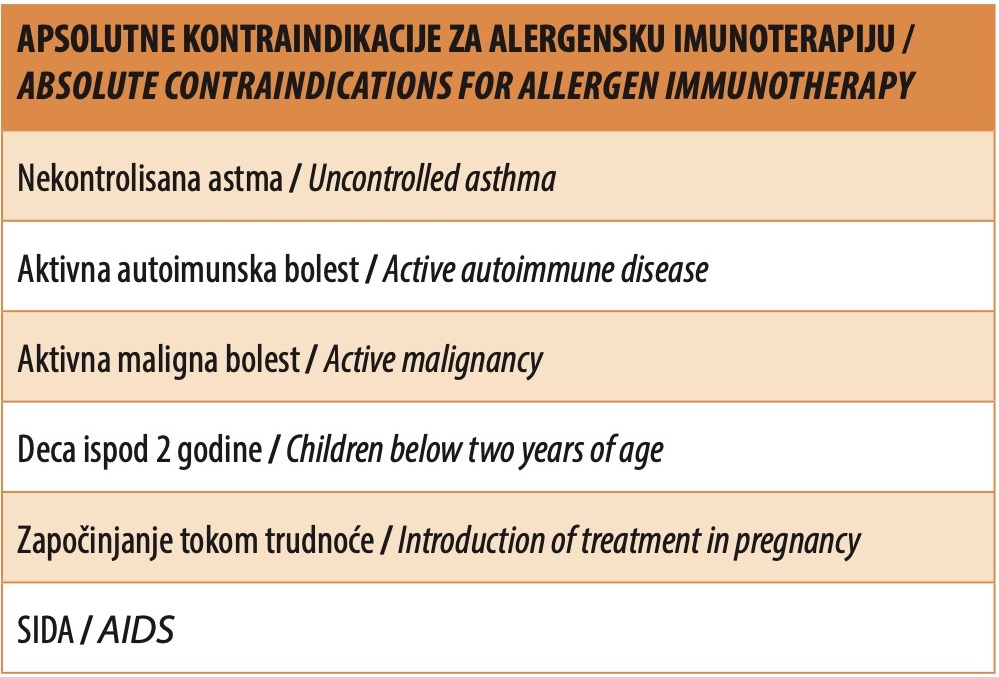
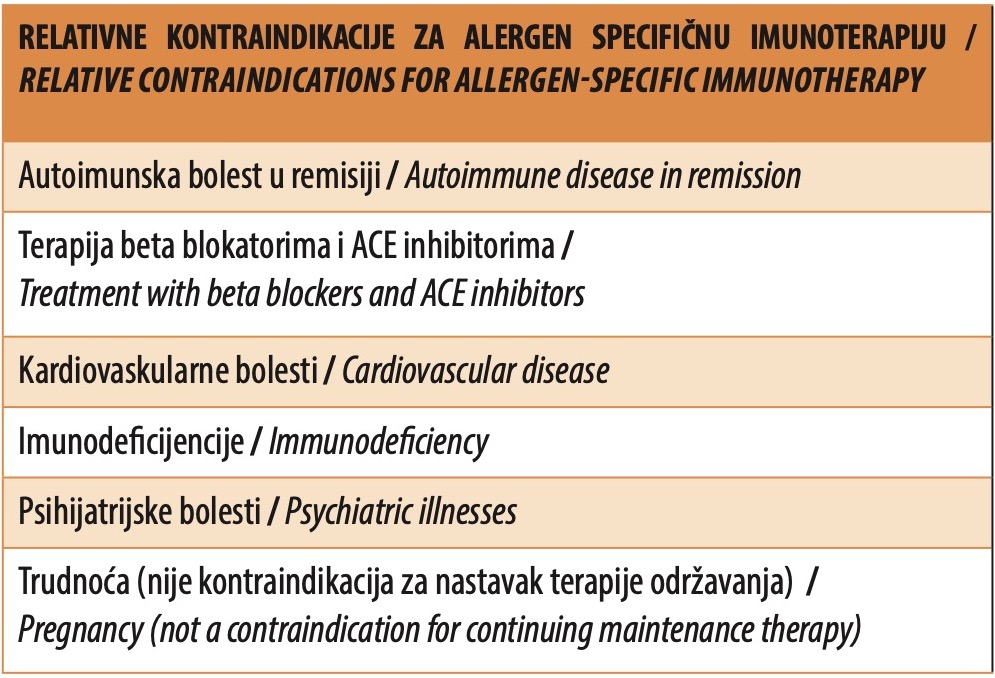
In the case presented in this article, the patient developed a severe systemic reaction 10 minutes upon receiving SCIT.
In patients who have developed a systemic reaction, it is necessary to reduce the dose of SCIT, i.e., continue therapy with the previous dose that was well tolerated. In patients with one severe systemic reaction or three or more milder systemic reactions, complete discontinuation of immunotherapy should be considered [11]. Dose adjustment during the pollen season for highly sensitive patients may reduce the risks of systemic reactions [15].
The incidence of anaphylaxis is 21 per 100,000 people per year, with a fatal outcome in about 0.65% of cases [4]. Prick skin tests for allergens and in vitro tests for verifying serum specific IgE do not reliably predict the risk of developing anaphylaxis [5]. Within two hours of the onset of systemic anaphylaxis, determining serum tryptase levels can be useful, thus confirming the diagnosis and reflecting mast cell degranulation [16].
The first-line pharmacological treatment for anaphylactic shock involves the intramuscular administration of epinephrine. Secondary measures include fluid replacement, administration of H1 and H2 antagonists, use of bronchodilators and corticosteroid preparations [4].
Epinephrine is a vasoconstrictor, it reduces the release of mediators and mucosal edema (via the a1-adrenergic receptor); relieves bronchoconstriction (a1- and b2-adrenergic receptor), and exhibits a positive inotropic and chronotropic effect (b1-adrenergic receptor). Epinephrine should be administered intramuscularly in the middle of the anterolateral thigh (Lat. vastus lateralis), which leads to better absorption than intramuscular (IM) or subcutaneous (SC) injection into the deltoid muscle. There are no absolute contraindications for the use of epinephrine [17].
Data indicate that H1-antihistamines are more commonly used to treat patients with anaphylaxis. Although histamine is key in the development of anaphylaxis, treatment with H1-antihistamines does not alleviate or prevent all pathophysiological mechanisms of anaphylaxis, including more serious complications such as airway obstruction, hypotension, and shock. In addition, H1-antihistamines do not act as quickly as epinephrine. Peak plasma concentrations are reached between one and three hours for H1-antihistamines, as compared to less than 10 minutes for intramuscular epinephrine. This indicates the need for additional training of physicians in the management of anaphylaxis, as well as the education of patients regarding appropriate self-help measures for anaphylaxis [18].
According to literature data, biphasic anaphylaxis occurs in about 20% of adults with symptoms that recur within 1 h – 72 h (usually 8 h – 10 h) after the initial reaction has disappeared. There are no clear predictors of the development of the second phase of anaphylaxis [17]. Since life-threatening manifestations may recur during the second phase, it is necessary to keep patients under observation in hospital for a period of 24 hours after apparent recovery from an anaphylactic episode [4]. All patients at risk of recurrent anaphylaxis should be educated on the appropriate use of epinephrine autoinjectors [5].
The patient presented in this article developed a good therapeutic response shortly after receiving 0.5 ml of epinephrine (1:1,000) intramuscularly, demonstrating an increase in arterial blood pressure and bronchodilation. With other therapeutic measures (intravenous glucocorticoids, antihistamines, infusion solutions), which were applied during the following 24 hours, there was a complete recovery, without the development of delayed anaphylaxis.
In the patient presented in this article, further treatment of allergic rhinitis and intermittent allergic asthma continued with conventional therapy as he was not willing to switch to SLIT. Also, SCIT with grass pollen mixture was discontinued.
Allergen immunotherapy is a safe form of treatm and North America [3].
AIT is currently undergoing major improvements and innovations, in terms of increased immunogenicity with less allergenicity, especially with new adjuvants, recombinant or modified allergens, synthetic peptides and new routes of administration (epidermal or intralymphatic). This progress is the basis for greater efficiency and safety of allergen immunotherapy in the future, with a greater prevalence of this treatment modality in daily clinical practice [8].
LIST OF ABBREVIATIONS AND ACRONYMS
AIT – allergen immunotherapy
SCIT – subcutaneous immunotherapy
SLIT – sublingual immunotherapy
TH2 – T helper 2 lymphocytes
TH1 – T helper 1 lymphocytes
SABA – short acting beta2 agonist
RAST – radioallergosorbent test
LABA – long acting beta2 agonist
PPI – proton pump inhibitors
AR – allergic rhinitis
IM – intramuscular
SC – subcutaneous
LR – local reactions
SR – systemic reactions
PNU – protein nitrogen units
Informations

-
Keywords:
-
Received:
-
Revised:
-
Accepted:
-
Online first:
-
DOI:
-
Cite this article:

Milan Dimitrijević
Clinic of Allergology and Immunology, University Clinical Center of Serbia
2 Koste Todorovića Street, 11000 Belgrade, Ser
E-mail:
1. Ihler F, Canis M. Ragweed-induced allergic rhinoconjunctivitis: current and emerging treatment options. J Asthma Allergy. 2015 Feb 16;8:15-24. doi: 10.2147/JAA.S47789. [CROSSREF]
2. Florincescu-Gheorghe NA, Popescu F, Alexandru DO, Popescu FD. The prevalence of allergic rhinitis to Ambrosia elatior in Oltenia area and the association with allergic conjunctivitis or asthma. Curr Health Sci J. 2019 JanMar;45(1):66-72. doi: 10.12865/CHSJ.45.01.09. [CROSSREF]
3. James C, Bernstein DI. Allergen immunotherapy: an updated review of safety. Curr Opin Allergy Clin Immunol. 2017 Feb;17(1):55-9. doi: 10.1097/ ACI.0000000000000335. [CROSSREF]
4. Janwitayanujit S. Anaphylaxis. J Med Assoc Thai. 2007 Jan;90(1):195-200.
5. Arnold JJ, Williams PM. Anaphylaxis: recognition and management. Am Fam Physician. 2011 Nov 15;84(10):1111-8. [HTTP]
6. Drazdauskaitė G, Layhadi JA, Shamji MH. Mechanisms of allergen immunotherapy in allergic rhinitis. Curr Allergy Asthma Rep. 2020 Dec 12;21(1):2. doi: 10.1007/s11882-020-00977-7. [CROSSREF]
7. Klimek L, Brehler R, Hamelmann E, Kopp M, Ring J, Treudler R, et al. Evolution of subcutaneous allergen immunotherapy (part 1): from first developments to mechanism-driven therapy concepts. Allergo J Int. 2019 Apr 15;28(3):78- 95. doi: 10.1007/s40629-019-0092-4. [CROSSREF]
8. Turkalj M, Banic I, Anzic SA. A review of clinical efficacy, safety, new developments and adherence to allergen-specific immunotherapy in patients with allergic rhinitis caused by allergy to ragweed pollen (Ambrosia artemisiifolia). Patient Prefer Adherence. 2017 Feb 14;11:247-57. doi: 10.2147/PPA. S70411. [CROSSREF]
9. Klimek L, Brehler R, Hamelmann E, Kopp M, Ring J, Treudler R, et al. Development of subcutaneous allergen immunotherapy (part 2): preventive aspects and innovations. Allergo J Int. 2019 May 13;28(4):107-19. doi: 10.1007/ s40629-019-0097-z. [CROSSREF]
10. Aue A, Ho J, Zhu R, Kim H, Jeimy S. Systemic reactions to subcutaneous allergen immunotherapy: real-world cause and effect modelling. Allergy Asthma Clin Immunol. 2021 Jul 6;17(1):65. doi: 10.1186/s13223-021-00566-x. [CROSSREF]
11. Sánchez-Borges M, Bernstein DI, Calabria C. Subcutaneous immunotherapy safety: incidence per surveys and risk factors. Immunol Allergy Clin North Am. 2020 Feb;40(1):25-39. doi: 10.1016/j.iac.2019.09.001. [CROSSREF]
12. Pitsios C, Demoly P, Bilò MB, Gerth van Wijk R, Pfaar O, Sturm GJ, et al. Clinical contraindications to allergen immunotherapy: an EAACI position paper. Allergy. 2015 Aug;70(8):897-909. doi: 10.1111/all.12638. [CROSSREF]
13. Passalacqua G, Nowak-Węgrzyn A, Canonica GW. Local Side Effects of Sublingual and Oral Immunotherapy. J Allergy Clin Immunol Pract. 2017 JanFeb;5(1):13-21. doi: 10.1016/j.jaip.2016.06.020. [CROSSREF]
14. Cox L, Larenas-Linnemann D, Lockey RF, Passalacqua G. Speaking the same language: The World Allergy Organization subcutaneous immunotherapy systemic reaction grading system. J Allergy Clin Immunol. 2010 Mar;125(3):569-74, 574.e1-574.e7. doi: 10.1016/j.jaci.2009.10.060. [CROSSREF]
15. Epstein TG, Liss GM, Murphy-Berendts K, Bernstein DI. Risk factors for fatal and nonfatal reactions to subcutaneous immunotherapy: National surveillance study on allergen immunotherapy (2008-2013). Ann Allergy Asthma Immunol. 2016 Apr;116(4):354-9.e2. doi: 10.1016/j.anai.2016.02.001. [CROSSREF]
16. Pflipsen MC, Vega Colon KM. Anaphylaxis: Recognition and Management. Am Fam Physician. 2020 Sep 15;102(6):355-62. [HTTP]
17. Rutkowski K, Dua S, Nasser S. Anaphylaxis: current state of knowledge for the modern physician. Postgrad Med J. 2012 Aug;88(1042):458-64. doi: 10.1136/postgradmedj-2011-130634. [CROSSREF]
18. Fineman SM. Optimal treatment of anaphylaxis: antihistamines versus epinephrine. Postgrad Med. 2014 Jul;126(4):73-81. doi: 10.3810/ pgm.2014.07.2785. [CROSSREF]