


Availability of preventive dental services to preschool and school children within the public health sector in the Canton of Sarajevo
- Public institution Primary Healthcare Center of the Canton of Sarajevo, Organizational unit Primary Healthcare Center Stari grad Sarajevo, Sarajevo, Bosnia and Herzegovina
- University of Sarajevo, Faculty of Health Studies, Sarajevo, Bosnia and Herzegovina
- Institute for Public Health of the Federation of Bosnia and Herzegovina, Sarajevo, Bosnia and Herzegovina
- Institute for Public Health of the Central Bosnian Canton, Travnik, Bosnia and Herzegovina
- Vitez University, Vitez, Bosnia and Herzegovina
ABSTRACT
Introduction: Oral health is a segment of general human health reflected in the condition of oral tissues, which contributes to overall physical, psychological and social well-being, enabling people to eat, communicate and participate in social life without discomfort, inconvenience or stress. This study aims to determine the frequency of conducting regular oral and dental examinations in early childhood, the practice of parents/ guardians in the process of preserving children’s oral health, as well as the satisfaction with the services provided.
Materials and methods: The study was conducted as a cross-sectional, descriptive and comparative study at the Primary Healthcare Center of the Canton of Sarajevo. Heads of dental services and service users were the respondents of the study. The study included five heads of dental services and 209 parents who participated via an online Google forms survey that was based on an original questionnaire designed by the study authors.
Results: The availability of dental health care is at a high level according to parents, and it is was determined to be available in 139 or 66.5% of cases. Only 24 or 11.7% of respondents stated that they do not have access to dental health care. Most parents stated that they did not have to wait for a dental examination for their children and that they were satisfied with the accessibility of the staff, giving a high score of 4.14 ± 1.21 on a scale of 1 to 5.
Conclusion: Based on the results of the study, we were able to prove that quality and safe preventive dental care for preschool and school children in the public health sector is provided in the Canton of Sarajevo. Most parents stated that they were satisfied with the professionalism, work and accessibility of the staff.
INTRODUCTION
Oral health is a segment of general human health reflected in the condition of oral tissues, which contributes to overall physical, psychological and social well-being, enabling people to eat, communicate and participate in social life without discomfort, inconvenience or stress.
The goal of dental care at the primary healthcare level is to maintain good oral health before problems requiring treatment arise. Ideally, the entire population should undergo periodic examinations in places with high concentrations of people, such as schools, companies, local community centers, and primary healthcare centers. In areas where this cannot be achieved, it is necessary to choose venues that are most suitable for the community members [1].
In most developing countries, it is not easy to organize an independent oral healthcare system in the community. Some countries already have well-organized primary healthcare and for them it is imperative to integrate oral health into the existing healthcare infrastructure. Some countries already have a healthcare and education infrastructure, but they need funds that would enable the expansion of their activities to include oral healthcare [2],[3].
The state of oral health among the population residing in the territory of the Federation of Bosnia and Herzegovina was monitored. In this regard, it can be said that the state of oral health of both the adult population and children and adolescents is at a very low level. For this reason, the Federal Ministry of Health launched an initiative to adopt a program of measures aimed at improving the oral health of the population in accordance with the Law on Dental Practice and in cooperation with the Institute for Public Health of the Federation of Bosnia and Herzegovina. Within this program, special focus will be placed on preschool children and on promoting nature-based nutrition for the youngest population with an emphasis on encouraging breastfeeding, which enables healthy growth in a child as well as the development of the structures of the face and mouth. Also, the focus will be on preschool children so as to preserve the first permanent teeth [4].
Preventive dental services are designated as such because they enable the dentist to monitor the patient’s oral health, promote healthy habits, prevent new diseases through various treatment services, and spot early signs of oral health problems. This gives the patient and the dentist enough time to identify, treat and prevent the problem.
Services such as fillings, root canal therapy, periodontal treatments, orthodontics or tooth extractions are not considered preventive dentistry. They are aimed at solving an existing problem and usually fall under basic or major procedures [5].
During a regular dental exam, the dentist will perform an oral exam to check for signs of cavities or gum disease, abnormal tooth wear, abnormal alignment or mechanical problems, soft tissue disease (such as oral cancer), and more. This examination is usually followed by a professional cleaning, along with the application of fluoride when appropriate, to ensure a clean, healthy and protected oral cavity. Preventive dental services should not be neglected. Regular dental visits and prevention of oral health problems can help maintain overall health and well-being as you age and save time, money, and potential discomfort by avoiding serious dental disease [6].
Children at the age of 4–5 identify with their parents, so parental attitudes towards oral health and regular follow-ups is of crucial importance [7],[8].
Basic role modeling by parents is a much more important method for achieving the desired goal in health education than any other known method. Whether the child will later have healthy teeth or whether their teeth will be a source of pain and problems depends on parental care [9].
The main objective of this study is to determine the availability of preventive dental services in the public health sector, as well as the efficiency in providing services. This study aims to determine the frequency of conducting regular examinations in early childhood, the practice of parents / guardians in the process of preserving children’s oral health, as well as satisfaction with the services provided.
MATERIALS AND METHODS
This was a cross-sectional, descriptive, comparative study carried out within the Public Health Institution, Primary Healthcare Centers of the Canton of Sarajevo, at four dental care services: Hadžići, Trnovo, Stari Grad, Novo Sarajevo, and Novi Grad Primary Healthcare Center. Heads of dental services and service users (children’s parents) were the respondents of the study. They participated via an online Google forms survey that was based on an original questionnaire designed by the study authors. The study included five heads of dental services and 209 randomly selected parents. Internal consistency testing of the study was carried out on a sample of 20 parents and Cronbach’s alpha for this sample size was 0.854 indicating a good internal consistency and power of the questionnaire.
In this study, all ethical principles related to the protection of the identity of the respondents and the data obtained through questionnaires / interviews were respected. Data confidentiality is guaranteed by the researcher. Respondents had no financial or any other interest for participation.
Nominal and ordinal variables are presented as the number of cases and percentages, while continuous variables, the arithmetic mean and standard deviation, were used to display the mean values and measures of dispersion. The test results were considered statistically significant at the level of statistical significance p < 0.05. The SPSS for Windows software (Version 13.0, SPSS Inc, Chicago, Illinois, USA) and Microsoft Excel (Version 11, Microsoft Corporation, Redmond, WA, USA) were used for statistical analysis of the obtained data.
RESULTS
A total of five respondents completed the questionnaire for heads of dental services.
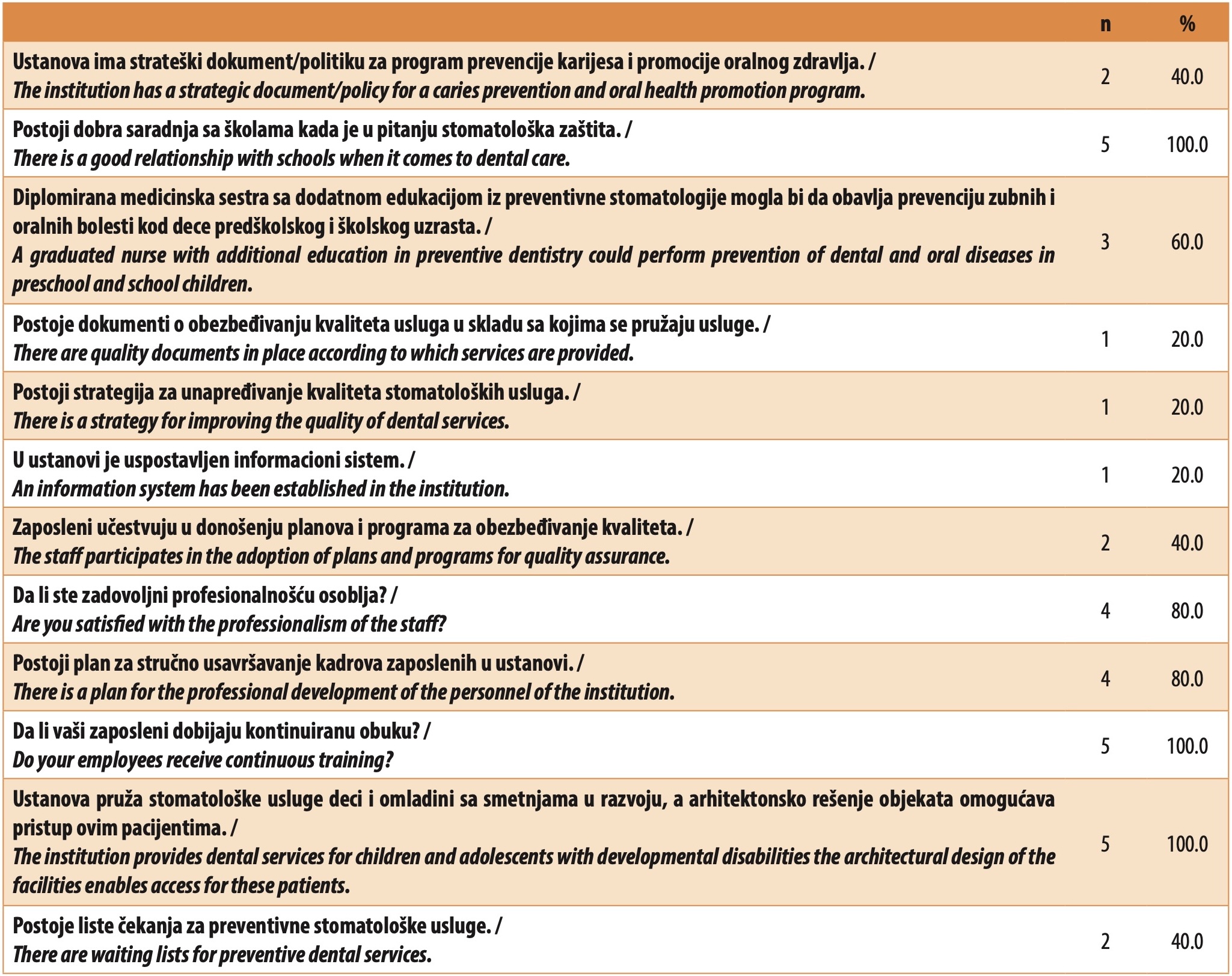
Only one head of dental services (20.0%) stated that they have adopted quality documents according to which they provide services, that they have a strategy for improving the quality of dental services, and that they have an established information system in their institution. Out of the total number of heads of dental services, two (40.0%) stated that the staff of their institution participates in the adoption of plans and programs for quality assurance. Also, two (40.0%) heads of dental services, stated that they have a strategic document (policy) for a program of caries prevention and promotion of oral health in their institution. All heads of dental services (100%) stated that they have good cooperation with schools regarding preventive services. The majority of heads of dental services, i.e., four (80.0%), stated that they have a staff development plan in their institution and that they are satisfied with the expertise of the staff. All heads of dental services (100%) stated that employees undergo continuous education. A greater number of heads of dental services, i.e., three (60.0%), stated that they believe that a graduate nurse with additional education in preventive dentistry could perform preventive measures against dental and oral diseases in preschool and school children. All heads of dental services (100%) stated that their institution provides dental services for children and adolescents with developmental disabilities and that the architectural design of the facilities enables access for these patients. Most heads of dental services, three (60.0%) stated that they do not have a waiting list for preventive dental services. Institutions that have waiting lists state that the wait is either up to 7 days or between 7 and 10 days.
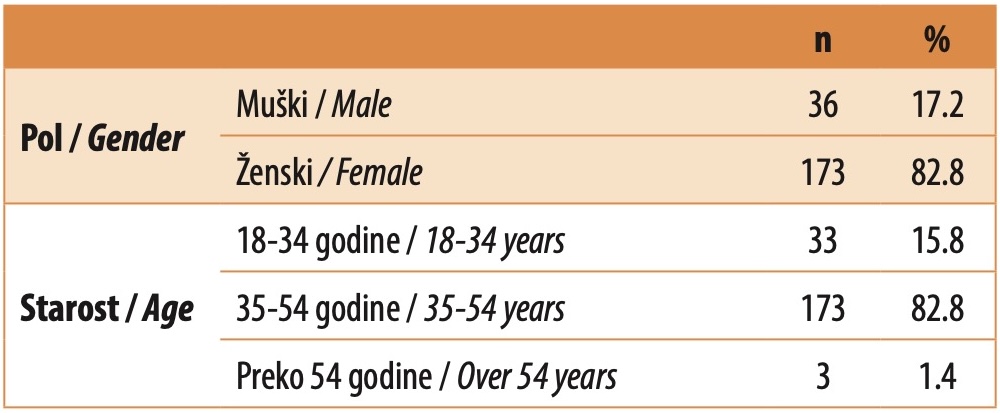
A total of 209 respondents filled out the questionnaire for parents.
With respect to gender, 173 (82.8%) mothers and 36 (17.2%) fathers completed the questionnaire.
As to the age of the parents, the largest number was in the 35–54 years age group (173 or 82.8%), followed by the youngest age group, i.e., 18–34 years (33 or 15.8%), while the smallest number (3 or 1.4 %) of respondents were in the group aged over 54 years.
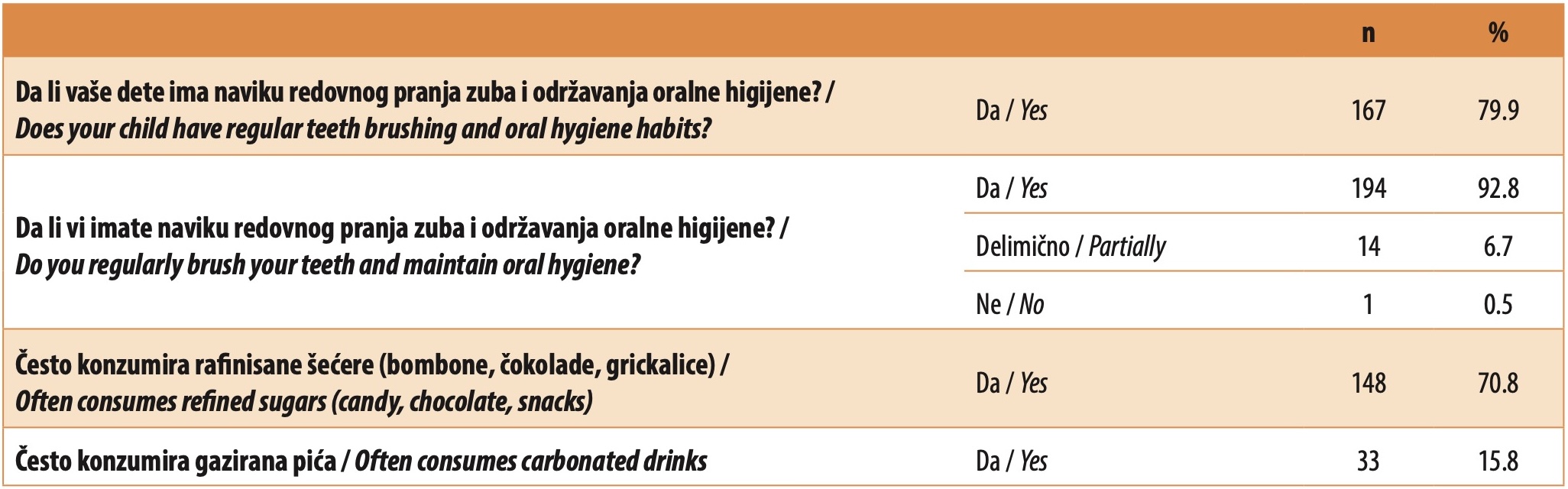
A majority of parents, 167 (79.9%), stated that their children regularly brush their teeth and maintain oral hygiene. In the same way, most parents, 194 (92.8%) of them, stated that they regularly brush their teeth and maintain oral hygiene. A total of 14 (6.7%) parents stated that they partially had these habits, and only one parent stated that they did not have such habits. According to the parents, in 148 (70.8%) of cases, children often consume refined sugar, while in 33 (15.8%) of cases, children often drink carbonated drinks.
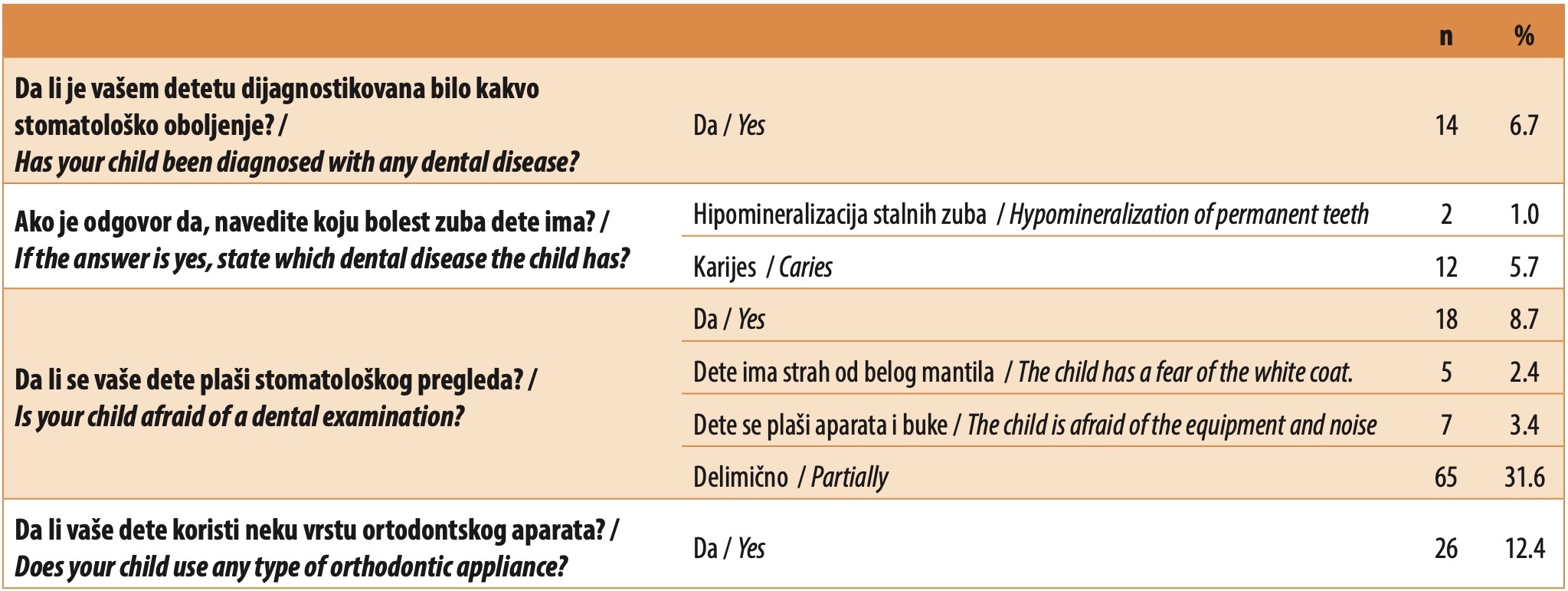
In 14 (6.7%) cases children have been diagnosed with a dental disease. Among the dental diseases, parents most often mentioned caries (in 12 or 5.7% of the cases) and hypomineralization of permanent teeth (in 2 or 1.0 % of cases). Slightly less than half of the parents (95 or 45.5% of the cases) stated that their child is afraid of the dental examination, either completely or partially. Of the total number of respondents, 26 (12.4%) stated that their children use some type of orthodontic appliance.
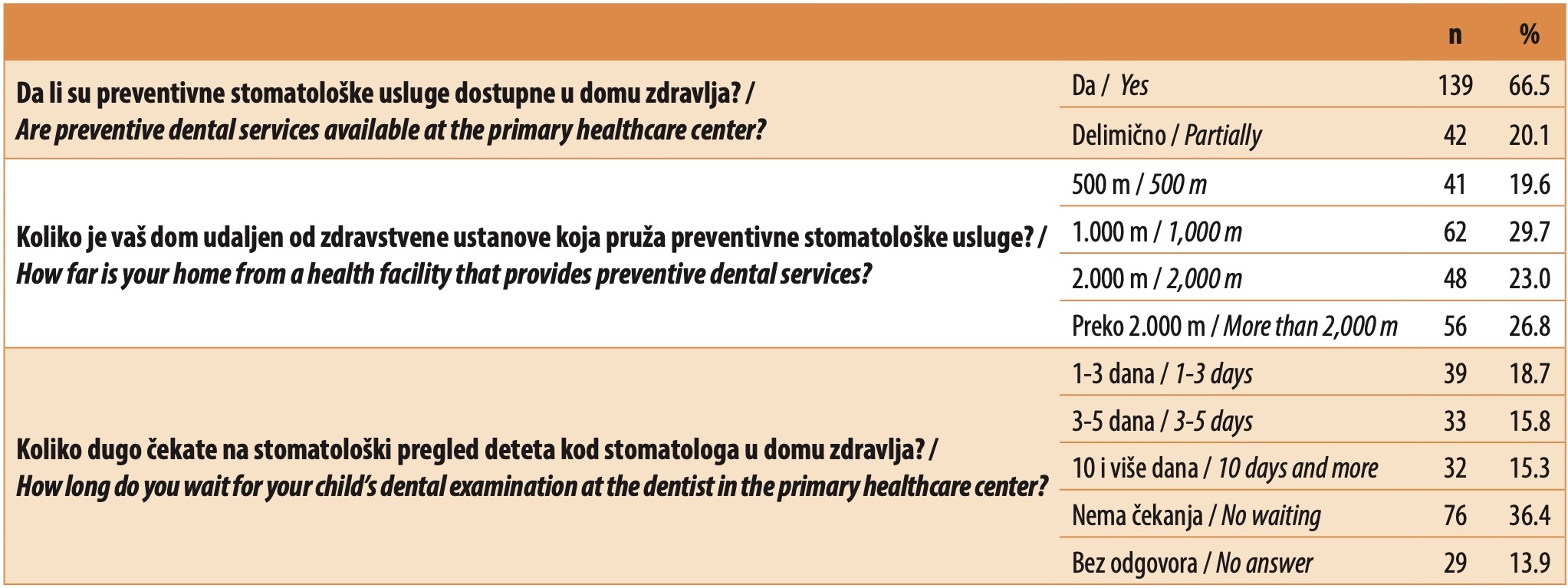
A majority of respondents (139 or 66.5%) stated that preventive dental services are available to them at the primary healthcare center, while 42 (20.1%) of the respondents stated that they are available partially. The distance from the facility where preventive dental services are provided is around 1,000 meters in most cases (62 cases or 29.7%), in 56 (26.8%) cases the distance is more than 2,000 meters, it amounts to 2,000 meters in 48 (23.0%) cases, and in 41 (19.6%) cases it is around 500 meters. A majority of parents stated that they do not have to wait for a dental examination at the primary healthcare center (76 cases or 36.4%), which is in line with the answers given by the heads of dental services. However, in 32 (15.3%) cases respondents stated having to wait for more than 10 days.
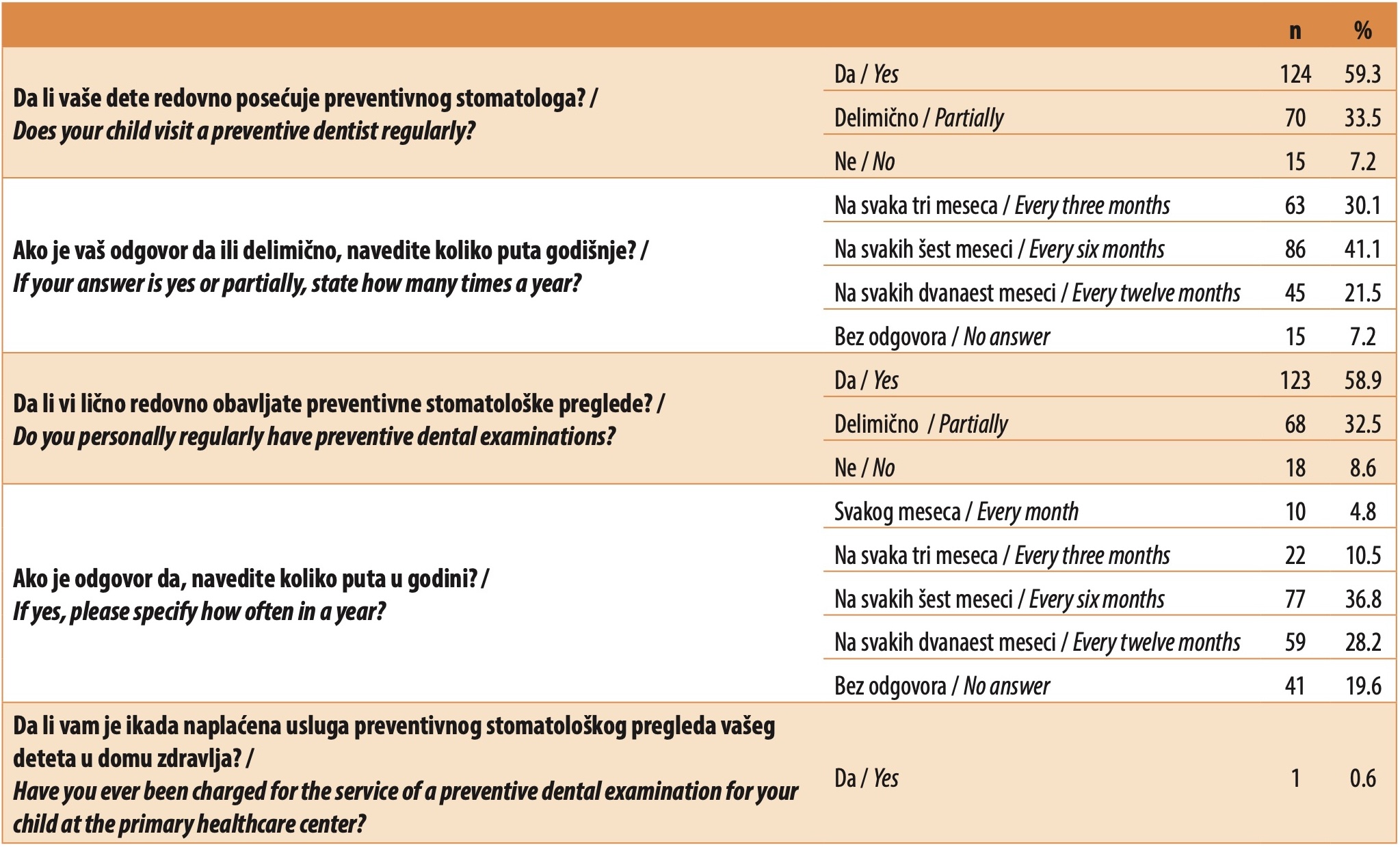
Most children regularly visit a preventive dentist, i.e., fully in 124 (59.3%) cases and partially in 70 (33.5%) cases, while in 15 (7.2%) cases children do not visit a preventive dentist regularly.
The greatest number of children (86 or 41.1%) visit a preventive dentist every 6 months, 63 (30.1%) children visit a preventive dentist every three months, and the least number of children (45 or 21.5%) visit the dentist every 12 months. A total of 15 (7.2%) parents did not answer this question. A majority of parents stated that they also personally have preventive dental examinations: always (123 cases or 58.9%) and partially (68 cases 32.5%), while 18 (8.6%) respondents do not have these examinations.
Parents most often perform preventive dental examinations every 6 months (77 cases or 36.8%) or every 12 months (59 cases or 28.2%). Only one parent reported being charged for the preventive dental examination at the primary healthcare center.
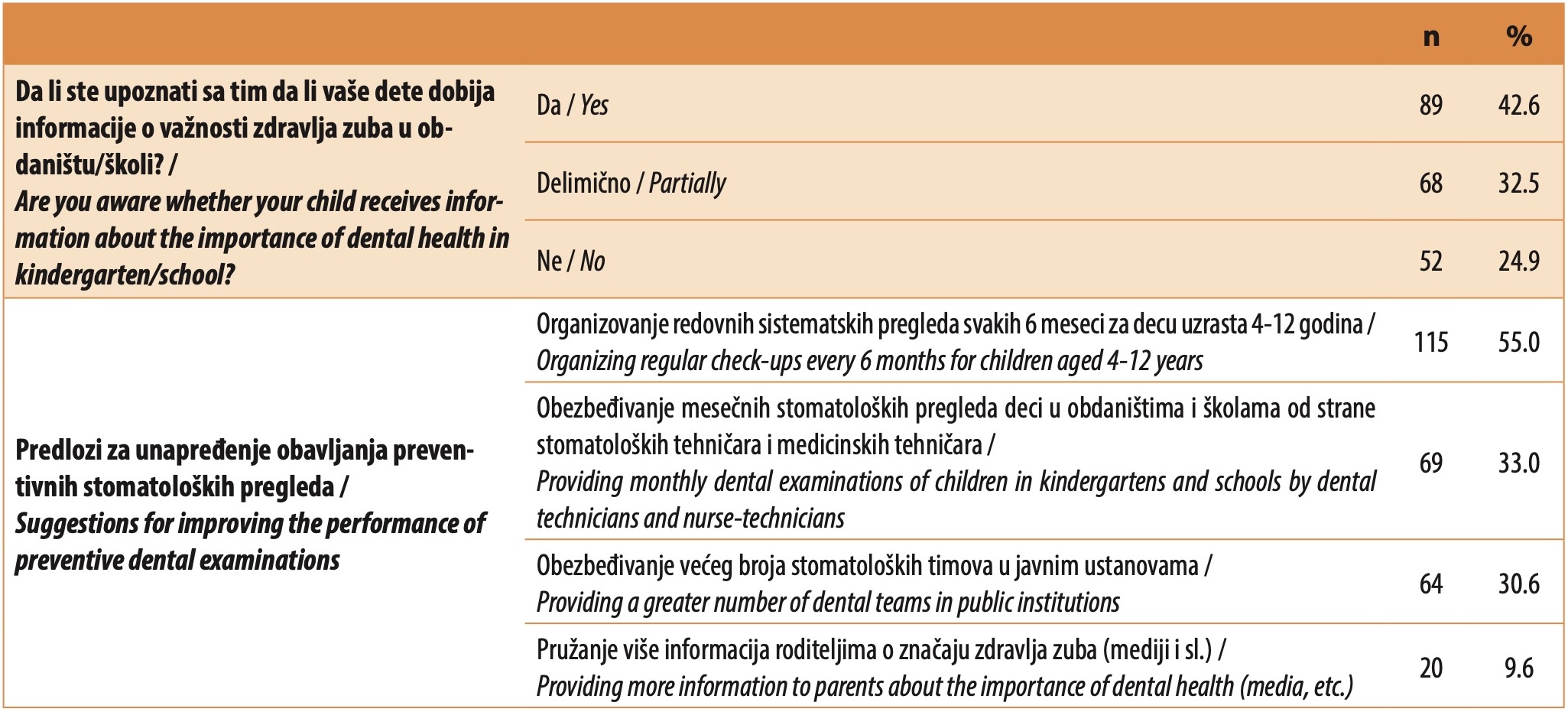
About three quarters of the parents are fully (89 or 42.6%) or partially (68 or 32.5%) aware of whether their child receives information about the importance of dental health in kindergarten/school. The rest (52 or 24.9%) answered in the negative.
Among the proposals for improvement, parents most often stated “Organizing regular check-ups every 6 months for children aged 4-12 years” (115 cases or 55.0%), followed by the suggestion “Providing monthly dental examinations of children in kindergartens and schools by dental technicians and nurse-technicians” (69 respondents or 33.0%), “Providing a greater number of dental teams in public institutions” (64 cases or 30.6%), and the least number of respondents suggested “Providing more information to parents about the importance of dental health (media, etc.)”, (20 respondents or 9.6 %).
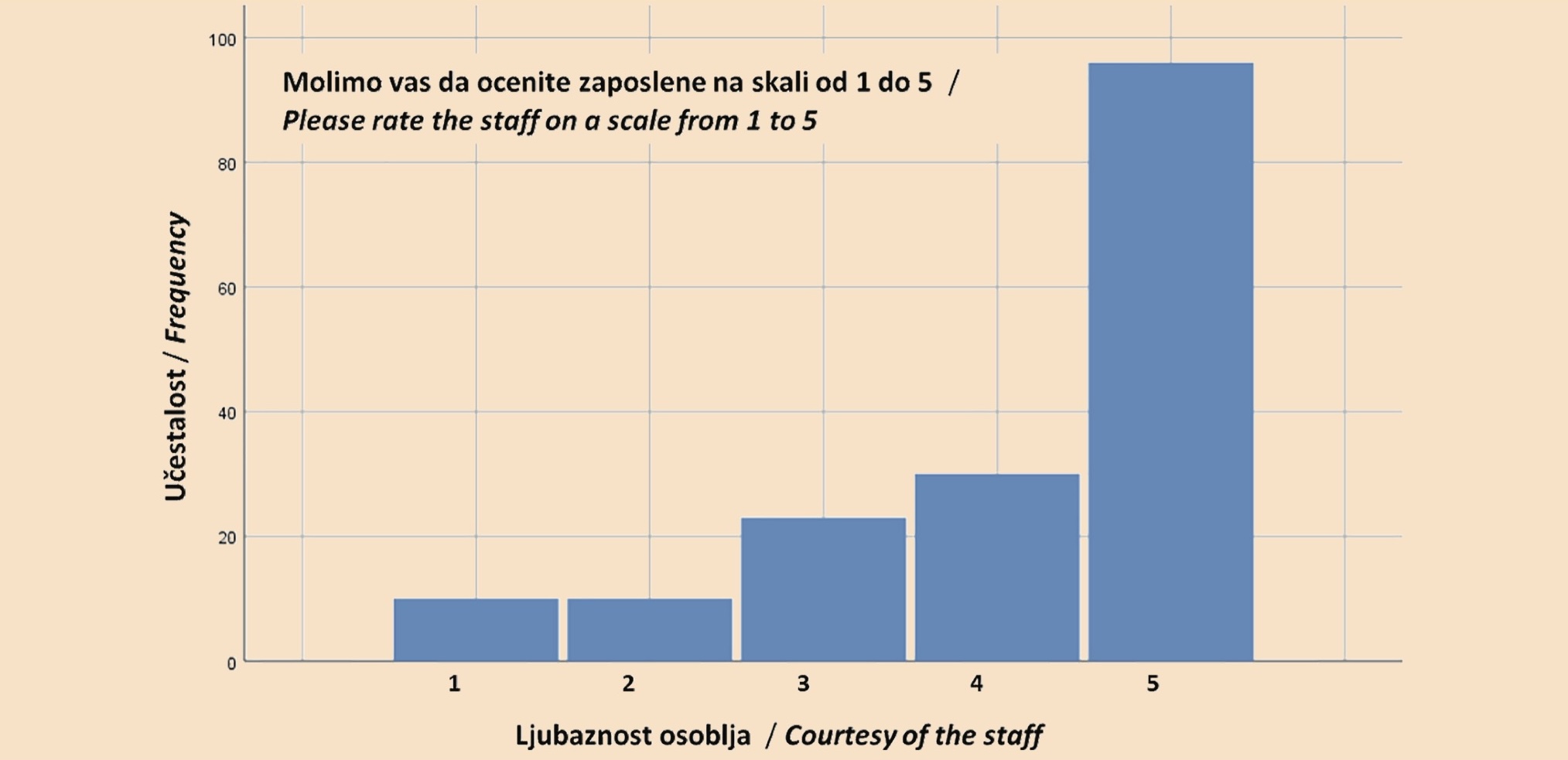
A total of 169 parents rated the friendliness of the staff of the dental service of the primary healthcare center, on a scale of 1 to 5, with a high average rating of 4.14 ± 1.21.
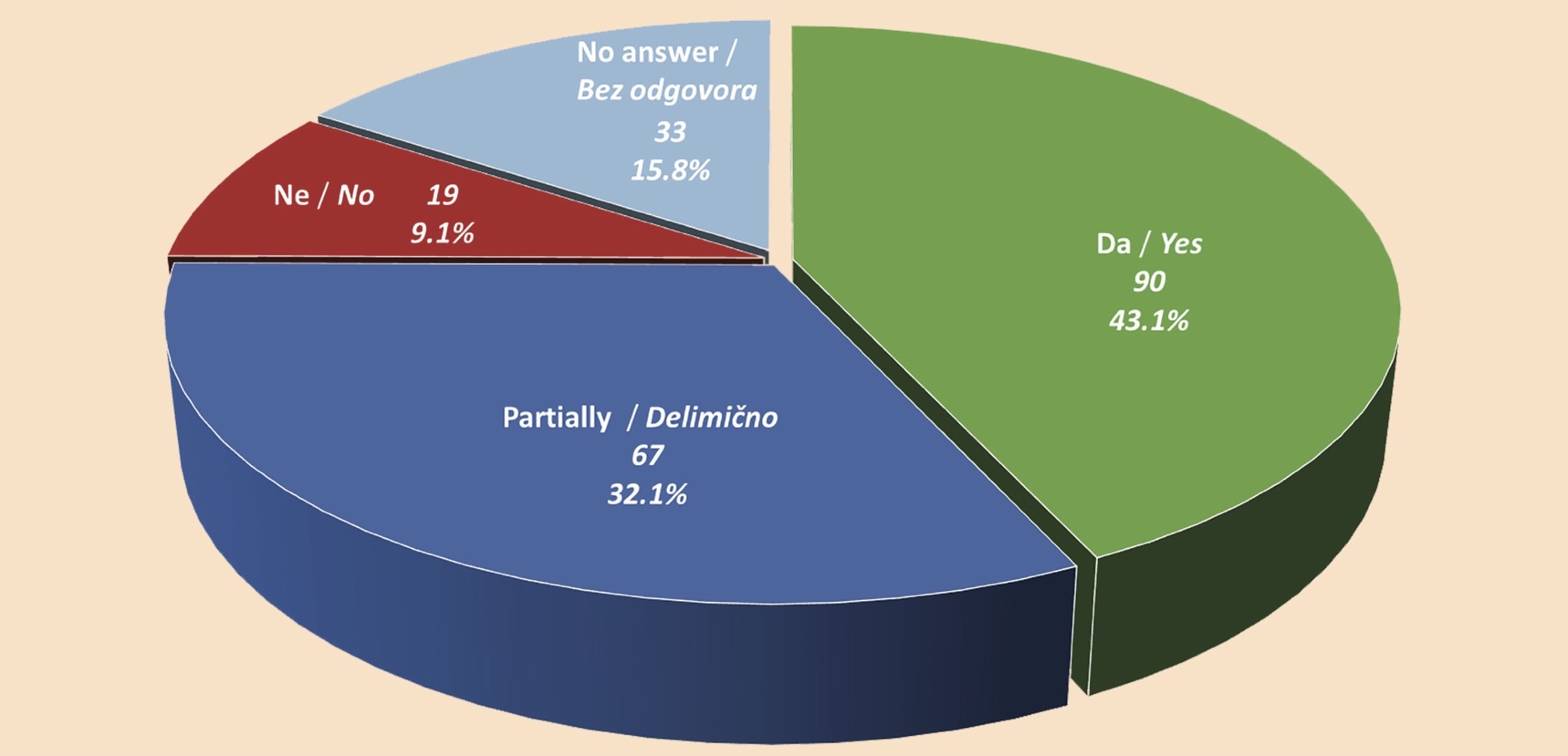
Almost 80% of parents stated that they are satisfied with the professionalism and work of the staff in the dental service of the primary healthcare center: fully (90 respondents or 43.1%) and partially (67 cases or 32.1%). Of all the respondents, 33 (15.8%) did not answer this question.
DISCUSSION
Two questionnaires were analyzed for the purpose of this study. One questionnaire was for heads of dental services, and the other was for children’s parents. Five respondents completed the questionnaire for heads of dental services.
Regarding the prevention of oral diseases, less than half of the respondents stated that they have a strategic document in place for a program of caries prevention and promotion of oral health in their institution while all respondents stated that they have good cooperation with schools regarding preventive services.
It is interesting to note that a majority of respondents (60.0%) pointed out that a graduate nurse with additional education in preventive dentistry could carry out prevention of oral diseases in preschool and school children.
Also, a majority of respondents stated that they are satisfied with the level of knowledge and education of the staff at their institution. It is important to point out that all respondents stated that their institution provides dental services for children and adolescents with developmental disabilities, and that the architectural design of the facilities enables access for these patients.
A total of 209 respondents filled out the questionnaire for parents, of whom 36 men and 173 women. Most respondents were aged 35–54.
It is important to point out that a majority of parents (80.7%) stated that their children have regular habits of brushing their teeth and maintaining oral hygiene. Also, regarding regular tooth brushing and maintaining oral hygiene in parents, most parents have regular teeth brushing habits.
Most parents stated that their children often consume refined sugars, while slightly fewer of them also consume carbonated drinks. A smaller number of respondents (6.7%) confirmed that their child has some dental disease, and that some of them (12.7%) use some type of orthodontic appliance.
The availability of dental health care is at a high level according to the parents (139 respondents or 67.8%). Only 24 (11.7%) of respondents stated that they do not have access to dental health care.
In their answers regarding the waiting time for a dental examination a majority of the parents stated that they do not have to wait for a dental examination.
It is very important to get information about the importance of oral health at kindergartens/schools, and 43.4% of the respondents stated that they are fully aware of whether their child is getting information about the importance of oral health.
Also, it is important that a majority of parents consider the staff of the dental services of the primary healthcare center to be very friendly, giving them a high average rating on a scale of 1 to 5. Most parents (51.1%) are satisfied with the professionalism and work of the dental services, followed by 38.1% of partially satisfied respondents and 10.8% of unsatisfied respondents. Preventive dental services at the primary healthcare center are free of charge, which is supported by the fact that only one parent stated that they were charged for preventive dental services.
The most common suggestions for improving the performance of preventive dental examinations are as follows: organizing regular check-ups every 6 months for children aged 4–12 years (55.0%), providing monthly dental examinations for kindergarten and school children by dental technicians and nurse-technicians (33.0%), and providing a greater number of dental teams in public institutions (30.6%).
In her study, carried out in 2021, Brčič points out that the dental service of the Primary Healthcare Center of the Livno Municipality provides all conditions for quality preventive care of preschool and school children and their parents, and that the outdated medical equipment and the fact that the staff are older and with many years of service have no influence on the quality of preventive dental services [9].
In their study from 2023, Bajrić et al. proved that the task of preventive programs is to recognize patients at high risk of developing caries, and to apply an individual approach to diagnostics and therapy [5]. Preventive procedures include professional cleaning with the use of fluoride, and essential nutritional and dietary counseling [10]. In clinical work, various tests, such as the plaque test, CRT bacteria, and CRT buffer, can prove the existence of an increased risk for caries. In this way, it is possible to introduce appropriate preventive measures at an early stage [11]. The goal of all preventive oral hygiene measures is to remove as much plaque as possible and delay its re-formation for as long as possible. The means by which this is achieved are a toothbrush, toothpaste, interdental brushes, dental floss, and antiseptics.
Parents who start brushing their children’s teeth before the age of two, as well as the parents’ perceived skills in brushing teeth as part of their children’s daily routine, are associated with a lower incidence of caries in children aged four and younger. In their study from 2015, Huebner et al. confirmed that engaging parents in the design of programs that support brushing teeth in infants and young children leads to positive results, i.e. a 30% increase in the number of parents who brush their young children’s teeth twice a day accompanied with an increased self-confidence of parents and the efficiency of tooth brushing. Brushing teeth twice a day is a low-cost strategy to reduce the risk of caries in childhood. Early childhood programs can be helpful in ensuring all children receive the benefits of tooth brushing by helping parents instill in their children the importance of personal hygiene [12]. In order to preserve the oral health of children, it is necessary to influence the adoption of healthy forms of behavior, in terms of oral hygiene, the use of fluoridation, healthy nutrition, and regular visits to the dentist, through health and education procedures. Through health education, it is necessary to influence all family members, with the aim of developing the skills necessary for proper oral and dental care and increasing the motivation for preventing oral diseases [13]. Programs and initiatives for promoting oral health and caries prevention that are starting to be implemented at the national level should enable changes, raise awareness about the importance of preventive action, and encourage the revitalization of preventive dental health care at the preschool and school age [14].
Numerous authors, in their original articles and systematic reviews, have pointed out that most oral diseases can be prevented, but it is necessary to start with education and prevention of oral diseases from an early age. That is why it is necessary to continuously collect epidemiological data, carry out literature reviews, and perform scientific analyses of preventive methods, in order to be able to create evidence-based programs and approach the issue of prevention in a multidisciplinary manner [7],[15],[16].
In their study from 2020, Dimitrova et al. researched the topic of individual programs for health education and motivation for oral hygiene and nutrition in children aged 7 to 10 years. Atif et al. published a systematic literature review in 2023. Both of these studies have proven that dentists have at their disposal various forms, ways, and means to motivate children and parents to take care of their oral health, such as various media content, workshops, and presentations, which, in addition to being educational, stimulate creativity and interest. Motivation to raise awareness of healthy habits is a long-term psychological process and requires a continuous strategy [17],[18].
CONCLUSION
Based on the results of the study, we were able to prove that quality and safe preventive dental care for preschool and school children in the public health sector is provided in the Canton of Sarajevo.
Based on the questionnaire for heads of dental services, it can be concluded that a majority of the institutions have a staff development plan, that all employees are continuously educated, and that the institutions have a personnel professional development plan in place. This speaks in favor of providing quality service by educated staff.
Only two out of three institutions have a strategic document (policy) for a program of caries prevention and promotion of oral health, which speaks in favor of the fact that more work should be done on strategic prevention planning.
Based on the analysis of the questionnaire for parents, it can be concluded that the preventive dental service in the public sector at the primary healthcare center is fully available for almost all children.
Most respondents stated that they do not wait for a dental examination at the dentist in the primary healthcare center. The parents’ assessment of the friendliness of the staff at the public primary healthcare center yielded a high score, indicating that a majority of parents were satisfied with the professionalism and work of the staff in the dental service of the primary healthcare center.
Informations

-
Keywords:
-
Received:
-
Revised:
-
Accepted:
-
Online first:
-
DOI:
-
Cite this article:

Amer Ovčina
Faculty of Health Studies, University of Sarajevo
75 Bolnička Street, 71000 Sarajevo, Bosnia and Herzegovina
E-mail:
1. Ahmić, A. Uvod u stomatologiju s historijom i etikom. Univerzitet u Sarajevu. Sarajevo. 2018.
2. Ivanković A, Rebac Z. Financing of dental health care in the Federation of Bosnia and Herzegovina. Croat Med J. 1999 Jun;40(2):166-74.
3. Bajrić E, Kobašlija S, Huseinbegović A, Zukanović A, Marković N, Selimović-Dragaš M, et al. Predictors of dental fear and anxiety in 9-12-year-old children in Bosnia and Herzegovina. Acta Stomatol Croat. 2022 Sep;56(3):246- 56. doi: 10.15644/asc56/3/3. [CROSSREF]
4. Muratbegovic A, Markovic N, Ganibegovic Selimovic M. Molar incisor hypomineralisation in Bosnia and Herzegovina: aetiology and clinical consequences in medium caries activity population. Eur Arch Paediatr Dent. 2007 Dec;8(4):189-94. doi: 10.1007/BF03262595. [CROSSREF]
5. Bajrić E, Arslanagić A, Zukanović A, Duratbegović D, Šačić-Selmanović L, Katana E, et al. Dental caries experience in children in public kindergartens of Sarajevo, Bosnia and Herzegovina. Acta Stomatol Croat. 2023 Mar;57(1):32- 42. doi: 10.15644/asc57/1/4. [CROSSREF]
6. Hraste J, Gržić R. Uvod u stomatologiju. Sveučilište u Rijeci. Medicinski fakultet. Rijeka. 2006.
7. Karamehmedovic E, Bajric E, Virtanen JI. Oral health behaviour of nine-year-old children and their parents in Sarajevo. Int J Environ Res Public Health. 2021 Mar 21;18(6):3235. doi: 10.3390/ijerph18063235. [CROSSREF]
8. Welbury RR, Duggal MS, Hosey MT. Paediatric Dentistry. Oxford: Oxford University Press. 2005.
9. Brčić Lj. Upravljanje kvalitetom u preventivnoj stomatološkoj djelatnosti na nivou Općine Livno. Završni rad. Sveučilište/Univerzitet „Vitez“ u Travniku. Vitez. 2021.
10. Vozza I, Capasso F, Calcagnile F, Anelli A, Corridore D, Ferrara C, et al. School-age dental screening: oral health and eating habits. Clin Ter. 2019 JanFeb;170(1):e36-40. doi: 10.7417/CT.2019.2105. [CROSSREF]
11. Khan MW, Cruz de Jesus V, Mittermuller BA, Sareen S, Lee V, Schroth RJ, et al. Role of socioeconomic factors and interkingdom crosstalk in the dental plaque microbiome in early childhood caries. Cell Rep. 2024 Aug 27;43(8):114635. doi: 10.1016/j.celrep.2024.114635. [CROSSREF]
12. Huebner CE, Milgrom P. Evaluation of a parent-designed programme to support tooth brushing of infants and young children. Int J Dent Hyg. 2015 Feb;13(1):65-73. doi: 10.1111/idh.12100. [CROSSREF]
13. Šačić L, Marković N, Arslanagić Muratbegović A, Zukanović A, Kobašlija S. The prevalence and severity of early childhood caries in preschool children in the Federation of Bosnia and Herzegovina. Acta Med Acad. 2016 May;45(1):19- 25. doi: 10.5644/ama2006-124.152. [CROSSREF]
14. Heller LS, Pithavadian R, Micheal S, Chandio N, Sanagavarapu P, Parmar J, et al. Parental perceptions of an oral health promotion program in early childhood education and care settings: A qualitative study. J Public Health Dent. 2024 Dec;84(4):407-19. doi: 10.1111/jphd.12641. [CROSSREF]
15. Elsadek YE, Baker SR. Oral health promotion through health-promoting schools in developing countries: A scoping review. Community Dent Oral Epidemiol. 2023 Dec;51(6):1197-208. doi: 10.1111/cdoe.12864. [CROSSREF]
16. Geetha Priya PR, Asokan S, Janani RG, Kandaswamy D. Effectiveness of school dental health education on the oral health status and knowledge of children: A systematic review. Indian J Dent Res. 2019 May-Jun;30(3):437-49. doi: 10.4103/ijdr.IJDR_805_18. [CROSSREF]
17. Dimitrova M, Tankova H, Rashkova M. Individual program for health education and motivation for oral hygiene and nutrition in children aged 7 to 10 years. Problems of dental medicine. 2020;46(2):28-36.
18. Atif M, Tewari N, Saji S, Srivastav S, Rahul M. Effectiveness of various methods of educating children and adolescents for the maintenance of oral health: A systematic review of randomized controlled trials. Int J Paediatr Dent. 2024 May;34(3):229-45. doi: 10.1111/ipd.13125. [CROSSREF]
- Table 1. Analysis of answers to questions from the questionnaire for heads of dental services
- Table 2. Sociodemographic characteristics of respondents
- Table 3. Overview of sugar and soda intake, tooth brushing, and oral hygiene habits
- Table 4. Analysis of the prevalence of dental diseases and treatment
- Table 5. Availability of preventive dental services at the primary healthcare center
- Table 6. Regularity of visits to the preventive dentist
- Table 7. The significance of obtaining information about dental health in kindergartens/schools and suggestions for improvement
- Figure 1. Analysis of the friendliness of the staff of dental services at the primary healthcare centers
- Figure 2. Analysis of satisfaction with the professionalism and work of the staff in the dental services of the primary healthcare center