


Positive trends in the number of nurses and technicians in Montenegro: an overview of period between 2014–2023
- Institute of Public Health of Montenegro, Podgorica, Montenegro
ABSTRACT
Introduction: Achieving universal health coverage is a major challenge for all countries, and progress largely depends on the resources they possess and their availability.
The aim of the paper is to review the provision and dynamics of the number of nurses/technicians and their structure in the ten-year period 2014-2023, as well as to examine whether there was a change in the equity of their distribution in relation to the number of inhabitants by municipalities.
Methodology: A retrospective analysis of data on nurses and technicians employed in public health institutions in Montenegro for the period 2014-2023 was conducted, focusing on the following outcomes: the longitudinal increase in the number of nurses, the nurse-to-doctor ratio, the distribution of nurses by sex, age, and education, and the Gini coefficient as a measure of inequality in the distribution of nurses relative to the population across municipalities.
Results: The density of nurses increased by 24% between 2014 and 2023, reaching 5.84 per 1,000 inhabitants in 2023, while the nurse-to-doctor ratio in the system reached 2.04 : 1. Nurses are predominantly female, aged 35-44, and the share of male nurses is increasing (12.91 in 2014 compared to 18.68 in 2023). Onefifth of the nurses have completed a college or university education. The Gini coefficient of inequality of distribution of nurses/technicians decreased from 0.195 in 2014. to 0.191 in 2023.
Conclusion: In the last ten years, there have been significant positive changes in the density and structure of nurses and technicians which have probably been influenced by the health policy measures implemented during the COVID-19 pandemic.
INTRODUCTION
All countries face significant challenges in ensuring an adequate supply of health personnel, particularly nurses and technicians, who form a vital and substantial segment of the health workforce. However, an adequate supply of human resources alone does not guarantee that a health system will be resilient to the numerous challenges it faces or successful in progressing toward universal health coverage. Only when human resources are equitably distributed to ensure widespread access to healthcare, and when they are both competent and motivated, can they deliver care that meets expected quality and socio-cultural standards [1],[2].
Montenegro’s health system is predominantly built around state-owned facilities. In the new millennium, efforts have focused on strengthening the health system by enhancing primary healthcare and improving the competencies and roles of teams comprising chosen doctors and nurses/technicians [3],[4]. Following the reform, the healthcare development plan (2015–2020) was adopted, outlining strategic directions for human resource development. These included regular education, continuous enhancement of knowledge and skills, capacity building for human resource management, and promoting the mobility of healthcare workers [5]. The Human Resources in Healthcare Plan (2013–2022) projected an increase in the number of doctors employed within the system, while maintaining a constant number of nurses and technicians [6].
This study aims to analyze the supply and trends in the number of nurses and technicians over a tenyear period (2014–2023), examining their demographic structure in terms of gender, age, and education level. Additionally, it seeks to determine whether the observed period saw changes in the geographic distribution of nurses and technicians relative to the population size across municipalities.
METHODS
The units of observation in this study were nurses and technicians employed in state health institutions across Montenegro, encompassing both outpatient and hospital settings. According to current legislation in Montenegro, nurses and technicians are healthcare professionals responsible for providing general health care services and are required to have an appropriate level of education in the healthcare field [7],[8]. The total number of nurses and technicians excluded those specializing in gynecology and obstetrics. Nurses and technicians do not include radiology technicians, physiotherapy technicians, or laboratory technicians, in order to maintain comparability and alignment with reporting standards in EU countries. When calculating the ratio between the number of nurses/technicians and doctors, the total number of doctors employed in public health institutions during the specified period was considered.
In addition to using descriptive methods (absolute and relative numbers), indices of change in the number of nurses and technicians were calculated for the period from 2014 to 2023. The rate of nurses and technicians per 1,000 inhabitants was also calculated for each year within the observed period. Based on the calculated rates of distribution of nurses/technicians and the growth rate of their numbers, trend lines were generated to illustrate their average movement between 2014 and 2023.
The demographic determinants used were gender (male/female) and age (age groups: up to 34 years, 35- 44 years, 45-54 years, and 55 and over). To assess the equality of the distribution of nurses and technicians relative to the population size by municipality, we employed the Gini coefficient [9],[10],[11]. Using the cumulative percentage of the population as the abscissa and the cumulative percentage of nurses as the ordinate, we constructed a Lorenz curve to illustrate the distribution of nurses/technicians relative to the population by municipality. The Gini coefficient is calculated based on the ratio of the area under the Lorenz curve to the area beneath the hypothetical line of perfect equality. It ranges from 0 to 1, where 0 indicates perfect equality and 1 signifies perfect inequality. All calculations were performed using the “Excel” program within the “Microsoft” software package.
Data on human resources, collected and published by the Institute for Public Health of Montenegro, were used in the preparation of this study. To calculate the rates, population data published by the Statistical Office of Montenegro (MONSTAT) were used. For comparative indicators across European countries and beyond, data from international databases were utilized, including the OECD Health Statistics 2020, Eurostat Database, and the World Health Organization database.
RESULTS
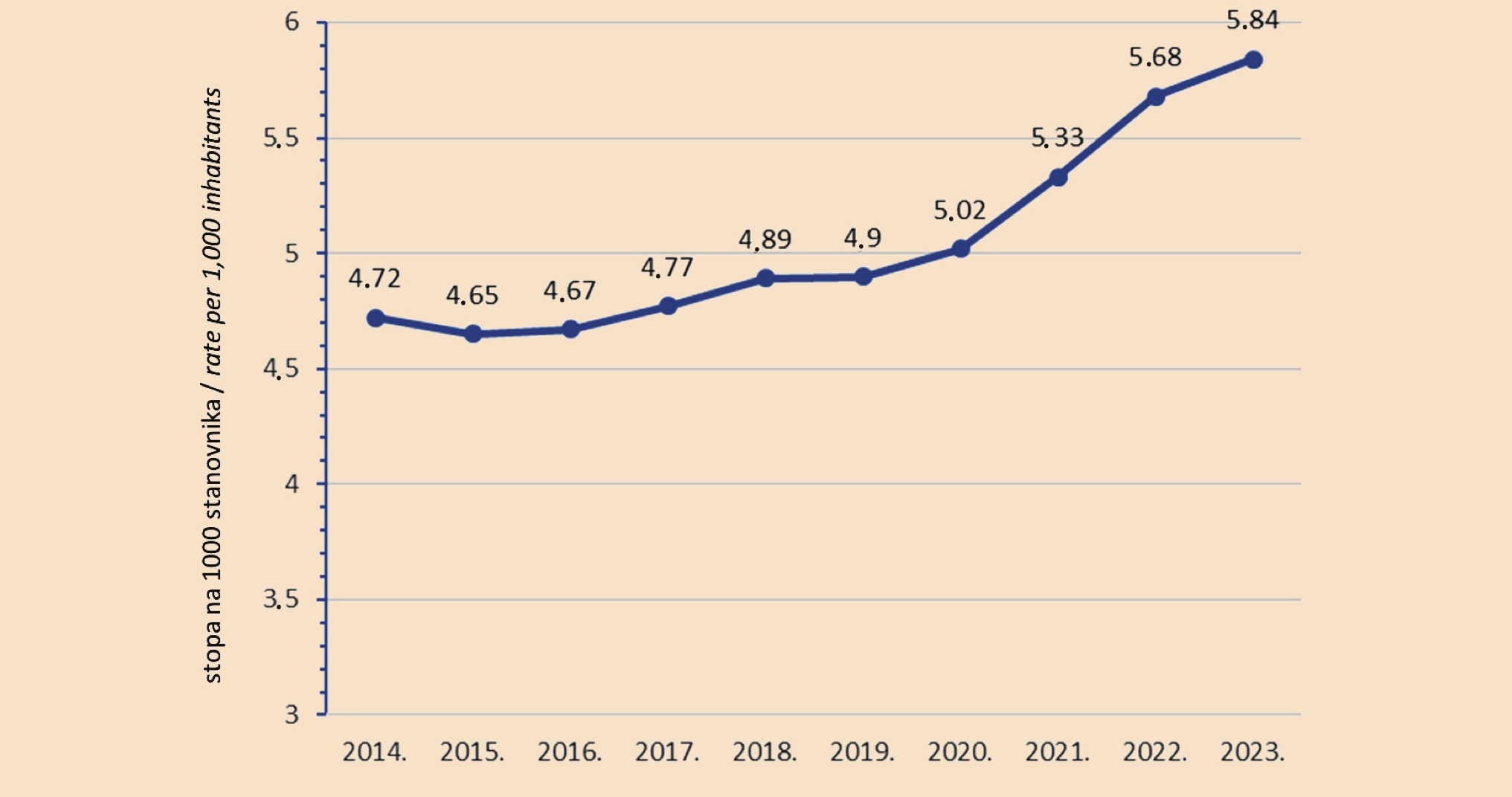
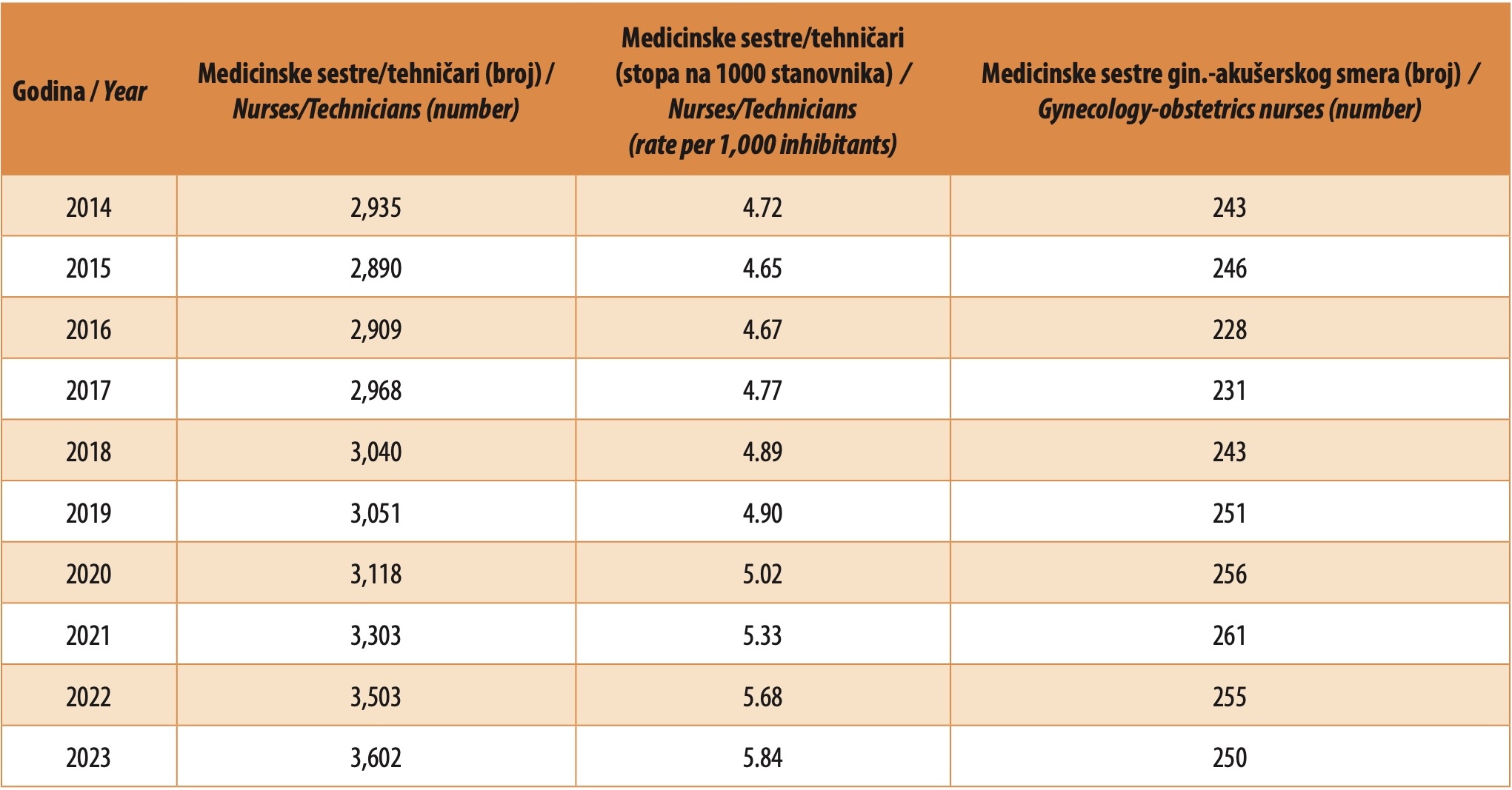
Over the ten-year period from 2014 to 2023, the number of employed nurses/technicians increased. By the end of 2023, a total of 3,602 nurses and technicians were employed in healthcare institutions, reflecting a 23% increase compared to 2014. The rate of nurses and technicians per 1,000 inhabitants steadily increased throughout the mentioned period. By 2023, it had risen by 24% compared to 2014, reaching a value of 5.84 per 1,000 inhabitants (Graph 1). The number of gynecological-obstetrical nurses remained relatively constant, totaling 250 in 2023 (Table 1).
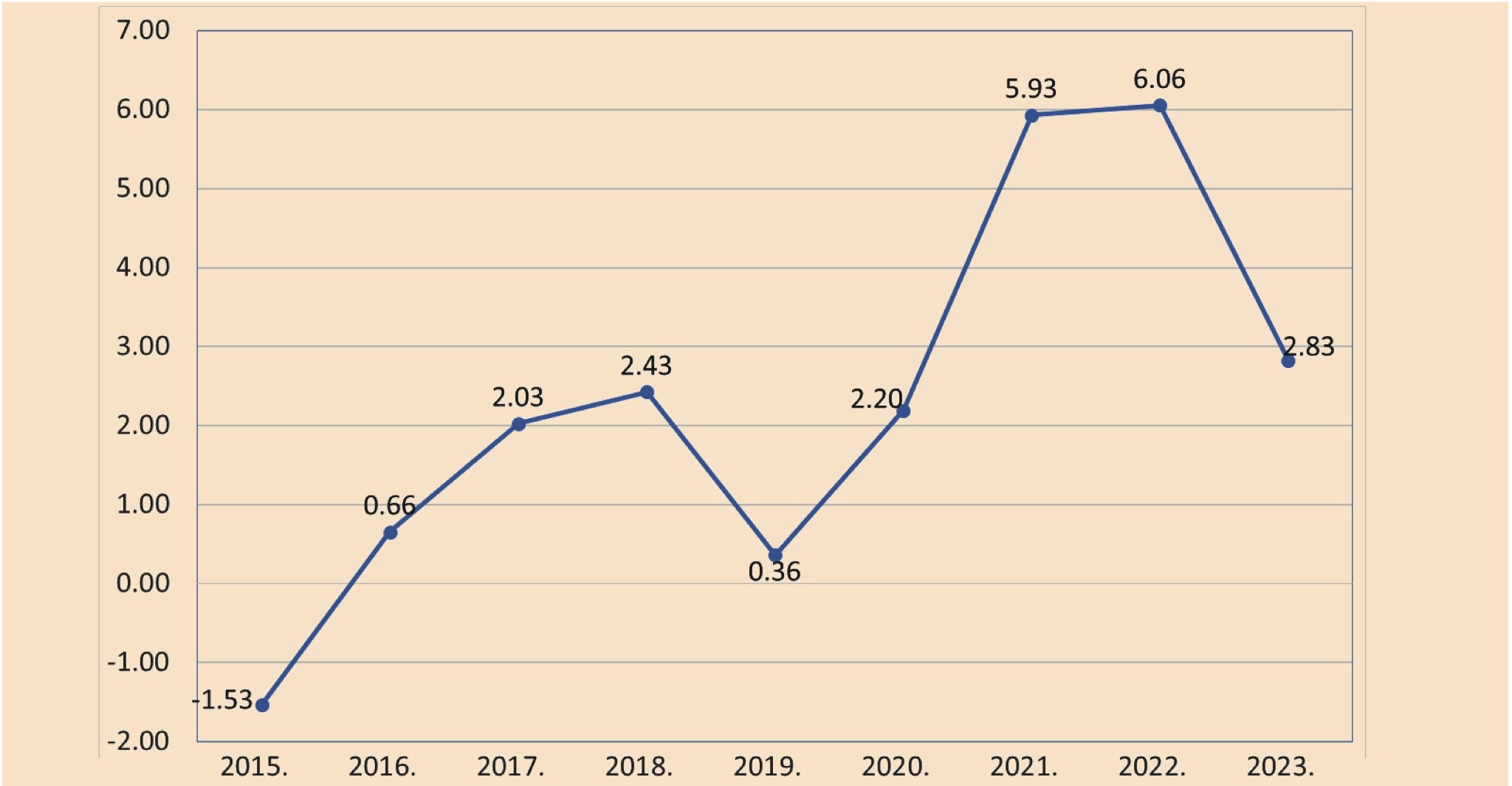
Based on the growth dynamics of the number of nurses/technicians (according to the growth rate by years of the observed period), as shown in Graph 2, two dominant growth intervals can be identified: the initial growth phase (from 2014 to 2018) and a more rapid growth phase (from 2019 to 2022). In the first period, the growth rate of the number of nurses increased by 3.58%. In the second period, the growth rate accelerated further, reaching an increase of 14.81% (Graph 2). After 2022, the growth slowed, with a rate of 2.83%.
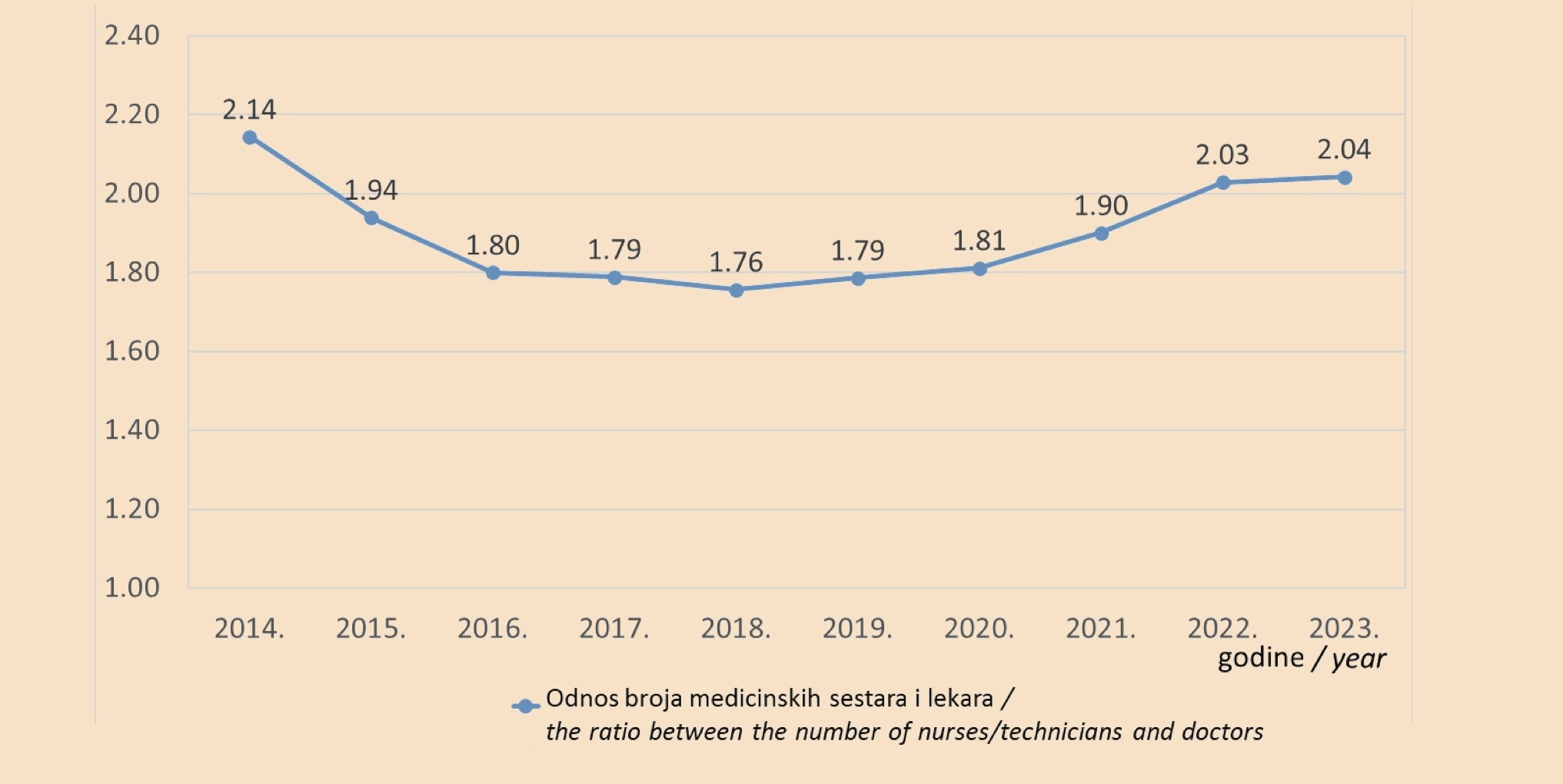
The ratio between the number of nurses/technicians and doctors in public health institutions in Montenegro is presented in Graph 3. After 2014, when the ratio was 2.14 : 1, it declined until 2018, reaching 1.76 : 1. From 2018 to 2023, the ratio showed a slight increase, reaching 2.04 : 1 by the end of the period.
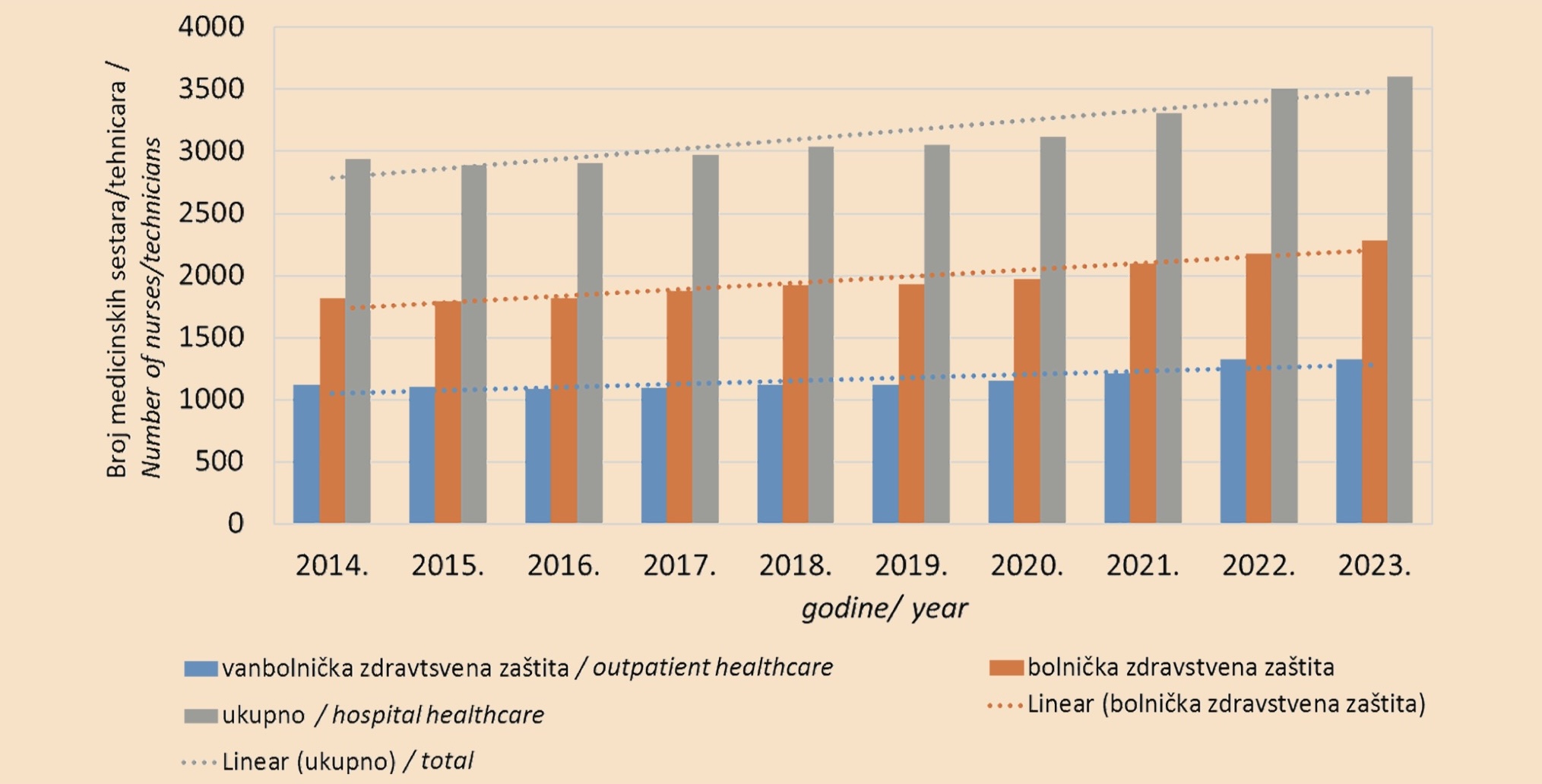
In 2023, the majority of employed nurses/technicians (63.33%) worked in hospital healthcare, while 36.67% were employed in outpatient healthcare. This distribution has shifted slightly compared to 2014, when the ratio was 61.91% in favor of hospital healthcare and 38.09% in outpatient care (Graph 4).
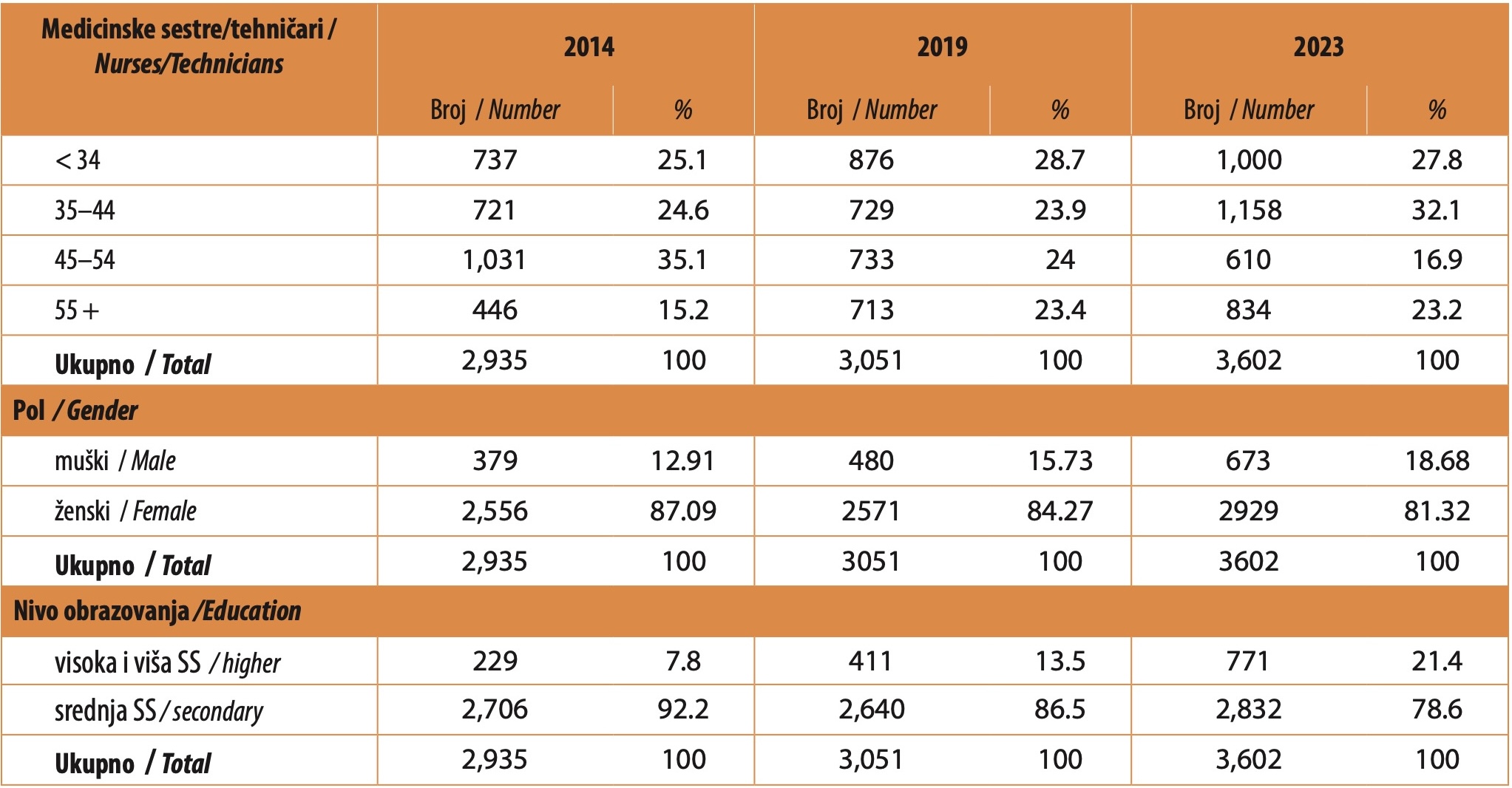
In 2023, the largest proportion of nurses/technicians belonged to the 35-44 age group. The number of nurses/technicians in the 35-44 age group has been increasing since 2014, along with the number in the up-to-34 and 55-and-older age groups. At the same time, the number of nurses in the 45-54 age group decreased. In public health institutions, females consistently dominated among nurses/technicians throughout the observed period. However, the proportion of male employees increased from 12.91% in 2014 to 18.68% in 2023 (Table 2). The proportion of nurses/ technicians with higher education increased from 7.8% in 2014 to 21.4% in 2023. This category includes nurses/technicians who completed four-year and threeyear degree programs, as well as those with a two-year higher education diploma.
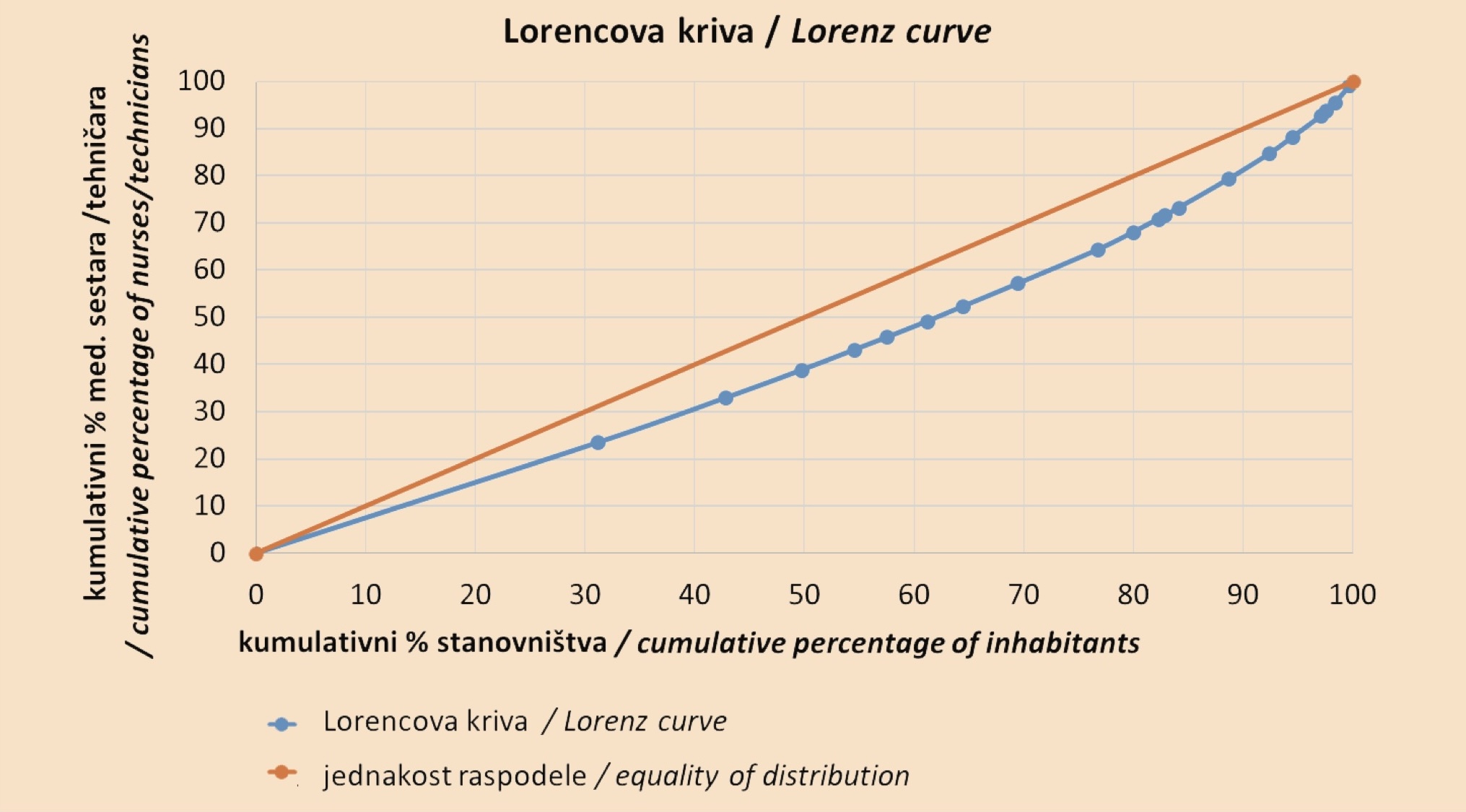
To assess the uniformity of the distribution of nurses/technicians across the 22 municipalities in Montenegro relative to the population size, the Gini coefficient was calculated for the start and end years of the observed period. The Gini coefficient, which measures the inequality of this distribution, decreased from 0.195 in 2014 to 0.191 in 2023. The distribution for the final year of the period is visually represented in the graph, using the Lorenz curve.
DISCUSSION
Between 2014 and 2023, the outcomes of Montenegro’s healthcare system reform were evaluated, revealing a significant reduction in the number of nurses and technicians. Although the strategic documents projected that the number of nurses and technicians would remain constant, their numbers consistently increased during the specified period, ultimately growing by nearly a quarter. The increase in the number of nurses and technicians within the system became essential to address the rising demand driven by global challenges affecting Montenegro. These included demographic shifts such as an aging population and low birth rates, a surge in chronic non-communicable diseases, health crises, and other emerging issues.
Despite the increase, the distribution of nursing workforce in Montenegro remains relatively low compared to European standards. Between 2010 and 2020, most EU countries also experienced an increase in the distribution of nursing workforce, with Finland, Ireland, and Germany leading the way, having the highest ratios. On average, the nurse-to-population ratio in EU countries during this period was 8 per 1,000 inhabitants [12]. In 2022, Serbia and North Macedonia reported the distribution of nursing workforce comparable to that of Montenegro among countries in the Southeast European region [12]. The interpretation and comparability of internationally collected data on healthcare human resources are challenging, largely due to differences in health system organization and reporting practices across countries.
Another key factor during the observed period was the COVID-19 pandemic. Countries with significantly lower density of nursing personnel faced greater challenges, including increased staff burnout, a decline in the quality of services provided, and higher attrition rates within the healthcare system [13]. In Montenegro, the pandemic led to a significant increase in the demand for nurses and technicians, which was reflected in the accelerated growth rate of their numbers. During the pandemic years, significant changes occurred at the primary healthcare level, including transformations in service delivery and management models, which likely contributed to an even greater need for staffing. To prevent migration and retain healthcare workers within the system, the government implemented ad hoc measures, including salary increases for health workers, improvements in working conditions (such as new equipment and the modernization of work processes), and educational programs at the state university level. The increase in the number of employed nurses and technicians helped improve the nurse-to-doctor ratio, which had been declining following the reform activities of the previous period. As a result, this ratio approached the EU average from 2020, which was slightly over two nurses/technicians per doctor [12],[14], and was higher than the average in several countries in the region [15].
Nurses and technicians are predominantly employed in hospital healthcare, with approximately one-third working in outpatient care. The growth trends over the past decade indicate a slight shift toward strengthening the labor supply of nurses and technicians in hospital settings. The majority of nurses and technicians are middle-aged, reflecting the workforce expansion, particularly during the pandemic years. However, nearly a quarter of them are aged 55 and older, which is higher than the average in EU countries and presents a challenge for the workforce sustainability [16].
As in many countries in the region and beyond, women have consistently dominated the nursing profession over medical technicians throughout the observed period. This is particularly true for gynecological-obstetrical nurses, where the profession is exclusively female. However, as the demand for these roles increased over the observed decade and working conditions improved, the number of male nurses and technicians steadily grew. As a result, the COVID-19 pandemic in Montenegro did not exacerbate the existing gender gap or inequality in the profession [17].
The educational structure of employed nurses and technicians has evolved over the past decade, with one-fifth of those working in healthcare institutions now holding a higher or advanced degree. This change was supported by the expansion of educational programs, including basic courses (Medical College and Applied Physiotherapy), as well as specialized and master’s studies (Nursing and Physiotherapy) at the state medical faculty. These programs are accessible to nurses and technicians who have completed their high school education.
The issue of equitable distribution of nurses and technicians is crucial for ensuring the availability and accessibility of healthcare. In Montenegro, there is a relatively high level of equality in the distribution of nurses and technicians across municipalities in relation to the population. The previously mentioned increase in the distribution of nursing workforce likely contributed to this trend. Similar studies examining the (in)equality in the distribution of various healthcare worker profiles have been conducted in several countries. Research conducted in China has shown a decline in the level of equality in the distribution of nurses, as evidenced by a decrease in the Gini coefficient [18]. Research conducted in Poland and Mongolia found a relatively high level of equality in the distribution of nurses relative to the population, based on the Gini coefficient, during the period from 2010 to 2017 [19],[20].
Additional research is needed to assess the health needs of the population, as such regular studies are not conducted in Montenegro. For effective planning, it is also crucial to investigate the migration patterns of nurses and technicians to regional and EU countries, as data on this topic is either scarce or nonexistent. Quality data on human resources is a critical prerequisite for evidence-based policymaking. Therefore, it is essential for health authorities to recognize the importance of establishing mechanisms that ensure up-to-date and comprehensive records.
This research did not include nurses and technicians working in the private sector, which has been expanding in Montenegro in recent years, particularly after the COVID-19 pandemic. It also excluded those employed in state prisons, the police, military, preschool, and social protection institutions. However, it is important to consider that a significant number of nurses employed in state healthcare institutions also work part-time in private institutions. Additionally, nurses and technicians working in emergency medical aid units across all municipalities are not included in the calculation of the Gini coefficient.
CONCLUSION
In recent years, there have been significant changes in the health workforce segment comprising nurses and technicians: the total number has increased, the nurse-to-doctor ratio has improved, and there has been greater gender representation within the profession. There has been significant progress in the education of nurses and technicians, and inequalities in their distribution across municipalities have been reduced. These changes are largely attributed to the country’s response to the crisis caused by the COVID-19 pandemic. However, the density of nursing workforce remains relatively low compared to the EU average, as does the proportion of nurses with higher education, while available data on human resources remains limited. To make informed decisions based on evidence, it is essential to have comprehensive and up-to-date data on human resources across the entire health system.
Informations

-
Keywords:
-
Received:
-
Revised:
-
Accepted:
-
Online first:
-
DOI:
-
Cite this article:

Lidija Šćepanović
Institute of Public Health of Montenegro
bb Džona Džeksona Street, 81000 Podgorica, Montenegro
E-mail:
1. World Health Organization. Global strategy on human resources for health: workforce 2030 [Internet]. Geneva: World Health Organization; 2016 [cited 2024 August, 21]. 61 p. Available from: https://iris.who.int/bitstream/handle/10665/250368/9789241511131-eng.pdf?sequence=1 [HTTP]
2. Boniol M, Kunjumen T, Nair TS, Siyam A, Campbell J, Diallo K. The global health workforce stock and distribution in 2020 and 2030: a threat to equity and ‘universal’ health coverage? BMJ Glob Health. 2022 Jun;7(6):e009316. doi: 10.1136/bmjgh-2022-009316. [CROSSREF]
3. Cvejanov Kezunović L, Drecun M, Švab I. Primary care reform in Montenegro. Zdr Varst. 2013 Dec;52(4):247-54. doi: 10.2478/sjph-2013-0025. [CROSSREF]
4. Šćepanović L. Health personnel and the reform of primary health care in Montenegro. Srpski medicinski časopis Lekarske komore. 2023;4(1):27-40. doi: 10.5937/smclk4-42596. [CROSSREF]
5. Ministarstvo zdravlja Crne Gore. Master plan razvoja zdravstva Crne Gore 2015–2020 [Internet]. Podgorica: Ministarstvo zdravlja Crne Gore; 2015 Aug [cited 2024 August, 16]. 61 p. Available from: https://www.gov.me/dokumenta/fde2ae2d-2a46-44e2-bf7c-06fdf35f4998 [HTTP]
6. Vlada Crne Gore – Ministarstvo zdravlja. Plan ljudskih resursa u zdravstvu u periodu 2013–2022. godine [Internet]. Podgorica: Vlada Crne Gore – Ministarstvo zdravlja; 2013 Feb [cited 2024 August, 21]. 71 p. Available from: https://www.gov.me/dokumenta/8155b409-453c-479e-af20-396c92778a8b [HTTP]
7. Ministarstvo zdravlja Crne Gore. Zakon o zdravstvenoj njezi pacijenata, „Službeni list CG” br. 25/2010 [Internet]. Available from: Zakon o zdravstvenoj njezi pacijenata (2010) [HTTP]
8. Ministarstvo zdravlja Crne Gore. Zakon o zdravstvenoj zaštiti „Službeni list CG”, br. 3/2016, 39/2016, 2/2017, 44/2018, 24/2019 – dr. zakoni, 82/2020 i 8/2021) [Internet]. Available from: https://www.gov.me/clanak/zakon-o-zdravstvenoj-zastiti [HTTP]
9. Brown MC. Using Gini-style indices to evaluate the spatial patterns of health practitioners: theoretical considerations and an application based on Alberta data. Soc Sci Med. 1994 May;38(9):1243-56. doi: 10.1016/0277- 9536(94)90189-9. [CROSSREF]
10. Kharazmi E, Bordbar N, Bordbar S. Distribution of nursing workforce in the world using Gini coefficient. BMC Nurs. 2023 May 5;22(1):151. doi: 10.1186/ s12912-023-01313-w. [CROSSREF]
11. Castillo-Salgado C, Schneider C, Loyola E, Mujica O, Roca A, Yerg T. Measuring health inequalities: Gini coefficient and concentration index. Epidemiol Bull [Internet]. 2001 Mar [cited 2024 August, 5];22(1):3-4. Available from: https://www3.paho.org/english/sha/be_v22n1-Gini.htm [HTTP]
12. OECD/European Union. Health at a Glance: Europe 2022: State of Health in the EU Cycle [Internet]. Paris: OECD Publishing; 2022 Dec [cited 2024 July,13]. 219 p. Available from: https://doi.org/10.1787/507433b0-en [CROSSREF]
13. Buchan J, Catton H, Shaffer F. Sustain and retain in 2022 and beyond. The global nursing workforce and the COVID-19 pandemic [Internet]. Philadelphia: International Centre on Nurse Migration; 2022 [cited 2024, July 17]. 71 p. Available from: https://www.icn.ch/sites/default/files/2023-04/Sustain%20 and%20Retain%20in%202022%20and%20Beyond-%20The%20global%20 nursing%20workforce%20and%20the%20COVID-19%20pandemic.pdf
14. Drennan VM, Ross F. Global nurse shortages-the facts, the impact and action for change. Br Med Bull. 2019 Jun 19;130(1):25-37. doi: 10.1093/bmb/ldz014. [CROSSREF]
15. Janković Z, Nešković A, Budić B. rovision of nurses in the Republic of Serbia during 2000-2016. Zdravstvena zaštita. 2018;47(3):1-12. doi: 10.5937/ ZZ1803001J. [CROSSREF]
16. World Health Organization Regional Office for Europe. Health and care workforce in Europe: time to act [Internet]. Copenhagen: WHO Regional Office for Europe 2022 Sep [cited 2024, August 15. 205 p. Available from: https://www.who.int/europe/activities/building-sustainable-and-fit-for-purpose-workforce [HTTP]
17. World Economic Forum Website [Internet]. What’s needed now to protect health workers: WHO COVID-19 briefing. Geneva: World Economic Forum; 2020 Apr 10 [cited 2024 August 7]. Available from: https://www.weforum.org/stories/2020/04/10-april-who-briefing-health-workers-covid-19-ppe-training/ [HTTP]
18. Lu H, Hou L, Zhou W, Shen L, Jin S, Wang M, et al. Trends, composition and distribution of nurse workforce in China: a secondary analysis of national data from 2003 to 2018. BMJ Open. 2021 Oct 27;11(10):e047348. doi: 10.1136/bmjopen-2020-047348. [CROSSREF]
19. Erdenee O, Paramita SA, Yamazaki C, Koyama H. Distribution of health care resources in Mongolia using the Gini coefficient. Hum Resour Health. 2017 Aug 29;15(1):56. doi: 10.1186/s12960-017-0232-1. [CROSSREF]
20. Rój J. Inequality in the distribution of healthcare human resources in Poland. Sustainability. 2020;12(5):2043. doi: 10.3390/su12052043. [CROSSREF]
- Graph 1. Number of nurses/technicians per 1,000 inhabitants in Montenegro from 2014 to 2023
- Table 1. Number of nurses/technicians and gynecology-obstetrics nurses in Montenegro from 2014 to 2023
- Graph 2. Growth dynamics of the number of nurses/technicians from 2014 to 2023
- Graph 3. The trend in the ratio between the number of nurses/technicians and doctors in Montenegro from 2014 to 2023
- Graph 4. Changes in the distribution of nurses/technicians across hospital healthcare, outpatient healthcare, and the total workforce in Montenegro from 2014 to 2023
- Table 2. Nurses/Technicians by age group and gender in public health institutions in Montenegro: 2014, 2019, and 2023
- Graph 5. Inequality in the distribution of nurses/technicians across health institutions in Montenegro in 2023