


The importance of teamwork for quality improvement in medical rehabilitation
- Special Hospital for Cerebral Palsy and Developmental Neurology, Belgrade, Serbia
- University of Belgrade, Faculty of Medicine, Clinic for Thoracic Surgery, Belgrade, Serbia
ABSTRACT
Introduction: Teamwork is an important instrument of organizational development and quality management. In medical rehabilitation, multidisciplinary teams are a necessity. The results of the analysis of the composition and functioning of a team made up of professionals from different disciplines, as well as of teamwork itself, contribute to the understanding of complex work processes, the integration of roles and activities of team members, and the optimization of team performance, as the ultimate goal. The study aims to determine the level of satisfaction within the team and the factors that contribute to building teamwork and better team performance, in terms of greater effectiveness and a decline in absenteeism.
Materials and methods: This cross-sectional study was conducted at the Special Hospital for Cerebral Palsy and Developmental Neurology in Belgrade, in January 2021. It analyzed the characteristics and performance of multidisciplinary teams of health workers and other professionals, functionally distributed in four organizational units. The teams anonymously filled out a specially designed questionnaire. The analyzed characteristics of the teams related to the average number of members in the team, gender structure, length of service, and 11 dimensions of teamwork (purpose, satisfaction, interactions, training, communication, processes, etc.). Performance indicators such as effectiveness (number of patients per team) and absenteeism (number of days of absence from work) were taken from the annual operation report for 2020.
Results: The level of satisfaction in terms of belonging to the organizational unit, according to the total scale and all four subscales, was highest among employees in the “B” Infirmary Unit. A statistically predominant number of respondents showed high satisfaction with teamwork, which was the result of satisfaction with team management (91.7%), the functioning of the team (88.1%), the organizational culture (79.8%), and team culture (60.5%). It has been confirmed that a better-structured team achieves better performance, in terms of higher productivity and a decline in absenteeism.
Conclusion: The study results indicate the necessary improvements that management should implement in organizing teamwork in order to achieve a higher level of satisfaction with teamwork in all respondents and better performance. Keywords: teamwork, medical rehabilitation, management, teamwork
INTRODUCTION
Holistically oriented medical rehabilitation rests on the foundations of teamwork because rehabilitating activity in patients with acute/chronic health problems and improving their quality of life is impossible to achieve through the work of only one profession [1]. Achieving optimal results in medical rehabilitation requires the collaboration of health workers (doctors of various specialties) and other professionals, such as speech therapists, psychologists, defectologists, physical and occupational therapists, social workers, and nurses. The literature lacks evidence on the key components of successful teams in physical and rehabilitation medicine programs [2].
Teamwork and its effectiveness in health care are key factors in organizing quality management, directly impacting the improvement of the quality of treatment and rehabilitation. Also, organizing work in the form of a team effort provides members with a sense of coherence and belonging [3]. On the other hand, a lack of team cooperation and communication can increase unnecessary antagonism among healthcare workers and contribute to long-term absenteeism. Several studies have shown that employee satisfaction in rehabilitation facilities where managers support effective teamwork is higher [3],[4],[5]. The theory of the relationship between teamwork and performance in healthcare teams is at the core of the conceptualization of this study [6]. This theory explains that better performance can be achieved in medical rehabilitation by building teamwork. In accordance with the theoretical framework, it is necessary to examine the subjective experience of teamwork together with objective indicators of teamwork in order to reduce bias when drawing conclusions and validate the model of teamwork improvement [7],[8].
This study aims to determine the relationship between the degree of satisfaction in the team and indicators of team performance by analyzing the characteristics of teamwork. The starting hypotheses of the study are as follows:
1. A team with more satisfied members achieves greater effectiveness;
2. A team with more satisfied members records lower absenteeism.
MATERIALS AND METHODS
This is a cross-sectional study with a descriptive and analytical approach to depicting the characteristics of teamwork in the medical rehabilitation of persons with disabilities and determining the connection between satisfaction in the team and selected indicators of team performance, carried out at the Special Hospital for Cerebral Palsy and Developmental Neurology in Belgrade, in January 2021.
The study population comprised healthcare workers (doctors, nurses) and professionals collaborating with healthcare workers (physical therapists, occupational therapists, defectologists, speech therapists, psychologists, and social workers) in four organizational units: the Outpatient Polyclinic (OP), the “A” Infirmary Unit (AIU), the “B” Infirmary Unit (BIU) and the Day Hospital (DH). In total, 124 employees of the Special Hospital for Cerebral Palsy and Developmental Neurology in Belgrade were included in the study and given questionnaires to fill out. Of the 124 distributed questionnaires, 109 (87.9%) were filled out properly, two (1.6%) were turned in blank, while 7 (5.6%) questionnaires were not turned in.
A survey and routine annual reports on the operation of the organizational units were used as data sources for the study. The survey used a questionnaire as a research instrument, which the team members filled out independently. Participation in the study was voluntary. The two-part questionnaire was constructed guided by the theory on the relationship between teamwork and performance [6] and similar studies [9],[10],[11],[12],[13]. The first part of the questionnaire related to the individual characteristics of the respondents (demographic characteristics and length of service), while the second part contained four groups of questions related to the organizational aspects of teamwork. To assess teamwork, the perception, i.e., the subjective experience of teamwork was examined – satisfaction rating on a continuous scale of 0-100 (Table 1), concerning 22 statements that were grouped to describe the following four aspects: team management, team culture, teamwork organization, and team functioning:
Team Management (a subscale comprising six questions on management processes, team purpose, team cohesion, and resource allocation). The subscale for the degree of satisfaction with team management (M – management) was formed based on the sum of the resulting scores;
Team Culture (a subscale comprising six questions on inter-team interactions, team integration, and teamwork). The subscale for the degree of satisfaction with team culture (C – culture) was formed based on the sum of the resulting scores;
Teamwork Organization (a subscale comprising six questions on the systemic elements of work organization, feedback, recognition, information availability, and the availability of training). The subscale for the degree of satisfaction with the organizational system (O – organization) was formed based on the sum of the resulting scores;
Team Functioning (a subscale comprising four questions about belonging to a team and team processes). The subscale for team functioning (F – functioning) was formed based on the sum of the resulting scores.
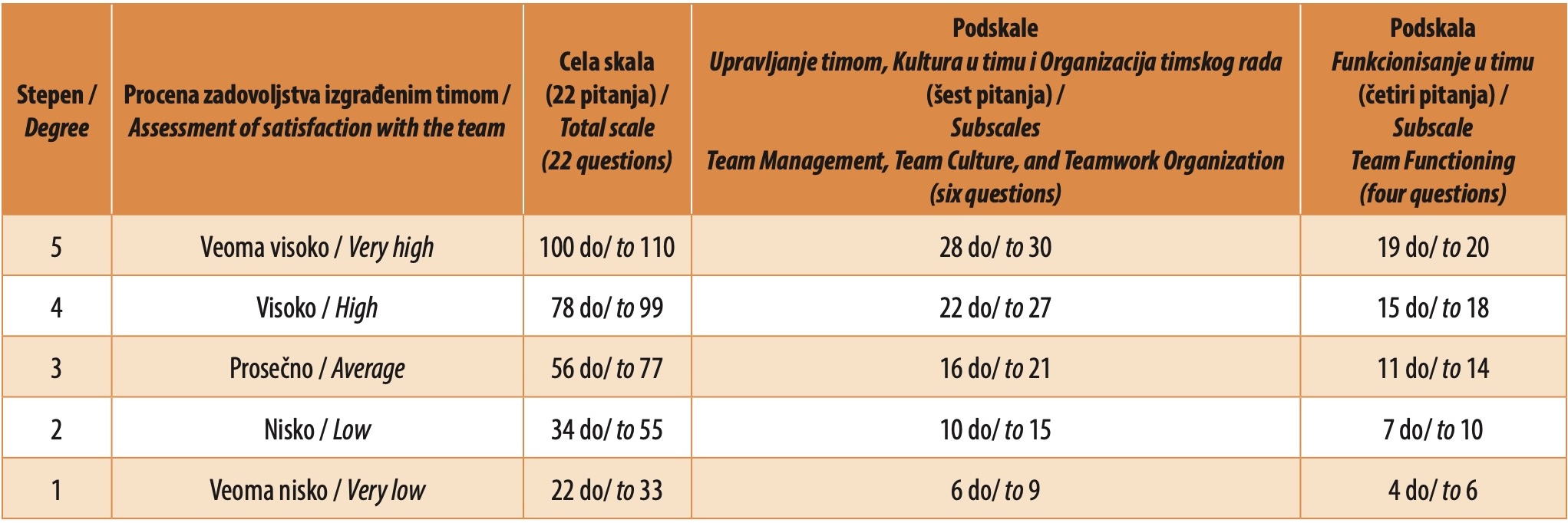
The reliability and validity of the applied scale and its subscales were determined with Cronbach’s alpha reliability coefficient, which was 0.964 for the total scale, 0.867 for the Team Management subscale, 0.922 for the Team Culture subscale, 0.908 for the Teamwork Organization subscale, and 0.877 for the Team Functioning subscale. Given that the values of the coefficients are quite high, especially for the total scale, it can be said that the scale and the subscales defined based on the questionnaire are very reliable.
Selected performance indicators of teamwork quality in medical rehabilitation – effectiveness (number of patients per team) and absenteeism (number of days of absence from work) were taken from the annual report for 2020. Annual average absenteeism per employee was calculated according to the following formula:
Abs = lost workdays during the year/total number of employees x 100.
Cut-off values of the scale and scores presented in the table below were used to test performance in relation to the binary variable that reflects satisfaction with the team, with 1 marking a high degree of satisfaction (very high, high, and average satisfaction ranking) and 0 marking a low degree of satisfaction (low and very low frequency of satisfaction).
SPSS 15.0 was used for statistical data processing. Continuous variables in the study are presented as mean values (arithmetic mean – AM) and the standard deviation (SD), while qualitative characteristics are presented as absolute numbers, i.e., frequencies (N) and percentages (%). The comparison of the frequency of attributive parameters among groups was performed using the Chi-square test. The comparison of recorded scores on the scale and the subscales among different organizational units was performed with ANOVA analysis, while post-hoc analysis tests were used for the comparison among individual subscales. Statistical hypotheses were tested at a statistical significance level (alpha level) of 0.05.
RESULTS
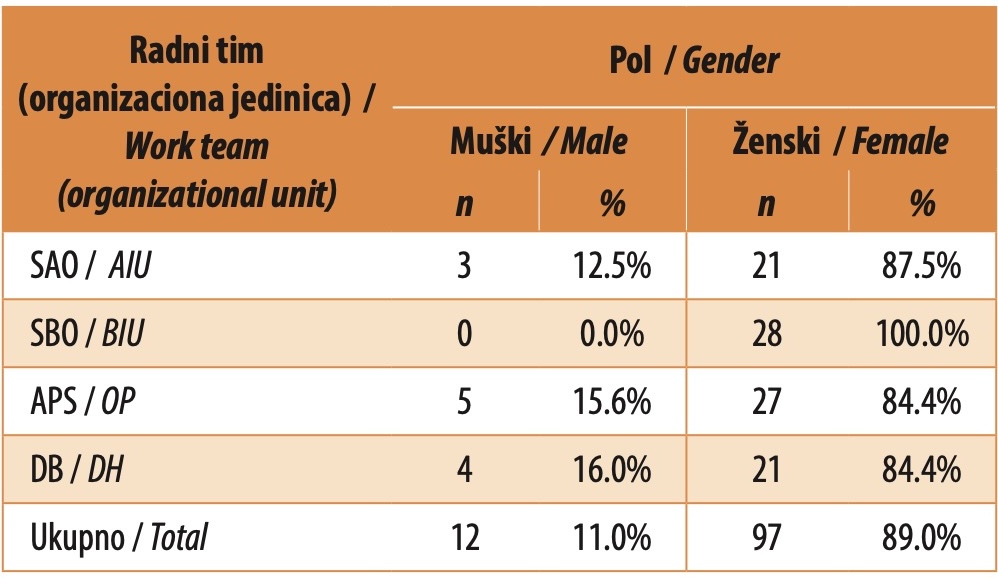
In the entire sample, as well as in all work teams, there were statistically significantly more female respondents (p < 0.001), (Table 2).
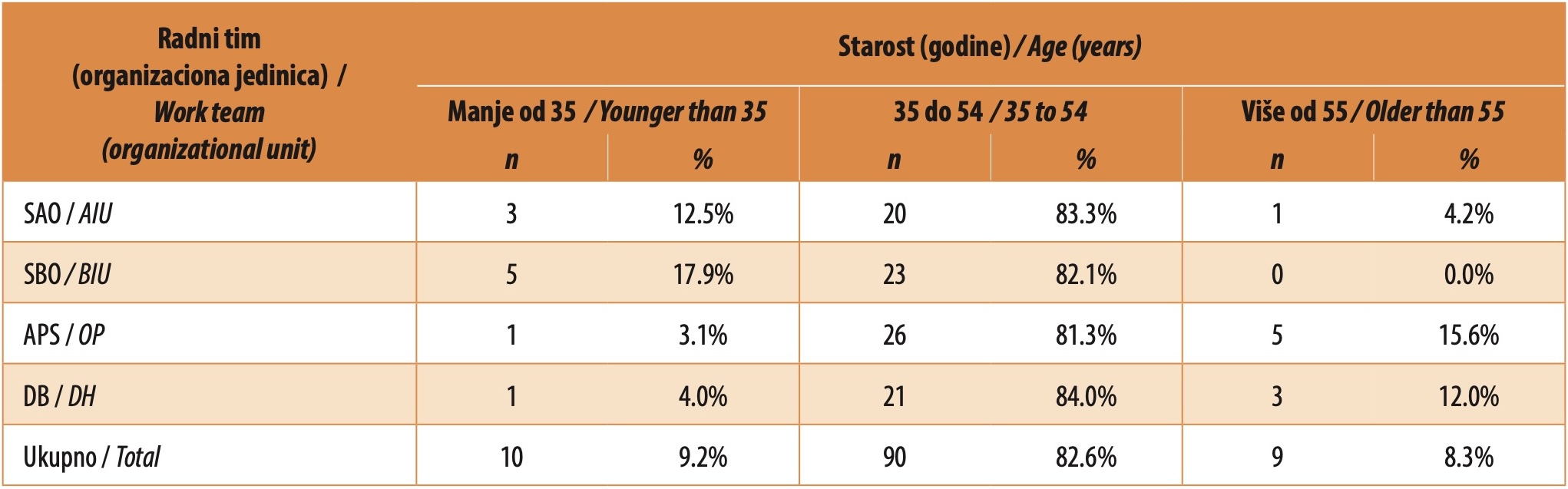
The distribution of employees by age showed that 82.6% were in the 35 to 54 category, 9.2% were younger than 35 years, while the least number of employees were older than 55 years, only 8.3% (Table 3).
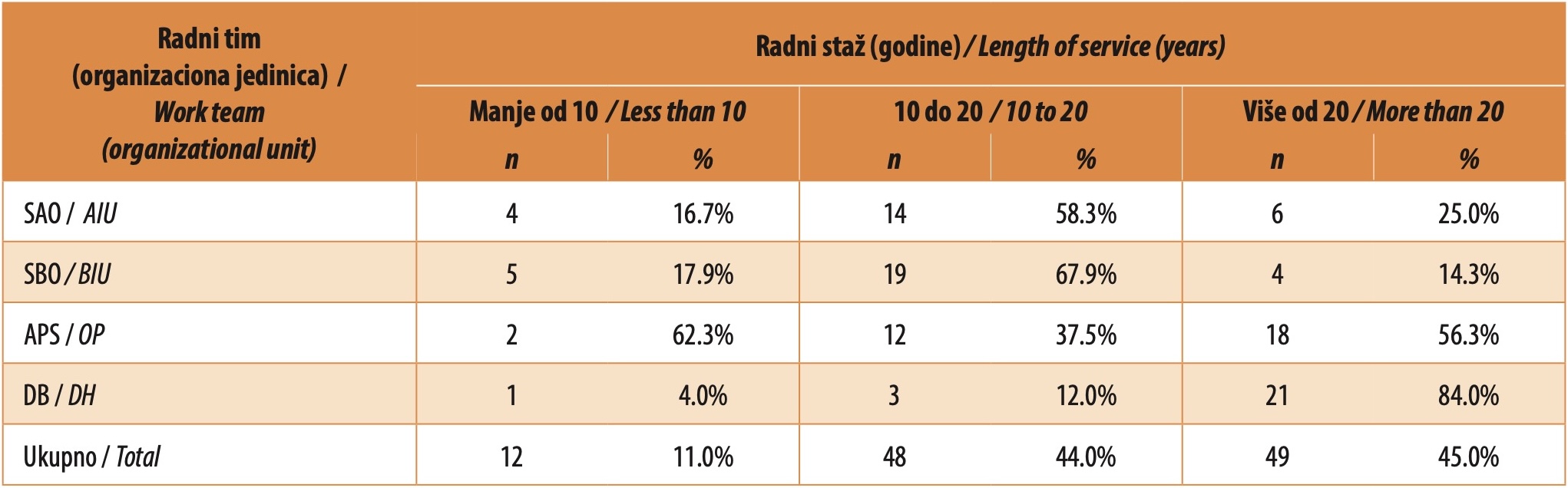
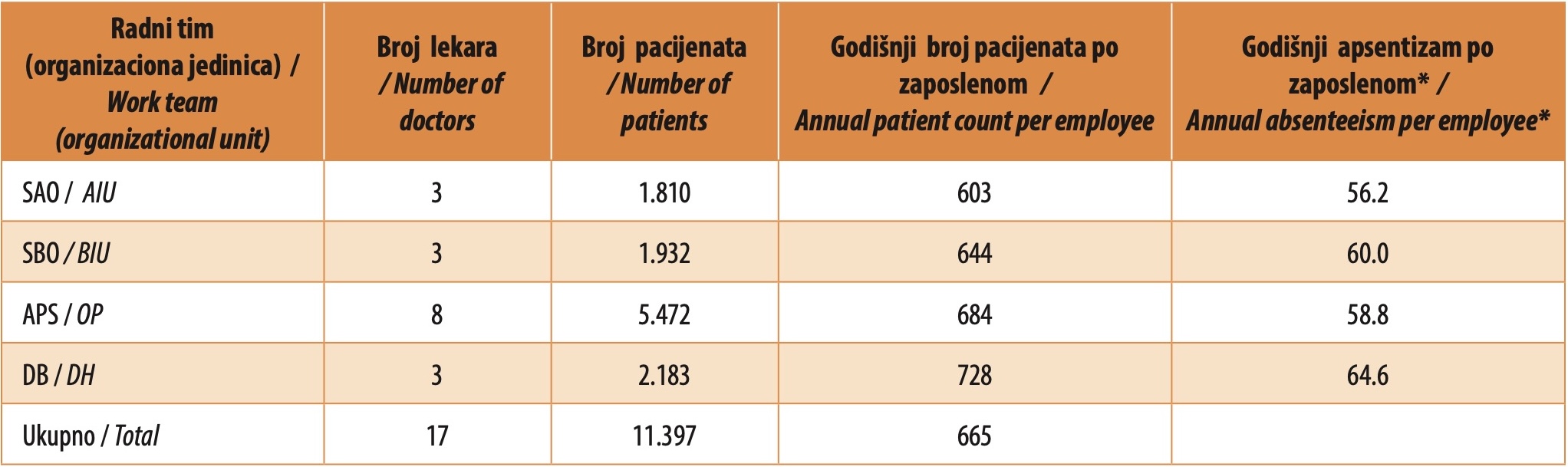
The distribution of employees in relation to the length of service (Table 4) shows that the highest number of employees in outpatient teams had longer service, i.e., more than 20 years (OP: 62.3%; DH: 84%), as compared to the inpatient units, where the highest number of employees had between 10 and 20 years of service (AIU: 58.3%; BIU: 67.9%). The Day Hospital employees had the greatest workload as they had 728 patients per employee annually. At the same time, this was where the highest annual absenteeism per employee was recorded, i.e., 64.6 days. The lowest values for both of the abovementioned parameters were registered in the “A” Infirmary Unit (Table 5).
Team Management
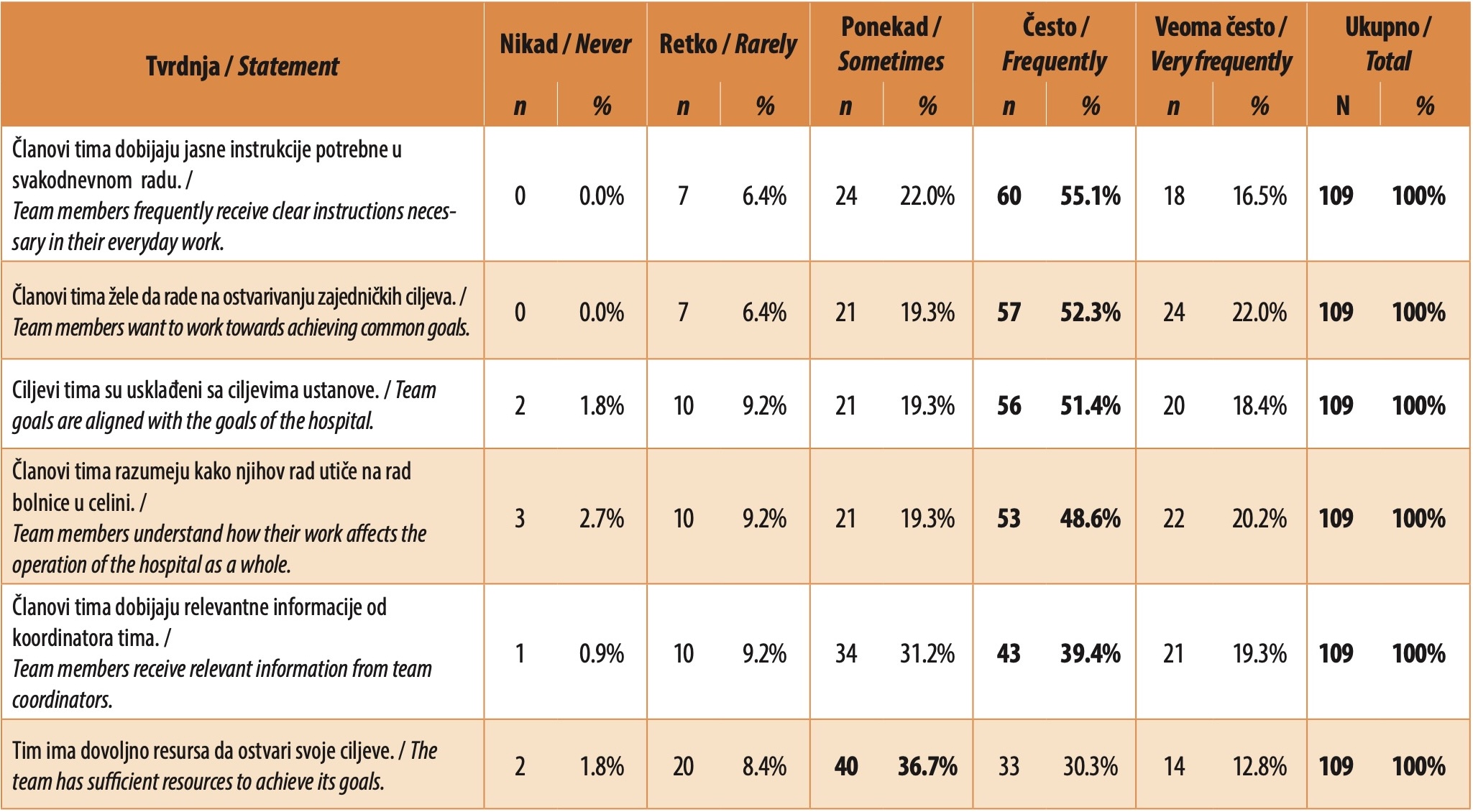
More than half of the respondents agreed with the statement that they frequently receive clear instructions necessary in their everyday work, that they frequently have a strong desire to work towards achieving common goals, and that the team goals are aligned with the goals of the hospital (Table 6).
Team Culture
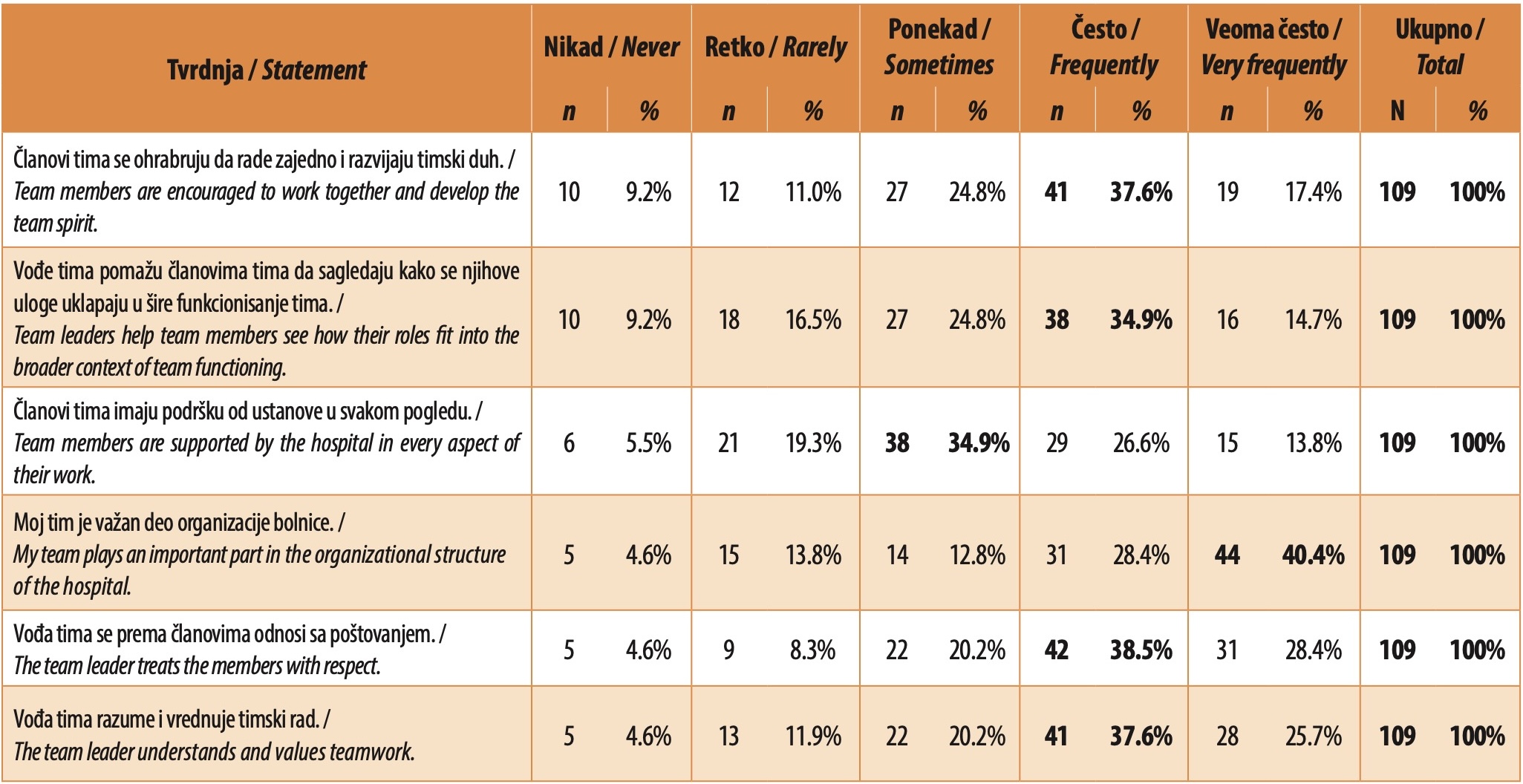
Only between one-third and two-fifths of respondents most often agreed with the statements that team coordinators frequently encourage team members to work together and develop team spirit, that there is help provided by the team leader to team members so that they can understand how their role fits into the broader context of team functioning, that the team leader treats the members with respect, as well as that he/she understands and values teamwork. The same ratio of respondents very frequently considered their team to play an important part in the organizational structure of the hospital and felt that the hospital only sometimes provides support to team members in all aspects of their work (Table 7).
Teamwork Organization
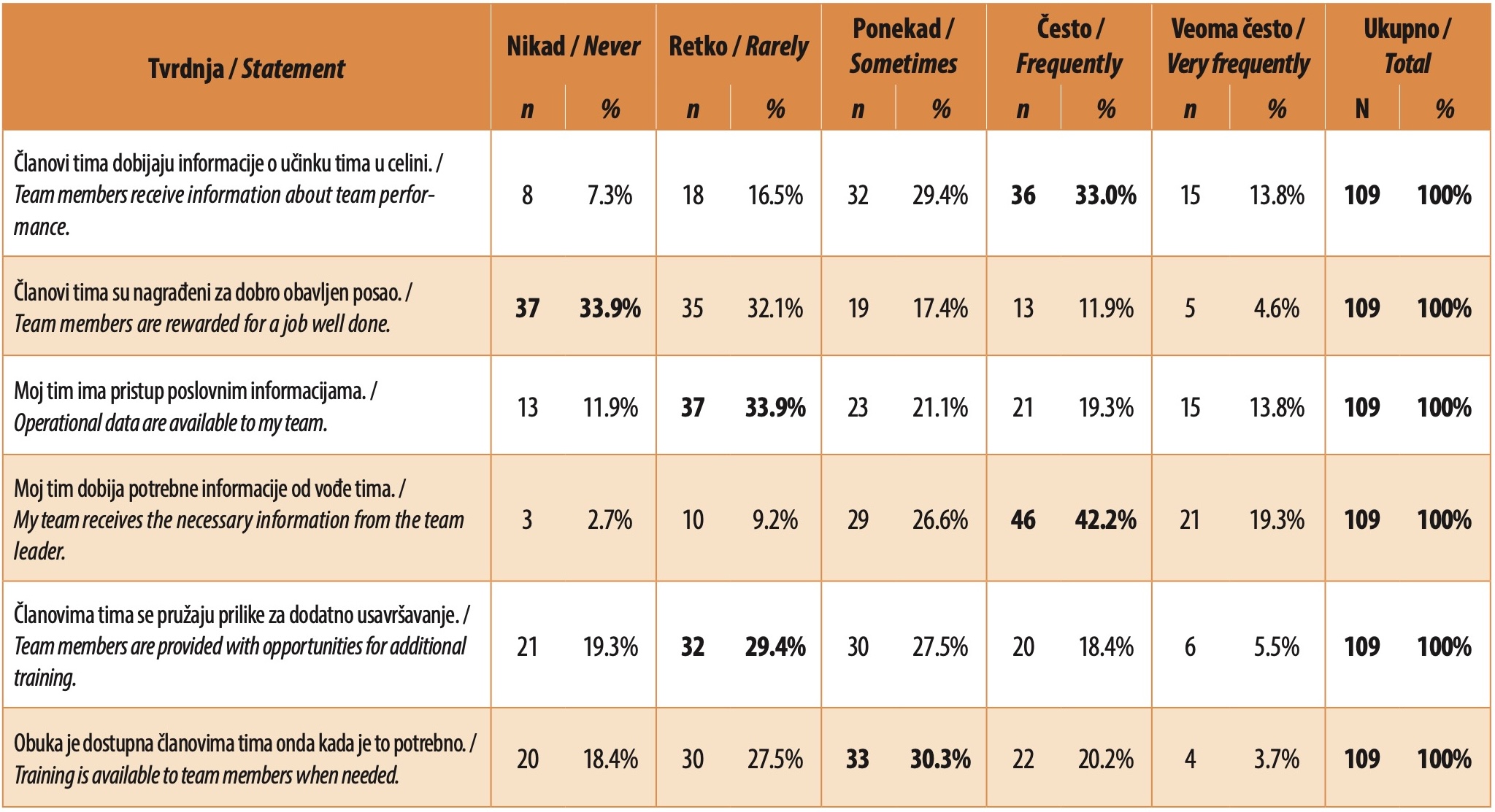
A third of the respondents stated that they frequently receive information about team performance, but that the team members are never rewarded for a job well done, while two-fifths of the respondents stated that they frequently receive the necessary information from the team leader. Less than a third of the respondents stated that training is only sometimes available to team members when needed, or stated that team members are rarely provided with additional training opportunities (Table 8).
Team Functioning
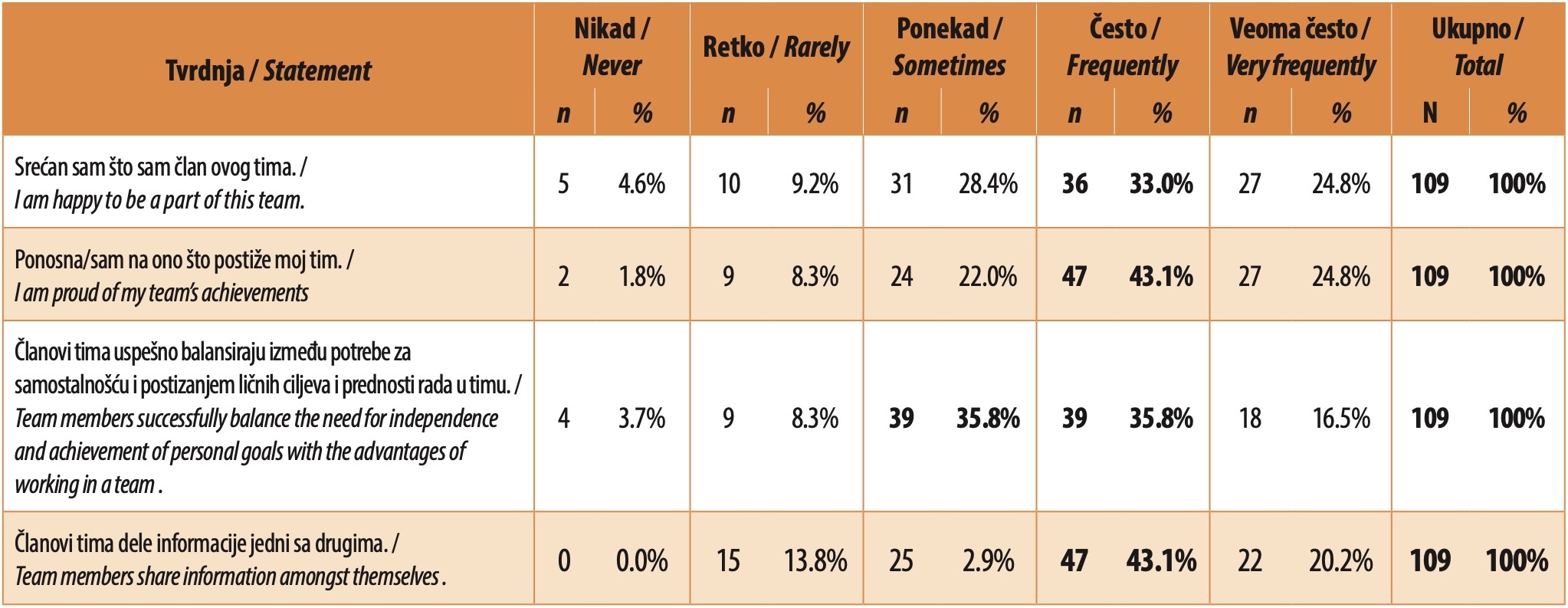
According to statements related to team functioning, a third of the respondents stated that they are often happy to be a part of the team, while more than twofifths indicated that they are often proud of their team’s achievements and of information sharing amongst team members. Also, a third of the respondents sometimes or frequently believe that team members successfully balance the need for independence and achievement of personal goals with the advantages of working in a team (Table 9).
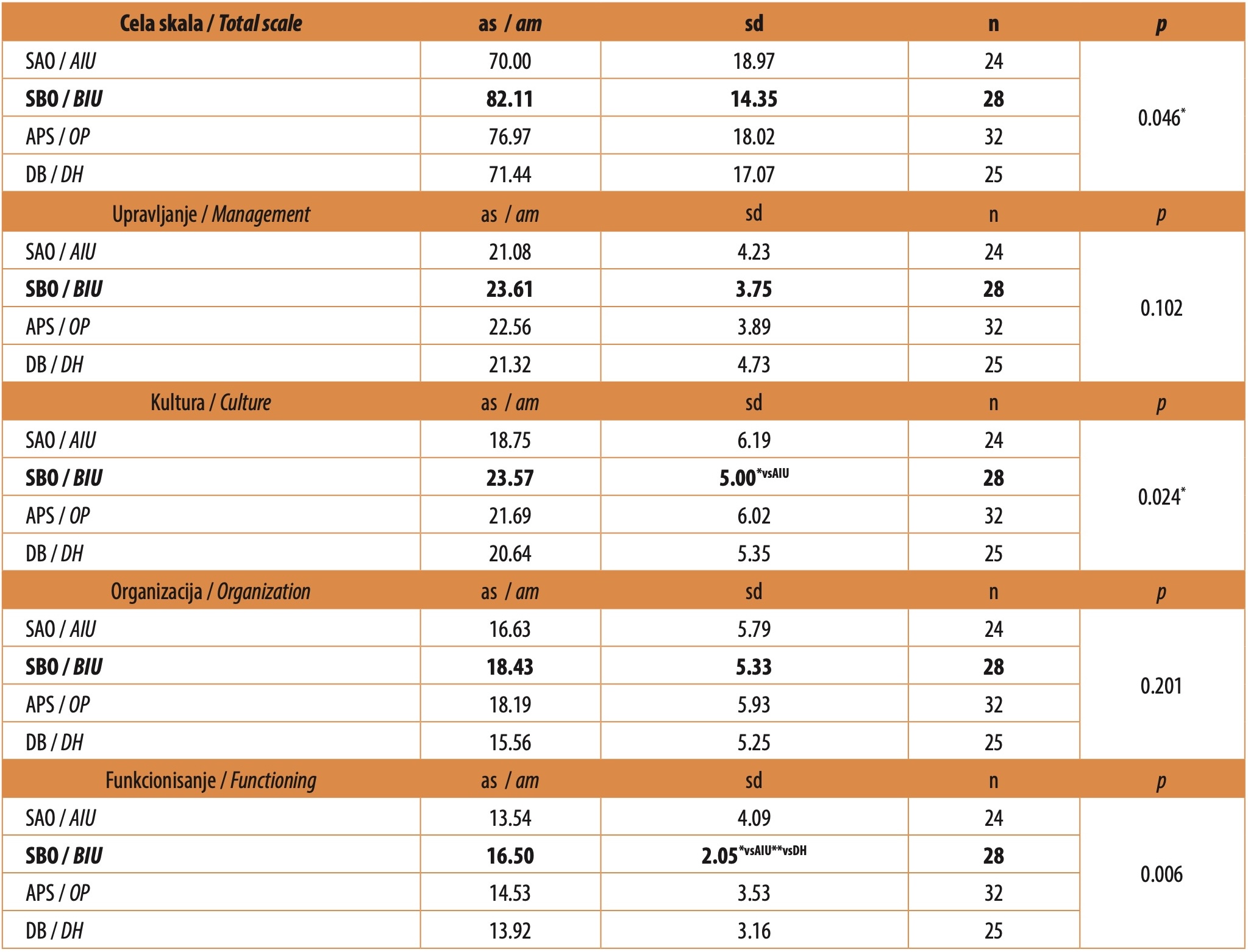
MANAGEMENT, CULTURE, ORGANIZATION, AND FUNCTIONING, BY HOSPITAL TEAMS
The basic descriptive parameters of the scores for the whole scale and the subscales of the organizational units, as well as the results of the ANOVA analysis, are presented in Table 10. The ANOVA analysis found the score for the total scale, as well as the scores for the subscales Team Culture (p < 0.05) and Team Functioning (p < 0.01) to be statistically significant. Consequent post-hoc analysis found that the value of the score for the subscale Team Culture was statistically significantly higher in the BIU, as compared to the AIU (p < 0.05), while the value of the score of the subscale Team Functioning in the BIU was statistically significantly higher, as compared to the AIU (p < 0.05) and the DH (p < 0.01).
Based on the total scale of all aspects of teamwork in the entire sample, high satisfaction with teamwork was dominant, which was expressed by a statistically predominant number of respondents, i.e., 94 (86.2%); p < 0.001 (Table 11). Respondents were most satisfied with management, team functioning, and culture, and least satisfied with organization. The respondents from the BIU were most satisfied with the team because they had the most respondents demonstrating high satisfaction with working in a team, both in the total scale and in all four subscales. BIU respondents, compared to AIU respondents, were statistically significantly more satisfied, in the total scale, with all aspects of teamwork (p < 0.05) and functioning (p < 0.01), and they were more satisfied with the organization, as compared to the DH (p < 0.05).
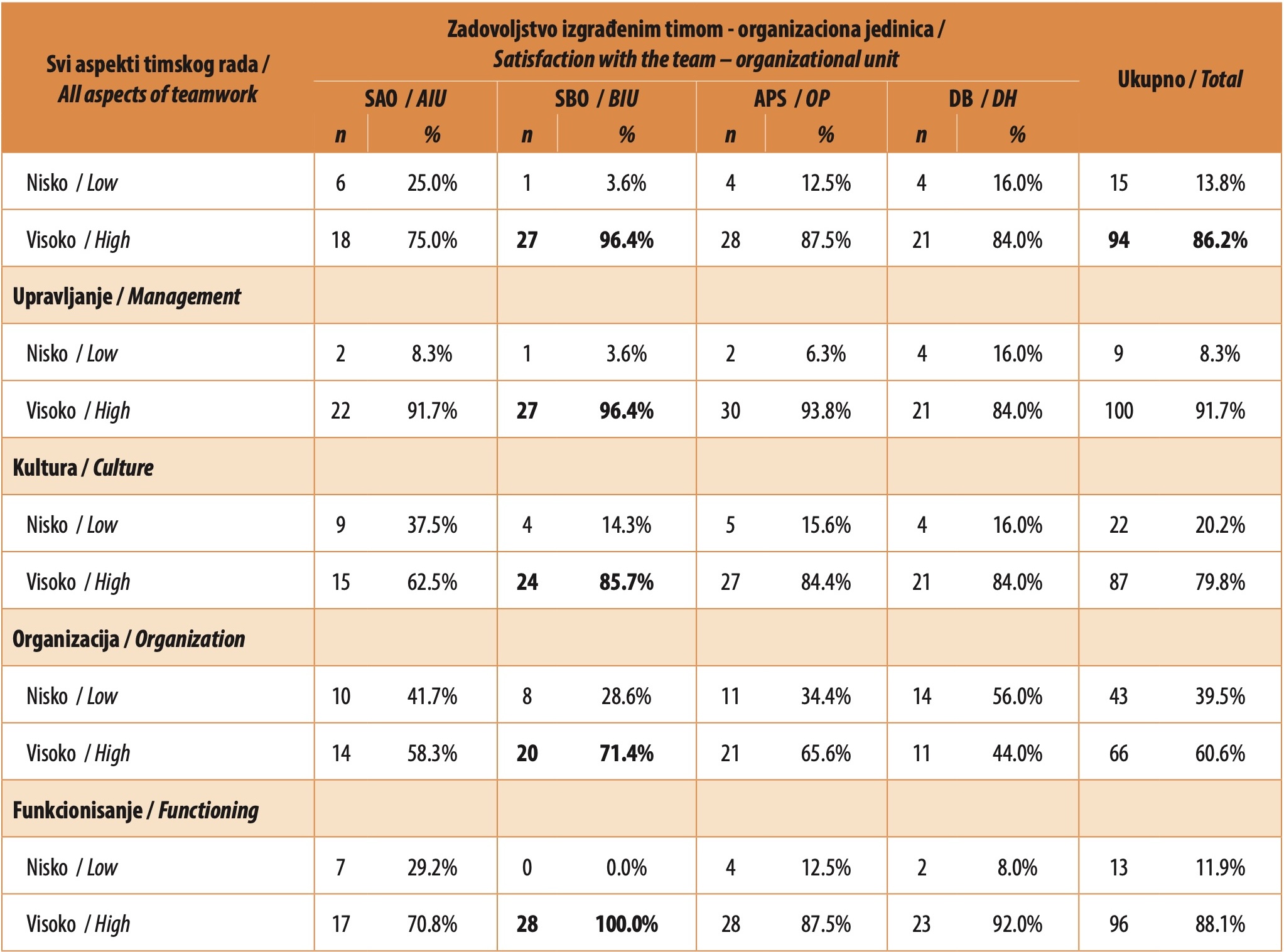
By comparing the findings in Table 5 (according to the annual patient count per doctor and absenteeism) with the data in Table 11 (all aspects of teamwork), we can conclude that in the organizational unit where there is greater satisfaction with building teamwork, there is also better performance, in terms of higher productivity and less absenteeism (BIU compared to AIU). Namely, work productivity was higher in the BIU compared to the AIU, because the patient count per doctor was 644 in the BIU, as compared to 603 in the AIU, and this is in keeping with the subjectively expressed satisfaction with teamwork, based on the total scale as well as the Team Functioning subscale. However, absenteeism is somewhat higher in the BIU than in the AIU, which may also result from the higher workload of doctors in this organizational unit. Incomplete confirmation of the initial hypothesis may stem from the relatively small number of respondents per organizational unit, especially the small number of doctors. In any case, the results indicate the necessary adjustments that the management should implement in teamwork organization so that respondent satisfaction with teamwork, which is already quite high, would be even higher.
DISCUSSION
The study aims to contribute to the understanding of the elements of teamwork significant for improving the quality of medical rehabilitation in a rehabilitation facility at the secondary level of health care in the Republic of Serbia. It was determined that it is necessary to improve all aspects of teamwork in all the hospital organizational units. It was also confirmed that, by building teamwork, better performance is achieved, in terms of higher productivity. These results are particularly important when considering the relevant evidence from similar studies. Namely, the review of the literature, which investigated the criteria for assessing the quality of medical rehabilitation at the global level, showed that, despite the significant differences in the organization of medical rehabilitation, the methodological approaches are similar, in terms of the basic purpose and principles of rehabilitation medicine [14], and more needs to be done in the domain of teambuilding.
Teamwork is an important instrument of organizational development and quality management. In medical rehabilitation, multidisciplinary teams are a necessity. The results of the analysis of the structure and functioning of a team made up of professionals from different disciplines and of teamwork contribute to the understanding of complex work processes, the integration of roles and activities of team members, as well as the optimization of team performance, as the ultimate goal. Data from seven European countries [15] demonstrate the link between the quality management system and the perception of teamwork, as well as the significance of positive perception and assessment of teamwork for the safety of medical patient care. The same was confirmed in our study. Namely, the greatest satisfaction with teamwork was expressed in the BIU, whose members achieved better performance and lower absenteeism. In this regard, a positive perception of teamwork can improve the aspects of organization, functioning, management, and the development of an optimal team process.
Currently, there is only a handful of empirical studies analyzing teamwork in the domain of health care, particularly in the field of inpatient medical rehabilitation [16]. Although building and nurturing teamwork is of the utmost importance in rehabilitation, so far no consensus has been reached on many issues related to such a complex teamwork concept, namely: team configuration and conflicts in the team, team process, organizational context of teamwork, communication patterns, and effects of different team characteristics on patient treatment outcomes [16]. Factors of modern rehabilitation doctrine, such as a holistic approach, multidisciplinary teamwork, evaluation of treatment outcomes, etc., are not sufficiently promoted in the daily rehabilitation practice of the Republic of Serbia healthcare system.
The scarcity of research in Serbian literature related to teamwork in Serbian rehabilitation facilities leads us to draw conclusions based on data from research conducted in rehabilitation centers in countries with a similar level of development as Serbia. A study conducted in Croatia, analyzing the satisfaction and motivation of physical therapists and the factors that influence them, showed that 71% of physical therapists did not have satisfactory equipment and means for adequately performing their work, 75% did not have the opportunity to work in jobs that they were trained for, and 77% of respondents declared that in the preceding seven days, no one had praised their work [17]. In our study, the results indicated that almost half of the respondents, or less, were not satisfied with the organizational aspects and the additional training opportunities offered, while a third of the team members had never been rewarded for a job well done.
The analysis of teamwork in our study was, in effect, an instrument of organizational development and quality management in a medical rehabilitation facility, because, in addition to providing team members with information about the content of teamwork, it also contributed to the improvement of team spirit in medical rehabilitation. The analysis of the teams enabled the assessment of the elements of teamwork and highlighted how important it is for managers to possess the skills necessary to build teams and foster teamwork in medical rehabilitation, in order to increase productivity and reduce absenteeism.
Findings from other studies also suggest that in the twelve months following the introduction of a program designed to promote more effective teamwork, there was an improvement in services, an increase in trust within the team, and a drop in staff absenteeism (nurses, doctors, physical therapists, social workers, occupational therapists) [15]. In that sense, the importance of team meetings and the feeling of belonging to the team was emphasized, which is also the recommendation of our study, so as to provide feedback and recognition for successfully implemented activities. Developing accurate methods for measuring team effectiveness is going to be critical for quality improvement. There is a limited number of literature data and concepts that systematically compare and explain effective teamwork. Most tools for measuring team effectiveness are applied in primary care or surgical settings. Therefore, more work is needed to develop research methods for other clinical settings, such as rehabilitation services.
CONCLUSION
The analysis of selected performance indicators of teamwork quality – annual patient count per doctor and number of days of absence from work, confirmed that better performance is achieved by building teamwork, in terms of higher productivity and a drop in absenteeism. It is necessary to improve management skills regarding teamwork organization and team building. The results of this study can be useful for health facility managers who unwittingly give less attention to certain aspects of teamwork in medical practice while consciously putting emphasis only on the quantity of work efficiency.
Ethical approval
The study was approved by the Ethics Committee and the Administration of the Special Hospital for Cerebral Palsy and Developmental Neurology, on December 18, 2020, Decision No. 338/I.
Informations

-
Keywords:
-
Received:
-
Revised:
-
Accepted:
-
Online first:
-
DOI:
-
Cite this article:

Danijela Baščarević
Special Hospital for Cerebral Palsy and Developmental Neurology
17a Sokobanjska Street, 11000 Belgrade, Serbia
E-mail:
1. White book on Physical and Rehabilitation Medicine in Europe. J Rehabil Med. 2007 Jan;(Suppl 45):6-47. doi: 10.2340/16501977-0028. [CROSSREF]
2. UEMS-PRM Section and Board. European definition of Physical and Rehabilitation Medicine. [Internet]. Available from: https://uems-prm.eu/the-specialty/ [HTTP]
3. Paxino J, Denniston C, Woodward-Kron R, Molloy E. Communication in interprofessional rehabilitation teams: a scoping review. Disabil Rehabil. 2022 Jun;44(13):3253-69. doi: 10.1080/09638288.2020.1836271. [CROSSREF]
4. Bendowska A, Baum E. The Significance of Cooperation in Interdisciplinary Health Care Teams as Perceived by Polish Medical Students. Int J Environ Res Public Health. 2023 Jan 5;20(2):954. doi: 10.3390/ijerph20020954. [CROSSREF]
5. Brown SA, Sparapani R, Osinski K, Zhang J, Blessing J, Cheng F, et al.; Cardio-Oncology Artificial Intelligence Informatics & Precision (CAIP) Research Team Investigators. Team principles for successful interdisciplinary research teams. Am Heart J Plus. 2023 Jun 3;32:100306. doi: 10.1016/j.ahjo.2023.100306. [CROSSREF]
6. Schmutz JB, Meier LL, Manser T. How effective is teamwork really? The relationship between teamwork and performance in healthcare teams: a systematic review and meta-analysis. BMJ Open. 2019 Sep 12;9(9):e028280. doi: 10.1136/bmjopen-2018-028280. [CROSSREF]
7. Andersson, D, Rankin A, Diptee D. Approaches to team performance assessment: a comparison of self-assessment reports and behavioral observer scales. Cogn Tech Work. 2017 Sep 1; 19(2-3):517-28. doi: 10.1007/s10111-017-0428-0. [CROSSREF]
8. Tempelaar D, Rienties B, Nguyen Q. Subjective data, objective data and the role of bias in predictive modelling: Lessons from a dispositional learning analytics application. PLoS One. 2020 Jun 12;15(6):e0233977. doi: 10.1371/journal.pone.0233977. [CROSSREF]
9. Torres PL, Cornide-Reyes H. Team performance assessment and improvement in an agile methodology framework. 2022 XVLIII Latin American Computer Conference (CLEI), Armenia, Colombia, 2022;1-10. doi: 10.1109/ CLEI56649.2022.9959959. [CROSSREF]
10. Traylor AM, Thomas EJ, Salas E. Measuring Collaboration in Health Care: Insights from the Science of Teamwork. Jt Comm J Qual Patient Saf. 2020 Dec;46(12):661-3. doi: 10.1016/j.jcjq.2020.09.003. [CROSSREF]
11. O’Leary KJ, Manojlovich M, Johnson JK, Estrella R, Hanrahan K, Leykum LK, et al. A Multisite Study of Interprofessional Teamwork and Collaboration on General Medical Services. Jt Comm J Qual Patient Saf. 2020 Dec;46(12):667- 72. doi: 10.1016/j.jcjq.2020.09.009. [CROSSREF]
12. Kilpatrick K, Tchouaket É, Paquette L, Guillemette C, Jabbour M, et al. Measuring patient and family perceptions of team processes and outcomes in healthcare teams: questionnaire development and psychometric evaluation. BMC Health Serv Res. 2019 Jan 6;19(1):9. doi: 10.1186/s12913-018-3808-0. [CROSSREF]
13. Anderson JE, Lavelle M, Reedy G. Understanding adaptive teamwork in health care: Progress and future directions. J Health Serv Res Policy. 2021 Jul;26(3):208-14. doi: 10.1177/1355819620978436. [CROSSREF]
14. Shevchuk V, Yavorovenko O, Belyaeva N, Kurylenko IV. Medical rehabilitation system and its quality control in developed countries of the world. Wiad Lek. 2020;73(9 cz. 2):2040-3. doi: 10.36740/WLek202009227 [CROSSREF]
15. Buljac-Samardzic M, Doekhie KD, van Wijngaarden JDH. Interventions to improve team effectiveness within health care: a systematic review of the past decade. Hum Resour Health. 2020 Jan 8;18(1):2. doi: 10.1186/s12960- 019-0411-3. [CROSSREF]
16. Wespi R, Birrenbach T, Schauber SK, Manser T, Sauter TC, Kämmer JE. Exploring objective measures for assessing team performance in healthcare: an interview study. Front Psychol. 2023 Oct 24;14:1232628. doi: 10.3389/ fpsyg.2023.1232628. [CROSSREF]
17. Lončarić I, Kovač I, Rilović Đurašin M, Harbuš R, Kauzlarić N. Interdisciplinarni timski rad – izazov u suvremenoj rehabilitaciji. JAHS. 2016; 2(2): 147-54. doi: 10.24141/2/2/7. [CROSSREF]
- Table 1. Cut-off values of scores in the total scale and the subscales of the questionnaire, and conversion into the assessment of satisfaction with the team
- Table 2. The gender structure of work teams
- Table 3. The age structure of the work teams
- Table 4. Structure of respondents in work teams according to length of service
- Table 5. Number of doctors and patients, annual patient count per employee, and annual absenteeism per employee
- Table 6. Degree of respondents' agreement with statements regarding team management
- Table 7. Degree of respondents' agreement with statements regarding team culture
- Table 8. Degree of respondents' agreement with statements regarding teamwork organization
- Table 9. Degree of respondents' agreement with statements regarding team functioning
- Table 10. Differences among teams regarding management, culture, organization, and functioning (ANOVA analysis)
- Table 11. Satisfaction with the team regarding all aspects of teamwork, and regarding management, culture, organization, and functioning, separately