


Should I stay or should I go? Perceptions of Serbian emigrant medical workers in Germany
- FOM University of Applied Sciences for Economics and Management, Essen, Germany
ABSTRACT
Background: Throughout history, various driving forces have influenced both forced and voluntary migrations of healthcare workers.
Objective: This study aims to obtain new insights into the work activities of foreign doctors from the Western Balkans practicing medicine in Germany.
Materials and Methods: In 2023, a qualitative cross-sectional study was conducted to analyze physicians’ motivation for emigration from their home countries, their professional status development in Germany, the German legal system, and overall satisfaction of the physicians.
Results: The main findings highlight better salaries for doctors abroad and no development opportunities in their home countries as the main reasons for emigration. Immigrant physicians were mainly satisfied with their professional status development in Germany, but less satisfied with the German legal system.
Conclusion: Employing doctors from the Western Balkans can alleviate the burden on the German healthcare system caused by the significant shortage of skilled labor force.
INTRODUCTION
Migration is a complex and longstanding phenomenon that has significantly influenced the development of nations worldwide. Many countries, such as the United States, Canada, and Australia, have populations largely comprised of migrants or descendants of migrants seeking better opportunities, safety, or a new beginning. Throughout history, various driving forces have influenced both forced and voluntary migrations, such as economic challenges, political instability, environmental changes, and the desire to explore and gain new experience. In addition to the political and social construct towards trade and labor market liberalization in health and care sectors, the demographic transition towards population aging, together with the epidemiological shift towards the double burden of communicable and non-communicable diseases in some countries, are increasing the need for health care and contributing to policy planning to regulate health worker shortages and workplace conditions [1],[2],[3],[4],[5].
The human health capital in many wealthy countries consists of foreign-trained medical workers. For example, it ranges from 57.8 % of all medical doctors in Israel, 42.1% in Norway, and 40.5% in Ireland, to 0.6% in Lithuania [6]. In Germany and Slovenia, popular job destinations for many Serbian medical doctors and nurses, there are 13.8% and 15.8% foreign-trained medical doctors and 9.6% and 5.5% foreign-trained nurses [6]. Bilateral agreements on health workers’ mobility and migration have drawn the attention of numerous stakeholders in recent decades [7]. International recruitment of medical workers is a complex issue with many aspects of the truth. It may be a provider approach to enhance healthcare service delivery, a governmental strategy to help reduce local unemployment, but it can also be seen as a management failure to keep the expertise needed for efficient operation. A variety of bilateral agreements have been created to accommodate the interests of all parties while emphasizing the rights and benefits of mobile and migrant healthcare workers. It is also important to recognize, explore, and enhance the benefits of circular migrations [8],[9].
As workforce migration patterns influence healthcare in many countries, they also present unprecedented considerations for health workers deciding whether to stay or leave. Understanding the context and current circumstances of migrant health workers is essential, as it provides valuable insights into promoting employment and cultural, economic, and social development that meet their expectations [10]. Listening to the migrant workers’ experiences can help find solutions to addressing the negative impacts of excessive migration. Recruiting healthcare professionals is challenging for many providers who struggle to maintain service performance and manage personnel turnover intentions [11]. It is also important to acknowledge perceptions and experiences of migrant health workers in order to alert policymakers to the extent that active measures can contribute to counteracting the negative effects of migration and mobility in the European Union by mitigating and making changes [12].
The study was conducted to gain new insights into the work activities of foreign doctors from the Western Balkans working in Germany. The study’s objectives were to explore physicians’ motives for emigrating from their home countries, their professional development status in Germany, the German legal system, and the general satisfaction of physicians.
MATERIALS AND METHODS
This qualitative cross-sectional study was conducted in 2023 to analyze physicians’ motives for emigration from their home countries, their professional status development in Germany, the German legal system, and the general satisfaction of physicians.
The population of interest comprised doctors from the Western Balkans’ third countries, including Serbia, Bosnia and Herzegovina, Montenegro, and North Macedonia. In addition, the target group had to be licensed and working in Germany. In total, 41 out of 150 licensed physicians contacted from the regions of Berlin and Saxony responded and were surveyed.
The study instruments were a specific questionnaire and in-depth interviews. The questionnaire comprised 38 questions created based on the relevant literature and uploaded via the online platform Survio. Such a survey was possible in cooperation with the Berlin Medical Association and the Saxony Medical Association. Other federal states, however, did not agree to participate. The associations wrote to the respective doctors and forwarded the survey. The survey was conducted anonymously and in keeping with the BDSG (Ger. Bundesdatenschutzgesetz), i.e., the Federal Data Protection Act.
Two interviews were conducted after the survey was completed, one with a male and one with a female doctor, who accepted the invitation for an in-depth interview. The interviews have shown both similarities and differences. Both interviews dealt with emigration from Serbia to Germany, the difference being that the first interview dealt with emigration and leaving a job. In contrast, the second interview focused on emigration after medical school. Both interviews were exclusively used to establish a better connection with the questionnaire results and to ensure a view of the individual persons’ problems, the challenges they have encountered, and the benefits they have enjoyed.
The data and information gathered throughout the study were meticulously analyzed using descriptive statistical methods. These methods allowed a thorough analysis of the dataset patterns and characteristics, shedding light on the fundamental trends and intricacies associated with migrant physicians.
The results are presented as frequency (percentages). The method used for testing statistical hypotheses was Fisher’s exact test. Statistical hypotheses were analyzed at the level of significance of 0.05. Statistical data analysis was performed using IBM SPSS Statistics 24 (IBM Corporation, Armonk, NY, USA).
RESULTS
Sociodemographic characteristics of the respondents
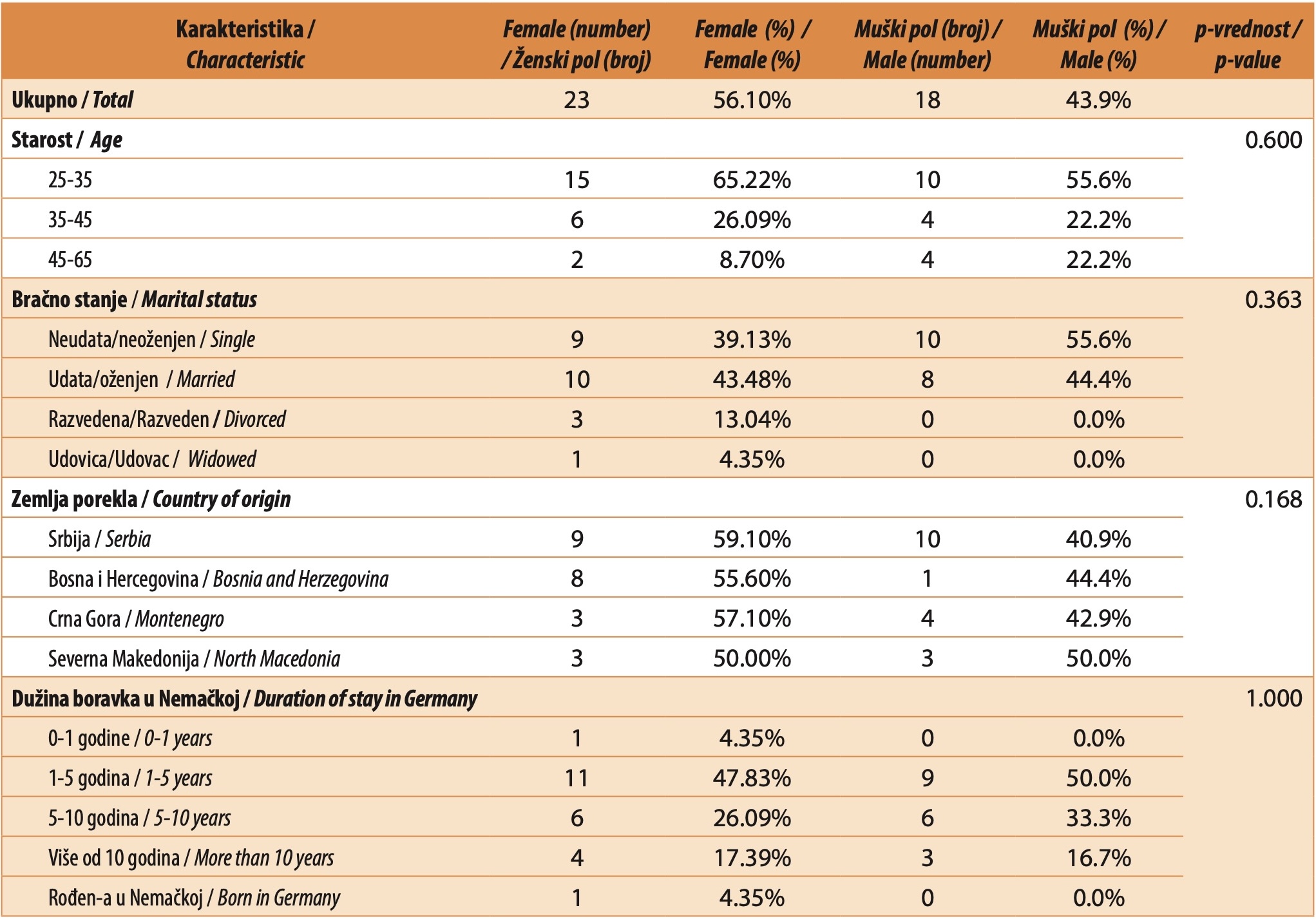
Table 1 shows that the proportion of female respondents was 56.1% (n = 23), while 43.9% of respondents (n = 18) were male. The majority of respondents were 20-35-yearolds. Most were either married, n = 18 (43.9%), or single, n =19 (46.3%). The respondents were originally from Serbia, n = 19 (46.3%), Bosnia and Herzegovina, n = 9 (22%), Montenegro, n = 7 (17.1%), and North Macedonia, n = 6 (16.4%). The results show that some doctors from the Western Balkans had lived in Germany for 1–5 years n = 20 (48.8%), while others had lived in Germany for 5–10 years n = 12 (29.3%), or over 10 years, n = 7 (17.7%), while one respondent was born in Germany, n = 1 (2.4%), and another, n = 1 (2.4%), had lived in Germany for under a year. Women and men in the study did not differ significantly (p > 0.05) by age category, marital status, country of origin, or duration of stay in Germany (Table 1).
Motives for emigration
Table 2 shows the motives for emigration from the home country. The analysis shows that of the 41 doctors surveyed, 38 (92.7%) had emigrated from their home countries, and 3 (7.3%) were either foreign-born or in training. Regarding the frequency, most coomon reasons for immigrating into Germany included better salaries for doctors abroad, n = 19 (19.6%), no development opportunities in the home country, n = 19 (19.6%), better further training and career opportunities abroad, n = 18 (18.6%), more social benefits in Germany, n = 17 (17.5%), no career prospects in the home country, n = 13 (13.4%). By their own testimony, for no particular reason n = 5 (5.2%). A proportion of respondents, n = 16 (34.8%), decided to emigrate to Germany alone directly after their medical studies, slightly fewer of those surveyed, n = 9 (19.6%), came to Germany with their husband/wife and children, some, n = 7 (15.2%) emigrated with parents or relatives, some, n = 6 (13%) emigrated with the help of an employment agency, while there were those, n = 5 (10.9%), who came to Germany on their own after graduating from high school.
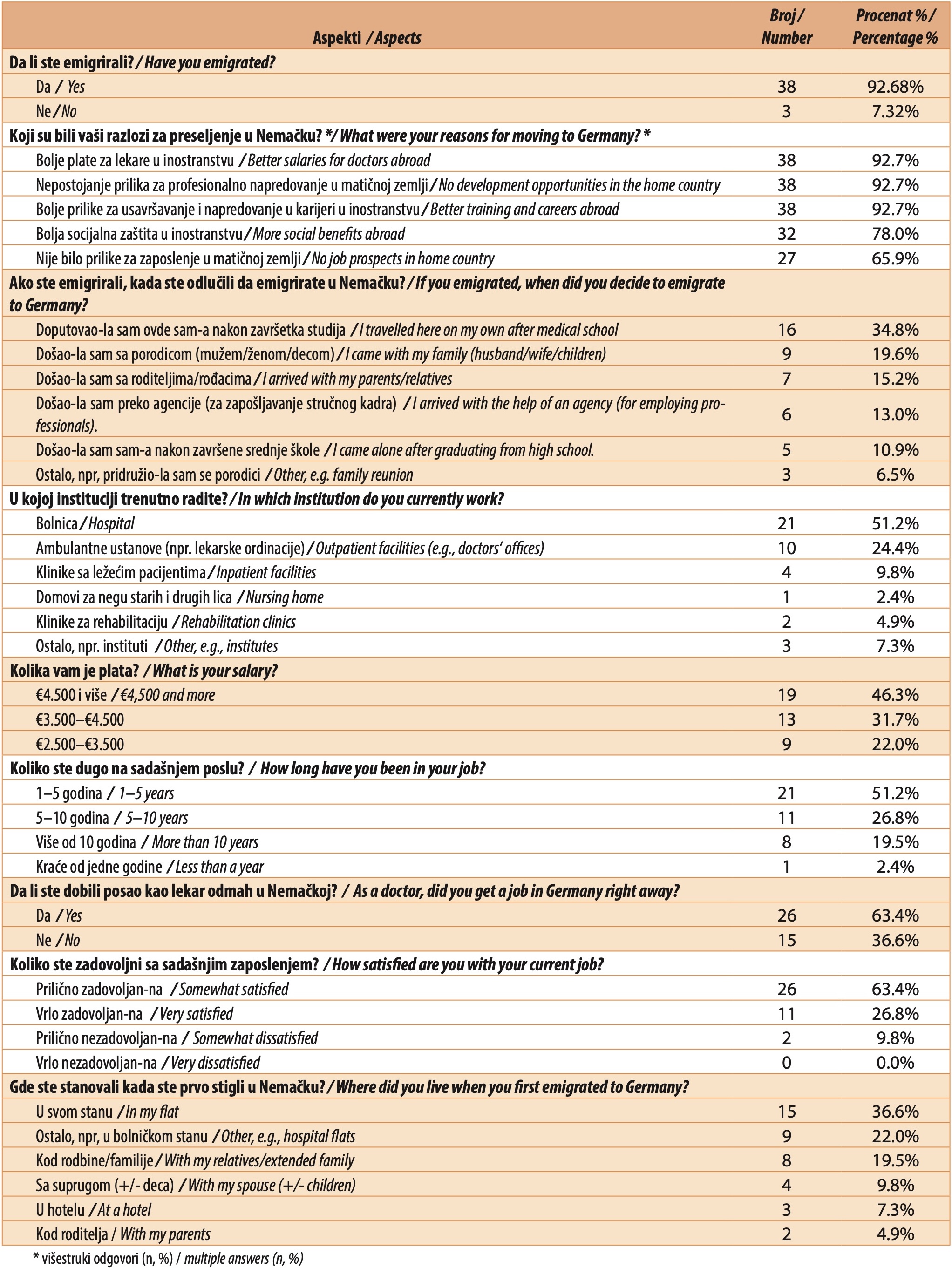
At the time of the survey, a number of respondents, n = 21 (51.2%), worked in hospitals, some, n = 10 (24.4%), worked in outpatient facilities, some, n = 4 (9.8%), were employed in other inpatient facilities, others, n = 2 (4.9%), worked in rehabilitation clinics, while the remaining respondent, n = 1 (2.4%), was employed in a nursing home. Half of the respondents, n = 21 (51.2%), had been working as doctors for 1–5 years, some, n = 11 (26.8%), had held the position for 5–10 years, others, n = 8 (19.5%), had been working as physicians for more than 10 years, and the remaining respondent, n = 1 (2.4%), had been working as a doctor for between one month and one year.
The financial background showed that a number of the surveyed doctors, n = 19 (46.3%), earned more than €4,500 per month, a little less than a third, n = 13 (31.7%), earned €3,500–€4,500, while the remaining number, n = 9 (22%), earned €2,500–€3,500. Also, most of the responders, n = 26 (63.4%), immediately found jobs as doctors in Germany, whereas others, n = 15 (36.6%), did not find a job immediately.
The job satisfaction of the doctors, at the time, showed that a certain number of the respondents, n = 11 (26.8%) were very satisfied, a number of the respondents, n = 26 (63.4%), stated that they were rather satisfied, while the remaining doctors, n = 4 (9.8%), were satisfied. The main reasons for high satisfaction were the following: having their own outpatient medical practice, having a good working atmosphere and superiors, and having a good structure in the hospital. On the other hand, the reasons for low satisfaction were the following: having a greater desire to work at a research institute, the shortage of specialists, and a lack of work-life balance.
When they first immigrated to Germany, more than a third of the respondents, n = 15 (36.3%), lived in their own flat, some, n = 8 (19.5%), lived with relatives and family, others, n = 4 (9.8%), lived with their spouse and children, while the remaining respondents, n = 2 (4.95%), lived with their parents.
Professional status
The data in Table 3 show that a majority of the respondents, n = 34 (82.9%), did not have a temporary job during their first stay in Germany, whereas others, n = 7 (17.1%), did have temporary employment. Also, a majority of the doctors, n = 33 (80.5%), were not employed at the same job at the time of the survey as when they arrived in Germany, whereas some doctors, n = 8 (19.5%), had not changed their job. Furthermore, the results show that more than a half of the doctors, n = 23 (56.1%), had changed their jobs two or three times, a little over a third, n = 14 (34.1%), had changed their jobs once or twice, and the reaming respondents, n = 4 (9.8%), had changed their jobs more than three times.
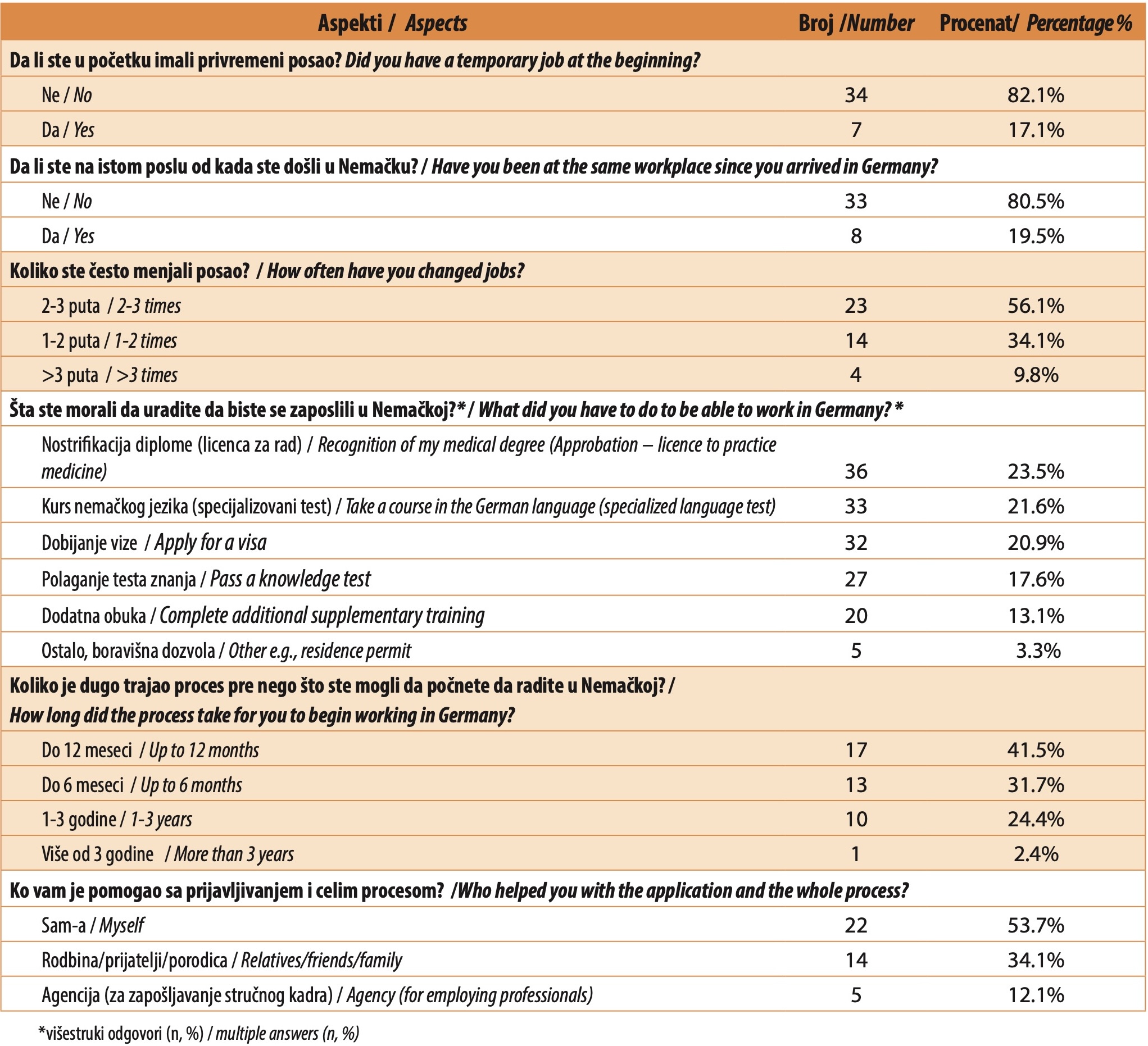
For physicians to establish themselves as doctors in Germany and get a work permit, the conditions often included medical degree recognition (Approbation – license to practice medicine), n = 36 (23.5%), completing a course in the German language, n = 33 (21.6%), visa application, n = 32 (20.9%), passing a knowledge test, n = 27 (17.6%), and completing additional training, n = 20 (13.1%). For some respondents, n = 13 (31.7%), the process took up to six months, for others, n = 17 (41.5%), it took up to 12 months, some respondents, n = 10 (24.4%), went through a process lasting 1–3 years, while for the remaining respondent, n = 1 (2.4%), it took more than three years. According to the results, more than half of the respondents, n = 22 (53.7%), went through the process without help, others, n = 14 (34.1%), had help from relatives, friends and familiy, and some, n = 5 (12.2%), had help from employment agencies in Germany.
The German legal system
The study also deals with the question of whether individuals are well looked after by the German legal system or face difficulties. Table 4 shows that some of the respondents, n = 9 (22%), were satisfied with the German legal system, while the majority, n = 29 (70.7%), were rather satisfied, while some, n = 3 (7.3%), were merely satisfied. The reasons for the difficulties were too much bureaucracy or the absence of assistance with legal matters. A majority of the respondents, n = 28 (68.3%), stated that they did not encounter any positive discrimination, with some respondents, n = 13 (31.7%), reported encountering this type of discrimination, including getting appointments for operations and at the town hall more quickly, and also receiving authorization from the Association of Statutory Health Insurance Physicians. In addition, analysis showed that positive discrimination (e.g., affirmative actions towards immigrants stimulating their integration despite the differences that may exist) occurred occasionally in more cases, n = 32 (78%), than often, n = 9 (22%). The results also show that a certain number of respondents, n = 19 (46.3%), had faced negative discrimination (e.g., discrimination aimed at belittling and harming an individual) in contrast to those, n = 22 (53.7%), who had not experienced negative discrimination. In addition, forms of negative discrimination included German (native) doctors being favored for further training, or colleagues in the hospital deliberately ignoring immigrant doctors. The results of the target group also show that negative discrimination occurred occasionally in more than half of the cases, n = 23 (56.1% %), whereas others, n = 18 (43.9% %), believed that it occurred frequently.
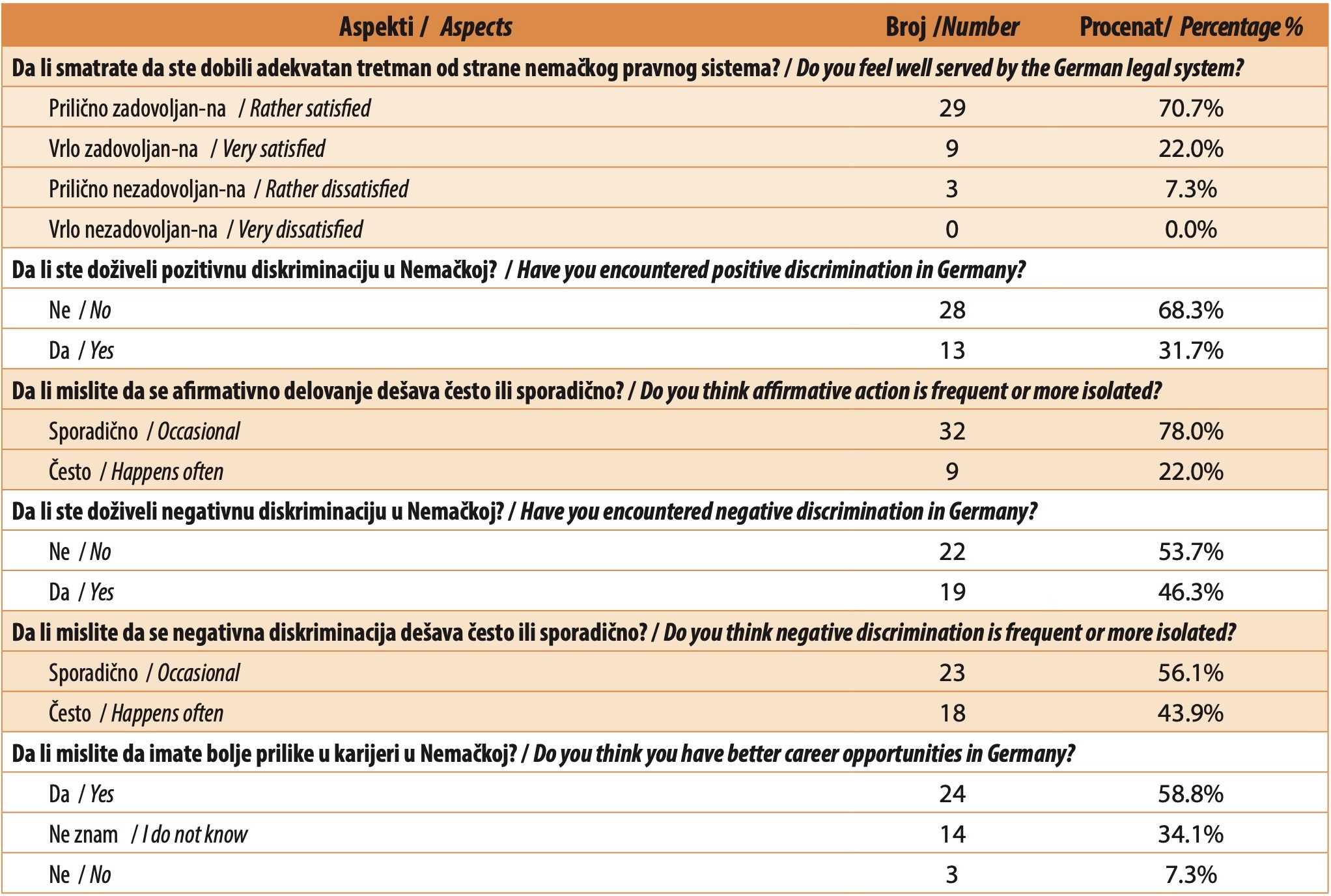
The study results presented in Table 4 also demonstrate the career opportunities available to doctors in Germany. The results show that a number of the respondents, n = 24 (58.5%), felt they had promising career opportunities in Germany, some, n = 14 (34.1%), said that they did not know, while others, n = 3 (7.3%), felt that they had no promising career opportunities (Table 4).
Satisfaction
Almost a quarter of the respondents, n = 10 (24.4%), stated that they were very satisfied, while a majority, n = 31 (75.6%), felt rather satisfied with their life in Germany (Table 5). The main reasons for this satisfaction were as follows: the social security in Germany, the promising career opportunities, and that Germany is a safe country. On the other hand, some matters proved to be a hindrance to complete satisfaction, such as the high cost of living, separation from family and friends in the home country, and excessive bureaucracy.
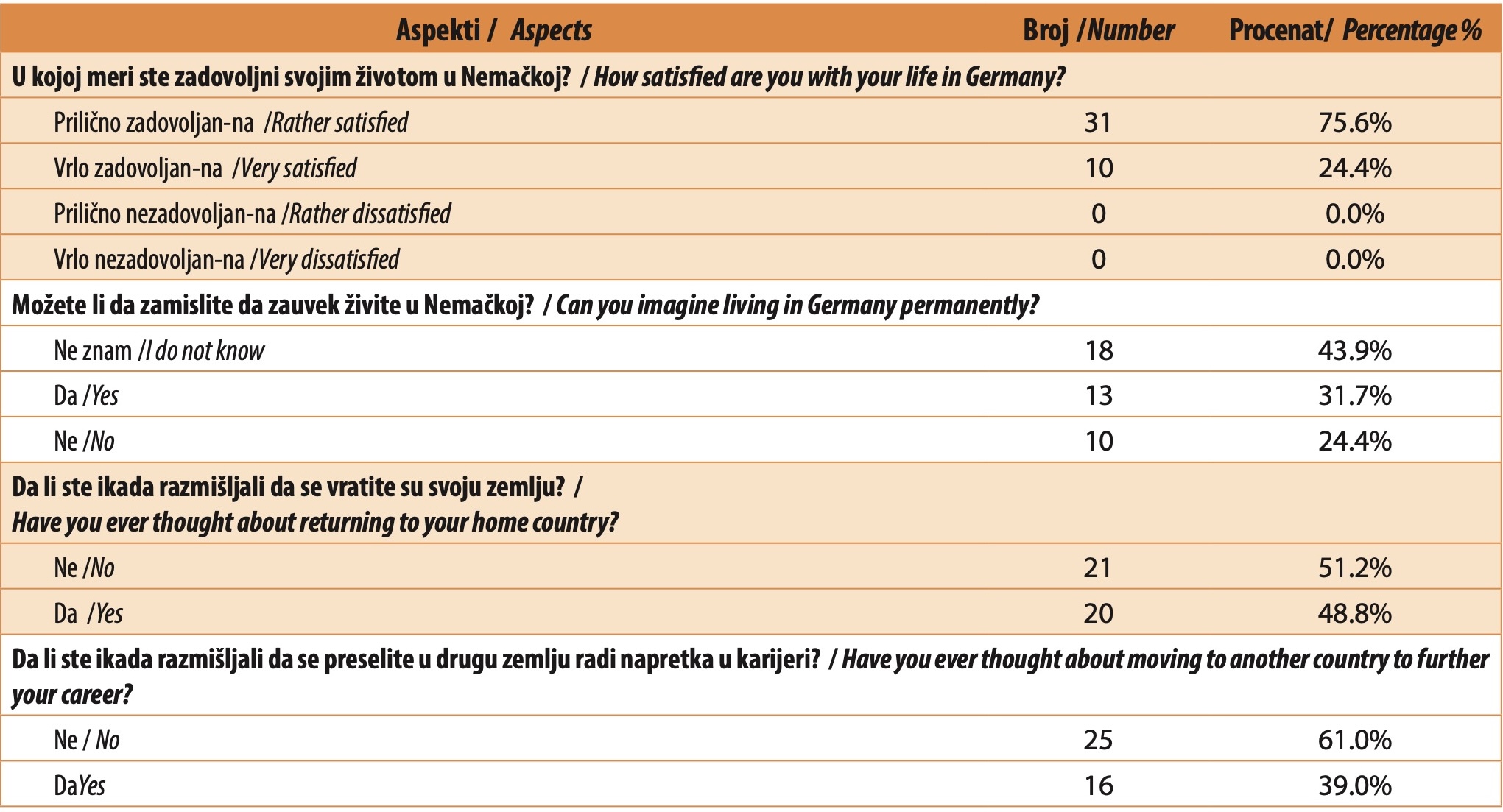
The results concerning the question of whether respondents could imagine living in Germany permanently were also interesting. A number of respondents, n = 18 (43.9%), stated that they did not know, almost a third, n = 13 (31.7%), confirmed that they wanted to stay in Germany permanently, while others, n = 10 (24.4%), stated that they did not want to live in Germany forever. The motivation for the decision to live in Germany permanently was: social security, better career opportunities, and an organized way of life. However, this did not apply to all respondents, as they could also decide to return completely if they did not feel comfortable at work. In addition, our analysis shows that a number of respondents, n = 21 (51.2%), had not considered moving back to their home country, while others, n = 20 (48.8%), had considered it. The reasons for moving back to their home country stated by the respondents were: the social milieu, different habits, missing family and friends (private reasons), as well as less red tape in their own country. The analyses further show that a majority of respondents, n = 25 (61%), had not contemplated emigrating from Germany to other countries, whereas, more than a third, n = 16 (39%), had considered moving to countries such as the USA, Austria, Switzerland, and the Scandinavian countries. The reasons stated were: more benefits for the doctors, for example, a shorter distance from the home country (Austria), better-centered care structures, and, in some cases, better salaries. The results show that, in general, the majority of the doctors were satisfied with life in Germany, stating that good career opportunities and good training were available.
Interviews
In addition to the questionnaire, two interviews were conducted with two different characteristics. The first interview was with a person who gave up their job in their home country to emigrate to Germany and work there, while the second interview was with a healthcare professional who came to Germany after completing their medical studies.
Both interviews revealed difficulties and lengthy periods that elapsed before the interviewees managed to complete the residence permit process and the degree recognition procedure. The first interview made it clear that the decision to emigrate to Germany was considered a positive one. The interviewee left her home country, Serbia, due to the unfavorable social, political, and economic situation, in search of better conditions for herself and her family. In contrast, Germany could offer a wide range of career opportunities, financial prosperity, and a stable political situation. However, this interview also revealed more difficulties in Germany regarding work-life balance and bureaucracy. The second interview was also about a positive experience of emigration from Serbia to Germany. The interviewee came directly to Germany after completing his medical studies with the help of an agency that brings qualified personnel to Germany. The agency was able to guarantee him a job, a place to stay, and assistance with translating and verifying documents. The reason for emigration was the poor training of doctors in Serbia after graduation, as well as not having a free choice of specialty. This interviewee, however, also encountered negative discrimination, although he took it well and saw it more as motivation to do more. The stability of Germany was also emphasized, as well as the good aspect of career opportunities, but the excessive bureaucracy was also perceived as a shortcoming. The interviewee stated that his goal was to complete his specialization in Berlin and open his own dermatology practice.
DISCUSSION
The analysis of the surveys shows clear motives for emigration from Serbia, Bosnia and Herzegovina, Montenegro, and North Macedonia. These include financial aspects, lack of professional development opportunities, and better opportunities for further training and careers abroad. These findings confirm the contemporary knowledge of the reasons for migration [13],[14],[15]. A comprehensive review of the factors influencing migration to and from the United Kingdom reveals that a physician’s decision to migrate is nuanced and necessitates careful consideration of various push and pull factors operating at macro, meso, and micro levels [13].
In our study, most respondents came to Germany with their partner, i.e., with their wife/husband and children, or they came to stay with family/relatives. The family reunion or family values and circumstances are often of migration policy relevance [14], either as a barrier [15] or as a push factor for emigration [14]. Our respondents were also influenced by better educational opportunities for their children and better career opportunities for their partners. Growing evidence suggests that educational opportunities have been and will continue to be a significant issue for the migration of health workers worldwide [16],[17],[18]. The majority of our respondents did not have a temporary job at the beginning of their stay in Germany and have changed workplaces 2-3 times since arriving, which might not be uncommon for medical personnel in early career stages.
Half of the respondents completed most of the application process without anyone’s help, while onethird received assistance from relatives, and only a small number received help from an agency. This indicates that trust is a key element in regulating migration flows. The application included a variety of tasks, such as the recognition of qualifications, taking language courses, regulating the visa status, additional training, or obtaining residence permits. For a person to be able to practice as a foreign doctor in Germany, a number of criteria must be met, including a license to practice medicine (recognition of medical degree), a specialist language test, and a visa, also known as a blue card. In some cases, additional training must also be completed. Due to the bureaucracy and other factors, the process takes up to 12 months, which may not be too long compared to the delays in the work permit process in the United States.
Our data also showed that most physician respondents worked in inpatient facilities, such as hospitals, which might have been influenced by the demand for services, better salaries, as well as the legal instruments supporting clinical specialties [19],[20],[21]. The financial aspect showed that these were high earners on their way to the peak of their careers.
The interviewees felt well looked after by the German legal system and had not experienced any major negative discrimination, but there had also been little positive discrimination. An opportunity to recruit foreign doctors or to arouse interest is reflected in some legal aspects. Since January 1, 2016, the regulation “Westbalkanordnung” § 26 paragraph 2 of the Employment Ordinance stipulates that nationals of Albania, Bosnia and Herzegovina, Kosovo, Montenegro, North Macedonia, and Serbia can obtain approval with a priority check for any type of employment [22]. This means that non-qualified personnel can also apply for a work visa and live in Germany. People who are qualified workers have an easier time coming to Germany, as skilled workers are the most sought-after.
The overall picture is one of satisfaction with having emigrated to Germany. It is also clear that there is a need for significant improvements in bureaucracy. In connection with the interviewees, it was interesting to note that they both had to overcome numerous bureaucratic hurdles in order to practice medicine. Both also emigrated to Germany for similar reasons: there were no development opportunities in their home country, however, they saw better training and career opportunities abroad, as well as higher salaries than in their home country. The interviewees had both been in Germany 5–10 years and had created a stable environment. They both experienced identical problems with immigration authorities [23], including the waiting time, absence of support, and lack of appropriate structure. Nevertheless, the interviewees were satisfied with their current life and stated that they had no plans of leaving Germany, but that they also hoped for a change and improvement in their living circumstances.
Fluctuation in the healthcare professions in Germany is increasing, and foreign assistants, doctors, and nursing staff are being recruited. It should, therefore, also be emphasized that it is becoming all the more enticing for foreign citizens to build a career in Germany. The variety of opportunities is also increasing from year to year and thus the interest abroad is growing. Finally, it can be said that the immigration of doctors from abroad is expected to increase each year. Then, there will be a need to ensure better work-life balance, improved bureaucratic support, and a guided process.
The recruitment of doctors from the Western Balkans can ease the burden on the German healthcare system caused by the high shortage of skilled labor. Studies have shown that more than 60% of doctors are considering leaving patient care completely [24].Germany has a total population of 84.6 million, of which 42.8 million are women and 41.7 million are men (as of 2023) [25]. Of the 84.6 million inhabitants, around 73.6 million people are covered by statutory health insurance, around 8.7 million are privately insured, and the remaining two million people are either welfare recipients, members of the police and armed forces, or uninsured [26]. The demographic change that is gradually becoming characteristic of Germany is of considerable importance. Data from the Federal Statistical Office shows that the proportion of the population over the age of 55 has significantly increased, while the number of people of working age over 18 is decreasing [27].The data also points to a low birth rate, which has led and will continue to lead to demographic change. Compared to 1950, life expectancy today is significantly higher: it is 83.9 years for women and 79.2 years for men. A constant increase in life expectancy is expected in Germany, and according to the forecast of the Federal Statistical Office, it will increase by around 5 years by 2070 [27].
Despite the availability of existing data, future research is necessary, involving larger sample sizes and immigrants from a broader range of countries. This will help us better understand the reasons behind physician migration, the challenges that migrants encounter, and the factors influencing their decision to stay in Germany or return to their home countries. Conducting this research will be instrumental in enhancing the satisfaction of migrant physicians, ultimately contributing to better retention rates in the medical workforce.
CONCLUSION
Most people who have moved to Germany are satisfied with their decision. However, there is a clear need for significant improvements, such as removing bureaucratic hurdles. Hiring doctors from the Western Balkans can help reduce the strain on the German healthcare system, which is facing a severe shortage of skilled workers. Given the ongoing shortage of skilled healthcare professionals in Germany and the country’s demographic development, the targeted recruitment of foreign medical professionals through bilateral agreements is becoming increasingly relevant. Future agreements could help reduce administrative barriers, facilitate professional recognition, and improve the integration of foreign professionals. Strengthened international cooperation, particularly with Western Balkan countries and other regions with a surplus of medical personnel, represents a strategic measure to ensure the long-term stability of healthcare provision in Germany while establishing sustainable migration mechanisms.
Informations

-
Keywords:
-
Received:
-
Revised:
-
Accepted:
-
Online first:
-
DOI:
-
Cite this article:

Sara Tintor
FOM University of Applied Sciences for Economics and Management
6 Leimkugelstraße Street, 45141 Essen, Germany
E-mail:
1. Federal Office for Migration and Refugees (BAMF). Integration of Female Migrants: Challenges and Needs. BAMF, Nuremberg, Germany, 2023. [Internet]. [Pristupljeno: 6. maj 2024.]. Dostupno: https://www.bamf.de/SharedDocs/Anlagen/DE/EMN/EMNDeutschlandPaper/emn-dp-1-2023-integration-migrantinnen.pdf. [HTTP]
2. McNamara C. Trade liberalization and social determinants of health: A state of the literature review. Soc Sci Med. 2017;176:1-13. doi: 10.1016/j.socscimed.2016.12.017. [CROSSREF]
3. Vlandas T. The Political Consequences of Labor Market Dualization: Labor Market Status, Occupational Unemployment and Policy Preferences. Political Science Research and Methods. 2020; 8(2): 362-368. doi: 10.1017/psrm.2018.42. [CROSSREF]
4. McNamara C. Trade liberalization, social policies and health: an empirical case study. Global Health. 2015; 11: 42. doi: 10.1186/s12992-015-0126-8. [CROSSREF]
5. Baum F, Townsend B, Fisher M, Browne-Yung K, Freeman T, Ziersch A, et al. Creating Political Will for Action on Health Equity: Practical Lessons for Public Health Policy Actors. International Journal of Health Policy and Management. 2022; 11(7): 947-960. doi: 10.34172/ijhpm.2020.233. [CROSSREF]
6. Greer SL. Labour politics as public health: how the politics of industrial relations and workplace regulation affect health. European Journal of Public Health. 2018; 28(suppl_3): 34-37. doi: 10.1093/eurpub/cky163. [CROSSREF]
7. Organisation for Economic Co-operation and Development (OECD). Health at a Glance 2023: OECD Indicators. OECD Publishing: Paris, France, 2023. doi: 10.1787/7a7afb35-en. [CROSSREF]
8. World Health Organization (WHO). Bilateral agreements on health worker migration and mobility: maximizing health system benefits and safeguarding health workforce rights and welfare through fair and ethical international recruitment. WHO: Geneva, Switzerland, 2024.
9. Department of Public Health, Babeș-Bolyai University (Romania), EUPHA-HWR Round table: Circular migration of the health and care workforce: how can we design sustainable policies? European Journal of Public Health. 2023; 33(Suppl 2): ckad160.537. Oxford University Press, Oxford, United Kingdom. doi: 10.1093/eurpub/ckad160.537. [CROSSREF]
10. Frenzel H, Weber T. Circular migration of health-care professionals: what do employers in Europe think of it? International Labour Organization (ILO): ILO Country Office for the Philippines, Makati City, Philippines, 2014.
11. Al-Btoush A, El-Bcheraoui C. Challenges affecting migrant healthcare workers while adjusting to new healthcare environments: a scoping review. Human Resources for Health. 2024; 22(1): 56. doi: 10.1186/s12960-024- 00941-w. [CROSSREF]
12. Leone C, Dussault G, Rafferty AM, Anderson JE. Experience of mobile nursing workforce from Portugal to the NHS in UK: influence of institutions and actors at the system, organization and individual levels. European Journal of Public Health. 2020; 30(Suppl_4): iv18-iv21. doi: 10.1093/eurpub/ckaa129. [CROSSREF]
13. Efendi F, McKenna L, Reisenhofer S, Kurniati A, Has EMM. Experiences of Healthcare Worker Returnees in Their Home Countries: A Scoping Review. Journal of Multidisciplinary Healthcare. 2021; 14: 2217-2227. doi: 10.2147/JMDH. S321963. [CROSSREF]
14. Brennan N, Langdon N, Bryce M. Drivers and barriers of international migration of doctors to and from the United Kingdom: a scoping review. Human Resources for Health. 2023; 21: 11. doi: 10.1186/s12960-022-00789-y. [CROSSREF]
15. Olazagasti C, Florez N. Going Back Home: Understanding Physician Migration to the United States. JCO Global Oncology. 2023;9: e2300332. doi: 10.1200/ GO.23.00332. [CROSSREF]
16. Adebayo A, Akinyemi OO. “What Are You Really Doing in This Country?”: Emigration Intentions of Nigerian Doctors and Their Policy Implications for Human Resource for Health Management. Journal of International Migration and Integration. 2022; 23(3): 1377-1396. doi: 10.1007/s12134-021-00898-y. [CROSSREF]
17. Toyin-Thomas P, Ikhurionan P, Omoyibo EE, Iwegim C, Ukueku AO, Okpere J, et al. Drivers of health workers’ migration, intention to migrate and non-migration from low/middle-income countries, 1970-2022: a systematic review. BMJ Global Health. 2023; 8(5): e012338. doi: 10.1136/bmjgh-2023-012338. [CROSSREF]
18. Essien EA, Mahmood MY, Adiukwu F, Kareem YA, Hayatudeen N., Ojeahere MI, et al. Workforce migration and brain drain - A nationwide cross-sectional survey of early career psychiatrists in Nigeria. Global Mental Health. 2024; 11: e30. doi: 10.1017/gmh.2024.25. [CROSSREF]
19. Iwata J, Todoroki R, Hashimoto T, Hyakutake M, Gomi H, Nishizono A. Perception of overseas experiences among medical students in Japan: a national online survey. BMC Medical Education. 2023; 23(1): 461. doi: 10.1186/s12909-023-04384-0. [CROSSREF]
20. Sani W. The Utilization of Foreign Workers in Hospital in Terms of Law Number 11 Of 2020 Concerning Job Creation Law (Omnibus Law). Proceedings of the 1st International Conference on Law, Social Science, Economics, and Education, ICLSSEE 2021, March 6th 2021, Jakarta, Indonesia. doi: 10.4108/ eai.6-3-2021.2306850. [CROSSREF]
21. Ahmed AA, Hwang WT, Thomas CR Jr, Deville C Jr. International Medical Graduates in the US Physician Workforce and Graduate Medical Education: Current and Historical Trends. Journal of Graduate Medical Education. 2018; 10(2): 214-218. doi: 10.4300/JGME-D-17-00580.1. [CROSSREF]
22. Federal Office of Justice, Germany. Ordinance on the Employment of Foreign Nationals 2013, §26 Abs. 2 BeschV, n.p. https://www.gesetze-im-nternet.de/beschv_2013/__26.html
23. von Stillfried D. Zi. Representative survey results on the situation in practices, 08.12.2023, p.2 #PraxenKollaps: Befragung zur Lage der Praxen
24. Federal Statistical Office, Germany. Population by nationality and gender (quarterly figures), 30/09/2023, n.p. https://www.destatis.de/EN/Themes/Society-Environment/Population/Current-Population/Tables/liste-current-population-basis-2022.html [HTTP]
25. vdek Der Ersatzkassen, Health insurance cover for the population, 2022, n.p. Daten zum Gesundheitswesen: Versicherte
26. Federal Statistical Office, Germany. Age structure of the population, 2022, n.p. https://www.destatis.de/EN/Themes/Society-Environment/Population/Current-Population/Tables/-tables-population-by-age-groups.html [HTTP]
27. Federal Statistical Office Germany. Healthcare personnel, 2023, n.p. https://www.destatis.de/EN/Themes/Society-Environment/Health/Health-Personnel/_node.html [HTTP]