


Complex foot injury treatment using vacuum assisted closure and platelet-rich fibrin method – Case report
- University Clinical Center of Serbia, Clinic for Orthopedic Surgery and Traumatology, Belgrade, Serbia
- University of Belgrade, Faculty of Medicine, Belgrade, Serbia
ABSTRACT
Introduction: Traffic accidents are one of the leading causes of death and injuries worldwide. According to the World Health Organization (WHO), more than 1.3 million people die annually in road accidents, while between 20 and 50 million suffer injuries. The majority of these injuries involve limb trauma, with the lower limbs being most commonly affected, particularly among pedestrians and motorcyclists.
Case report: This report presents the case of a 77-year-old female pedestrian involved in a road accident, sustaining open fractures of the second and third metatarsal bones of the left foot (Gustilo type II). Initial surgical treatment was performed immediately after the injury, including extensive irrigation, debridement, and fracture stabilization using K-wires, along with below-knee plaster immobilization and triple antibiotic therapy. Further complex treatment involved a combination of vacuum-assisted closure (V.A.C.), platelet-rich fibrin (PRF) application, and hyperbaric oxygen therapy (HBO).
Conclusion: Timely surgical intervention was crucial for achieving a positive outcome in an elderly patient, ensuring healing without infection and functional recovery. A multidisciplinary approach was essential in this complex case, adapting therapy to the specific needs of an elderly patient and improving overall recovery.
INTRODUCTION
Traffic-related trauma is one of the leading causes of death and injury worldwide. According to the World Health Organization (WHO), more than 1.3 million people die annually in road traffic accidents, while between 20 and 50 million are injured. It is the eighth leading cause of death across all age groups, surpassing HIV/AIDS, tuberculosis, and diarrheal diseases [1]. A large portion of traffic-related injuries involve limb trauma, with the lower extremities most commonly affected, particularly among pedestrians and motorcyclists who are more exposed due to the lack of protective structures present in vehicles [2].
According to data from the National Highway Traffic Safety Administration (NHTSA), pedestrians accounted for between 16% and 17% of all traffic-related fatalities in the United States during the five years from 2017 to 2021 [3].
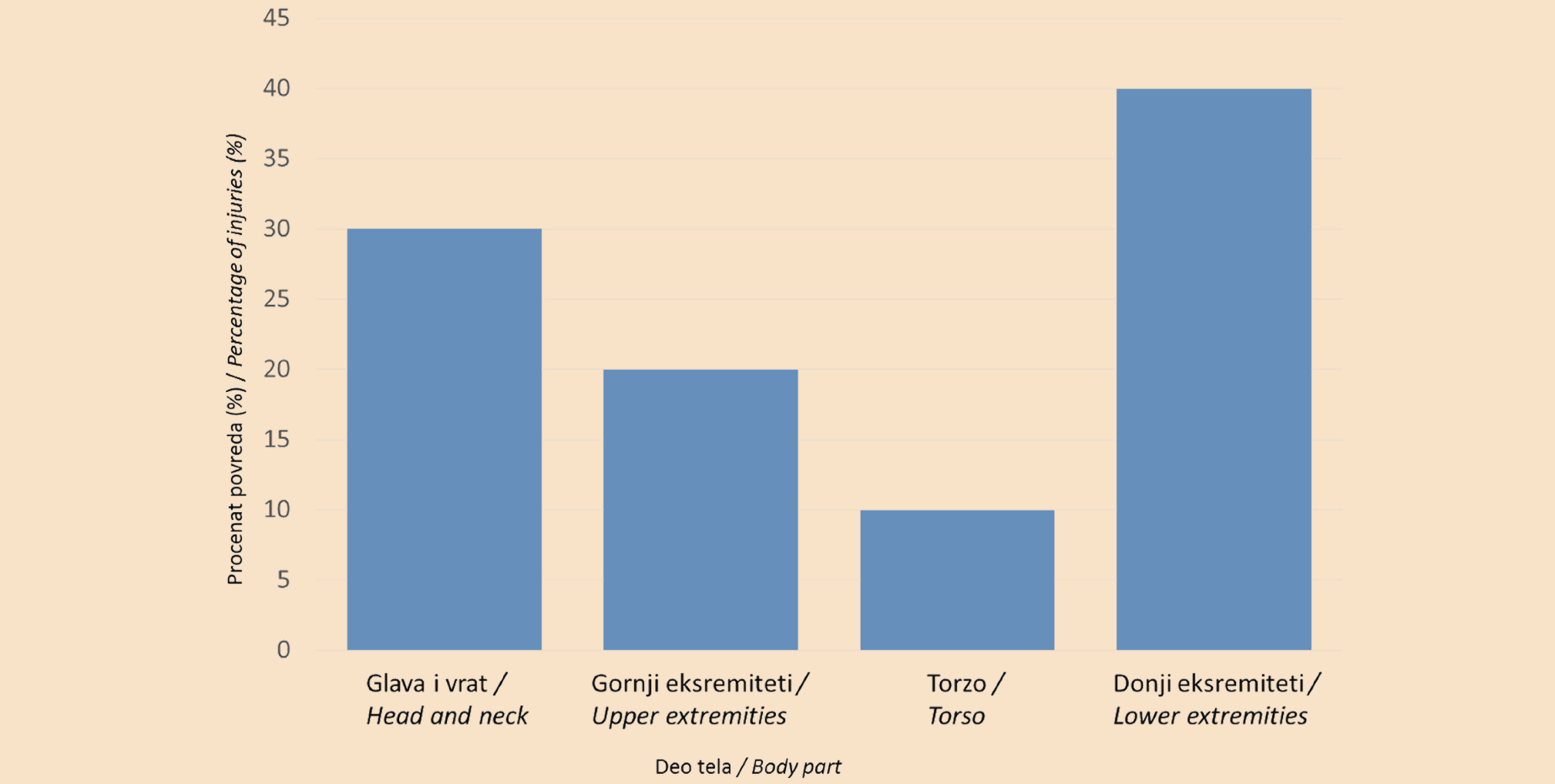
Foot and lower limb injuries caused by vehicle runover incidents are among the most severe injuries a pedestrian can sustain (Chart 1). Data shows that the majority of injured pedestrians (42.10%) were aged 41 to 69, and 81.31% were male [4]. In such cases, therapies such as vacuum-assisted closure (V.A.C.) and hyperbaric oxygen therapy (HBOT) can significantly contribute to faster recovery and reduced complications [5].
This case report aims to highlight the necessity of a multidisciplinary approach in treating complex injuries and to emphasize that the timely selection of appropriate therapeutic protocols can result in both functionally and aesthetically satisfactory outcomes, considering the extent of the injury.
CASE REPORT
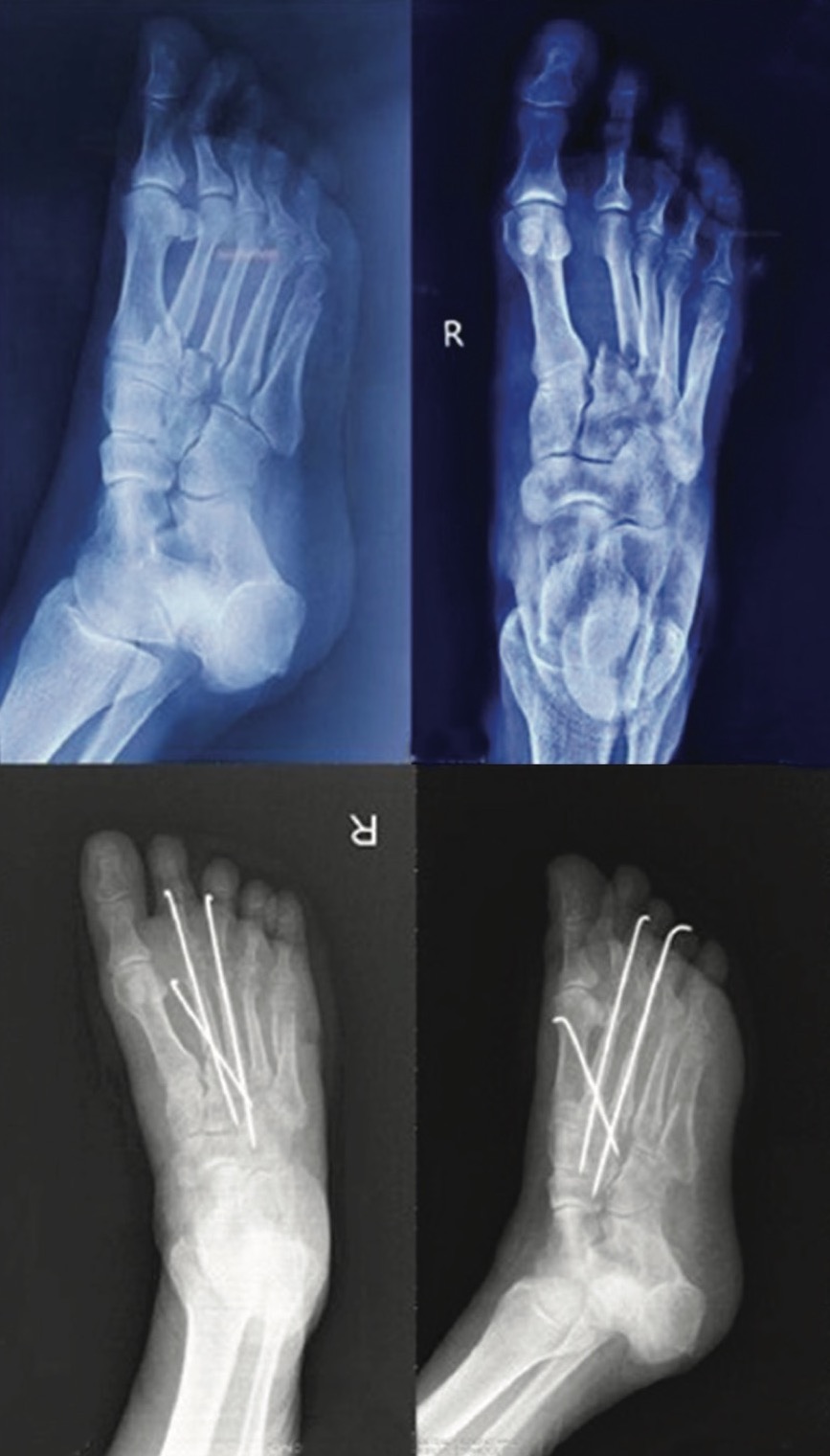
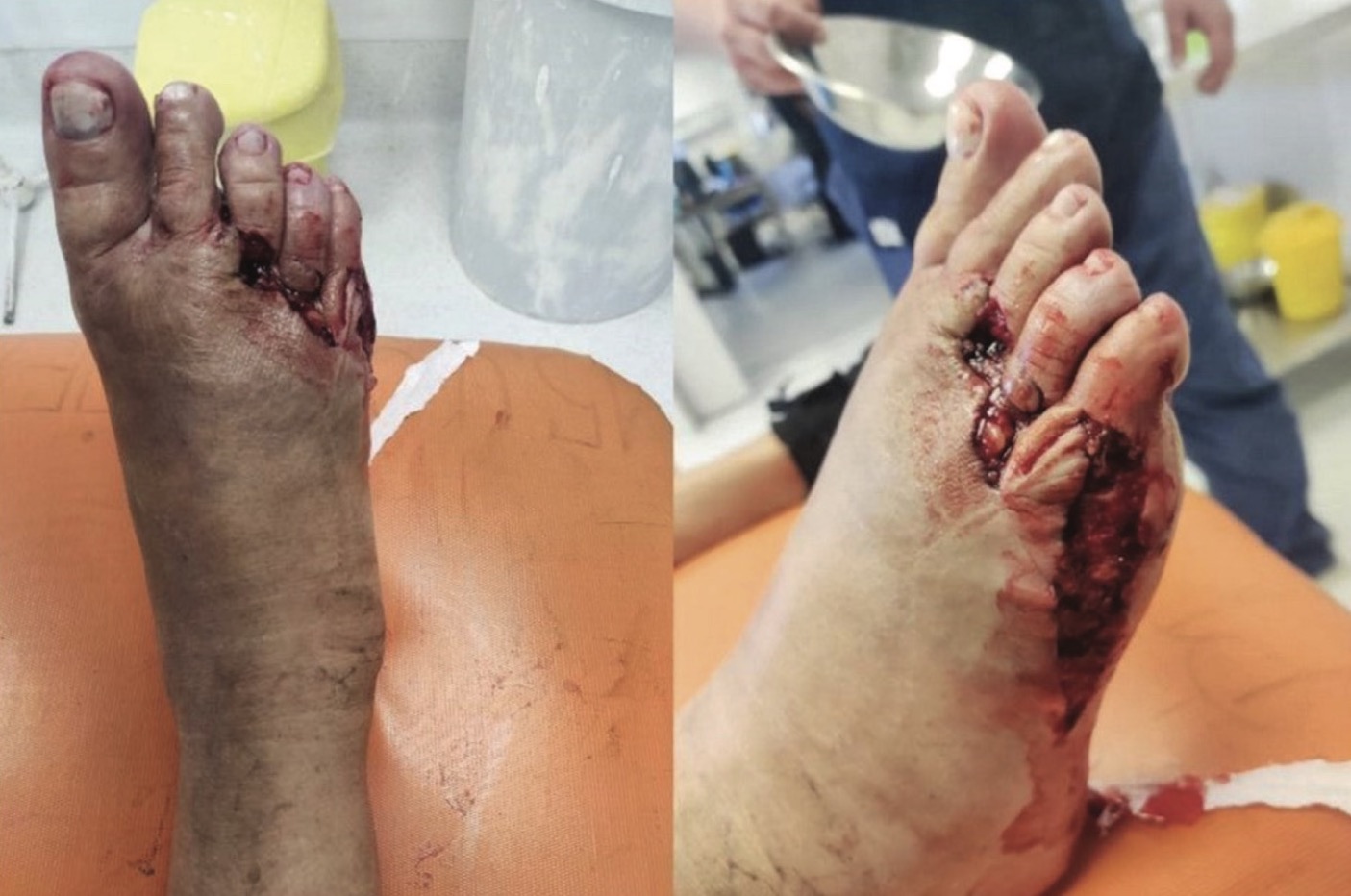
A 77-year-old female patient was injured as a pedestrian when a bus ran over her left foot. Examination revealed open fractures of the II and III metatarsal bones (Gustilo type II), with skin damage and compression of the extensor tendons on the dorsal aspect of the foot, but with preserved neurovascular status (Figure 1, Figure 2). On the day of injury, surgical treatment was performed, which included extensive wound irrigation, soft tissue debridement, and fixation of the II and III metatarsal bones with Kirschner wires (K-wires). A below-knee plaster cast was applied, and triple antibiotic therapy was administered: Azaran 1 g IV twice daily, Amikacin 500 mg IV twice daily, and Orvagil solution 500 ml IV three times daily. The patient also received anticoagulant prophylaxis (Fraxiparin 0.6 ml subcutaneously once daily) and tetanus prophylaxis (Tetagam 250 IU/ ml serum and Tetavaksal 40 IU/0.5 ml vaccine), in accordance with the immunization schedule [6].
Three days post-surgery, the patient began hyperbaric oxygen therapy (HBOT) to achieve hyperoxia and promote soft tissue healing. A total of 20 HBOT sessions were completed. The wounds were regularly dressed and managed with serial debridements. Despite treatment, skin necrosis developed on the dorsal aspect of the foot. Thirty-three days post-injury, a second surgical intervention was performed. This included repeated soft tissue debridement and excision of necrotic tissue from the dorsal foot, resulting in a skin defect that was managed with a V.A.C. device (V.A.C. Ulta®), applied under continuous pressure of 125 mmHg.
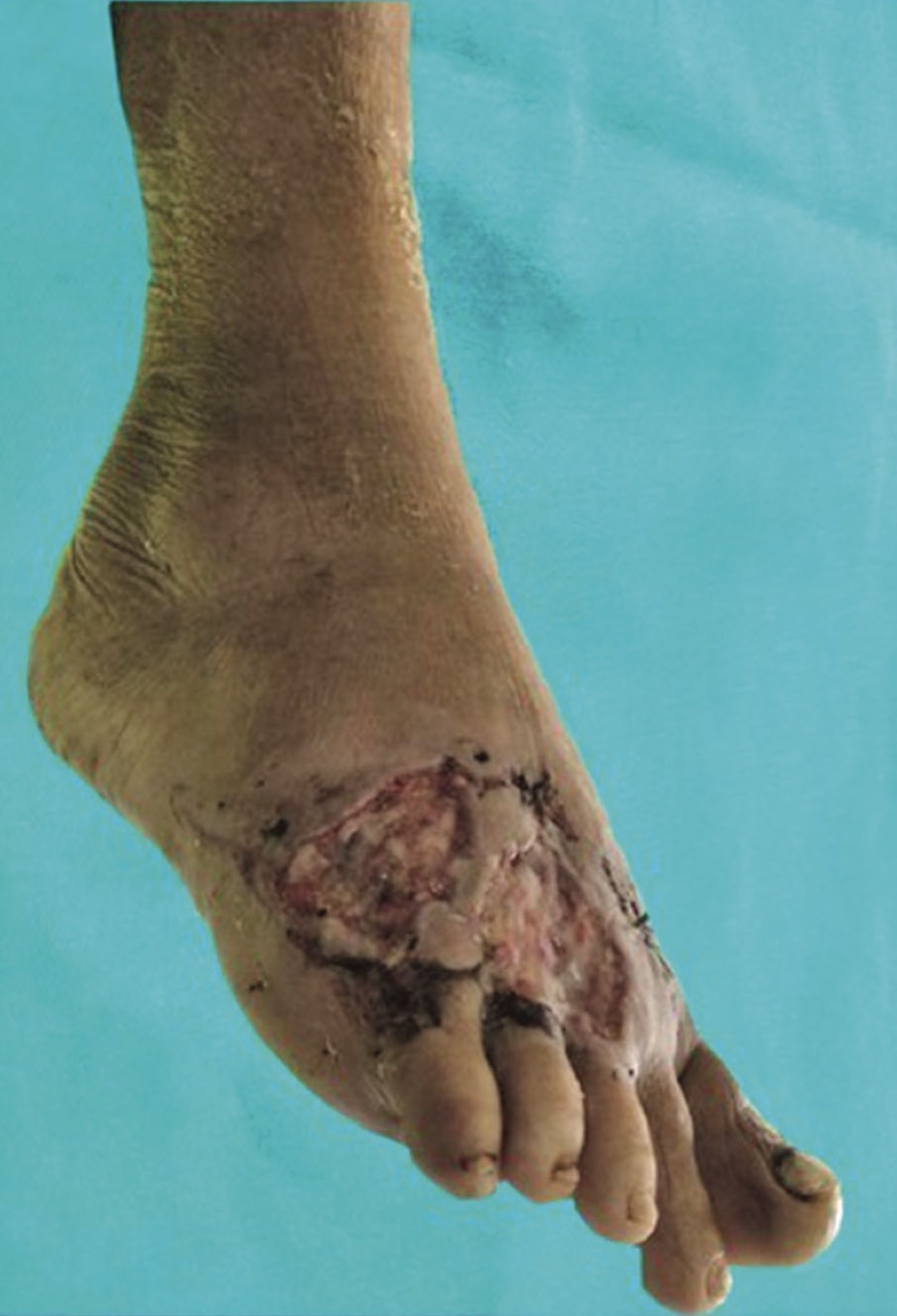
On day 36 post-injury, the skin defect was treated with platelet-rich fibrin (PRF), manufactured by Vivostat®. PRF is prepared in a closed system to concentrate fibrin and platelets 7–10 times above normal values from 120 ml of the patient’s autologous blood, drawn 15 minutes before anesthesia. The blood is collected directly into specially designed, single-use, sterile bottles. The automated preparation process takes about 25 minutes and yields 5–6 ml of the final product. The automated process is carried out in the anteroom of the operating block, and upon completion of centrifugation, the final product cassette is brought into the operating room and inserted into the Vivostat® applicator, where the solution is buffered. A sterile system is directly connected to the applicator unit, which includes a spray option for solution application. The application process lasts 3–4 minutes. When the spray is applied to the donor site defect, immediate polymerization occurs, resulting in the formation of a bioactive fibrin matrix. This procedure was repeated on day 43 to cover the remaining 2 cm diameter defect (Figure 3). Granulation tissue formed over the dorsal foot, and with no signs of infection, it was decided to proceed with skin defect coverage. On day 47, a new surgery was performed using a split-thickness autologous skin graft according to the Tiersch technique [7], with removal of K-wires (Figure 4). The donor site was on the anterior thigh of the contralateral leg, which was dressed aseptically. A skin graft mesh device is used to process the autologous skin graft, allowing for the creation of an adequate flap for application to the dorsal side of the foot.
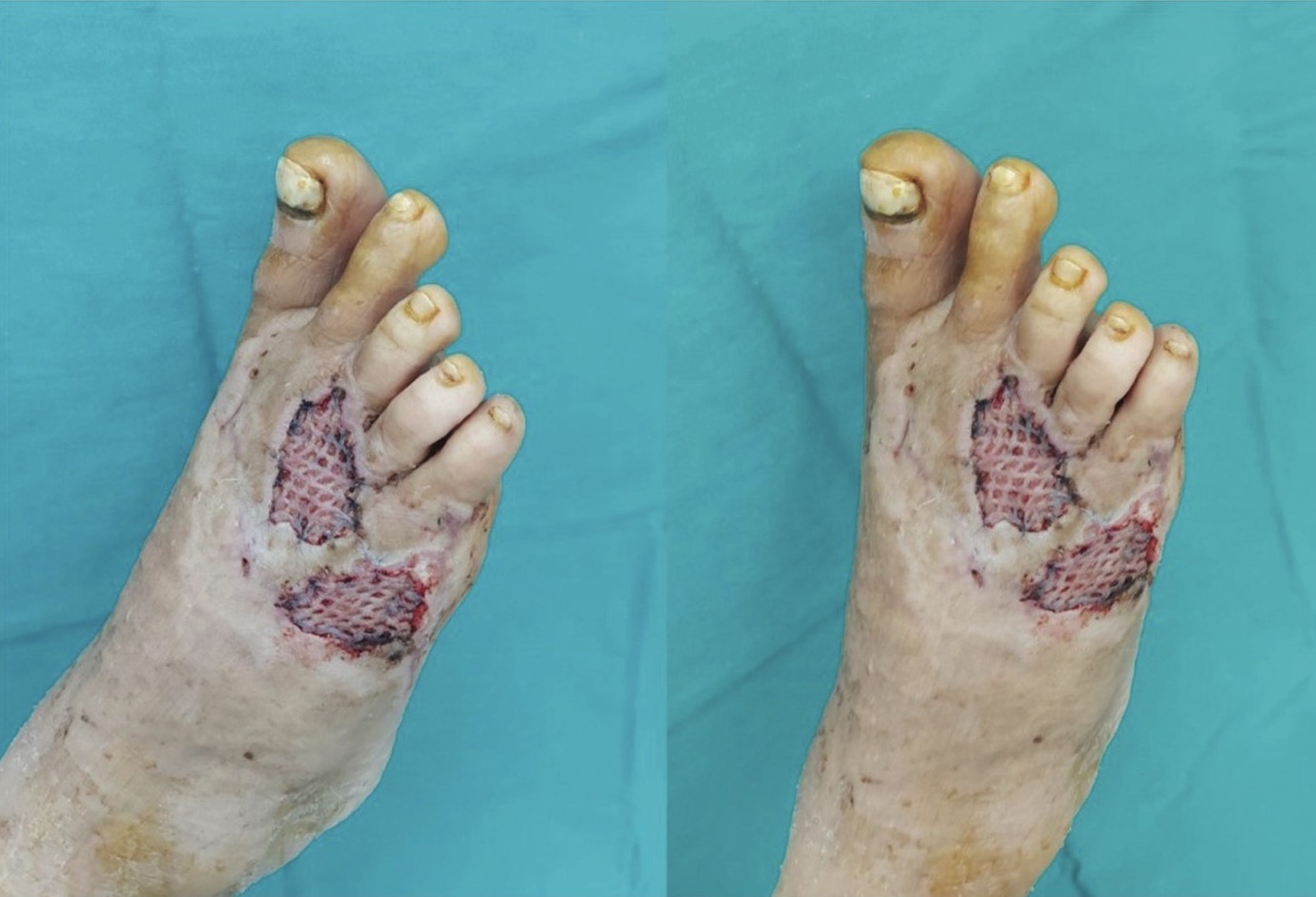
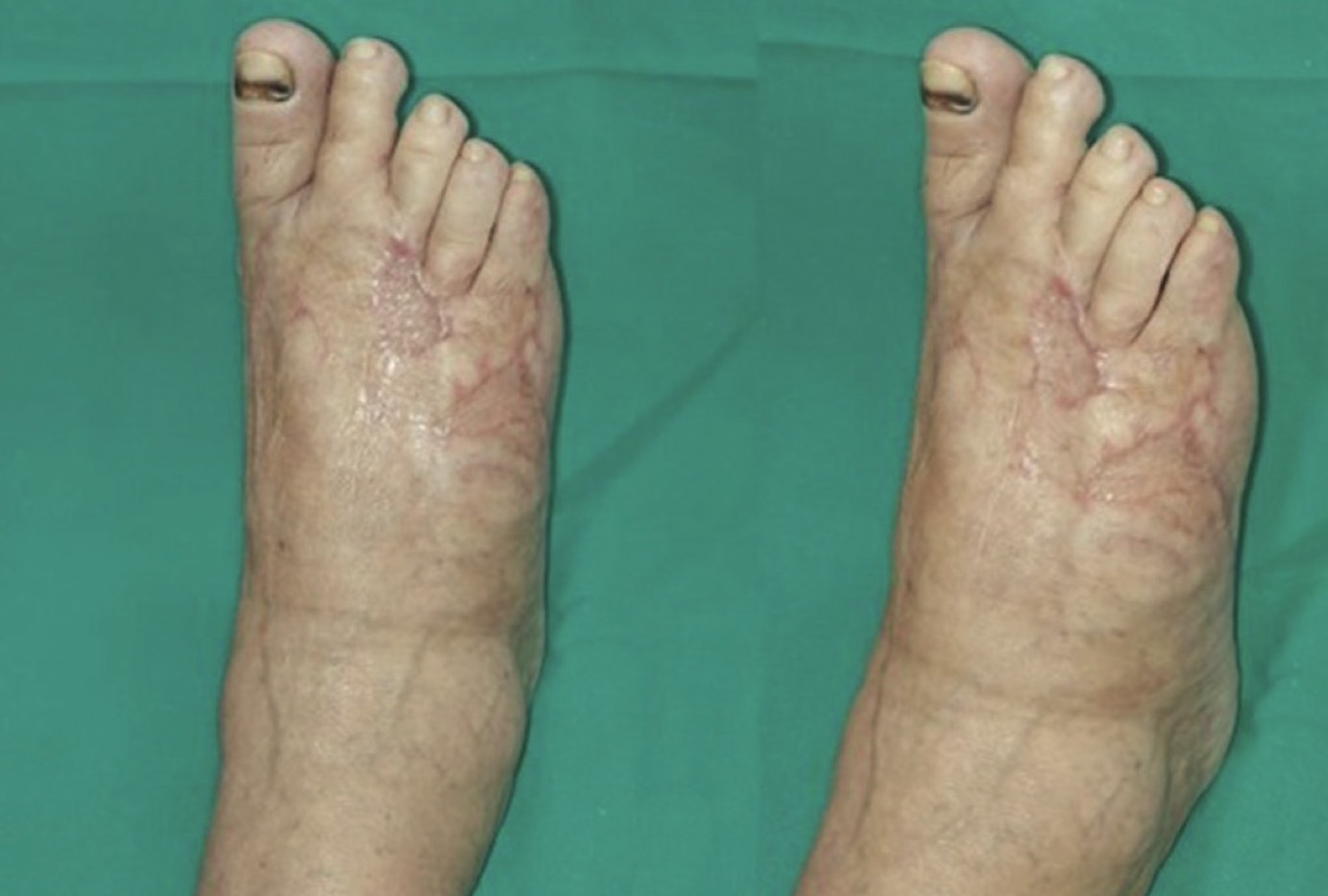
Following the application of the Thiersch graft, the patient underwent regular dressing changes. Based on the satisfactory local conditions of both the graft and the donor site, it was decided to continue the patient’s treatment at home, using dressings with vaseline gauze and Rivanol compresses. Two weeks after hospital discharge and two months after the injury, the wounds had healed, and weight-bearing on the operated leg was permitted (Figure 5). The patient was then referred for continued physical therapy, which was carried out at the designated rehabilitation center over the following three months. Six months after the initial injury, the patient was able to walk independently without the use of assistive devices.
DISCUSSION
Open foot fractures treated with anatomical reduction and K-wire fixation remain the gold standard for treatment. Common complications include implant rejection or soft tissue irritation, refracture, nonunion, nerve injuries, and chronic pain. Patients should be informed about treatment options and included in decision-making, especially when return to function is a priority [8].
In pediatric cases, open reduction and K-wire fixation typically yield satisfactory results with minimal severe complications. Early surgical intervention and rehabilitation in younger patients usually result in sound fracture reduction and full joint mobility after therapy [9].
Open fractures are associated with a higher rate of infections and delayed fracture healing; therefore, in addition to fracture fixation, infection prevention and monitoring of the local soft tissue status are crucial. Antibiotic administration should be initiated as early as possible and continued for 24 to 72 hours, depending on the nature of the injury. Initial debridement and assessment of injury severity determine the treatment strategy, particularly in elderly patients, as in our case. Fracture fixation follows general traumatological principles. In cases of significant contamination, bone loss, or extensive soft tissue damage, temporary fixation and provisional wound closure are performed. Definitive soft tissue coverage should be achieved within 72 hours to reduce the risk of fracture-related infections. For segmental bone defects, various approaches are available to restore bone continuity, depending on the size of the defect and the local condition of surrounding structures such as tendons, nerves, and skin coverage defects [10].
Studies have shown that wound healing in elderly individuals is slower. Poor healing of chronic wounds in the elderly population is more often attributed to comorbidities rather than age alone [11]. Split-thickness skin grafts have an advantage because they contain less tissue requiring revascularization compared to full-thickness skin grafts. Therefore, they are more likely to succeed on previously prepared tissue.
The advantages of using split-thickness skin grafts include a higher likelihood of survival under conditions of vascular compromise, relatively easy application, and their ability to cover significant skin defects. The main disadvantage of these grafts is cosmetic, including differences in skin color and the presence of granulation tissue at donor sites, which requires special care. The grafts are typically hairless and exhibit reduced sweating due to the absence of skin adnexa [12].
Hyperbaric oxygen therapy (HBO) involves administering 100% oxygen under increased atmospheric pressure to elevate oxygen levels above physiological norms, thereby creating conditions of hyperoxia [9]. HBO maximizes the benefits of oxygen and enhances the body’s natural defense mechanisms to promote wound healing. It is an effective wound healing procedure, but should only be used when clinically justified. To apply this treatment appropriately, the physician must understand its indications and contraindications [13].
Vacuum-assisted closure (V.A.C.) therapy utilizes negative pressure to enhance circulation in the injured area and stimulate the formation of granulation tissue, thereby significantly accelerating the healing process [14]. By removing excess fluid and exudate, V.A.C. therapy reduces swelling and facilitates optimal wound healing conditions. Continuous exudate removal also helps eliminate devitalized tissue, thereby reducing the risk of infection [14]. It creates a closed environment that helps decrease bacterial accumulation, thereby lowering the risk of infection. This is especially beneficial for open wounds and injuries prone to contamination [13]. The mechanical stimulation provided by negative pressure supports the development of granulation tissue, which is essential for wound healing and the restoration of damaged structures [15].
The process of muscle and wound healing, as well as the role of growth factors in this process, is an area of intense research. By concentrating these growth factors, PRF can enhance healing processes. Some of the first studies to demonstrate this were conducted by Wright-Carpenter and colleagues, who evaluated the effects of PRF on muscle injuries in humans. The study showed that the recovery time of patients treated with PRF was reduced to 16.6 days, compared to 22.3 days for patients treated with conventional methods. This supported the use of PRF during patient treatment, confirming earlier observations from animal models and in vitro studies [16].
According to an experimental study conducted by M. Cianforlini and colleagues, the healing process following direct or indirect muscle injury is complex yet clearly defined, comprising well-coordinated phases: degeneration, inflammation, regeneration, and fibrosis. Despite the frequent occurrence of such injuries and the abundance of data on the pathophysiology of muscle damage, none of the current treatment strategies has proven truly effective in strictly controlled trials. PRP is a promising alternative approach based on the ability of autologous growth factors (GFs) to accelerate tissue healing, enhance muscle regeneration, increase neovascularization, and reduce fibrosis. This study focused on the use of different concentrations of PRP as a source of growth factors [17].
Platelet-Rich Fibrin is rich in growth factors that stimulate cell proliferation, thereby contributing to faster healing of skin and soft tissues. These growth factors enhance tissue regeneration and collagen synthesis, leading to firm and elastic wound healing. It has been observed that PRF contains 23% higher leukocyte concentration compared to regular plasma, which helps control microbial presence in the wound and reduces the risk of infection [18]. When used as an adjunct during tissue grafting, PRF increases the likelihood of successful graft integration and reduces the risk of graft rejection, which can significantly contribute to treatment outcomes [19].
Negative pressure wound therapy (NPWT) has dramatically changed the management of complex foot wounds. Compared to standard wound care, patients with diabetic foot wounds treated with NPWT are 5.9 times more likely to achieve wound closure and 4.4 times less likely to require amputation. NPWT increases wound perfusion, accelerates granulation tissue formation, reduces edema, and lowers the bioburden [20].
Kishore Vellingiri and colleagues presented a case of foot trauma treated with V.A.C. therapy. The patient sustained a calcaneal injury with bone loss and local tissue damage due to a crush injury in a traffic accident. The authors noted that the benefits of the V.A.C. system significantly outweigh its costs, making it a primary treatment option for patients with such injuries [21].
The combination of V.A.C. therapy and PRF enables efficient wound healing, reduces the risk of infection, and provides optimal wound bed preparation for further reconstructive surgery, thereby improving treatment success in cases of complex soft tissue injuries and open fractures, as demonstrated in the treatment of the presented patient.
CONCLUSION
The timely initiation of surgical treatment on the day of injury, combined with specific therapeutic methods and a multidisciplinary approach, was crucial in delivering high-quality care and achieving an optimal outcome in this elderly patient. The initial surgery, which included irrigation, debridement, and fracture stabilization, laid the groundwork for successful recovery by minimizing the risk of infection and other complications that could have further compromised the patient’s condition.
Advanced age carries an increased risk of delayed healing and complications, making prompt intervention and continuous monitoring even more important. The multidisciplinary approach enabled precise planning and timely implementation of additional therapies, including hyperbaric oxygen therapy, V.A.C. therapy, and PRF treatment. This integrated treatment model, tailored to the patient’s specific needs, exemplifies the importance of comprehensive care that addresses all aspects of recovery, maximizing the chances for complete functional restoration even in elderly patients with complex injuries.
Informations

-
Keywords:
-
Received:
-
Revised:
-
Accepted:
-
Online first:
-
DOI:
-
Cite this article:

Aleksandra Petrović
Clinic for Orthopedic Surgery and Traumatology, University Clinical Center of Serbia
26 Dr Koste Todorovića Street, 11000 Belgrade, Serbia
E-mail:
1. World Health Organization. Global status report on road safety 2018 [Internet]. Geneva: World Health Organization; 2018 [cited 2025 February 24]. Available from: https://www.who.int/publications/i/item/9789241565684 [HTTP]
2. Court-Brown CM, Caesar B. Epidemiology of adult fractures: a review. Injury. 2006 Aug;37(8):691-7. doi: 10.1016/j.injury.2006.04.130. [CROSSREF]
3. Kirley BB, Robison KL, Goodwin AH, Harmon KJ, O’Brien NP, West A, et al. Countermeasures that work: a highway safety countermeasure guide for State Highway Safety Offices, 11th edition, 2023 [Internet]. Washington (DC): National Highway Traffic Safety Administration; 2023 Nov. Report No.: DOT HS 813 490. Available from: https://www.nhtsa.gov/book/countermeasures-that-work/pedestrian-safety [HTTP]
4. Zohrevandi B, Rad EH, Kouchakinejad-Eramsadati L, Imani G, Pourheravi I, Khodadadi-Hassankiadeh N. Epidemiology of head injuries in pedestrian-motor vehicle accidents. Sci Rep. 2023 Nov 20;13(1):20249. doi: 10.1038/s41598-023-47476-z. [CROSSREF]
5. Engel P, Ranieri M, Felthaus O, Geis S, Haubner F, Aung T, et al. Effect of HBO therapy on adipose-derived stem cells, fibroblasts and co-cultures: in vitro study of oxidative stress, angiogenic potential and production of pro-inflammatory growth factors in co-cultures. Clin Hemorheol Microcirc. 2020;76(4):459-71. doi: 10.3233/CH-209222. [CROSSREF]
6. Roses M, Bonvehí PE. Vaccines in adults. Medicina (B Aires). 2019;79 (Spec 6/1):552-58. English.
7. Khan AA, Khan IM, Nguyen PP, Lo E, Chahadeh H, Cerniglia M, et al. Skin graft techniques. Clin Podiatr Med Surg. 2020 Oct;37(4):821-35. doi: 10.1016/j. cpm.2020.07.007. [CROSSREF]
8. Chloros GD, Kakos CD, Tastsidis IK, Giannoudis VP, Panteli M, Giannoudis PV. Fifth metatarsal fractures: an update on management, complications, and outcomes. EFORT Open Rev. 2022 Jan 11;7(1):13-25. doi: 10.1530/EOR-21-0025. [CROSSREF]
9. Ayoglu N, Afacan MY, Ozsahin MK, Seker A. Match the metatarsal heads: a case of all-metatarsal fractures after a motorcycle accident. Cureus. 2023 May 29;15(5):e39659. doi: 10.7759/cureus.39659. [CROSSREF]
10. Omar M, Zeckey C, Krettek C, Graulich T. Offene Frakturen [Open fractures]. Unfallchirurg. 2021 Aug;124(8):651-65. German. doi: 10.1007/s00113-021-01042-2. [CROSSREF]
11. Kremer M, Burkemper N. Aging skin and wound healing. Clin Geriatr Med. 2024 Feb;40(1):1-10. doi: 10.1016/j.cger.2023.06.001. [CROSSREF]
12. Ratner D. Skin grafting. From here to there. Dermatol Clin. 1998 Jan;16(1):75- 90. doi: 10.1016/s0733-8635(05)70488-5. [CROSSREF]
13. Klakeel M, Kowalske K. The role of hyperbaric oxygen therapy for the treatment of wounds. Phys Med Rehabil Clin N Am. 2022 Nov;33(4):823-32. doi: 10.1016/j.pmr.2022.06.008. [CROSSREF]
14. Normandin S, Safran T, Winocour S, Chu CK, Vorstenbosch J, Murphy AM, et al. Negative pressure wound therapy: mechanism of action and clinical applications. Semin Plast Surg. 2021 Aug;35(3):164-70. doi:10.1055/s-0041-1731792. [CROSSREF]
15. Yane Y, Hida J, Makutani Y, Ushijima H, Yoshioka Y, Iwamoto M, et al. The technique for less infectious and earlier healing of stoma closure wound: negative pressure wound therapy with instillation and dwelling followed by primary closure. BMC Surg. 2021 Mar 22;21(1):157. doi:10.1186/s12893-021- 01109-2. [CROSSREF]
16. Grecu AF, Reclaru L, Ardelean LC, Nica O, Ciucă EM, Ciurea ME. Platelet-rich fibrin and its emerging therapeutic benefits for musculoskeletal injury treatment. Medicina (Kaunas). 2019 May 15;55(5):141. doi: 10.3390/medicina55050141. [CROSSREF]
17. Cianforlini M, Mattioli-Belmonte M, Manzotti S, Chiurazzi E, Piani M, Orlando F, et al. Effect of platelet rich plasma concentration on skeletal muscle regeneration: an experimental study. J Biol Regul Homeost Agents. 2015 Oct-Dec;29(4 Suppl):47-55.
18. Miron RJ, Gruber R, Farshidfar N, Sculean A, Zhang Y. Ten years of injectable platelet-rich fibrin. Periodontol 2000. 2024 Feb;94(1):92-113. doi: 10.1111/prd.12538. [CROSSREF]
19. Simonpieri A, Del Corso M, Vervelle A, Jimbo R, Inchingolo F, Sammartino G, et al. Current knowledge and perspectives for the use of platelet-rich plasma (PRP) and platelet-rich fibrin (PRF) in oral and maxillofacial surgery part 2: Bone graft, implant and reconstructive surgery. Curr Pharm Biotechnol. 2012 Jun;13(7):1231-56. doi: 10.2174/138920112800624472. [CROSSREF]
20. Davis KE, La Fontaine J, Farrar D, Oz OK, Crisologo PA, Berriman S, et al. Randomized clinical study to compare negative pressure wound therapy with simultaneous saline irrigation and traditional negative pressure wound therapy for complex foot infections. Wound Repair Regen. 2020 Jan;28(1):97- 104. doi: 10.1111/wrr.12741. [CROSSREF]
21. Vellingiri K, S NJ, Hongaiah D. Negative pressure wound therapy with flap reconstruction for extensive soft tissue loss in the foot: a case report. Cureus. 2020 Aug 29;12(8):e10116. doi: 10.7759/cureus.10116. [CROSSREF]
- Graphics 1. Distribution of body part injuries - World Health Organization (WHO), Global Status Report on Road Safety, 2018
- Figure 1. Radiography of the foot after injury and after operative
- Figure 2. The foot after injury
- Figure 3. The foot after PRF treatment
- Figure 4. Foot with Thiersch transplant
- Figure 5. Foot with Thiersch transplant