


Navigating COVID-19 in pregnancy: care pathways and system challenges in Kazakhstan – a qualitative study
- Al-Farabi Kazakh National University, Faculty of Medicine and Health Care, Almaty, Kazakhstan
ABSTRACT
Introduction: International studies conducted during the COVID-19 pandemic have shown that pregnant women often experienced significant barriers to timely and appropriate care. However, much of the existing evidence is derived from quantitative surveillance or from settings with well-established digital infrastructure and standardized clinical pathways, which may not reflect the realities of many middle-income health systems. This study aims to qualitatively explore the experiences of pregnant women and healthcare professionals regarding COVID-19 care pathways, including symptom recognition, outpatient management, and hospitalization, in Almaty, Kazakhstan.
Methods: The present study applied a qualitative, descriptive, phenomenological design to explore how pregnant COVID-19 patients and healthcare professionals experienced the organization of care during the pandemic. The study included 24 participants from local primary health care and hospital settings in Almaty, Kazakhstan. Fifteen healthcare professionals and nine pregnant or postpartum women voluntarily and anonymously provided informed consent to in-depth semi-structured interviews, either face-to-face or via secure video conferencing, between May and August 2023.
Results: Healthcare professionals reported that COVID-19 substantially altered maternal health care due to increased workload, fear of infection, and a shift toward remote care. Uncertainty regarding pregnancy-specific clinical guidelines and standard operating procedures (SOPs) contributed to reliance on general protocols and informal practices, while delayed hospitalization was linked to symptom denial, fear of admission, self-treatment, and system constraints. Pregnant and postpartum women commonly misinterpreted COVID-19 symptoms as pregnancy-related or mild illness, leading to self-medication and delayed help-seeking. Follow-up was largely unstructured and based on communication via phone or messages. The experience of care varied, ranging from timely clinical support to inconsistent monitoring and preference for home-based management.
Conclusion: The study offers detailed insights into a fragile and fragmented COVID-19 care pathway for pregnant women in primary and hospital care settings in Almaty. Several priorities for strengthening care organization for pregnant women with COVID-19 and for future public health emergencies include improving continuity of care, reducing delays in escalation, and enhancing the safety of maternal health services during infectious disease outbreaks.
INTRODUCTION
Pregnant women have been identified as a high-risk group during the COVID-19 pandemic. Compared with non-pregnant women of reproductive age, they face a higher likelihood of severe disease, intensive care unit admission, and adverse obstetric outcomes, including preterm birth [1],[2],[3],[4]. Beyond the direct clinical risks of SARS-CoV-2 infection, pregnancy creates additional vulnerability because maternal and fetal health are closely intertwined, making delays or disruptions in care potentially more harmful [5]. As a result, the COVID-19 pandemic highlighted not only the need for effective clinical management of infection in pregnant women, but also the critical importance of how care is organized, delivered, and accessed for this population [5],[6].
During a rapidly evolving pandemic, clinical outcomes are shaped not only by the biological severity of infection but also by how health systems respond to patient needs. For pregnant COVID-19 patients, timely recognition of symptoms, access to testing, clear referral pathways, and appropriate decisions about outpatient versus inpatient care are crucial for preventing deterioration and adverse outcomes [7]. Disruptions in communication, uncertainty about clinical responsibility, or delays in hospitalization can turn otherwise manageable illness into a serious threat for both mother and fetus [8],[9],[10]. Therefore, understanding how care pathways function in practice is essential for identifying gaps that may undermine the safety and effectiveness of maternal health care during public health emergencies.
International studies conducted during the COVID-19 pandemic have shown that pregnant women often experienced significant barriers to timely and appropriate care. These included fear of infection in healthcare facilities, uncertainty about when to seek help, reduced face-to-face contact with clinicians, and reliance on remote communication [11],[12],[13]. Likewise, healthcare professionals likewise reported heavy workloads, rapidly changing clinical guidance, and difficulties coordinating care across services [14],[15],[16]. Qualitative research from high-income countries has described how these challenges affected communication, trust, and decision-making between pregnant women and providers [17],[18]. However, much of the existing evidence is derived from quantitative surveillance or from settings with well-established digital infrastructure and standardized clinical pathways, which may not reflect the realities of many middle-income health systems.
Despite a growing body of international research on pregnancy and COVID-19, important gaps remain [19]. Most qualitative studies have been conducted in high-income countries with relatively stable health systems and established clinical pathways. Several clinical studies from Kazakhstan have documented the impact of COVID-19 on maternal health, including higher rates of adverse clinical outcomes and increased maternal mortality associated with the pandemic. A recent multicentric study reported that pregnant women with COVID-19 experienced more severe symptoms and higher rates of intensive care unit admission compared with non-pregnant women, and national data indicate a sharp rise in indirect causes of maternal death during the pandemic year [2],[20],[21]. However, existing research from Kazakhstan has primarily focused on quantitative clinical outcomes, with little qualitative evidence on how care pathways were experienced by women and providers in the real world. The present study aims to qualitatively explore the experiences of pregnant women and healthcare professionals regarding COVID-19 care pathways, including symptom recognition, outpatient management, and hospitalization, in Almaty, Kazakhstan.
MATERIALS AND METHODS
Study design
The present study applied a qualitative, descriptive, phenomenological design to explore how pregnant COVID-19 patients and healthcare professionals experienced the organization of care during the pandemic. The phenomenological approach was chosen to capture the participants’ lived experiences and perceptions of care pathways, barriers, and decision-making in real-world clinical settings.
Setting and study period
The study was conducted in Almaty, Kazakhstan. Data collection took place between May 2023 and August 2023. At the time, care for pregnant COVID-19 patients was regulated by national clinical protocols and regional organizational procedures, which were undergoing frequent revisions during the pandemic.
Participants and sampling
The participants were recruited for the study from local primary health care and hospital settings in Almaty, Kazakhstan. They were informed on the study protocol and invited to voluntarily and anonymously provide informed consent. Two groups of participants were recruited:
- Healthcare professionals involved in the care of pregnant women with COVID-19 (n = 15), including obstetricians-gynecologists, midwives, infectious disease specialists, and hospital and primary care managers.
- Pregnant and postpartum women with confirmed COVID-19 during pregnancy (n = 9).
Participants were selected through purposive sampling to ensure they were directly involved in or affected by COVID-19 care. Recruitment continued until data saturation was achieved. Data saturation was defined as the point when no new concepts or themes emerged from the interviews.
Inclusion and exclusion criteria
Healthcare professionals were eligible to participate in the study if they had been actively involved in the care of pregnant COVID-19 patients and if they provided written informed consent. The healthcare professionals not directly involved in maternal COVID-19 care or not present during the study period were excluded.
Pregnant and postpartum women were eligible to participate in the study if they were aged 18–49 years, had confirmed pregnancy at the time of COVID-19 infection, and were able and willing to participate in an interview. Women with severe communication barriers or those who did not provide informed consent were excluded from the study.
Data collection
Data were collected through in-depth, semi-structured interviews conducted either face-to-face or via secure video conferencing (Zoom), at the participants’ preference. Interviews lasted between 21 and 40 minutes.
Participants were interviewed in 2023, after the most acute phases of the COVID-19 pandemic. During the interviews, participants were encouraged to reflect both on their experiences at the time of illness and on earlier pandemic waves, when care pathways, clinical guidelines, and the organization of health services were rapidly evolving. This retrospective viewpoint enabled the exploration of the ways that experiences and perceptions of care changed over time.
Interview guides were developed separately for healthcare professionals and pregnant women. For healthcare professionals, the questions focused on clinical protocols, care organization, hospitalization, and communication with patients. For the pregnant women, the questions addressed symptom recognition, help-seeking behavior, experiences with healthcare services, and follow-up during illness.
All interviews were audio-recorded and transcribed verbatim by the research team.
Interview guides
Separate semi-structured interview guides were developed for pregnant/postpartum women and for healthcare professionals.
For pregnant and postpartum women, interviews began with open-ended questions about their pregnancy and postpartum experience during COVID-19. The discussion then focused on how women recognized and interpreted COVID-19 symptoms, how they sought care, and how they perceived the attitudes and responses of primary care and hospital-based providers. Interviews concluded with questions about their experience of follow-up and clinical communication during illness.
For healthcare professionals, interviews started with general questions about professional background and work experience. Subsequent questions explored their knowledge of national COVID-19 clinical protocols and regulatory documents related to pregnancy, their experiences in managing pregnant COVID-19 patients, patient help-seeking behavior, hospitalization pathways, and the availability of resources needed to provide care.
The semi-structured format allowed interviewers to follow participant narratives while ensuring that key topics related to care pathways, decision-making, and system-level barriers were consistently addressed across interviews.
Data analysis
Data were processed using thematic analysis. Transcripts were read repeatedly to achieve familiarization and then coded inductively using ATLAS.ti (Version 24). Codes were grouped into categories and then into broader themes reflecting patterns across the data.
Initial coding was conducted by a doctoral researcher, whereafter codes and themes were reviewed and refined under the supervision of the academic supervisors, to enhance analytic rigor.
Ethical considerations
All participants provided written informed consent prior to participation. To ensure confidentiality, personal identifiers were removed from interview transcripts, and participants were assigned unique codes (e.g., R1, R2). Interviews were conducted in secure settings, and all digital data were stored on password-protected devices. Ethical approval for the study was obtained from the Local Ethics Committee of Al-Farabi Kazakh National University (approval dated 9 June 2022; IRB-A470). The study was conducted in accordance with the principles of the Declaration of Helsinki at all stages.
RESULTS
Participant characteristics
The study included 24 participants: 15 healthcare professionals and 9 pregnant or postpartum women (Table 1).
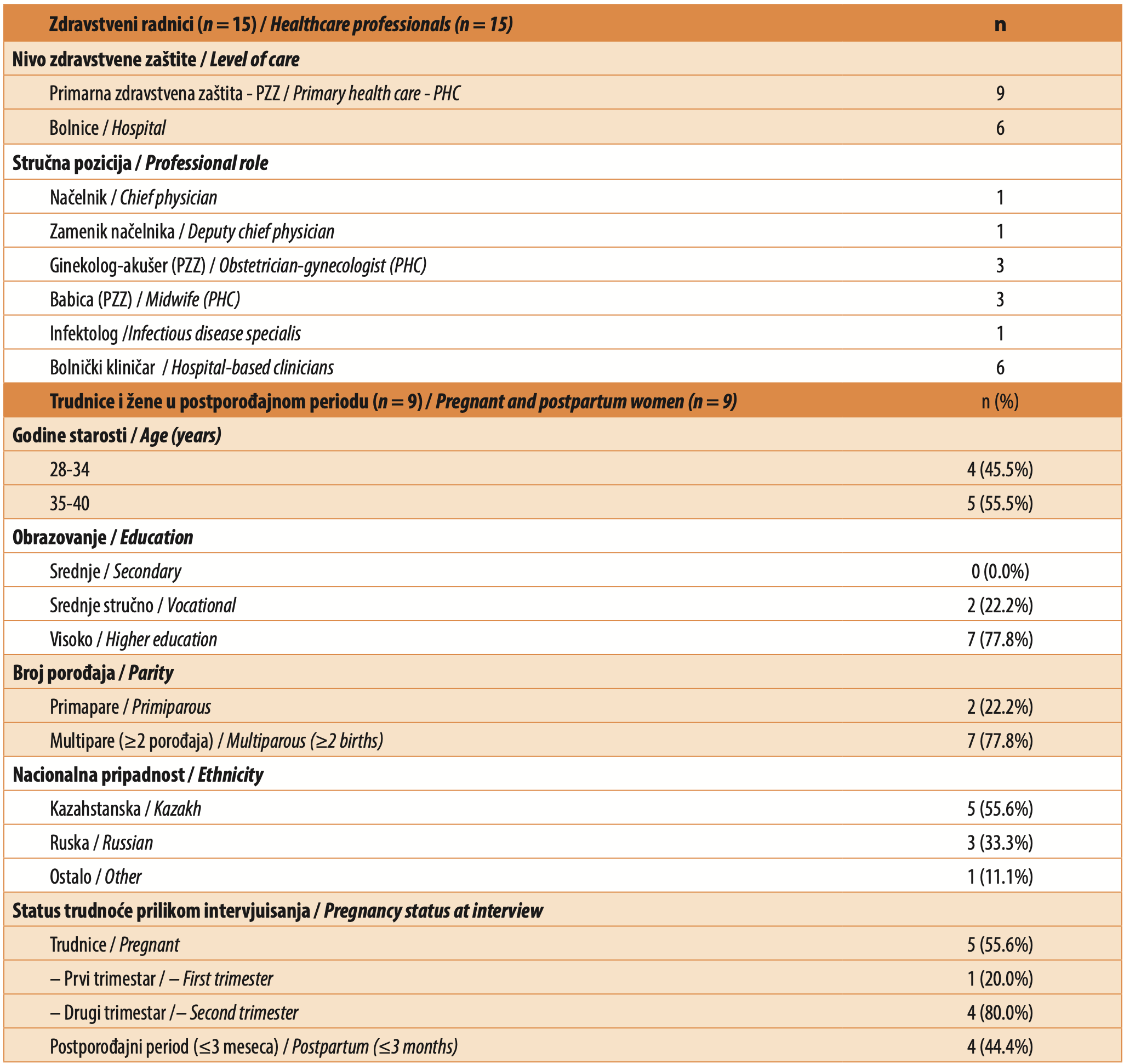
Among the healthcare professionals, nine worked in primary health care and six in hospital settings. The sample included a broad range of professionals involved in maternal COVID-19 care, including one chief physician, one deputy chief physician, three obstetrician-gynecologists, three midwives, one infectious disease specialist, and six hospital-based clinicians. This ensured representation of both managerial and frontline clinical perspectives across different levels of care.
Among the pregnant and postpartum women, all participants were between 28 and 40 years of age, with slightly more than half of them aged 35–40 years. Most women had a higher level of education (77.8%) and were multiparous (77.8%). The majority identified as Kazakh (55.6%), followed by those identifying as Russian (33.3%) and those of other ethnic backgrounds. At the time of the interview, five women (55.6%) were pregnant, most of them in their second trimester, and four (44.4%) were within three months postpartum.
Healthcare professionals
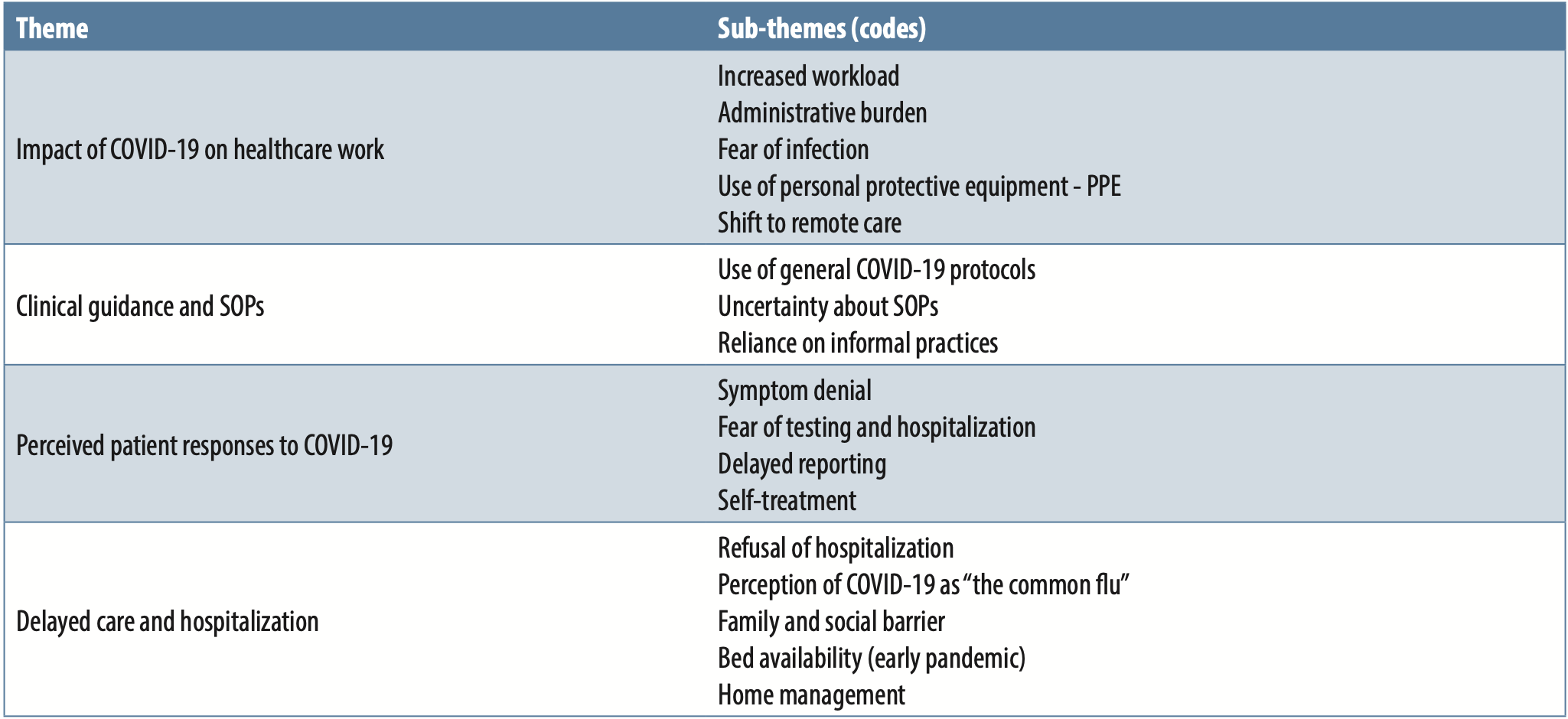
We first present findings obtained from healthcare professionals, focusing on what was most important in their experience of providing care to pregnant COVID-19 patients during the pandemic. Using their own words, we illustrate how clinicians navigated rapidly changing conditions, patient behaviors, and system-level constraints. Four main themes were identified: the impact of COVID-19 on healthcare work, the availability and use of clinical guidelines and SOPs, perceived patient responses to COVID-19, and delayed care and hospitalization. Each theme and its sub-themes are illustrated with verbatim quotations from the interviews (Table 2A).
Impact of COVID-19 on healthcare practices
COVID-19 substantially reshaped everyday clinical practice for healthcare professionals involved in the care of pregnant women. Participants consistently described a sharp increase in workload, administrative burden, and psychological stress, driven by the growing number of cases and the expansion of their clinical responsibilities. Fear of infection was a recurrent element of their experience and influenced how care was organized.
To reduce transmission risks, healthcare workers adopted new working practices, including strict use of personal protective equipment and remote communication with patients. These changes were particularly burdensome in daily practice and contributed to fatigue and emotional strain.
“There was fear in our minds, paperwork increased, and we were in very close contact with pregnant women” (R9, midwife).
“The work became more complicated. When a woman had COVID, we called her every day, checked her condition, filled in checklists. Now we wear masks all the time, even in summer, which is especially uncomfortable” (R4, obstetrician-gynecologist).
Several participants described how digital tools became central to maintaining continuity of care, especially for women in isolation or with a positive PCR test. WhatsApp groups and remote consultations were widely used to provide information, monitor symptoms, and coordinate follow-up.
“We created a WhatsApp group for about a hundred pregnant women. We sent COVID-related information to all of them, answered questions, and conducted remote consultations. We also called them to remind them of appointments and sometimes even visited them at home for examinations and tests. It was very difficult” (R5, obstetrician-gynecologist).
These practices functioned as informal or ad hoc telemedicine strategies that emerged in response to reduced face-to-face contact and the absence of fully institutionalized digital care pathways.
Clinical guidelines and standard operating procedures (SOPs)
Healthcare professionals reported substantial uncertainty regarding the availability and use of clinical guidelines for managing pregnant COVID-19 patients. Although most participants were aware of general national COVID-19 treatment protocols, many were unsure whether pregnancy-specific guidelines existed, and even fewer could confirm the presence of SOPs regulating patient pathways at the facility level.
Participants frequently described relying on general COVID-19 protocols or informal practices rather than structured, pregnancy-specific guidelines. This lack of clarity resulted in variability in clinical decision-making, particularly when managing pregnant women with suspected or confirmed infection.
“No, there isn’t a separate one, we follow the general protocol” (R9, midwife).
“There is a protocol for managing pregnant women and women in labor with COVID-19.” (R6, obstetrician-gynecologist).
“There is no protocol specifically for pregnant women. However, in neighboring countries, like Russia, there are clear standards, and we used those.” (R5, obstetrician-gynecologist).
Several participants were uncertain whether SOPs existed within their institutions and indicated that such documents, if available, were not consistently communicated to frontline staff.
“For pregnant women… I’m not really sure. We followed the COVID protocol, but when pregnant women came, we were afraid to manage them at home, so we took tests and tried to send them to hospital” (R6, obstetrician-gynecologist).
“I think there is one, maybe the senior midwife has it” (R8, midwife).
Overall, the findings indicate gaps in the dissemination and operationalization of clinical guidelines and SOPs, contributing to inconsistent care pathways for pregnant COVID-19 patients.
Perceived patient responses to COVID-19
Healthcare professionals described significant variations in how pregnant women responded to COVID-19 symptoms. While some women promptly contacted their doctors when symptoms appeared, others minimized or ignored early signs of infection, particularly when symptoms were mild. Fear of testing positive and being hospitalized emerged as a key reason for delayed reporting.
Several participants noted that women often questioned or dismissed positive PCR results when they experienced only minor symptoms, such as a sore throat, and in some cases repeated testing privately instead of informing their doctors.
“If the symptoms were mild, like just a sore throat, they didn’t take it seriously. Even with a positive PCR, they didn’t believe it and went to retest privately. They were afraid we would send them to hospital” (R9, midwife).
Self-treatment at home before contacting healthcare providers was also common. According to clinicians, some women waited one or two days trying to manage symptoms on their own, which delayed medical assessment.
“Some report their symptoms immediately, but others try to treat themselves at home for one or two days. Many don’t tell us because they are afraid we will ask them to take a PCR test and then hospitalize them” (R6, obstetrician-gynecologist).
At the same time, several healthcare workers observed that awareness and seriousness increased as the pandemic progressed, and complications became more visible.
“At first, many were indifferent, but after seeing complications from COVID-19, they started to seek help more promptly” (R8, midwife).
Overall, clinicians estimated that most women eventually sought care, but a substantial minority delayed reporting symptoms due to fear of hospitalization and underestimation of disease severity.
“In general, about 70% of pregnant women contacted us in time” (R6, obstetrician-gynecologist).
Delayed care and hospitalization
Healthcare professionals identified delayed hospital admission as one of the most critical challenges in managing pregnant COVID-19 patients. Women with mild or asymptomatic infection were commonly managed at home, but delays in escalation of care often occurred when symptoms worsened. Clinicians emphasized that late presentation increased the risk of complications and limited the effectiveness of timely intervention.
Pregnant women were typically treated as outpatients when symptoms were mild or absent, even with a positive PCR test.
“We manage them at home only if the infection is mild. If there is shortness of breath, fever above 38, cough, or intoxication, we hospitalize them” (R5, obstetrician-gynecologist).
“Asymptomatic women, those with a positive PCR test but no fever or symptoms, stay at home” (R9, midwife).
However, refusal of hospitalization contributed significantly to prolonged home management. Healthcare workers reported that many women declined admission even when it was medically indicated. The most common reasons included fear of COVID wards, belief that the illness was mild, family responsibilities, and mistrust of the diagnosis.
“Some didn’t believe they had COVID. They thought it was just the flu” (R5, obstetrician-gynecologist).
“They refused because they had no one to leave their children with, or no one to take care of the household” (R6, obstetrician-gynecologist).
“Some were afraid they might die in the hospital” (R4, obstetrician-gynecologist).
Although most clinicians reported that hospitals generally accepted pregnant women when beds were available, early in the pandemic bed shortages occasionally led to women with mild disease being sent back home.
“At the beginning, everyone was sent to hospital, but because there were not enough beds, women with mild disease were sometimes returned and monitored by outpatient teams” (R13, hospital physician).
Self-medication was another important factor contributing to delayed escalation of care. Healthcare workers reported that some women attempted to manage symptoms with home remedies or avoided antiviral medications due to concerns about fetal safety, often without informing their doctors.
“Some treated themselves at home, only drinking fluids and avoiding antivirals because they were afraid it could harm the baby” (R5, obstetrician-gynecologist).
Despite daily follow-up by primary care teams through phone calls and WhatsApp messages, delayed reporting and refusal of hospitalization remained persistent barriers to timely treatment.
“We message them every day in the chat, telling them not to think it’s just the flu and to call us if they have fever or a cough” (R9, midwife).
Pregnant and postpartum women
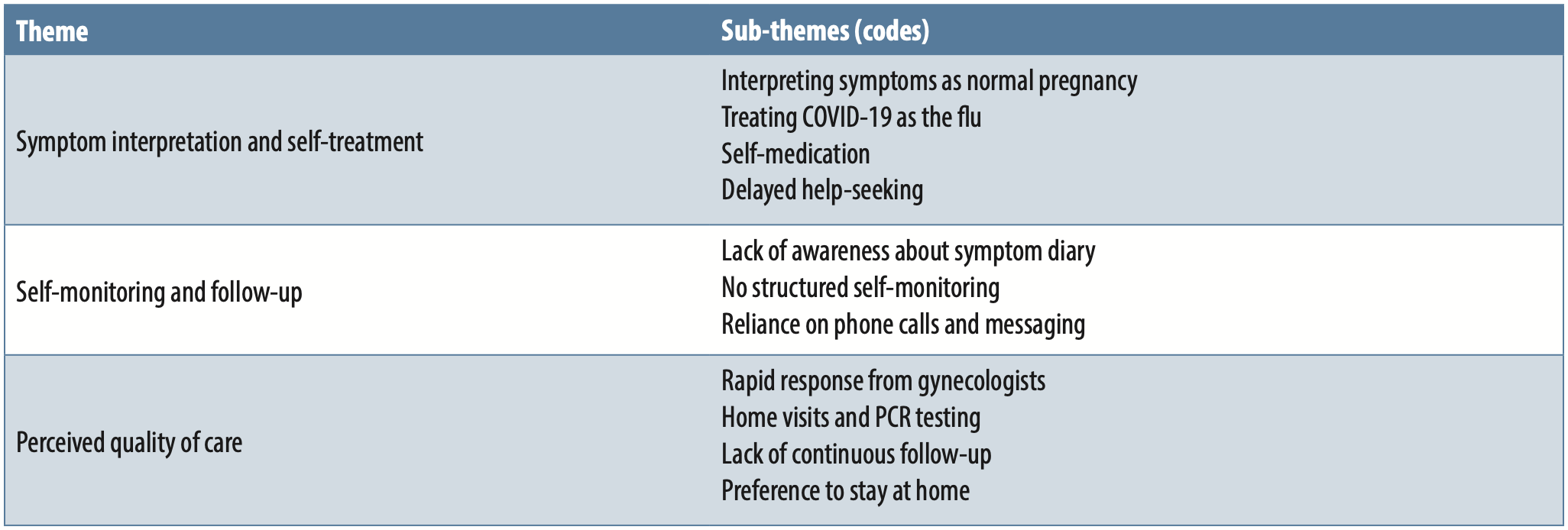
We next present findings obtained from pregnant and postpartum women, describing the way that they experienced COVID-19 illness, monitoring, and interactions with healthcare services. Three main themes were identified: symptom interpretation and self-treatment, self-monitoring and follow-up, and perceived quality of care. These themes reflect how women made sense of their symptoms, navigated follow-up during illness, and evaluated the support they received from healthcare providers. Verbatim quotations are used to illustrate each theme (Table 2B).
Symptom interpretation and self-treatment
Pregnant women described diverse ways of interpreting and responding to COVID-19 symptoms. In the early phase of the pandemic, many participants did not initially seek medical care because they attributed fatigue, weakness, and malaise to normal pregnancy-related changes or to a common respiratory infection. This led to delayed recognition of COVID-19 and, in several cases, to self-treatment at home.
“For almost two weeks I experienced weakness, headaches, and fatigue. I thought it was just how my fourth pregnancy was going. But then my whole body started aching, I had chills and a low-grade fever. I felt so bad I thought I was dying” (R4, pregnant woman).
Some women initially attempted to manage symptoms on their own before contacting healthcare providers, even when symptoms progressed.
“I had body aches and chills, like I was catching a cold. I started treating myself the way I usually do. When my temperature went up to 38.5, I called my gynecologist. She told me to call an ambulance, but I said I would try to bring the fever down first” (R2, pregnant woman).
Others reported more immediate help-seeking behavior, particularly during periods of high community transmission.
“I got sick at the peak of COVID, so I wrote to my gynecologist right away” (R9, postpartum woman).
Overall, the findings indicate that symptom misinterpretation and initial self-treatment were common, especially early in the pandemic, and contributed to delays in professional assessment and care.
Self-monitoring and follow-up
Most pregnant and postpartum women reported that they were not informed about the need to keep a self-monitoring diary during COVID-19 illness. Although some received general advice to isolate and observe their condition, systematic tracking of symptoms, body temperature, or oxygen saturation was rarely implemented on the patient’s part.
“My gynecologist told me to isolate and monitor myself, but she didn’t say anything about a diary” (R1, pregnant woman).
“No, I didn’t keep any diary. The doctors themselves called to check how I was doing” (R5, pregnant woman).
Several participants indicated that follow-up relied mainly on phone calls or messages from healthcare providers rather than on patient structured self-reporting.
“I don’t remember my doctor telling me anything about a diary” (R8, postpartum woman).
As a result, disease progression monitoring depended largely on clinicians’ outreach rather than on patients’ systematic documentation of symptoms. This limited the ability to detect early deterioration and to guide timely clinical decisions.
These practices functioned as informal or ad hoc telemedicine strategies that emerged in response to reduced face-to-face contact and the absence of fully institutionalized digital care pathways.
Perceived quality of care
Pregnant and postpartum women reported mixed experiences in their interactions with healthcare providers during COVID-19 illness. Some participants described rapid responses from gynecologists and proactive follow-up, which gave them a sense of safety and support. Others, however, experienced limited or inconsistent contact after the initial consultation.
Several women highlighted prompt action by healthcare providers, including home visits, PCR testing, and continued communication after diagnosis.
“After I called my gynecologist, two doctors came to my home, took a PCR test, and the next day told me it was positive and to call an ambulance. After that, my gynecologist kept calling to check if everything was okay” (R3, pregnant woman).
In contrast, other participants reported minimal follow-up and lack of ongoing monitoring, even when symptoms persisted.
“Two weeks later I still felt weak, so I wrote to my doctor. She told me to rest more and stay home, but I wasn’t given a PCR test and no one from the clinic checked on me again” (R6, postpartum woman).
Some women also questioned the need for hospitalization, particularly when symptoms were mild, and preferred to stay at home.
“I didn’t want to be hospitalized. Why should I? It seemed like just a regular flu” (R5, pregnant woman).
“I stayed at home throughout my pregnancy. I felt weak, but there were no other complications” (R7, postpartum woman).
Overall, the perceived quality of care depended largely on the level of communication and continuity provided by healthcare workers. While some women felt closely supported, others experienced gaps in follow-up and uncertainty about appropriate management.
DISCUSSION
This qualitative study provides insight into how care for pregnant COVID-19 patients was experienced by both healthcare professionals and the pregnant women themselves, in Kazakhstan. Across both perspectives, the organization of care was affected by delayed symptom recognition, limited structured follow-up, and uncertainty regarding hospitalization pathways. Healthcare professionals described heavy workloads, rapidly changing guidelines, and the absence of clear SOPs for managing pregnant COVID-19 patients, while pregnant women reported misinterpreting symptoms, relying on self-treatment, and experiencing variable levels of clinical follow-up. Together, these findings highlight the way that gaps in care pathways, communication, and operational guidelines influenced both help-seeking behavior and clinical decision-making during the pandemic.
Taken together, the findings obtained from healthcare professionals and pregnant women reveal a fragile and fragmented care pathway for COVID-19 in pregnancy. Women often delayed seeking care because they interpreted early symptoms as normal features of pregnancy or mild respiratory illness, while clinicians faced uncertainty about when and how to escalate care due to limited pregnancy-specific guidelines and unclear operational procedures. The absence of structured self-monitoring tools, such as symptom diaries, further reduced the clinicians’ ability to detect clinical deterioration at an early stage. As a result, both patient behavior and system-level constraints converged to produce delays in testing, referral, and hospitalization, increasing the risk of adverse maternal and fetal outcomes.
Our findings align with international qualitative evidence showing that maternal care during COVID-19 was frequently experienced as disrupted, uncertain, and emotionally demanding for both women and providers. Qualitative evidence syntheses and primary studies have consistently reported reduced faceto-face contact, reliance on remote communication, and heightened anxiety among pregnant women, alongside major service reconfiguration and strain on maternity services [22,23,24 25]. Similarly, healthcare professionals interviewed in our study described an increased workload, administrative burden, and rapidly changing guidelines, mirroring reports from other settings where providers faced shifting policies and operational challenges while maintaining maternal care [18],[26],[27].
The increased use of phone-based and messaging-based follow-up in our data is also consistent with broader global experiences of a rapid shift toward telemedicine in maternal care, described as both necessary and challenging for quality and continuity [28],[29],[30]. At the same time, our study adds an important middle-income, Central Asian perspective by highlighting how gaps in pregnancy-specific operational guidelines (standard operating procedures – SOPs) and inconsistent implementation of structured monitoring tools (e.g., symptom diaries) intersected with women’s symptom misinterpretation and self-treatment, contributing to delays in escalation of care and hospitalization decisions – issues that are less prominent in much of the high-income qualitative literature [22].
The findings of this study need to be interpreted within the specific context of the Kazakhstani health system during the COVID-19 pandemic. Unlike many high-income countries with stable and well-institutionalized maternal healthcare pathways, which maintained consistent clinical guidance during the pandemic, Kazakhstan experienced frequent revisions of national COVID-19 protocols and regulatory documents, creating uncertainty regarding the responsibility for referral and hospitalization of pregnant COVID-19 patients.
This type of policy flux has also been described as a challenge for maintaining continuity of care in other settings [31]. In the absence of consistently implemented standard operating procedures, healthcare professionals in our study relied on informal practices, messaging platforms, and remote communication to manage women in their homes, reflecting broader trends of telemedicine expansion and communication challenges observed internationally during the pandemic [28],[32].
At the same time, pregnant women navigated care in an environment characterized by changing rules, fear of hospitalization, and limited structured follow-up, which amplified tendencies toward self-treat-ment and delayed help-seeking. These system-level features help explain why gaps in care pathways observed in this study were particularly pronounced in the Kazakhstani setting.
The findings of this study highlight several priorities for strengthening the organization of care for pregnant COVID-19 patients and for future public health emergencies. Firstly, the absence of consistently implemented, pregnancy-specific SOPs underscores the need for clear and operational clinical pathways that define responsibilities for symptom monitoring, testing, referral, and hospitalization. Secondly, structured self-monitoring tools, such as symptom diaries and standardized follow-up protocols, should be integrated into routine outpatient management to support early detection of clinical deterioration. Thirdly, communication strategies between primary care, hospitals, and pregnant women need to be strengthened to reduce uncertainty and fear surrounding testing and hospitalization.
The widespread use of phone calls, messaging applications, and chat-based communication observed in this study can be understood as forms of informal or ad hoc telemedicine. These practices emerged as adaptive responses to reduced face-to-face contact, uncertainty in referral pathways, and the absence of fully institutionalized digital care models. While such communication helped maintain continuity of care, its informal nature also contributed to variability in monitoring, documentation, and escalation of care decisions. This finding aligns with international evidence highlighting rapid but uneven digital health adaptation during the COVID-19 pandemic.
Finally, while remote communication through phone calls and messaging platforms proved essential during the pandemic, these tools should be embedded within formal care pathways rather than relying on informal or ad hoc practices. Together, these measures could improve continuity of care, reduce delays in escalation of care, and enhance the safety of maternal health services during infectious disease outbreaks.
STUDY STRENGTHS AND LIMITATIONS
This study has several strengths. It draws on in-depth qualitative data from two key stakeholder groups – pregnant and postpartum women and healthcare professionals – allowing triangulation of perspectives on COVID-19 care pathways. The use of verbatim interviews and thematic analysis has enabled a detailed exploration of real-world experiences in both primary care and hospital settings. In addition, the study provides rare qualitative evidence from a middle-income, Central Asian context, where such data are scarce.
However, some limitations should be acknowledged. All participants were recruited from a single city, which may limit the transferability of the findings to other regions of Kazakhstan or to rural settings. Experiences may also differ across later stages of the pandemic, as clinical guidelines and organization of health services evolved. Nevertheless, the consistency of themes across participants suggests that the findings capture key features of COVID-19 care pathways during the study period.
We found examples of dedicated and responsive care from healthcare professionals during the COVID-19 pandemic, and maternity staff should be acknowledged for their efforts to provide support under extremely challenging conditions. This qualitative study allowed both pregnant women and healthcare professionals to reflect on what was most important in the organization of COVID-19 care during pregnancy.
Future research should focus on how pregnancy-specific care pathways and digital follow-up tools can be integrated into routine maternal health services and sustained across different regions of Kazakhstan to improve continuity and timely escalation of care during public health emergencies.
Funding: This study received no external funding.
Ai application: Artificial intelligence tools were used for language editing and stylistic refinement only.
CURRICULUM VITAE

Zhansaya Nurgaliyeva, PhD
Zhansaya Nurgaliyeva, PhD, is a public health researcher and senior lecturer at Al-Farabi Kazakh National University (Kazakhstan). Her research focuses on maternal and reproductive health, health systems organization, and qualitative research methods, with particular attention to care pathways during public health emergencies. She holds a PhD in Public Health and has been involved in academic teaching and research in epidemiology, biostatistics, and evidence-based medicine. Nurgaliyeva’s work aims to strengthen maternal health services and inform policy and practice in middle-income health systems.

Natalia Glushkova, PhD
Professor Natalia Glushkova, PhD, is a Professor of Public Health and Director of the Research Institute of Health Care at Al-Farabi Kazakh National University (Kazakhstan). She is a highly cited researcher with a strong publication record and a high h-index, reflecting the significant impact and visibility of her work. In 2024, Professor Glushkova was recognized as one of the 50 Best Researchers nationwide, selected through the “Best Researcher–2024” competition among scientists from research institutes and universities. Her research focuses on health systems organization, maternal and reproductive health, epidemiology, and strengthening evidence-based public health practice.
Informations

-
Keywords:
-
Received:
-
Revised:
-
Accepted:
-
Online first:
-
DOI:
-
Cite this article:

Zhansaya Nurgaliyeva
Faculty of Medicine and Health Care, Al-Farabi Kazakh National University
71 Al-Farabi Ave., Almaty, Republic of Kazakhstan, 050040
E-mail:
1. Bernstein K, Landau R. Management of maternal COVID-19: considerations for anesthesiologists. Curr Opin Anaesthesiol. 2021 Jun 1;34(3):246-253. doi: 10.1097/ACO.0000000000001001. [CROSSREF]
2. Nurgaliyeva Z, Pivina L, Moiynbayeva S, Alibayeva G, Suleimenova M, Kozhekenova N, et al. A Multicentric Study on Adverse COVID-19 Outcomes Among Pregnant and Nonpregnant Women in Multidisciplinary Hospitals of Kazakhstan. Diagnostics (Basel). 2025 Apr 1;15(7):900. doi: 10.3390/diagnostics15070900. [CROSSREF]
3. Zamparini J, Saggers R, Buga CE. A Review of Coronavirus Disease 2019 in Pregnancy. Semin Respir Crit Care Med. 2023 Feb;44(1):50-65. doi: 10.1055/s-0042-1758853. [CROSSREF]
4. Mattar CN, Kalimuddin S, Sadarangani SP, Tagore S, Thain S, Thoon KC, et al. Pregnancy Outcomes in COVID-19: A Prospective Cohort Study in Singapore. Ann Acad Med Singap. 2020 Nov;49(11):857-869. doi: 10.47102/annals-acadmedsg.2020437. [CROSSREF]
5. Afshar Y, Silverman NS, Han CS, Platt LD. Clinical guidance and perinatal care in the era of coronavirus disease 2019 (COVID-19). J Perinat Med. 2020 Nov 26;48(9):925-930. doi: 10.1515/jpm-2020-0400. [CROSSREF]
6. COVID-19 Research Prioritization Group on MNCAH. Global research priorities on COVID-19 for maternal, newborn, child and adolescent health. J Glob Health. 2021 Nov 20;11:04071. doi: 10.7189/jogh.11.04071. [CROSSREF]
7. Semaan A, Audet C, Huysmans E, Afolabi B, Assarag B, Banke-Thomas A, et al. Voices from the frontline: findings from a thematic analysis of a rapid online global survey of maternal and newborn health professionals facing the COVID-19 pandemic. BMJ Glob Health [Internet]. 2020 Jun 24 [Pristupljeno: 10. januar 2026.];5(6). Dostupno na: https://gh.bmj.com/content/5/6/e002967 [HTTP]
8. Murewanhema G, Nyakanda MI, Madziyire MG. Restoring and maintaining robust maternity services in the COVID-19 era: a public health dilemma in Zimbabwe. Pan Afr Med J. 2020 Nov 8;37(Suppl 1):32. doi: 10.11604/pamj.supp.2020.37.32.26798. [CROSSREF]
9. Semaan A, Annerstedt KS, Beňová L, Dossou JP, Boyi Hounsou C, Agballa G, et al. Provision and utilization of maternal health services during the COVID-19 pandemic in 16 hospitals in sub-Saharan Africa. Front Glob Womens Health. 2023 Oct 31;4:1192473. doi: 10.3389/fgwh.2023.1192473. [CROSSREF]
10. The Lancet Digital Health. Pregnancy in a pandemic: inequalities in maternal health. Lancet Digit Health. 2022 Feb;4(2):e75. doi: 10.1016/S2589-7500(22)00005-X. [CROSSREF]
11. Meaney S, Leitao S, Olander EK, Pope J, Matvienko-Sikar K. The impact of COVID-19 on pregnant womens’ experiences and perceptions of antenatal maternity care, social support, and stress-reduction strategies. Women Birth. 2022 May;35(3):307-316. doi: 10.1016/j.wombi.2021.04.013. [CROSSREF]
12. Women’s experiences of maternity care in the first wave of the COVID-19 pandemic in Poland: a cross-sectional study [Internet]. [Pristupljeno: 11. januar 2026.]. Dostupno na: https://medicalsciencepulse.com/article/01.3001.0054.7021/en [HTTP]
13. Green C, Board A, Squire C, Adams ET, Kim SY, Brown JA, et al. The Impact of the COVID-19 Pandemic on the Care of Pregnant Women with a Focus on Those who Use Substances: Lessons for the Future. Disaster Med Public Health Prep. 2025 Jun 17;19:e154. doi: 10.1017/dmp.2025.10089. [CROSSREF]
14. Berggren K, Ekstedt M, Joelsson-Alm E, Swedberg L, Sackey P, Schandl A. Healthcare workers’ experiences of patient safety in the intensive care unit during the COVID-19 pandemic: A multicentre qualitative study. J Clin Nurs. 2023 Oct;32(19-20):7372-7381. doi: 10.1111/jocn.16793. [CROSSREF]
15. Rodríguez-Madrid MN, Pastor-Moreno G, Albert-Lopez E, Pastor-Valero M. «You knew you had to be there, it had to be done»: Experiences of health professionals who faced the COVID-19 pandemic in one public hospital in Spain. Front Public Health. 2023 Apr 20;11:1089565. doi: 10.3389/fpubh.2023.1089565. [CROSSREF]
16. Bhattacharjee PK, Deka K. PSYCHOLOGICAL DISTRESS AND JOB SATISFACTION AMONG HEALTH CARE WORKERS ENGAGED IN COVID 19 PANDEMIC WORKING IN A TERTIARY HEALTH CARE SYSTEM IN ASSAM. South East Eur J Public Health. 2025 Mar 2;5699–705. doi:https://doi.org/10.70135/seejph.vi.5280. [CROSSREF]
17. Forte DN, Stoltenberg M, Ribeiro SCDC, de Almeida IMMO, Jackson V, Daubman BR. The Hierarchy of Communication Needs: A Novel Communication Strategy for High Mistrust Settings Developed in a Brazilian COVID-ICU. Palliat Med Rep. 2024 Feb 9;5(1):86-93. doi: 10.1089/pmr.2023.0070. [CROSSREF]
18. Dasgupta T, Bousfield E, Pathak Y, Horgan G, Peterson L, Mistry HD, et al. Healthcare providers’ experiences of maternity care service delivery during the COVID-19 pandemic in the United Kingdom: a follow-up systematic review and qualitative evidence synthesis. Front Glob Womens Health [Internet]. 2024 Nov 28 [Pristupljeno: 11. januar 2026.];5. Dostupno na: https://www.frontiersin.org/journals/global-womens-health/articles/10.3389/fgwh.2024.1470674/full [HTTP]
19. Kassa ZY, Scarf V, Turkmani S, Fox D. Impact of COVID-19 on antenatal care provision at public hospitals in the Sidama region, Ethiopia: A mixed methods study. PLoS One. 2024 Apr 18;19(4):e0301994. doi: 10.1371/journal.pone.0301994. [CROSSREF]
20. Ganikyzy Shaimerdenova G, Narkenovna Abuova G, Kulbayeva Nalibekkyzy S. Features of the course of severe and critical COVID-19 in pregnant women: A prospective cross-sectional study. Int J Reprod Biomed. 2024 May 15;22(3):229-234. doi: 10.18502/ijrm.v22i3.16167. [CROSSREF]
21. Nukeshtayeva K, Kayupova G, Yerdessov N, Bolatova Z, Zhamantayev O, Turmukhambetova A. Factors associated with maternal mortality in Kazakhstan: a pre- and during-pandemic comparison. Front Public Health [Internet]. 2024 Jun 3 [Pristupljeno: 11. januar 2026.];12. Dostupno na: https://www.frontiersin.org/journals/public-health/articles/10.3389/fpubh.2024.1337564/full [HTTP]
22. Flaherty SJ, Delaney H, Matvienko-Sikar K, Smith V. Maternity care during COVID-19: a qualitative evidence synthesis of women’s and maternity care providers’ views and experiences. BMC Pregnancy Childbirth. 2022 May 26;22(1):438. doi: 10.1186/s12884-022-04724-w. [CROSSREF]
23. Hendrix CL, Werchan D, Lenniger C, Ablow JC, Amstadter AB, Austin A, et al. COVID-19 Impacts on Perinatal Care and Maternal Mental Health: A Geotemporal Analysis of Healthcare Disruptions and Emotional Well-Being Across the United States [Internet]. Rochester, NY: Social Science Research Network; 2021 [Pristupljeno: 12. januar 2026.]. Dostupno na: https://papers.ssrn.com/sol3/papers.cfm?abstract_id=3857679 [HTTP]
24. Johnson MS, Skjerdingstad N, Ebrahimi OV, Hoffart A, Johnson SU. Fear of giving birth alone: Experiences of psychological distress, symptoms of anxiety and depression, and coping- strategies of childbearing women during COVID-19. Midwifery. 2024 Apr;131:103951. doi: 10.1016/j.midw.2024.103951. [CROSSREF]
25. Groulx T, Bagshawe M, Giesbrecht G, Tomfohr-Madsen L, Hetherington E, Lebel CA. Prenatal Care Disruptions and Associations With Maternal Mental Health During the COVID-19 Pandemic. Front Glob Womens Health. 2021 Apr 23;2:648428. doi: 10.3389/fgwh.2021.648428. [CROSSREF]
26. Brown J, Moore K, Keer E, Kane Low L. A Qualitative Study Focused on Maternity Care Professionals’ Perspectives on the Challenges of Providing Care During the COVID-19 Pandemic. J Perinat Neonatal Nurs. 2022 Jan-Mar 01;36(1):46-54. doi: 10.1097/JPN.0000000000000623. [CROSSREF]
27. Basnet B, Chapagain P, Subedi S, Dahal T, Neupane S, Khanal R, et al. Experiences of nurses providing maternity care in a public hospital during the COVID-19 pandemic in Nepal: A qualitative study. PLOS Glob Public Health. 2022 May 5;2(5):e0000322. doi: 10.1371/journal.pgph.0000322. [CROSSREF]
28. Galle A, Semaan A, Huysmans E, Audet C, Asefa A, Delvaux T, et al.A double-edged sword-telemedicine for maternal care during COVID-19: findings from a global mixed-methods study of healthcare providers. BMJ Glob Health. 2021 Feb;6(2):e004575. doi: 10.1136/bmjgh-2020-004575. [CROSSREF]
29. Markwei M, Goje O. Optimizing mother-baby wellness during the 2019 coronavirus disease pandemic: A case for telemedicine. Womens Health (Lond). 2021 Jan-Dec;17:17455065211013262. doi: 10.1177/17455065211013262. [CROSSREF]
30. Pinnock H, Murphie P, Vogiatzis I, Poberezhets V. Telemedicine and virtual respiratory care in the era of COVID-19. ERJ Open Res. 2022 Jul 25;8(3):00111- 2022. doi: 10.1183/23120541.00111-2022. [CROSSREF]
31. Riley V, Ellis N, Mackay L, Taylor J. The impact of COVID-19 restrictions on women’s pregnancy and postpartum experience in England: A qualitative exploration. Midwifery. 2021 Oct;101:103061. doi: 10.1016/j.midw.2021.103061. [CROSSREF]
32. Chandrakar M. Telehealth and digital tools enhancing healthcare access in rural systems. Discov Public Health. 2024 Oct 21;21(1):144. doi: 10.1186/s12982-024-00271-1. [CROSSREF]
- INTRODUCTION
- MATERIALS AND METHODS
- RESULTS
- Participant characteristics
- Healthcare professionals
- Impact of COVID-19 on healthcare practices
- Clinical guidelines and standard operating procedures (SOPs)
- Perceived patient responses to COVID-19
- Delayed care and hospitalization
- Pregnant and postpartum women
- Symptom interpretation and self-treatment
- Self-monitoring and follow-up
- Perceived quality of care
- DISCUSSION
- STUDY STRENGTHS AND LIMITATIONS
- CURRICULUM VITAE
- Table 1. Characteristics of healthcare professionals and pregnant/postpartum women
- Table 2A. Outline of themes and sub-themes identified among healthcare professionals
- Table 2B. Outline of themes and sub-themes identified among pregnant and postpartum women
- Zhansaya Nurgaliyeva, PhD
- Natalia Glushkova, PhD