


Penile fracture associated with urethral injury – case report
- University Clinical Center of Serbia, Clinic of Urology, Belgrade, Serbia
- University of Belgrade, Faculty of Medicine, Belgrade, Serbia
ABSTRACT
Introduction: Penile fracture is a rare urologic emergency that may occur when the erect penis is injured, most often during sexual intercourse. In 10%- 21% of cases, it is associated with urethral injury. The diagnosis is most often made by clinical examination, but additional diagnostic methods are useful in evaluating the site of rupture of the corpora cavernosa and detecting urethral injury. This medical emergency requires urgent surgical management as delays are associated with worse outcomes.
Case report: A 43-year-old man reported to the Emergency Center of the University Clinical Center of Serbia due to an injury to the erect penis during sexual intercourse. The anamnestic data were that he had felt pain and heard a “popping” sound, upon which sudden detumescence of the penis occurred and penile hematoma appeared, as well as blood during urination. Suspicion of a penile fracture was established on clinical examination. An ultrasound examination showed a rupture of the tunica albuginea of the right cavernous body, and retrograde urethrocystography revealed a rupture of the penile urethra. The patient underwent surgery that same evening. The surgical approach was a median penoscrotal incision, followed by suturing of the right cavernous body and penile urethra through a gently placed urinary catheter. Postoperative recovery was uneventful. During follow-up examinations, the patient reported normal erections, regular urination and satisfaction with the appearance of his penis.
Conclusion: Penile fracture is a rare urologic emergency, which is relatively rarely associated with urethral injury. The presentation of our case indicates the importance of initial ultrasound and radiographic diagnostics. In the case where the site of injury is present preoperatively, a ventral penoscrotal incision may be a suitable surgical approach. Timely recognition and surgical treatment of penile fracture associated with urethral injury gives excellent functional results.
INTRODUCTION
Penile fracture is a urologic emergency characterized by disruption to the continuity of the tunica albuginea and rupture of the corpora cavernosa following trauma to the erect penis [1]. Penile fracture is a rare condition in emergency urology [2]. It most commonly occurs during vigorous sexual intercourse but may also result from penile manipulation, masturbation, or trauma to the erect penis [3]. In 10%-21% of patients, rupture of the corpora cavernosa is associated with urethral injury [4],[5]. Clinically, a penile fracture presents with penile hematoma, deformity, pain, and immediate detumescence [1]. Patients may report hearing a characteristic “popping” sound at the moment of injury [1]. In cases of associated urethral injury, urethrorrhagia may be present [1]. Suspicion of penile fracture is based on anamnesis and clinical findings and is confirmed by ultrasonography or magnetic resonance imaging of the penis [6]. When urethral injury is suspected, retrograde urethrocystography is necessary [3]. Penile fracture is treated surgically, preferably as early as possible, since delays in intervention adversely affect treatment outcomes [3].
The aim of this paper is to present a case of penile fracture associated with rupture of the penile urethra that was treated with emergency surgery, resulting in favorable postoperative functional outcomes. Written informed consent for publication of this case report was obtained from the patient.
CASE REPORT
A 43-year-old man presented in the evening hours at the urology outpatient clinic of the University Clinical Center of Serbia Emergency Center, due to penile trauma sustained during sexual intercourse. The patient reported that he was having rear-entry intercourse (i.e.,“doggy style”; Latin: coitus more ferarum) with his extramarital partner, in her apartment, when he experienced pain and heard a “popping” sound, followed by immediate detumescence. He noticed penile hematoma as well as blood during urination.
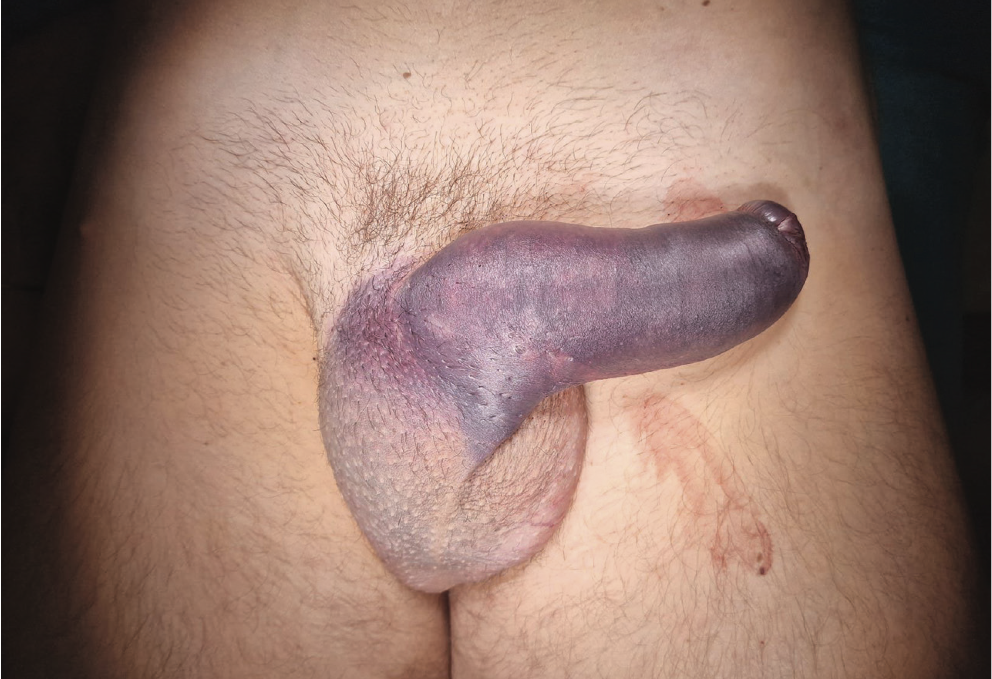
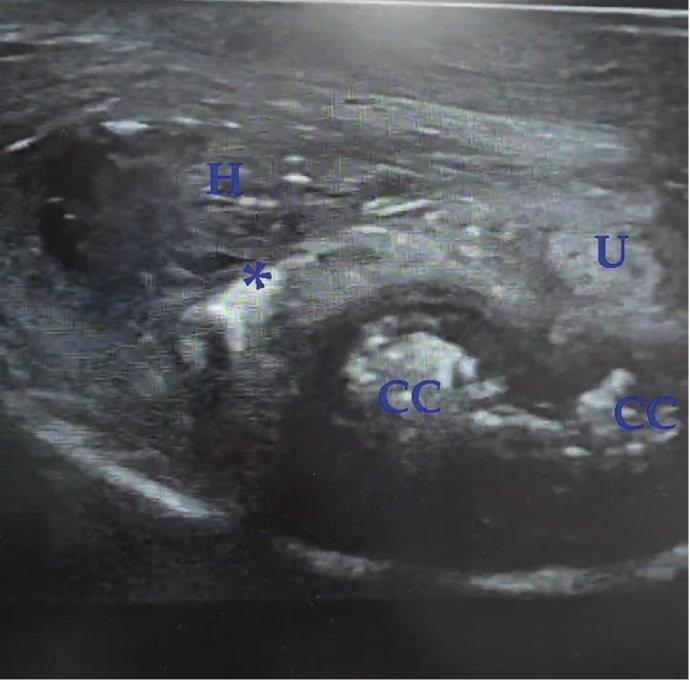
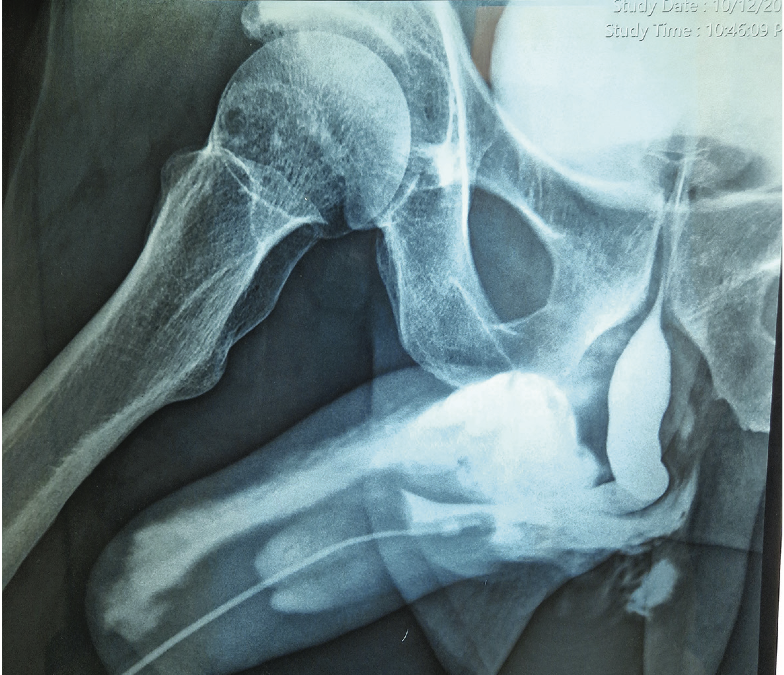
The patient reported no chronic illnesses and was not on any regular therapy. On physical examination at admission, penile swelling, hematoma, and deformity were present. Urethrorrhagia was also observed at the urethral meatus (Figure 1). Ultrasonographic examination of the penis using a linear probe revealed a penile hematoma with disruption of the tunica albuginea of the right corpus cavernosum and evidence of active bleeding (Figure 2). Retrograde urethrocystography subsequently demonstrated contrast extravasation from the penile urethra (Figure 3). Emergency admission and immediate surgical treatment were indicated, and the patient was transferred to the operating room four hours after the initial examination.
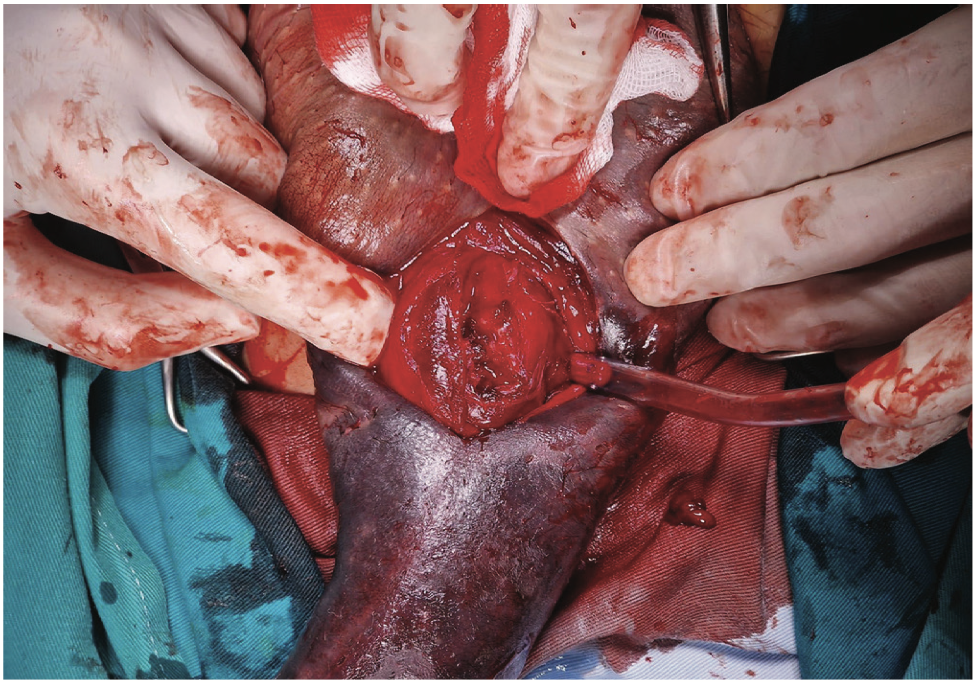
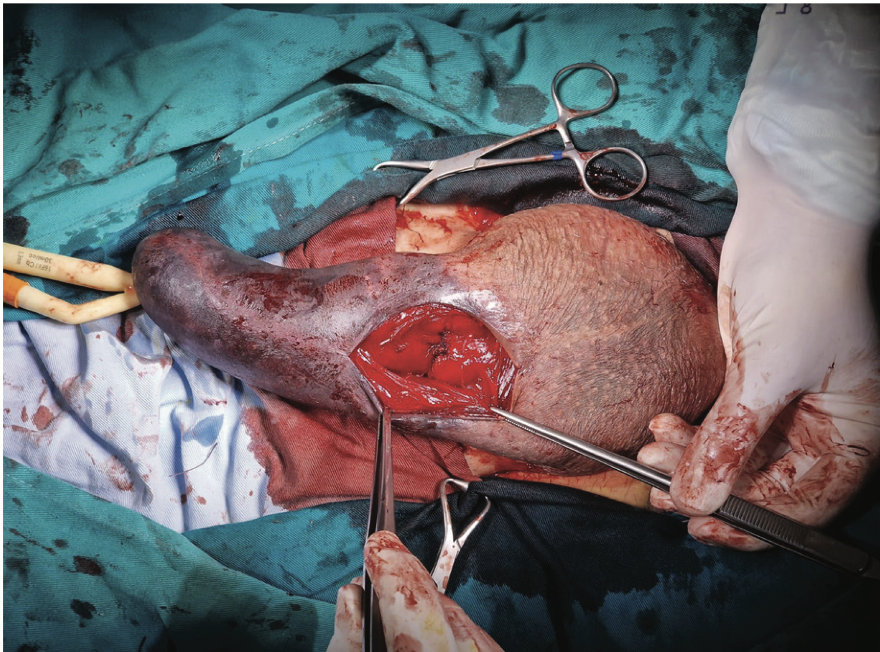
Under general anesthesia, a midline penoscrotal incision was performed along the penile and scrotal raphe. The hematoma-infiltrated tissue layers were incised. Both corpora cavernosa were dissected. A hematoma adjacent to the right corpus cavernosum was evacuated, and at the level of the penile root, a ventral rupture of the right corpus cavernosum measuring approximately two cm was identified. At the same level, a rupture of the penile urethra measuring approximately one cm was also identified (Figure 4). A Foley urinary catheter (Foley CH 16) was inserted into the bladder under visual and manual control, yielding clear urine. The right corpus cavernosum was repaired using interrupted sutures with 3-0 absorbable multifilament material. The penile urethra was repaired using interrupted sutures with 5-0 absorbable monofilament material (Figure 5). The incision was then closed, and a dressing was applied.
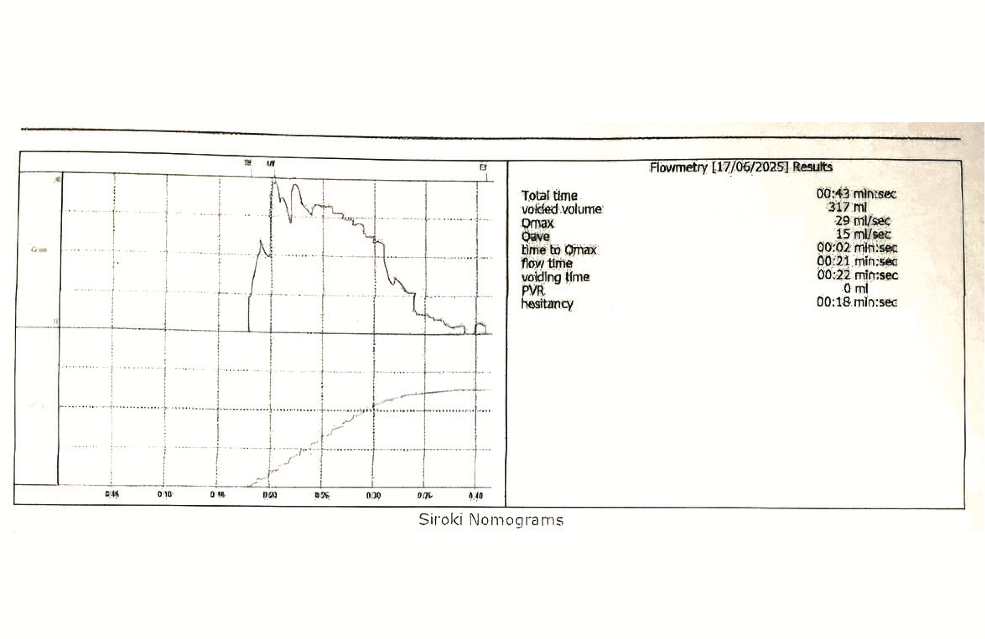
The patient received antibiotic prophylaxis and thromboprophylaxis. The postoperative course was uneventful. The patient was discharged from hospital in good general condition on the fourth postoperative day with a urinary catheter in place. At follow-up visits, skin sutures were removed. On postoperative day 15, retrograde urethrocystography performed with the catheter in situ showed no contrast extravasation. At the next follow-up, on postoperative day 19, the urinary catheter was removed. The patient was advised to abstain from sexual activity for one month. During subsequent follow-up, the patient reported normal erections, satisfaction with penile appearance, and normal urination. Eight months later, uroflowmetry demonstrated a normal bell-shaped curve with a maximum flow rate (Qmax) of 29 ml/s (Figure 6).
DISCUSSION
Penile fracture is a rare urologic emergency. In the United States, its estimated incidence ranges from 1.0 to 1.8 cases per 100,000 hospitalizations [2]. This condition is, in fact, the rupture of the tunica albuginea of the corpora cavernosa following trauma to the erect penis [1]. Studies indicate that penile fracture typically occurs in younger and middle-aged men, with a mean age slightly below 40 years [2],[4]. In our case, the patient was a middle-aged, 43-year-old man. Based on the anatomical characteristics of the tunica albuginea, rupture most commonly occurs at its thinnest point – ventrally or laterally, most often distally to the suspensory ligament [1],[7],[8]. In our case, a unilateral ventral rupture of the right corpus cavernosum was identified. Rupture of the corpora cavernosa is usually unilateral and not associated with urethral injury in approximately 80% of cases [3], whereas urethral rupture occurs in approximately 10%–21% of cases [4],[5] and is often associated with bilateral cavernous rupture [3].
In Western countries, penile fracture most commonly occurs during vigorous sexual intercourse (over 80% of cases), and much less frequently during masturbation or trauma to the erect penis [3]. In Middle Eastern countries, the predominant cause is “taghaandan,” or forced detumescence of the erect penis [9]. The sexual positions most commonly associated with penile fracture are the so-called “doggy style” and “missionary” positions [10],[11], when the rigid penis slips out of the vagina and strikes the perineum or pubic bone [1]. Among men who have sex with other men, the most common position associated with penile fracture is also “doggy style” [12]. Penile fracture most often occurs during intercourse in “stressful situations,” such as extramarital intercourse, intercourse at the workplace, or in unusual locations [13]. In our case, the patient reported intercourse with an extramarital partner in her apartment. A study from the United States (2021) reported increased use of psychoactive substances among patients hospitalized for penile fracture [2].
As to anamnesis, patients often report hearing a “cracking” sound accompanied by pain, followed by sudden detumescence. Clinically, a penile fracture presents with hematoma, swelling, and deformity, with the hematoma causing deviation of the penis to the contralateral side. This characteristic appearance is referred to as the “eggplant deformity” or “aubergine sign”. In cases of Buck’s fascia rupture, the hematoma may extend to the scrotum, perineum, and suprapubic region [1],[3],[8]. When urethral injury is present, urethrorrhagia from the urethral meatus may occur [1]. In our case, the patient reported all the characteristic symptoms, and all the above-described clinical signs were confirmed on examination.
The diagnosis of penile fracture is primarily based on history and clinical findings, while imaging – ultrasound or magnetic resonance imaging – is usually employed in equivocal cases [1],[14],[15]. Although many studies suggest that clinical diagnosis is sufficient in most cases, imaging modalities may facilitate better surgical planning, smaller incisions, and reduced surgical morbidity [1],[6],[14],[15]. In our hospital, ultrasound examinations are routinely performed in all suspected cases of penile rupture. Magnetic resonance imaging is reserved for cases where diagnosis remains unclear or when patients present late. In our patient, ultrasound imaging revealed disruption of the tunica albuginea of the right corpus cavernosum ventrally, with visible blood extravasation (“blush”) and penile hematoma. When urethral injury is suspected – based on urethrorrhagia, hematuria, or urinary retention – preoperative retrograde urethrocystography [1],[3],[16] or flexible urethroscopy [1],[16] is indicated. In our case, retrograde urethrocystography confirmed urethral rupture, revealing contrast extravasation.
Penile fracture is treated surgically. A study by Gamal et al. demonstrated that erectile function was preserved in only 50% of patients treated conservatively, compared to 96% of those treated surgically [17]. These findings support surgical repair as the treatment of choice [3]. Some studies suggest that surgery may be delayed for up to seven days with acceptable outcomes [1],[18]. However, a retrospective multicenter study of 137 patients showed that delays longer than eight hours were associated with worse erectile function [3]. The authors advocate that surgical intervention should be performed as early as possible, but without unnecessary haste. In our case, surgery was performed four hours after initial evaluation.
The most common surgical approach is a circumferential subcoronal incision [1],[5],[6],[8]. Upon incision, penile degloving is performed and all three components of the penis are made accessible. If the patient is uncircumcised, circumcision is recommended at the end of the procedure, i.e., after cavernous body reparation, to prevent postoperative edema and potential preputial ischemia [1],[8]. This approach is particularly useful when the location of the cavernous body laceration is unknown preoperatively, as it enables better access to the cavernous bodies and the corpus spongiosum [1],[19]. Also, the degloving technique has its advantages when the penis is excessively swollen with extensive hematoma [20]. However, when the site of cavernous body laceration is identified with preoperative imaging, a targeted approach such as a penoscrotal or localized longitudinal incision may be applied, which also yields good outcomes [19],[21]. In our case, since preoperative ultrasound imaging revealed a ventral rupture of the cavernous body, proximally, and preoperative urethrocystography showed a urethral rupture at the same level, the midline vertical penoscrotal incision was chosen. Compared to degloving techniques, the midline ventral and longitudinal lateral incisions are less traumatic for the tissue and reduce the risk of additional neurovascular injury [19],[21]. Additionally, lateral incisions are applicable in circumcised men in whom there is not enough skin for adequate healing [19]. Penoscrotal access also provides better exposure of the urethra [21].
Intraoperative injection of saline solution can contribute to identifying the site of laceration of the corpus cavernosum and the urethra, as well as enable verification of the success of the suture [1],[8]. When the site of laceration of the corpus cavernosum is identified, suturing with 2-0 or 3-0 absorbable sutures is recommended [1],[5],[8]. In the case of urethral injury, urethral suturing over a carefully placed urinary catheter using fine 4-0 or 5-0 absorbable sutures is recommended [1],[3],[22]. Aćimović et al. described a case of urethral repair associated with penile fracture using a buccal mucosa graft [23]. In our case, repair of the corpus cavernosum was performed using a 3-0 polyfilament absorbable suture, while urethral repair was performed using a 5-0 absorbable monofilament suture over a carefully placed Foley catheter.
In our patient, the postoperative course was uneventful. The urinary catheter was removed on the nineteenth postoperative day. Abstinence from sexual intercourse for the following month was advised, which is in accordance with recommendations that the catheter remain in place for two to three weeks after surgery [1] and that the patient abstain from sexual intercourse for at least two weeks [24], while most urologists advise sexual abstinence for six to eight weeks after surgery [25]. During eight months of follow-up, the patient reported satisfaction with the appearance of the penis, full erections, as well as normal urination. On uroflowmetry, eight months after surgery, a normal, bell-shaped curve with Qmax 29 ml/s was described.
Late postoperative complications of penile fracture are most commonly erectile dysfunction and the development of penile curvature. Most studies indicate preservation of erectile function in over 90% of cases after surgical treatment [8],[24],[26]. Given that penile fracture is a traumatic event, erectile dysfunction may also occur as a result of psychogenic factors [25]. The presence of penile curvature is estimated at around 5% of cases after surgical treatment of penile fracture, with curvatures usually being mild and in most cases not requiring surgical treatment [3],[25]. Current studies show that the rate of long-term complications is higher in cases of delayed surgical treatment [3],[27], whether due to late presentation to a referral center [27] or prolonged time from admission to surgical treatment [3].
CONCLUSION
Penile fracture is a rare urologic emergency and is relatively infrequently associated with urethral injury. This case highlights the importance of initial ultrasonographic and radiographic evaluation in detecting both cavernosal and urethral rupture. When the site of injury is identified preoperatively, a ventral penoscrotal approach may be an appropriate surgical option. Early recognition and prompt surgical management result in excellent functional outcomes in terms of erectile function, urination, and penile appearance.
Informations

-
Keywords:
-
Received:
-
Revised:
-
Accepted:
-
Online first:
-
DOI:
-
Cite this article:

Nebojša Prijović
Clinic of Urology, University Clinical Center of Serbia
51 Resavska Street, 11000 Belgrade, Serbia
E-mail:
1. Morey A, Simhan J. Genital and Lower Urinary Tract Trauma. In: Partin A, Dmochowski R, Kavoussi L, Peters C, editors. Campbell-Walsh-Wein Urology. Philadelphia: Elsevier; 2021. p. 3048-61.
2. Christian-Miller N, Lenis AT, Fero KE, Madrigral J, Eleswarapu SV, Chamie K, et al. Risk factors for penile fracture compared with a surgical control cohort in the United States: the role of substance abuse. Asian J Androl. 2021 MayJun;23(3):236-9. doi: 10.4103/aja.aja_70_20. [CROSSREF]
3. Bozzini G, Albersen M, Otero JR, Margreiter M, Cruz EG, Mueller A, et al.; European Association of Urology Young Academic Urologists Men’s Health working party. Delaying Surgical Treatment of Penile Fracture Results in Poor Functional Outcomes: Results from a Large Retrospective Multicenter European Study. Eur Urol Focus. 2018 Jan;4(1):106-10. doi: 10.1016/j. euf.2016.02.012. [CROSSREF]
4. Arikan MG, Akgul B, Turk S, Tantekin ÖO, Çakiroğlu B, Arda E. Beyond conventional wisdom: unexplored risk factors for penile fracture. Sex Med. 2024 Oct 1;12(5):qfae068. doi: 10.1093/sexmed/qfae068. [CROSSREF]
5. Ory J, Bailly G. Management of penile fracture. Can Urol Assoc J. 2019 Jun;13(6 Suppl4):S72-4. doi: 10.5489/cuaj.5932. [CROSSREF]
6. Hardesty J, Burns RT, Soyster ME, Mellon M, Bernie HL. A review of the literature and proposed algorithm for penile fracture management. Sex Med Rev. 2023 Dec 23;12(1):100-5. doi: 10.1093/sxmrev/qead041. [CROSSREF]
7. Brock G, Hsu GL, Nunes L, von Heyden B, Lue TF. The anatomy of the tunica albuginea in the normal penis and Peyronie’s disease. J Urol. 1997 Jan;157(1):276-81. doi: 10.1016/S0022-5347(01)65359-X. [CROSSREF]
8. Mydlo JH. Surgeon experience with penile fracture. J Urol. 2001 Aug;166(2):526-9. doi: 10.1016/S0022-5347(05)65975-7. [CROSSREF]
9. Zargooshi J. Penile fracture in Kermanshah, Iran: report of 172 cases. J Urol. 2000 Aug;164(2):364-6. doi: 10.1016/S0022-5347(05)67361-2. [CROSSREF]
10. Barros R, Schulze L, Ornellas AA, Koifman L, Favorito LA. Relationship between sexual position and severity of penile fracture. Int J Impot Res. 2017 Sep;29(5):207-9. doi: 10.1038/ijir.2017.24. [CROSSREF]
11. Syarif S, Azis A, Natsir AS, Putra MZDA. What is the most dangerous sexual position that caused the penile fracture? A systematic review and meta-analysis. Int Braz J Urol. 2024 Jan-Feb;50(1):28-36. doi: 10.1590/S1677- 5538.IBJU.2023.0419. [CROSSREF]
12. Barros R, Lacerda G, Schul A, Ornellas P, Koifman L, Favorito LA. Sexual complications of penile frature in men who have sex with men. Int Braz J Urol. 2018 May-Jun;44(3):550-4. doi: 10.1590/S1677-5538.IBJU.2017.0520. [CROSSREF]
13. Kramer AC. Penile fracture seems more likely during sex under stressful situations. J Sex Med. 2011 Dec;8(12):3414-7. doi: 10.1111/j.1743- 6109.2011.02461.x. [CROSSREF]
14. Spiesecke P, Mang J, Fischer T, Hamm B, Lerchbaumer MH. Diagnostic performance of MRI and US in suspicion of penile fracture. Transl Androl Urol. 2022 Mar;11(3):377-85. doi: 10.21037/tau-21-957. [CROSSREF]
15. Zare Mehrjardi M, Darabi M, Bagheri SM, Kamali K, Bijan B. The role of ultrasound (US) and magnetic resonance imaging (MRI) in penile fracture mapping for modified surgical repair. Int Urol Nephrol. 2017 Jun;49(6):937-45. doi: 10.1007/s11255-017-1550-x. [CROSSREF]
16. Morey AF, Brandes S, Dugi DD 3rd, Armstrong JH, Breyer BN, Broghammer JA, et al.; American Urological Assocation. Urotrauma: AUA guideline. J Urol. 2014 Aug;192(2):327-35. doi: 10.1016/j.juro.2014.05.004. [CROSSREF]
17. Gamal WM, Osman MM, Hammady A, Aldahshoury MZ, Hussein MM, Saleem M. Penile fracture: long-term results of surgical and conservative management. J Trauma. 2011 Aug;71(2):491-3. doi: 10.1097/TA.0b013e3182093113. [CROSSREF]
18. el-Assmy A, el-Tholoth HS, Mohsen T, Ibrahiem el-HI. Does timing of presentation of penile fracture affect outcome of surgical intervention? Urology. 2011 Jun;77(6):1388-91. doi: 10.1016/j.urology.2010.12.070. [CROSSREF]
19. Xu MX, Zhou Z, Yao HJ, Zhang K, Da J, Zhang M, et al. Comparison of different approaches to the surgical treatment of penile fractures: quicker return to sexual function with longitudinal incisions. Int J Impot Res. 2016 Jul;28(4):155-9. doi: 10.1038/ijir.2016.13. [CROSSREF]
20. Minor TX, Brant WO, Rahman NU, Lue TF. Approach to management of penile fracture in men with underlying Peyronie’s disease. Urology. 2006 Oct;68(4):858-61. doi: 10.1016/j.urology.2006.05.022. [CROSSREF]
21. Mazaris EM, Livadas K, Chalikopoulos D, Bisas A, Deliveliotis C, Skolarikos A. Penile fractures: immediate surgical approach with a midline ventral incision. BJU Int. 2009 Aug;104(4):520-3. doi: 10.1111/j.1464-410X.2009.08455.x. [CROSSREF]
22. Nale D, Bojanić N, Nikić P. Penile fracture: a rare case of simultaneous rupture of the one corpus cavernosum and complete urethral rupture. Vojnosanit Pregl. 2015 Jan;72(1):60-2. doi: 10.2298/vsp1501060n. [CROSSREF]
23. Acimovic M, Zivkovic M, Georgescu AV, Matei IR, Bumbasirevic U. Repair of urethral injury associated with penile fracture using buccal mucosa graft: A novel therapeutic approach for complex cases. Injury. 2020 Dec;51 Suppl 4:S114-6. doi: 10.1016/j.injury.2020.02.116. [CROSSREF]
24. Uygur MC, Gülerkaya B, Altuğ U, Germiyanoğlu C, Erol D. 13 years’ experience of penile fracture. Scand J Urol Nephrol. 1997 Jun;31(3):265-6. doi: 10.3109/00365599709070345. [CROSSREF]
25. McEleny K, Ramsden P, Pickard R. Penile fracture. Nat Clin Pract Urol. 2006 Mar;3(3):170-4; quiz 175. doi: 10.1038/ncpuro0433. [CROSSREF]
26. De Luca F, Garaffa G, Falcone M, Raheem A, Zacharakis E, Shabbir M, et al. Functional outcomes following immediate repair of penile fracture: a tertiary referral centre experience with 76 consecutive patients. Scand J Urol. 2017 Apr;51(2):170-5. doi: 10.1080/21681805.2017.1280532. [CROSSREF]
27. Naouar S, Boussaffa H, Braiek S, El Kamel R. Management of penile fracture: Can it wait? African J Urol 2018 Mar;24(1):56-9. doi: 10.1016/j. afju.2017.07.006. [CROSSREF]
- Figure 1. Clinical presentation of penile fracture in our patient – swollen penis with hematoma and visible blood due to urethrorrhagia
- Figure 2. Ultrasound examination of the penis showing penile hematoma and bleeding from the right corpus cavernosum (H – hematoma, U – urethra, CC – corpora cavernosa, * bleeding)
- Figure 3. Retrograde urethrocystography showing contrast extravasation from the penile urethra
- Figure 4. Intraoperative finding demonstrating rupture of the right corpus cavernosum and penile urethra
- Figure 5. Appearance after repair of the right corpus cavernosum and penile urethra using interrupted sutures
- Figure 6. Normal bell-shaped uroflowmetry curve at follow-up examination