


Treatment of primary myelofibrosis, where we stand today?
- University Clinical Center of Serbia, Clinic for Hematology, Belgrade, Serbia
- University of Belgrade, Faculty of Medicine, Belgrade, Serbia
ABSTRACT
Introduction: Primary myelofibrosis (PMF) is a clonal hematopoietic neoplastic disease characterized by constitutive complaints, splenomegaly, anemia and very often thrombocytopenia.
Aim: To analyze and compare data from clinical trials, focusing on both current and emerging therapeutics.
Methods: The analysis of published clinical trials and relevant papers.
Results: Currently, the gold standard for treating primary myelofibrosis (PMF) is ruxolitinib, the first-in-class JAK inhibitor (JAKi). It has achieved a ≥35% reduction in spleen volume (SVR) in 41.9% of patients compared to placebo and has led to a >50% improvement in symptoms, as measured by the Total Symptom Score (TSS), in 49.5% of treated individuals. Ruxolitinib is not an ideal drug, as some patients experience worsening anemia, thrombocytopenia, and an increased susceptibility to various infections. Some patients are required to discontinue the treatment or reduce the dosage. Another approved JAK inhibitor, fedratinib, has shown promising results as a second-line treatment following ruxolitinib failure. As a first-line therapy, fedratinib achieved a spleen volume reduction (SVR) of ≥35% in 47% of patients, with a >50% improvement in TSS in 40% of cases. In transfusion-dependent patients, momelotinib has demonstrated good results, showing non-inferiority to ruxolitinib, with similar spleen volume reduction (SVR≥35%) rates of 26.5% compared to 29% with ruxolitinib. Momelotinib treatment reduced transfusion independence by 17% compared to ruxolitinib (66% vs 49%). In thrombocytopenic patients (Plt 50-100 x109 /L), pacritinib is the newest therapy; it reduces spleen volume compared to adjusted ruxolitinib dosing without worsening thrombocytopenia.
Drugs combined with ruxolitinib (e.g. navitoklaks, pelabresib) have the purpose to improve the outcome, especially in spleen reduction.
Conclusion: Treating PMF remains a challenge. While ruxolitinib provides effective disease control in nearly half of patients, new therapies are needed to enhance outcomes both overall and in those with refractory disease.
INTRODUCTION
Primary myelofibrosis (PMF) is a clonal disorder of hematopoietic stem cells, marked by specific genetic mutations and pathophysiological changes that disrupt the normal maturation of megakaryocyte and granulocyte lineage cells in the bone marrow [1],[2].
All Philadelphia-negative myeloproliferative neoplasms arise from mutations that originate at the level of hematopoietic stem cells and progenitor cells. There are thought to be two types of mutations: the so-called ”driver” or disease-initiating mutations, and “epigenetic” or additional mutations. Disease-causing mutations in primary myelofibrosis (PMF) primarily involve three key genes that are crucial for the development and maintenance of the disease phenotype: the JAK2 V617F mutation, the calreticulin (CALR) gene mutation (exon 9 indel), and the c-MPL W515K/L mutation [3]. These mutations are found in a significant percentage of patients with PMF: the JAK2 mutation is present in 50-60% of cases, the CALR mutation in about 25%, and the MPL mutation in approximately 10%. A subset of patients may be triple-negative, lacking all three of these key mutations [3]. Additional mutations play a crucial role in driving molecular interactions and contribute to the progression of the disease towards acute leukemia. These mutations also influence the rate and aggressiveness of disease progression. They involve genes that regulate various critical processes, including epigenetic modification (ASXL1, TET2), RNA splicing (SRSF2, U2AF1), chromatin remodeling (DNMT3A, EZH2), and the regulation of tumor suppressor mechanisms and apoptosis (primarily the p53 gene, as well as BCL-XL , and, less commonly, BCL-2) [4],[5].
In the etiopathogenesis of PMF, genetically altered stem and progenitor cells interact with often mutated stromal cells in the bone marrow, leading to dysregulated mechanisms and the development of a persistent inflammatory response, or hyperinflammation [6],[7]. This response triggers stromal reactions and activates fibroblasts, leading to the production of profibrogenic and proangiogenic cytokines (Scheme 1), including interleukin-1β (IL-1β), β-fibroblast growth factor (β-FGF), transforming growth factor-beta (TGF-β), platelet-derived growth factor (PDGF), and vascular endothelial growth factor (VEGF) [1],[6],[7]. Disruption of this regulation leads to the dysregulation of pathways such as AKT/mTOR [7],[8] and oxidative stress pathways [8], resulting in uncontrolled proliferation of both megakaryocyte and granulocyte progenitors, as well as neoangiogenesis [9-11]. The proliferation of connective tissue initially manifests as reticulin fibrosis in the bone marrow. In the later stages of the disease, reticulin fibers polymerize into collagen, leading to the formation of new bone structures (osteogenesis) [2],[6]. This progression results in the irreversible phase of bone marrow insufficiency in PMF. During this transitional phase, stem cells and progenitors migrate to the spleen and liver, where myeloid metaplasia occurs. Consequently, in the late stages of the disease, hematopoiesis shifts to these extramedullary sites, resulting in signs of bone marrow insufficiency [1].

The discovery of the JAK2 V617F mutation in 2005 by four independent laboratories (the JAK2 gene is located on chromosome 9), along with the identification of mutations in the c-MPL gene (thrombopoietin receptor) and later the CALR gene (also located on chromosome 9) [1],[5], significantly advanced our understanding of potential therapeutic targets for PMF. Prior to these discoveries, treatment options were primarily palliative and focused on symptom management. The only therapeutic option that offers a potential cure is hematopoietic stem cell transplantation. However, this treatment is typically reserved for a limited number of younger patients who have an HLA-matched donor [4].
Conversely, numerous cytogenetic aberrations have been identified in PMF, leading to genetic disorders that, in conjunction with unfavorable molecular mutations, influence the rate of disease progression and the likelihood of leukemic transformation [12].
In clinical practice, PMF patients are currently categorized into two groups: those in the early phase, which often includes a hypercellular, prefibrotic phase (fibrosis stages MF-0 and MF-1), and those with manifest, overt PMF, where all disease features are present along with advanced fibrosis (stages MF-2 and MF-3). In the early stage of the disease, the most significant clinical issues are thrombocytosis and the associated risk of thrombotic events [13],[14]. As the disease progresses to the manifest stage, patients may experience systemic symptoms (such as inflammation), splenomegaly, hepatomegaly, and complications like anemia and thrombocytopenia, which complicate therapeutic interventions [1].
A critical aspect of clinical practice is distinguishing between essential thrombocythemia and the early phase of primary myelofibrosis. In the latter case, careful monitoring is essential throughout the disease’s progression to timely initiate specific therapy and/or plan for stem cell transplantation if necessary [15].
When should patients with PMF be treated [1],[3],[4],[14]? It depends on the stage of the disease, clinical manifestations, and biological indicators. In clinical practice, thrombocytosis is typically managed with hydroxyurea or PEG-interferon, particularly in younger patients. Interferon has demonstrated both antiproliferative effects and benefits in reducing fibrotic and inflammatory processes. Anemia is managed with red blood cell transfusions, erythropoietin, and synthetic androgens, although success varies. Additionally, immunomodulatory drugs such as steroids and thalidomide have been attempted. The treatment of splenomegaly poses significant challenges because traditional cytostatics such as hydroxyurea, busulfan, alkeran, and pipobroman can exacerbate cytopenias, particularly thrombocytopenia, thereby complicating treatment options.
Several parameters are considered when selecting therapy for patients, leading to the development of specific prognostic models. Among these, the DIPSS+ score is widely used for clinical assessment, incorporating clinical benefits and negative cytogenetic parameters (https://qxmd.com/calculate/calculator_315/ dipss-plus-score-for-prognosis-in-myelofibrosis) [16]. Additionally, composite models that integrate both cytogenetic and molecular markers, such as MIPSS70 (http://www.mipss70score.it/) [17] and the GIPSS score (https://globalrph.com/medcalcs/prognostic-scoring-for-myelofibrosis/) are also utilized [2],[4]. These scores help assess the patient’s risk of disease progression, particularly the likelihood of leukemic transformation and mortality. They also guide decisions on the timing of additional specific therapies or the potential need for stem cell transplantation if appropriate. All scores categorize patients into three or, more often, four distinct risk groups, each associated with varying survival outcomes. For example, the DIPSS+ score stratifies patients into low-risk (15 years survival), moderate-1/intermediate-1 risk (6.6 years), moderate-2/intermediate-2 risk (2.9 years), and high-risk (1.3 years) categories [16].
Following the discovery of the JAK2 mutation, a significant number of drugs targeting the JAK/STAT signaling pathway, known as JAK inhibitors (JAKi), were developed relatively quickly. All registration studies for these drugs initially focused on patients with advanced stages of the disease, including manifest PMF with intermediate-2 and high-risk profiles, and those with manifest myelofibrosis, typically at pathological grades MF-2 and MF-3. Subsequently, therapies with more specific profiles were identified, offering distinct benefits for patients with pronounced anemia (such as momelotinib) or thrombocytopenia (such as pacritinib).
Nowadays, the following JAK inhibitors have been registered in the USA and Europe:
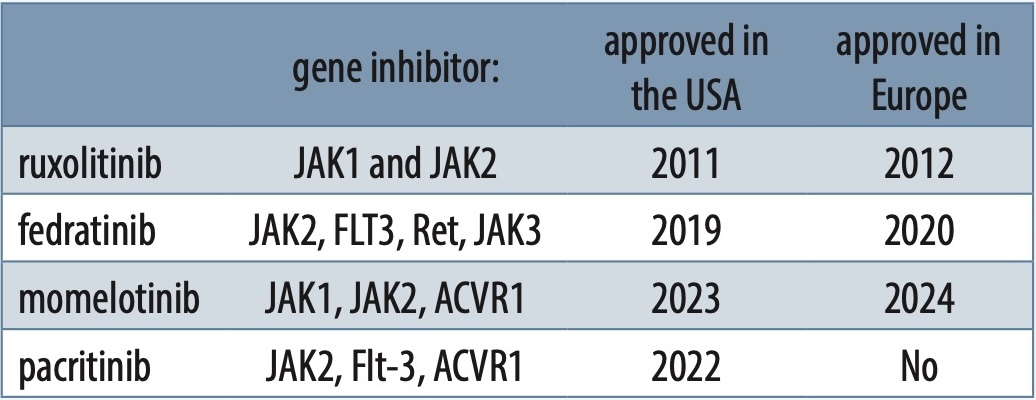

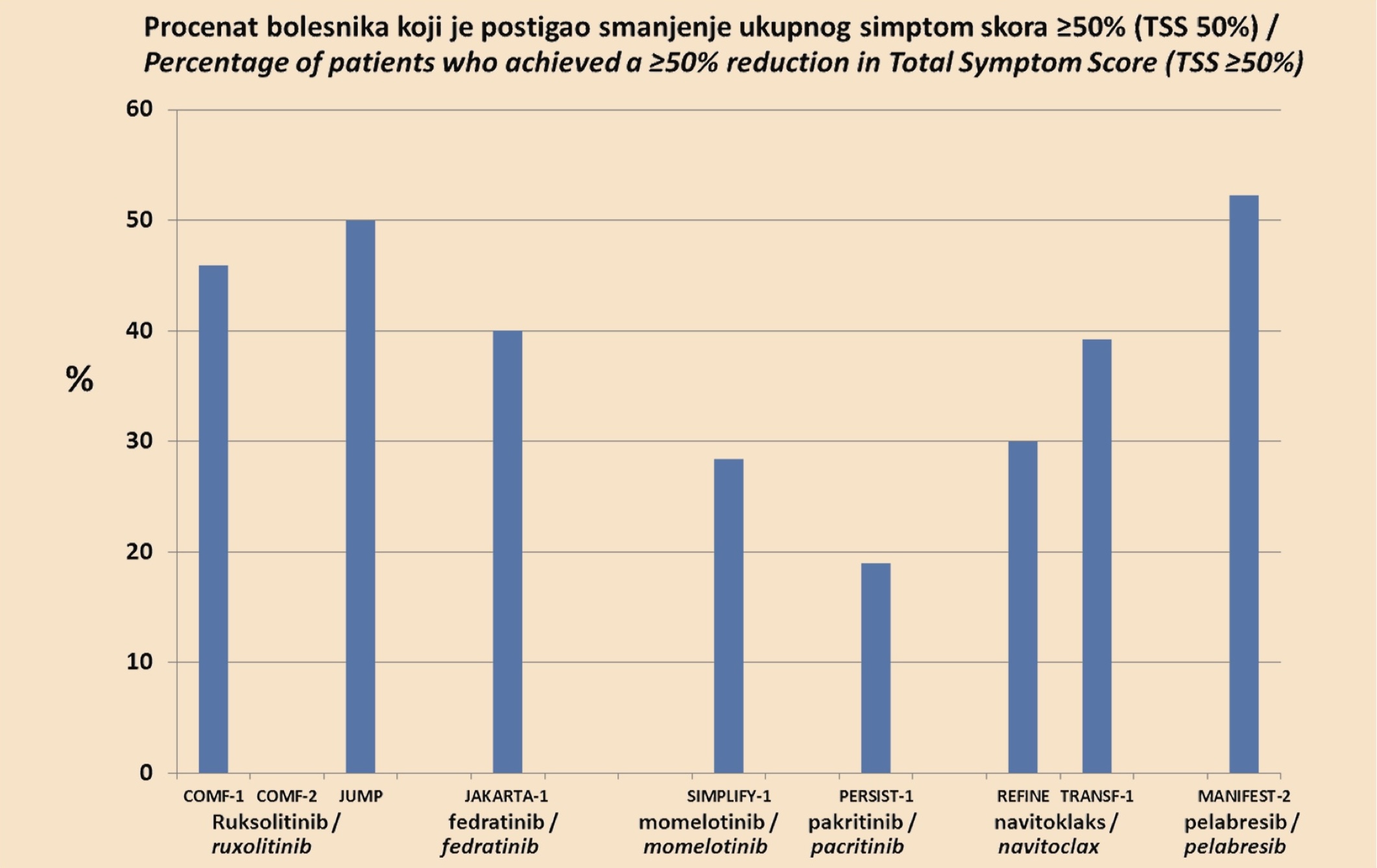
RUXOLITINIB (JAKAVI®) Ruxolitinib, the first JAK inhibitor to enter regular clinical use, was approved in the USA in 2011 and in Europe in 2012 for the treatment of advanced-stage PMF. Results from two clinical studies, COMFORT-I (ruxolitinib vs. placebo) [18] and COMFORT-II [19] (ruxolitinib vs. best available therapy excluding JAK inhibitors), demonstrated that ruxolitinib effectively controls the disease in a significant number of patients by alleviating symptoms associated with increased inflammation and reducing spleen size or volume. In the COMFORT-I study, 45.9% of patients experienced a reduction in symptoms by more than 50%, as measured by the Total Symptom Score (TSS<50%) using specific questionnaires. Additionally, disease control in terms of spleen size reduction (spleen volume reduction of ≥35%, SVS≥35%, measured by NMR or CT) was achieved in 41.9% of patients in COMFORT-I and in 28% in COMFORT-II study. These results were achieved within the first six months of therapy and showed slight improvement with continued treatment. Therefore, ruxolitinib has become the gold standard for treating patients with PMF, significantly improving their quality of life. For those who responded favorably, it also extended overall survival from 3.8 years for patients on placebo or the best available therapy to 5.8 years for those treated with ruxolitinib [20]).
Following the success of these two studies, an open-label study was conducted in real-world clinical practice (the JUMP study) [21],[22] involving 1,546 patients with primary myelofibrosis, regardless of their initial platelet count. A platelet count of <100×10⁹/L was an exclusion criterion in both COMFORT studies. Within the first six months, 56.5% of patients experienced a ≥50% reduction in palpable spleen length, and by the end of the first year, this was achieved in 66.5% of patients. In most patients, the spleen volume was not determined. Additionally, 50% of patients experienced a reduction in disease symptoms, as measured by several specific questionnaires. These findings demonstrate that ruxolitinib is highly effective in alleviating patient symptoms and reducing spleen size, which is one of the most challenging therapeutic issues for these patients.
In Serbia, ruxolitinib was registered in 2013 but was included on the list of reimbursed medications in 2016, with very limited indications, by the Central Commission of the Republic Health Insurance Fund. Before being listed, only a few patients were treated through Novartis’ direct support program. The most recent overall analysis of our results, conducted in 2022, included 155 patients, of whom 129 had been treated for at least six months (until the first assessment) [23]. The patient evaluation included assessing the reduction of general symptoms and measuring the reduction in spleen size, using ultrasound or CT scans. While the volume was not calculated, the reduction in total spleen diameter was assessed. Our results demonstrated a significant reduction in general symptoms, with 111 out of 129 patients showing improvement at six months and 84 out of 90 patients at twelve months. Spleen reduction was observed in 91 out of 125 patients (72.8%) within the first six months and in 67 out of 90 patients (74.4%) by the end of the first year. By the end of the second year, 29 out of 59 evaluated patients (49%) had reduced the maximum length of their spleen by ≥25%, as measured by ultrasound or CT scans.
Ruxolitinib is generally well tolerated, but most adverse reactions stem from its inhibition of the JAK/ STAT pathway involved in hematopoiesis. This often leads to significant anemia and thrombocytopenia, which may necessitate dose adjustments and can consequently impact overall treatment efficacy. Additionally, patients on ruxolitinib may experience a generally reduced immune response, leading to a higher frequency of respiratory and other infections, including herpesvirus infections. Although rare, cases of tuberculosis activation have also been reported [2],[21].
The failure of ruxolitinib therapy or loss of response has raised the question of using second-line JAKi. Several clinical studies were conducted to explore alternative treatments, with fedratinib being the first new option to enter the arena. Fedratinib has demonstrated effectiveness even in patients previously treated with ruxolitinib. This was followed by clinical trials of momelotinib, particularly in patients with anemia, and pacritinib, specifically for those with thrombocytopenia.
FEDRATINIB
(INREBIC®) Fedratinib entered clinical practice in 2019 and 2020 following detailed patient monitoring in two clinical studies. In rare cases, the use of fedratinib was associated with Wernicke’s encephalopathy due to vitamin B1 deficiency, which has been highlighted in a black box warning [24]. Importantly, the JAKARTA study demonstrated that fedratinib was significantly more effective than placebo in reducing systemic complaints and spleen size. By the end of the sixth treatment cycle (6 months of therapy), 47% of patients had a significant reduction in spleen volume, and 40% experienced a reduction in symptoms [25].
Patients previously treated with ruxolitinib also showed a strong secondary response to fedratinib. Notably, 55% of these patients achieved a ≥35% reduction in spleen size, as measured by MRI or CT, and 26% experienced a reduction in symptoms of over 50%. The response was slightly better in patients who had not tolerated previous treatment with ruxolitinib [26].
A detailed analysis within the JAKARTA study of a cohort with initially low platelet counts revealed that the splenic response did not significantly differ between patients with an initial platelet count >100×10⁹/L and those with counts between 50-100×10⁹/L [27].
Based on these results, fedratinib was introduced as an effective treatment option for patients who cannot tolerate or have not responded to previous ruxolitinib therapy. It significantly enhances the likelihood of achieving long-term disease control.
Like ruxolitinib, fedratinib’s side effects are linked to its mechanism of action, including anemia and thrombocytopenia. Infections occur somewhat less frequently, but there is also a risk of vitamin B1 deficiency, which can be effectively managed with supplementation [27].
MOMELOTINIB (OMJJARA®)
Momelotinib is the newest JAK inhibitor, having been approved for clinical use in the US in 2023 and in Europe in 2024. Unlike ruxolitinib and fedratinib, momelotinib also targets the activin A type I receptor, which plays a crucial role in modulating hepcidin activity. This action enhances the availability of iron from reserves for active erythropoiesis, thereby reducing the severity of anemia in patients with PMF [28],[29]. This is why momelotinib is specifically recommended for patients with PMF who have significant anemia as part of their condition [28]. The two clinical trials with momelotinib, SIMPLIFY-1 and SIMPLIFY-2, shared a similar basic design. SIMPLIFY-1 [30] was a non-inferiority trial comparing momelotinib to ruxolitinib, demonstrating that momelotinib was non-inferior to the standard therapy, ruxolitinib. Over the first six months, the overall response rate for significant reduction in spleen volume (SVR≥35%) was 26.5% with momelotinib, which is comparable to 29% in the group treated with ruxolitinib. Reduction in symptoms, as measured by a Total Symptom Score (TSS <50%), was also comparable. However, a higher percentage of patients treated with ruxolitinib achieved TSS <50% (42.2%) compared to those treated with momelotinib, where 28.4% experienced a reduction in symptoms by more than 50%. However, this difference was not significant, indicating that momelotinib was not significantly inferior in this regard either. Another study with momelotinib, SIMPLIFY-2 [29],[31] compared it not only to ruxolitinib but also allowed for the use of best available therapy (BAT), which could include ruxolitinib for patients who did not achieve an optimal response to their previous treatment. The results of this study indicated that momelotinib did not significantly impact changes in spleen volume but did significantly improve the reduction of the total symptom score, with 43% of patients achieving this outcome compared to 21% in the control group. Both studies also demonstrated that a significant number of patients on momelotinib became transfusion-independent. Specifically, 66% of patients treated with momelotinib achieved this outcome compared to 49% in the ruxolitinib group (SIMPLIFY-1). In another study, 43% of patients treated with momelotinib achieved transfusion independence, compared to 21% of patients receiving the best available therapy (SIMPLIFY-2). Consequently, a study was conducted to compare momelotinib with the use of the androgen danazol in patients with PMF who had previously been treated with JAK inhibitors and developed significant anemia (MOMENTUM). The study demonstrated that momelotinib reduced transfusion dependence by the end of the initial six months of treatment, with 31% of patients achieving this outcome compared to 20% in the danazol group [2],[29].
Like other JAK inhibitors, momelotinib may cause transient worsening of anemia and thrombocytopenia, which should be considered when adjusting the drug dose during treatment.
PACRITINIB (VONJO®)
Pacritinib is the newest approved JAK inhibitor. It was granted orphan drug status and approved for use in the US in 2022, but it has not been approved in Europe yet. Several clinical trials are currently underway to assess the real-world value of this JAK inhibitor, particularly in patients with low platelet counts, where pacritinib has previously shown promising results. Unlike ruxolitinib and fedratinib, where platelet counts can limit drug use and response, the initial PERSIST-1 study [32] demonstrated that pacritinib had a significant effect on reducing spleen volume compared to the best available therapy (excluding JAK inhibitors). Specifically, 19% of patients treated with pacritinib achieved a spleen volume reduction of ≥35% (SVR≥35%), compared to just 5% in the control group. These results were further evaluated in the PERSIST-2 study, which included patients with significant thrombocytopenia (< 100×10⁹/L). The control group consisted of various therapies, with a substantial proportion receiving reduced doses of ruxolitinib (45%). In this study, pacritinib demonstrated a significant reduction in both spleen volume (SVR≥35% in 18% of patients compared to 3% in the control group) and overall symptom score (25% of patients achieved a reduction versus 14% in the control group).
Future studies will reveal the true clinical value of pacritinib for patients with marked thrombocytopenia in PMF.
Like other JAK inhibitors, pacritinib can cause anemia. However, due to its effect on the AVRI receptor, it tends to have less severe long-term effects on anemia compared to ruxolitinib and fedratinib.
POTENTIAL SEQUENCE OF JAK INHIBITOR USE IN THE TREATMENT OF PATIENTS WITH PMF
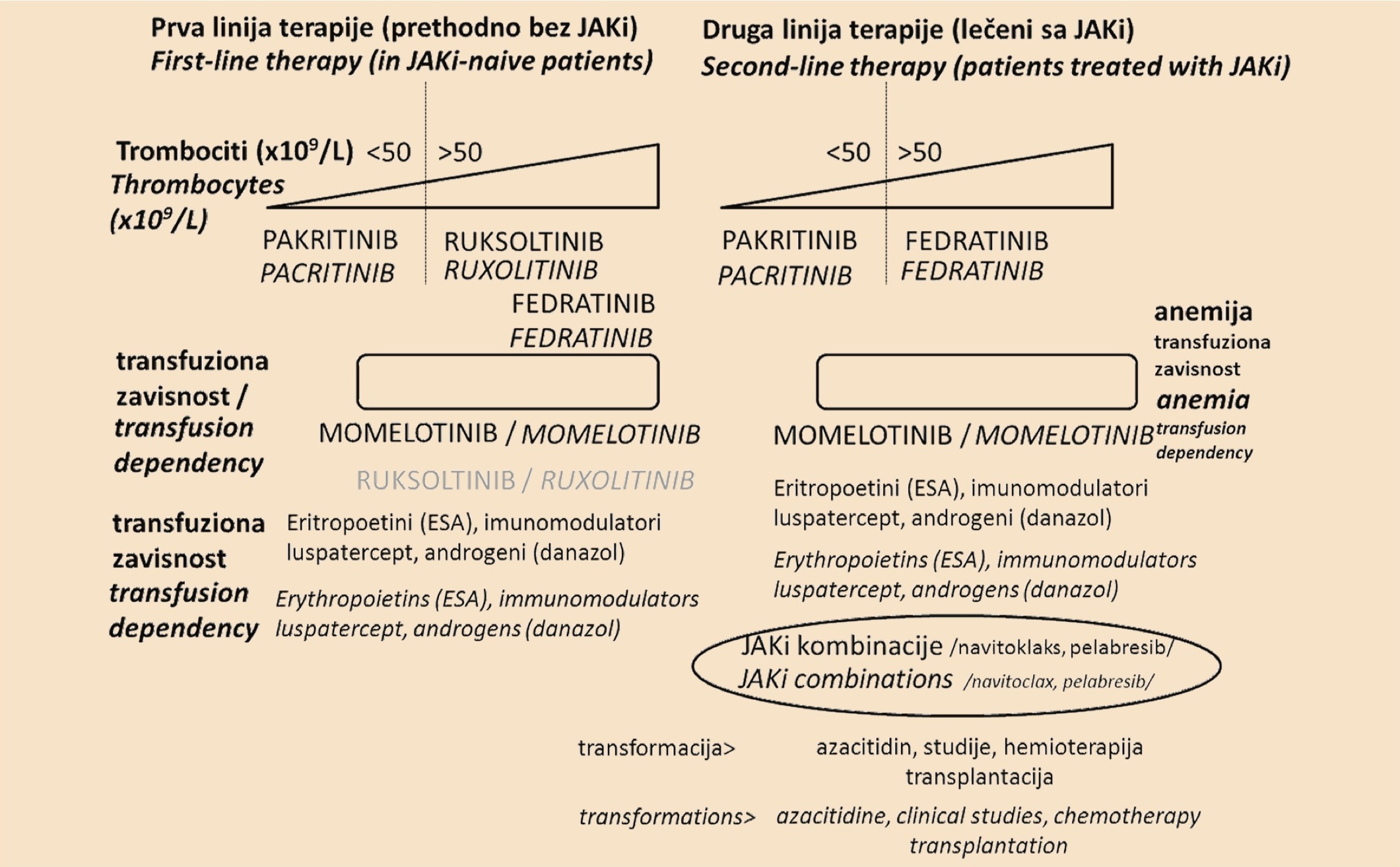
Currently, three JAK inhibitors are available in Europe and four in the USA. This allows for tailored treatment based on clinical and specific hematological features, ending the long period of reliance on a single drug. The chart provides a guide for the sequence and selection of JAK inhibitors in clinical practic [34].
One of the most crucial aspects of treating patients with primary myelofibrosis (PMF) and secondary myelofibrosis (resulting from transformation of polycythemia vera or essential thrombocythemia) is the appropriate timing and prompt initiation of therapy. Analysis of patient subgroups from conducted studies [35], along with real-world clinical application, indicates that outcomes are more favorable when JAK inhibitors, particularly ruxolitinib, are introduced earlier in the disease course—when symptoms and complaints first appear, even if risk factors are not yet severe (patients in the moderate/intermediate-1 phase). This approach allows for the initiation of treatment with more favorable baseline blood parameters, which can enhance the effectiveness and efficiency of JAKi [22],[35]. To date, no clinical studies have investigated the use of JAK inhibitors in the very early stages of PMF. However, results from studies of ruxolitinib in patients with late-stage polycythemia vera have demonstrated its potential for controlling the disease and slowing its progression to the manifest fibrotic phase. Consequently, ruxolitinib is approved for use in PV patients who are resistant to hydroxyurea, both in the USA and in Europe (EMA).
 34])" width="2121" height="1313">
Given the complexity and interrelated nature of clinical manifestations in PMF, there is a need to combine therapies that target different molecular pathways within hematopoietic cells, as well as those affecting stromal cells and their interactions. The potential for combining different agents is substantial, ranging from small molecules like signaling inhibitors targeting various intracellular pathways and apoptosis inhibitors to telomerase inhibitors, as well as monoclonal antibodies that target neovascularization, angiogenic factors, and profibrotic factors. Given that this topic is the subject of numerous ongoing studies, we will focus on just two new drugs that have demonstrated significant effects in reducing spleen volume, which is the primary clinical measure of drug efficacy for myelofibrosis [36].
NAVITOCLAX
Navitoclax activates pro-apoptotic pathways by inhibiting anti-apoptotic proteins such as BCL-2 and BCL-XL. This mechanism is particularly effective in patients with myeloproliferative neoplasms, such as PMF [37]. The drug has been under clinical development since 2007, with numerous studies demonstrating its effectiveness both as a standalone treatment and in combination with other cytotoxic drugs and signaling inhibitors. In PMF, navitoclax is being investigated in several studies, with early results available from the REFINE and TRANSFORM-1 trials. The REFINE study was the first to evaluate navitoclax in patients who had either not responded to ruxolitinib or had lost their response (addon study). The addition of navitoclax led to a significant reduction in spleen volume in 26.5% of patients and a notable decrease in symptoms, as measured by a Total Symptom Score (TSS <50%) in 30% of patients [37],[38].
The ongoing TRANSFORM-1 study has demonstrated promising results, which were presented at the 2023 American Society of Hematology (ASH) meeting and the 2024 European Hematology Association (EHA) meeting [39].The study was designed as a double-blind, placebo-controlled trial with two cohorts, where all patients were treated with ruxolitinib, either with the addition of navitoclax or a placebo. Preliminary results indicated that the combination therapy led to a significant reduction in spleen volume, with 63.2% of patients achieving the target (SVR ≥35%) compared to 31.5% in the ruxolitinib plus placebo group. The reduction in Total Symptom Score (TSS) was less striking. A similar proportion of patients achieved a TSS reduction to below 50% in both groups: 39.2% in the navitoclax plus ruxolitinib group and 41.7% in the ruxolitinib plus placebo group. This indicates that the observed symptom improvement is likely a direct effect of ruxolitinib on the JAK/STAT pathways [37],[38],[39].
One of the major challenges with navitoclax is the risk of thrombocytopenia, necessitating careful dose titration. However, based on experience from the REFINE, TRANSFORM-1, and TRANSFORM-2 studies, there has been no significant increase in bleeding incidents or a need to exclude patients due to severe thrombocytopenia [37].
PELABRESIB
Another promising drug is pelabresib, a specific inhibitor of bromodomain and extra-terminal (BET) proteins. By targeting these proteins, pelabresib has the potential to downregulate multiple genes involved in oncogenesis. Pelabresib is currently in clinical development, with ongoing studies across various malignancies. Specifically, two studies, MANIFEST [40] and MANIFEST-2 [40],[41], have been conducted in myeloproliferative neoplasms. MANIFEST-2 is a double-blind, placebo-controlled trial evaluating the combination of ruxolitinib and pelabresib versus ruxolitinib with placebo. The MANIFEST-2 study demonstrated that adding pelabresib to ruxolitinib significantly enhances the overall response in patients. In the experimental group, 65.9% of patients achieved a spleen volume reduction of ≥35% (SVR≥35%), compared to 35.2% in the ruxolitinib plus placebo group [41]. Additionally, the reduction in overall symptoms was significantly greater with the combination of pelabresib and ruxolitinib. TSS reduction to below 50% was achieved in 52.3% of patients receiving the combination of pelabresib and ruxolitinib, compared to 46.3% in the ruxolitinib plus placebo group. This study showed that it is possible to achieve further optimization and improvement of the patient’s initial response to ruxolitinib, which opens the possibility for numerous other combinations aimed at improving the overall therapeutic outcome of patients with primary myelofibrosis. Similar to other JAK inhibitors, pelabresib can cause worsening of anemia and thrombocytopenia. However, the majority of patients tolerated the combination therapy well [40].
CONCLUSION
Current therapeutic options for myelofibrosis offer the potential for significant improvements in overall quality of life, symptom reduction, and spleen size reduction. Timely initiation of therapy is likely to enhance these benefits and potentially extend the lifespan of many patients. The development of additional JAK inhibitors has expanded our therapeutic options, allowing for more tailored treatments in specific clinical scenarios, such as patients with cytopenic myelofibrosis or severe transfusion-dependent anemia. This advancement offers the potential to significantly improve the previously inadequate quality of life for these patients. Moreover, advancing our understanding of the disease’s biology, pathophysiological, and genetic mechanisms is expected to reveal new therapeutic targets beyond the JAK/STAT pathway. This progress will likely lead to the adoption of combination therapies as the standard approach for first-line treatment in the coming years [42].
We hope that at least one more of the registered JAK inhibitors will soon be available in Serbia, providing our patients with additional therapeutic options beyond the sporadic availability of clinical studies.
Informations

-
Keywords:
-
Received:
-
Revised:
-
Accepted:
-
Online first:
-
DOI:
-
Cite this article:

Andrija Bogdanović
Clinic for Hematology, University Clinical Center of Serbia
2 Dr Koste Todorovića Street, 11000 Belgrade, Serbia
E-mail:
1. Bogdanović A. Hronična granulocitna leukemija i mijeloproliferativne neoplazme (prava policitemija, primarna mijelofibroza i esencijalna trombocitemija). In: Poremećaji i bolesti krvi i krvotvornih organa kod starih osoba. Marisavljević D, Milošević B, Nikolić-Žugić J, Čokić V, Prostran M, editors. Beograd: Zavod za udžbenike i nastavna sredstva; 2017. p. 201-15.
2. Passamonti F, Mora B. Myelofibrosis. Blood. 2023 Apr 20;141(16):1954-70. doi: 10.1182/blood.2022017423. [CROSSREF]
3. Tefferi A. Primary myelofibrosis: 2021 update on diagnosis, risk-stratification and management. Am J Hematol. 2021 Jan;96(1):145-62. doi: 10.1002/ ajh.26050. [CROSSREF]
4. Tefferi A. Primary myelofibrosis: 2023 update on diagnosis, risk-stratification and management. Am J Hematol. 2023 May;98(5):801-21. doi: 10.1002/ ajh.26857. [CROSSREF]
5. Gangat N, Tefferi A. Myelofibrosis biology and contemporary management Br J Haematol. 2020 Oct;191(2):152-70. doi: 10.1111/bjh.16576. [CROSSREF]
6. Zahr AA, Salama ME, Carreau N, Tremblay D, Verstovsek S, Mesa R, et al. Bone marrow fibrosis in myelofibrosis: pathogenesis, prognosis and targeted strategies. Haematologica. 2016 Jun;101(6):660-71. doi: 10.3324/haematol.2015.141283. [CROSSREF]
7. Čokić VP, Mossuz P, Han J, Socoro N, Beleslin-Čokić BB, Mitrović O, et al. Microarray and proteomic analyses of myeloproliferative neoplasms with a highlight on the mTOR signaling pathway. PLoS One. 2015 Aug 14;10(8):e0135463. doi: 10.1371/journal.pone.0135463. [CROSSREF]
8. Đikic D, Markovic D, Bogdanovic A, Mitrovic-Ajtic O, Suboticki T, Diklic M, et al. Oxidative and nitrosative stress in myeloproliferative neoplasms: the impact on the AKT / mTOR signaling pathway. J BUON. 2018 Sep-Oct;23(5):1481-91.
9. Šefer D, Bižić-Radulović S, Kraguljac-Kurtović N, Bogdanović A, Čokić V, Miljić P, et al. Proliferative characteristics of Philadelphia-negative myeloproliferative neoplasms – clinical implications. Int J Lab Hematol. 2017 Feb;39(1):21-31. doi: 10.1111/ijlh.12564. [CROSSREF]
10. Lekovic D, Gotic M, Skoda R, Beleslin-Cokic B, Milic N, Mitrovic-Ajtic O, et al. Bone marrow microvessel density and plasma angiogenic factors in myeloproliferative neoplasms: clinicopathological and molecular correlations. Ann Hematol. 2017 Mar;96(3):393-404. doi: 10.1007/s00277-016-2890-9. [CROSSREF]
11. Subotički T, Mitrović Ajtić O, Beleslin-Čokić BB, Nienhold R, Diklić M, Đikić D, et al. Angiogenic factors are increased in circulating granulocytes and CD34+ cells of myeloproliferative neoplasms. Mol Carcinog. 2017 Feb;56(2):567-79. doi: 10.1002/mc.22517. [CROSSREF]
12. Đorđevic V, Dencic-Fekete M, Jovanovic J, Bizic S, Jankovic G, Bogdanovic A, et al. Cytogenetics of agnogenic myeloid metaplasia: a study of 61 patients. Cancer Genet Cytogenet. 2007 Feb;173(1):57-62. doi: 10.1016/j.cancergencyto.2006.09.021. [CROSSREF]
13. Šefer D, Miljić P, Kraguljac-Kurtović N, Bižić-Radulović S, Bogdanović A, Knežević V, et al. Correlation between leukocyte-platelet aggregates and thrombosis in myeloproliferative neoplasms. Int J Lab Hematol. 2022 Apr;44(2):302-12. doi: 10.1111/ijlh.13754. [CROSSREF]
14. Palandri F, Sabattini E, Maffioli M. Treating early-stage myelofibrosis. Ann Hematol. 2019 Feb;98(2):241-53. doi: 10.1007/s00277-018-3526-z. [CROSSREF]
15. Lekovic D, Bogdanovic A, Sobas M, Arsenovic I, Smiljanic M, Ivanovic J, et al. Easily applicable predictive score for differential diagnosis of prefibrotic primary myelofibrosis from essential thrombocythemia. Cancers (Basel). 2023 Aug 20;15(16):4180. doi: 10.3390/cancers15164180. [CROSSREF]
16. Gangat N, Caramazza D, Vaidya R, George G, Begna K, Schwager S, et al. DIPSS plus: a refined Dynamic International Prognostic Scoring System for primary myelofibrosis that incorporates prognostic information from karyotype, platelet count, and transfusion status. J Clin Oncol. 2011 Feb 1;29(4):392-7. doi: 10.1200/JCO.2010.32.2446. [CROSSREF]
17. Guglielmelli P, Lasho TL, Rotunno G, Mudireddy M, Mannarelli C, Nicolosi M, et al. MIPSS70: Mutation-Enhanced International Prognostic Score System for transplantation-age patients with primary myelofibrosis. J Clin Oncol. 2018 Feb 1;36(4):310-8. doi: 10.1200/JCO.2017.76.4886. [CROSSREF]
18. Verstovsek S, Mesa RA, Gotlib J, Levy RS, Gupta V, DiPersio JF, et al.; COMFORT-I investigators. Efficacy, safety, and survival with ruxolitinib in patients with myelofibrosis: results of a median 3-year follow-up of COMFORT-I. Haematologica. 2015 Apr;100(4):479-88. doi: 10.3324/haematol.2014.115840. [CROSSREF]
19. Harrison CN, Vannucchi AM, Kiladjian JJ, Al-Ali HK, Gisslinger H, Knoops L, et al. Long-term findings from COMFORT-II, a phase 3 study of ruxolitinib vs best available therapy for myelofibrosis. Leukemia. 2016 Aug;30(8):1701-7. doi: 10.1038/leu.2016.148. [CROSSREF]
20. Verstovsek S, Gotlib J, Mesa RA, Vannucchi AM, Kiladjian JJ, Cervantes F, et al. Long-term survival in patients treated with ruxolitinib for myelofibrosis: COMFORT-I and -II pooled analyses. J Hematol Oncol. 2017 Sep 29;10(1):156. doi: 10.1186/s13045-017-0527-7. [CROSSREF]
21. Al-Ali HK, Griesshammer M, Foltz L, Palumbo GA, Martino B, Palandri F, et al. Primary analysis of JUMP, a phase 3b, expanded-access study evaluating the safety and efficacy of ruxolitinib in patients with myelofibrosis, including those with low platelet counts. Br J Haematol. 2020 Jun;189(5):888-903. doi: 10.1111/bjh.16462. [CROSSREF]
22. Palandri F, Al-Ali HK, Guglielmelli P, Zuurman MW, Sarkar R, Gupta V. Benefit of early ruxolitinib initiation regardless of fibrosis grade in patients with primary myelofibrosis: a post hoc analysis of the single-arm phase 3b JUMP study. Cancers (Basel). 2023 May 22;15(10):2859. doi: 10.3390/cancers15102859. [CROSSREF]
23. Bogdanović A, Gotić M, Leković D, Ćojbašić I, Anđelković N, Perčić I, et al. Primena ruksolitiniba kod bolesnika sa mijelofibrozom: 5 godina iskustva u Srbiji. Zbornik Sažetaka 5-og Kongresa hematologa Srbije; 2022 Okt 6-9; Novi Sad, Srbija. p. 56.
24. Blair HA. Fedratinib: first approval. Drugs. 2019 Oct;79(15):1719-25. doi: 10.1007/s40265-019-01205-x. [CROSSREF]
25. Pardanani A, Tefferi A, Masszi T, Mishchenko E, Drummond M, Jourdan E, et al. Updated results of the placebo-controlled, phase III JAKARTA trial of fedratinib in patients with intermediate-2 or high-risk myelofibrosis. Br J Haematol. 2021 Oct;195(2):244-8. doi: 10.1111/bjh.17727. [CROSSREF]
26. Harrison CN, Schaap N, Vannucchi AM, Kiladjian JJ, Tiu RV, Zachee P, et al. Janus kinase-2 inhibitor fedratinib in patients with myelofibrosis previously treated with ruxolitinib (JAKARTA-2): a single-arm, open-label, non-randomised, phase 2, multicentre study. Lancet Haematol. 2017 Jul;4(7):e317-24. doi: 10.1016/S2352-3026(17)30088-1. [CROSSREF]
27. Harrison CN, Schaap N, Vannucchi AM, Kiladjian JJ, Passamonti F, Zweegman S, et al. Safety and efficacy of fedratinib, a selective oral inhibitor of Janus kinase-2 (JAK2), in patients with myelofibrosis and low pretreatment platelet counts. Br J Haematol. 2022 Jul;198(2):317-27. doi: 10.1111/bjh.18207. [CROSSREF]
28. Keam SJ. Momelotinib: first approval. Drugs. 2023 Dec;83(18):1709-15. doi: 10.1007/s40265-023-01964-8. [CROSSREF]
29. Tefferi A, Pardanani A, Gangat N. Momelotinib (JAK1/JAK2/ACVR1 inhibitor): mechanism of action, clinical trial reports, and therapeutic prospects beyond myelofibrosis. Haematologica. 2023 Nov 1;108(11):2919-32. doi: 10.3324/haematol.2022.282612. [CROSSREF]
30. Mesa RA, Kiladjian JJ, Catalano JV, Devos T, Egyed M, Hellmann A, et al. SIMPLIFY-1: A phase iii randomized trial of momelotinib versus ruxolitinib in Janus kinase inhibitor-naive patients with myelofibrosis. J Clin Oncol. 2017 Dec 1;35(34):3844-50. doi: 10.1200/JCO.2017.73.4418. [CROSSREF]
31. Verstovsek S, Mesa R, Gupta V, Lavie D, Dubruille V, Cambier N, et al. Momelotinib long-term safety and survival in myelofibrosis: integrated analysis of phase 3 randomized controlled trials. Blood Adv. 2023 Jul 25;7(14):3582-91. doi: 10.1182/bloodadvances.2022009311. [CROSSREF]
32. Mesa RA, Vannucchi AM, Mead A, Egyed M, Szoke A, Suvorov A, et al. Pacritinib versus best available therapy for the treatment of myelofibrosis irrespective of baseline cytopenias (PERSIST-1): an international, randomised, phase 3 trial. Lancet Haematol. 2017 May;4(5):e225-36. doi: 10.1016/S2352- 3026(17)30027-3. [CROSSREF]
33. Mascarenhas J, Hoffman R, Talpaz M, Gerds AT, Stein B, Gupta V, et al. Pacritinib vs best available therapy, including ruxolitinib, in patients with myelofibrosis: a randomized clinical trial. JAMA Oncol. 2018 May 1;4(5):652-9. doi: 10.1001/jamaoncol.2017.5818. [CROSSREF]
34. Venugopal S, Mascarenhas J. Novel therapeutics in myeloproliferative neoplasms. J Hematol Oncol. 2020 Dec 2;13(1):162. doi: 10.1186/s13045-020- 00995-y. [CROSSREF]
35. Verstovsek S, Kiladjian JJ, Vannucchi AM, Mesa RA, Squier P, Hamer-Maansson JE, et al. Early intervention in myelofibrosis and impact on outcomes: a pooled analysis of the COMFORT-I and COMFORT-II studies. Cancer. 2023 Jun 1;129(11):1681-90. doi: 10.1002/cncr.34707. [CROSSREF]
36. Tremblay D, Mascarenhas J. Next generation therapeutics for the treatment of myelofibrosis. Cells. 2021 Apr 27;10(5):1034. doi: 10.3390/cells10051034. [CROSSREF]
37. Pemmaraju N, Garcia JS, Perkins A, Harb JG, Souers AJ, Werner ME, et al. New era for myelofibrosis treatment with novel agents beyond Janus kinase-inhibitor monotherapy: focus on clinical development of BCL-X(L) /BCL-2 inhibition with navitoclax Cancer. 2023 Nov 15;129(22):3535-45. doi: 10.1002/ cncr.34986. [CROSSREF]
38. Pemmaraju N, Garcia JS, Potluri J, Harb JG, Sun Y, Jung P, et al. Addition of navitoclax to ongoing ruxolitinib treatment in patients with myelofibrosis (REFINE): a post-hoc analysis of molecular biomarkers in a phase 2 study. Lancet Haematol. 2022 Jun;9(6):e434-44. doi: 10.1016/S2352-3026(22)00116-8. [CROSSREF]
39. Pemmaraju N, Mead AJ, Somervaille TCP, McCloskey JK, Palandri F, Koschmieder S, et al. Transform-1: A randomized, double-blind, placebo-controlled, multicenter, international phase 3 study of navitoclax in combination with ruxolitinib versus ruxolitinib plus placebo in patients with untreated myelofibrosis. Blood. 2023 Nov 2; 142 (Suppl. 1):620. doi: 10.1182/ blood-2023-173509. [CROSSREF]
40. Mascarenhas J, Kremyanskaya M, Patriarca A, Palandri F, Devos T, Passamonti F, et al. MANIFEST: Pelabresib in combination with ruxolitinib for Janus kinase inhibitor treatment-naive myelofibrosis. J Clin Oncol. 2023 Nov 10;41(32):4993-5004. doi: 10.1200/JCO.22.01972. [CROSSREF]
41. Harrison CN, Gupta VK, Gerds AT, Rampal R, Verstovsek S, Talpaz M, et al. Phase III MANIFEST-2: pelabresib + ruxolitinib vs placebo + ruxolitinib in JAK inhibitor treatment-naive myelofibrosis. Future Oncol. 2022 Sep;18(27):2987- 97. doi: 10.2217/fon-2022-0484. [CROSSREF]
42. Chifotides HT, Masarova L, Verstovsek S. SOHO state of the art updates and next questions: novel therapeutic strategies in development for myelofibrosis. Clin Lymphoma Myeloma Leuk. 2023 Apr;23(4):219-31. doi: 10.1016/j. clml.2022.12.014. [CROSSREF]
- Scheme 1. Key pathophysiological events in the development of primary myelofibrosis.
- Nowadays, the following JAK inhibitors have been registered in the USA and Europe:
- Graph 1. Comparative outcomes and efficiency of different JAK inhibitors in clinical trials (spleen volume reduction, SVR≥35%) (related to following text)
- Graph 2. Comparative outcomes and efficiency of different JAK inhibitors in clinical trials (degree of symptom reduction asTotal Symptom Score reduction, TSS
- Graph 2. Potential therapy with approved JAK inhibitors based on lines of treatment and clinical features in PMF, modified from Venugopal et al. [34])