


Interstitial lung disease and bullous pemphigoid associated with direct oral anticoagulant use: a case report of literature-based pharmacovigilance signal detection
- PrimeVigilance, Belgrade, Serbia
ABSTRACT
Introduction/Objective: Direct oral anticoagulants (DOACs) have significantly improved the prevention and management of thromboembolic disorders owing to predictable pharmacokinetics, simplified dosing, and reduced monitoring compared to vitamin K antagonists. However, as clinical use increases, emerging evidence suggests that DOACs may also cause rare but clinically important non-hemorrhagic adverse events, such as interstitial lung disease (ILD) and bullous pemphigoid (BP). The aim of this study is to present and evaluate drug safety signal cases reported in the existing literature and to contextualize them in order to enhance clinician awareness of rare pulmonary and dermatologic adverse events associated with DOAC therapy.
Case report: This report describes signal detection of ILD in 11 elderly male patients following exposure to apixaban, dabigatran, or edoxaban, with latency periods ranging from several days to four years. Most patients showed clinical improvement following drug discontinuation and corticosteroid therapy; however, two experienced fatal outcomes. We additionally report a signal detection case of rivaroxaban-associated bullous pemphigoid in an 86-year-old male with multiple comorbidities, who fully recovered following rivaroxaban withdrawal and corticosteroid therapy, with no recurrence after one year of treatment with apixaban.
Conclusion: Prompt recognition and management are crucial for favorable outcomes. These cases underscore the importance of pharmacovigilance and the need for continued investigation to elucidate mechanisms and risk factors for such reactions.
INTRODUCTION
Thromboembolic disorders such as atrial fibrillation-related stroke, venous thromboembolism, and pulmonary embolism remain major contributors to global morbidity and mortality, making anticoagulant therapy essential in modern clinical practice [1],[2],[3]. While these agents are highly effective, their therapeutic benefits must always be balanced against safety concerns, particularly the risk of bleeding events that can range from minor to life-threatening [3].
The introduction of direct oral anticoagulants (DOACs), including apixaban, dabigatran, edoxaban, and rivaroxaban, has changed anticoagulation management paradigms by providing predictable pharmacokinetics, fixed dosing, fewer drug and food interactions, and reduced need for routine laboratory monitoring [1],[2]. However, these advantages have also highlighted the importance of continuous post-marketing safety monitoring to identify rare or unexpected adverse reactions [3],[4],[5].
Pharmacovigilance is particularly important, as clinical trials often lack sufficient duration, population diversity, or sample size to detect infrequent or delayed events [4],[5]. Spontaneous reporting systems and observational studies have consequently revealed previously unrecognized adverse reactions to DOACs, extending beyond hemorrhagic events. Among these, two rare but clinically significant toxicities, i.e., interstitial lung disease (ILD) and bullous pemphigoid (BP), have been increasingly reported [4],[5],[6],[7].
Among these, two conditions have recently gained attention: interstitial lung disease (ILD) associated with direct oral anticoagulants and rivaroxaban-induced bullous pemphigoid [4],[5],[6],[7]. Though uncommon, these adverse events pose diagnostic challenges and may be underrecognized in clinical practice [4],[5],[6],[7]. Their identification underscores the importance of ongoing pharmacovigilance, clinician awareness, and continued investigation into the broader safety profile of DOACs [4],[5],[6],[7].
To inform this review, a supportive literature search was conducted using PubMed, Web of Science, and Google Scholar up to March 2025. Only peer-reviewed articles, case reports, case series, reviews, and pharmacovigilance analyses published in English were included. Additional sources were identified by manually screening the reference lists of relevant articles. Duplicate records were removed, and studies were evaluated for relevance based on their focus on rare, non-hemorrhagic adverse events associated with novel oral anticoagulants (NOACs).
This report aims to assess drug safety signal cases from the existing medical literature, present pharmacovigilance medical review results of patients experiencing ILD and BP, and synthesize the available evidence on these adverse events, with a focus on their clinical characteristics, potential mechanisms, and implications for patient management and drug safety monitoring.
CASE REPORT
As a part of a pharmacovigilance signal detection process, we report a collated series of 11 cases of elderly males who developed interstitial lung disease (ILD) following exposure to apixaban, dabigatran, or edoxaban. Additionally, we present a detailed case of an 86-year-old male who developed bullous pemphigoid (BP) following the initiation of rivaroxaban.
Interstitial Lung Disease (ILD) Associated with DOACs
A pharmacovigilance signal of ILD associated with NOACs or DOACs was first identified in the safety database report with a data lock point of 28 February 2025. This signal comprised a collated series of 11 elderly male patients, published in a literature review by Han et al. [8], which evaluated the evidence available up to March 2023. A collated case series of 11 elderly male patients, aged 65–91 years (mean age 79.6 ± 7.1), who developed ILD in association with apixaban, dabigatran, or edoxaban, was received as a pharmacovigilance signal. The latency period varied widely, ranging from three days to as long as four years following treatment initiation. All patients presented with dyspnea, and diffuse alveolar hemorrhage was a common feature. Clinical outcomes were mixed: nine patients improved following drug withdrawal, often in combination with methylprednisolone pulse therapy, while two patients died due to respiratory failure. The conclusion drawn from this series was that ILD can occur in association with several NOACs and that early imaging, combined with immediate drug discontinuation and corticosteroid therapy, is essential for improving outcomes [8]. Throughout the pharmacovigilance review process, the administered NOACs were assessed as having a possible causal relationship with the observed events. The detailed findings of this series are summarized in Table 1.
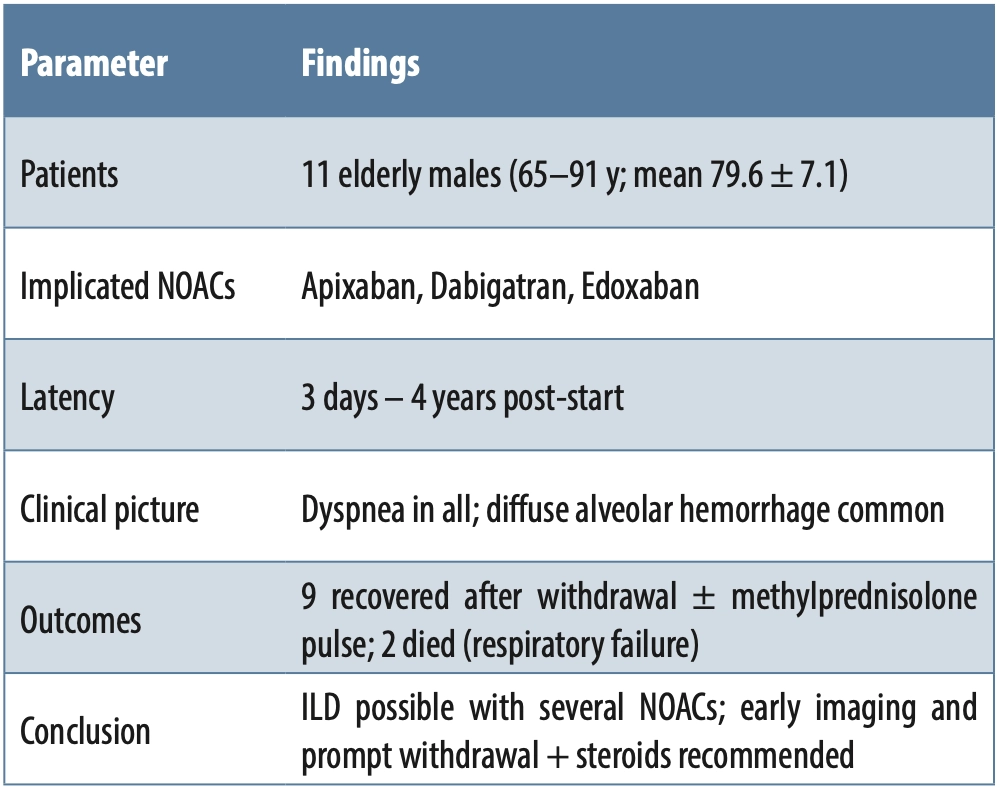
This signal remained under monitoring, with re-evaluation planned for the next safety database review to incorporate additional non-Asian data and refine risk factor assessment.
Rivaroxaban-Associated Bullous Pemphigoid (BP)
As part of our routine pharmacovigilance activities, a particularly well-documented Individual Case Safety Report (ICSR) of rivaroxaban-associated bullous pemphigoid was identified in our global safety database. With this published case, we identified a distinct, well-documented literature-based signal of a single case of rivaroxaban-associated bullous pemphigoid. An 86-year-old male with a complex medical history, including hypertension, type 2 diabetes mellitus, chronic kidney disease (CKD; eGFR 45–50 mL/min), dyslipidemia, and paroxysmal atrial fibrillation (CHA₂DS₂-VASc score = 4) was initiated on rivaroxaban 15 mg daily and bisoprolol in July 2019 following the diagnosis of atrial fibrillation. By December 2019, he developed generalized pruritus, which was initially attributed to rivaroxaban, prompting a switch to apixaban in January 2020. However, due to poor adherence to the twice-daily regimen, rivaroxaban was reintroduced at a dose of 20 mg daily in early February [6].
Concomitant medications included ramipril, metformin, atorvastatin, gliclazide, diltiazem, and digoxin, with no reported use of over-the-counter products. Within one week of rivaroxaban re-initiation, the patient developed tense bullae on the abdomen, which subsequently progressed to crusted erosions and bullous eruptions on the limbs. He was admitted to hospital on March 2, 2020.
On examination, violaceous plaques with hemorrhagic crusts were noted on the abdomen, and multiple intact bullae were present on the extremities. No mucosal involvement was identified. Skin biopsy revealed a subepidermal blister with eosinophilic infiltration. Direct immunofluorescence demonstrated strong C3 deposition along the basement membrane, consistent with the diagnosis of bullous pemphigoid (BP).
Following hospitalization, rivaroxaban was discontinued, and therapy was switched to apixaban. The patient received systemic corticosteroids and adjunctive immunosuppressive therapy, with progressive clinical improvement. The Naranjo score was +5 and apixaban was successfully administered without recurrence of bullous eruptions during the follow-up period of one year. Consistent with the collated series, the administered apixaban was assessed as having a possible causal relationship during this pharmacovigilance review. Table 2 summarizes the treatment timeline and outcomes.

DISCUSSION
These pharmacovigilance signal assessment reports make an important contribution by consolidating 11 ILD cases associated with DOACs, along with a distinct case of rivaroxaban-induced BP, representing one of the most comprehensive clinical overviews of these rare non-hemorrhagic toxicities to date. These cases highlight rare but serious adverse reactions associated with direct oral anticoagulants and underscore the importance of early recognition, appropriate management, and consideration of alternative therapies. Multiple single-case reports and small series have described ILD, often accompanied by diffuse alveolar hemorrhage, following exposure to NOACs. Importantly, this safety concern is not currently reflected in the European Union Summary of Product Characteristics (SmPC) or in most Risk Management Plans. The ILD findings align with pharmacovigilance data reported by Raschi et al. and others [4],[8], suggesting that although infrequent, these pulmonary reactions can have severe outcomes. The consistent demographic pattern (elderly Asian males with comorbidities) points to potential population-specific susceptibility.
Additional support for this association comes from a single-center observational survey in Japan. Among 870 apixaban users, four developed ILD, corresponding to an incidence of approximately 0.45%. All affected individuals were elderly Japanese men, and in three of the four cases symptoms developed within one week of drug initiation. Despite treatment with methylprednisolone pulse therapy and ventilatory support, two patients died. These findings further reinforce the potential seriousness of this adverse reaction and suggest a demographic susceptibility [9].
Although ILD remains an uncommon adverse event across all DOACs, observational studies and pharmacovigilance reports suggest some variability in risk depending on the specific agent, patient demographics, and comorbidities. Table 3 summarizes the available evidence on the incidence of ILD among different DOACs and highlights key patient and drug-related factors.
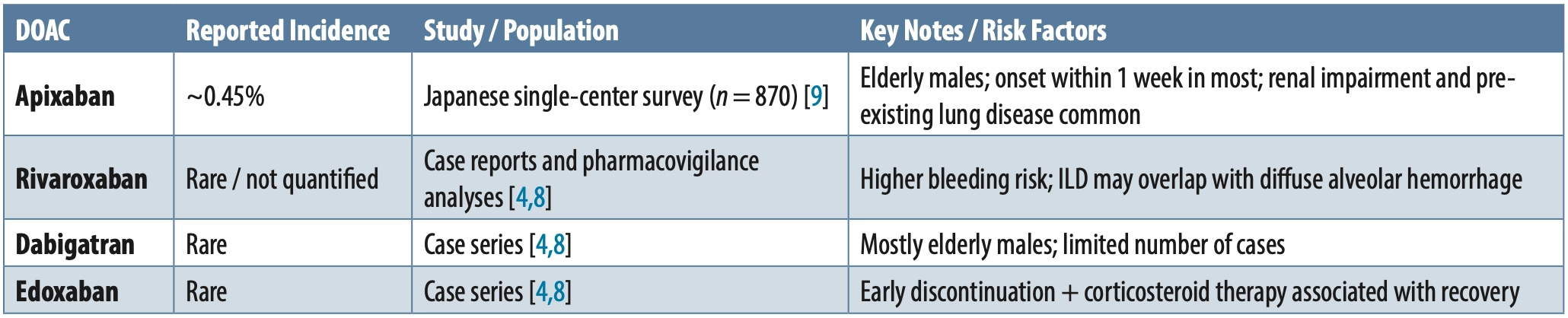
The majority of reported cases involve elderly Asian males, and several clinical risk factors have been proposed, including renal impairment, pre-existing pulmonary disease, and a history of smoking. Drug-related factors may also contribute to the risk. Apixaban is associated with a higher potential for metabolic interactions, whereas rivaroxaban carries a higher risk of bleeding complications. Alveolar hemorrhage itself may mimic or precipitate interstitial lung disease, making the distinction between these entities clinically challenging. The relationship between hemorrhage and ILD remains an unresolved question [4],[8].
At present, interstitial lung disease is not listed as an adverse reaction in the EU SmPC for any NOAC. In contrast, Japan introduced “important precautions” for rivaroxaban as early as February 2014, specifically highlighting potential pulmonary adverse events. This regulatory action likely increased awareness and may partly explain the higher rate of reporting from Japanese centers [4],[6],[9].
Clinicians should be aware that respiratory symptoms such as dyspnea may signal an early development of ILD in patients treated with NOACs. This risk appears to be greatest in elderly Asian males, as well as in individuals with renal impairment or pre-existing lung disease. Prompt high-resolution computed tomography is warranted in symptomatic patients in order to differentiate ILD from diffuse alveolar hemorrhage. Once suspected, immediate discontinuation of the offending NOAC is indicated, followed by initiation of high-dose corticosteroid therapy, with ventilatory support in severe cases. Educating prescribers is essential to raise awareness that, although uncommon, ILD represents a clinically significant complication of NOAC therapy, in addition to the well-established bleeding risks [1],[4],[6],[8],[9],[10].
Future research priorities include large-scale, multi-regional pharmacovigilance analyses to establish incidence rates, prospective clinical studies to elucidate underlying mechanisms, and focused investigations into the relative contributions of diffuse alveolar hemorrhage versus immune-mediated toxicity in the pathogenesis of NOAC-associated ILD.
The rivaroxaban-associated BP case detailed in this report was initially identified as a robust ICSR within our pharmacovigilance database, underscoring the practical output of ongoing signal detection. Its subsequent publication [6] provided a valuable opportunity for in-depth clinical analysis. While several other cases of DOAC-associated BP have been reported in the literature [7],[11], this specific case was selected not as a literature review example, but because it represented a high-quality, data-rich signal from our internal monitoring system. The patient’s clinical course, confirmed by biopsy and immunofluorescence, together with a positive rechallenge and a high Naranjo score (+5), provided strong evidence for a causal association. The successful transition to apixaban without recurrence further suggests that this adverse reaction may be molecule-specific rather than a class effect, providing a crucial insight for clinical management.
Accurate identification of rivaroxaban-associated BP requires careful clinical evaluation combined with immunofluorescence studies, which remain the definitive diagnostic method [6],[7],[11]. In this case, both the clinical presentation and immunopathological findings corroborated the diagnosis.
Timely recognition, immediate withdrawal of the suspected agent, and initiation of corticosteroid therapy are essential for controlling disease progression. While some patients show rapid improvement following drug cessation, others may need extended corticosteroid therapy and additional immunosuppressants, as seen here [7],[11]. The Naranjo score was +5, indicating a probable causal relationship between rivaroxaban and BP [6],[7]. The Naranjo algorithm, widely used in pharmacovigilance, offers an objective and reproducible method for assessing causality, minimizing subjective bias in adverse reaction evaluation.
Ongoing anticoagulation poses additional challenges. In this patient, apixaban was successfully administered without recurrence of bullous eruptions for more than one year, suggesting it may be a suitable alternative for patients with rivaroxaban-induced BP [6],[7].
This case emphasizes the need for early recognition of rivaroxaban-induced BP, immediate discontinuation of the drug, and corticosteroid initiation. The successful use of apixaban as an alternative supports the hypothesis of a molecule-specific, rather than class-wide, reaction.
Together, these cases illustrate how post-marketing surveillance and pharmacovigilance bridge knowledge gaps left by randomized trials, which rarely capture such infrequent events [4],[5]. Increased clinician awareness, prompt diagnostic evaluation, and timely intervention remain essential to minimize morbidity and mortality associated with these reactions.
This study is limited by the small number of cases, retrospective data collection, and an absence of a control group. Causality cannot be conclusively proven, and under-reporting remains a potential bias. Additionally, demographic overrepresentation (elderly males) may restrict generalizability. Nonetheless, these reports provide valuable real-world evidence and highlight the need for larger, multicenter studies. Our intention was to highlight the signal detection process using high-quality internal cases, rather than to provide a comprehensive review of all published DOAC-associated cases. While we focused on a small number of internally identified cases for detailed analysis, we acknowledge that additional cases exist in the literature.
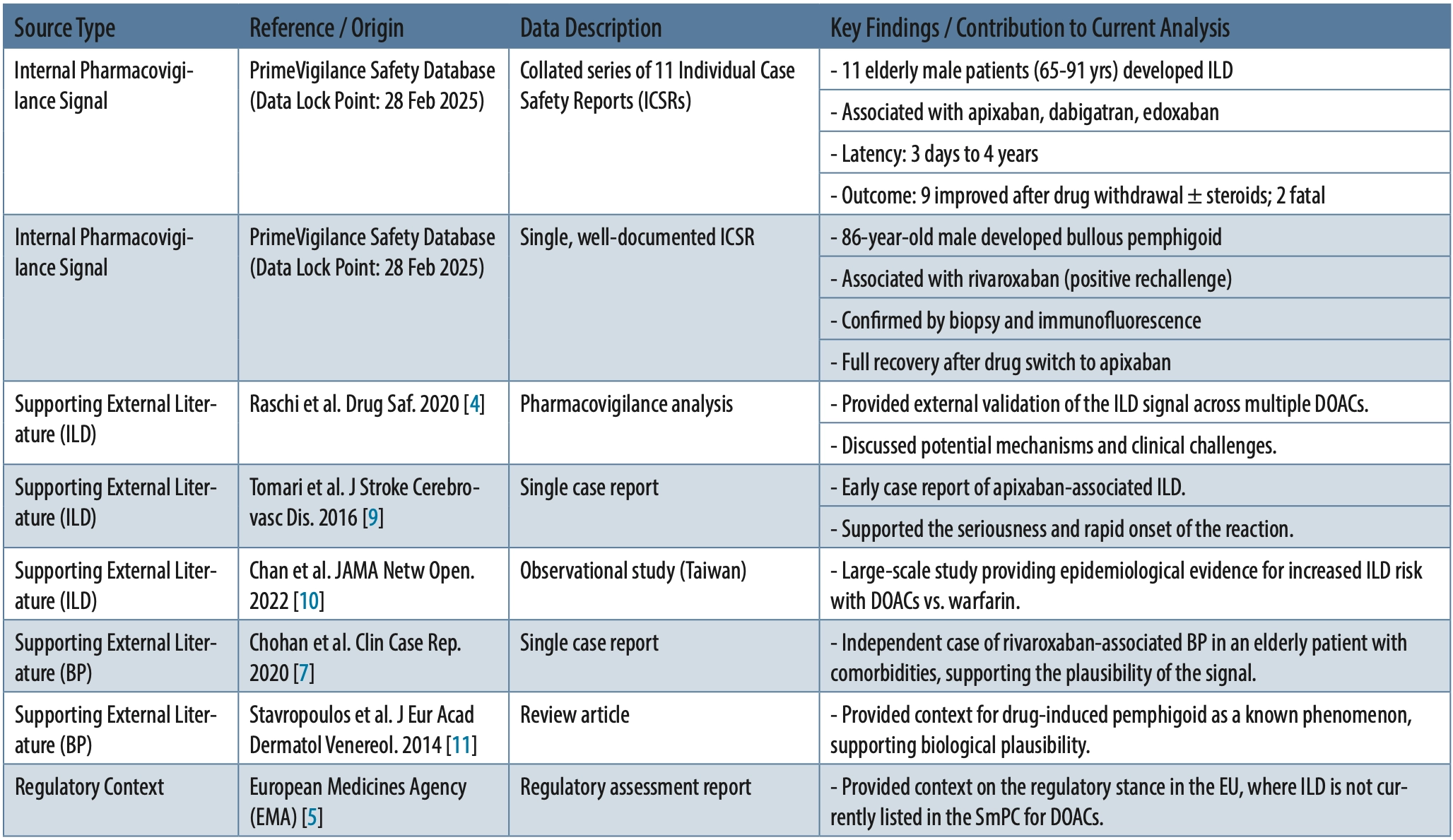
Table 4 presents summary of signal detection reports and supporting external literature.
Although DOACs remain safer and more convenient alternatives to vitamin K antagonists, emerging evidence of rare non-hemorrhagic reactions such as ILD and BP warrants ongoing vigilance. Early imaging, immediate drug withdrawal, and corticosteroid therapy are critical for ILD management, while biopsy and immunofluorescence confirmation followed by immunosuppressive treatment are central to BP care. This pharmacovigilance signal assessment report bridges knowledge gaps left by clinical trials, while the signals detected underscore the value of pharmacovigilance in uncovering infrequent adverse events and call for further studies to clarify mechanisms, risk factors, and strategies for improved patient safety.
Informations

-
Keywords:
-
Received:
-
Revised:
-
Accepted:
-
Online first:
-
DOI:
-
Cite this article:

Nikica Hadži-Nikolić
PrimeVigilance
4 Đorđa Stanojevića Street, 11000 Belgrade, Serbia
E-mail:
1. Julia S, James U. Direct oral anticoagulants: a quick guide. Eur Cardiol. 2017 Aug;12(1):40-5. doi: 10.15420/ecr.2017:11:2. [CROSSREF]
2. Gunawardena T. Direct oral anticoagulants: A review for the non-specialist. Hematol Rep. 2021 Nov 26;13(4):9239. doi: 10.4081/hr.2021.9239. [CROSSREF]
3. Amaraneni A, Chippa V, Goldin J, Rettew AC. Anticoagulation safety. In: StatPearls [Internet]. Treasure Island (FL): StatPearls Publishing; 2024 [cited 2025 Oct 9]. Available from: https://www.ncbi.nlm.nih.gov/books/NBK519025/. [HTTP]
4. Raschi E, Fusaroli M, Diemberger I, Poluzzi E. Direct oral anticoagulants and interstitial lung disease: emerging clues from pharmacovigilance. Drug Saf. 2020 Nov;43(11):1191-4. doi: 10.1007/s40264-020-00990-9. [CROSSREF]
5. European Medicines Agency (EMA). Assessment report: direct oral anticoagulants and interstitial lung disease–signal evaluation. EMA Pharmacovigilance Risk Assessment Committee (PRAC); 2021. Available from: https://www.ema.europa.eu/ [HTTP]
6. Liang JC, Raman K, Chan SH, Tashakkor AY. Rivaroxaban-associated bullous pemphigoid in a patient with atrial fibrillation. CJC Open. 2021 Jun 12;3(10):1316-9. doi: 10.1016/j.cjco.2021.06.003. [CROSSREF]
7. Chohan SA, Balasubramanian D, Ee S. Bullous pemphigoid-like skin rash associated with Rivaroxaban use in a very elderly patient with multimorbidity and chronic kidney disease: A case report. Clin Case Rep. 2020 Feb 26;8(4):725-30. doi: 10.1002/ccr3.2757. [CROSSREF]
8. Han Q, Zhang L, Gong Y, Zhu J, Xie C. Literature case analysis of interstitial lung disease induced by novel oral anticoagulants. Chin Pharm J. 2024;59(2):186- 90. doi: 10.11669/cpj.2024.02.011.
9. Tomari S, Homma K, Noguchi T, Aiba T, Matsuki T, Suzuki R, et al. Development of Interstitial Lung Disease after Initiation of Apixaban Anticoagulation Therapy. J Stroke Cerebrovasc Dis. 2016 Jul;25(7):1767-9. doi: 10.1016/j. jstrokecerebrovasdis.2016.03.036. [CROSSREF]
10. Chan YH, Chao TF, Chen SW, Lee HF, Chen WM, Li PR, et al. Development of interstitial lung disease among patients with atrial fibrillation receiving oral anticoagulants in Taiwan. JAMA Netw Open. 2022 Nov 1;5(11):e2243307. doi: 10.1001/jamanetworkopen.2022.43307. [CROSSREF]
11. Stavropoulos PG, Soura E, Antoniou C. Drug-induced pemphigoid: a review of the literature. J Eur Acad Dermatol Venereol. 2014 Sep;28(9):1133-40. doi: 10.1111/jdv.12366. [CROSSREF]
- Table 1. Core findings of ILD cases associated with NOACs
- Table 2. Treatment and outcome of the patient with rivaroxaban-associated bullous pemphigoid
- Table 3. Comparative incidence and characteristics of ILD among DOACs
- Table 4. Summary of signal detection reports and supporting external literature