


Myeloproliferative neoplasms in patients younger than 40 years: a retrospective analysis of clinical characteristics
- University Clinical Center of Serbia, Clinic for Hematology, Belgrade, Serbia
- University of Belgrade, Faculty of Medicine, Belgrade, Serbia
ABSTRACT
Introduction: Myeloproliferative neoplasms (MPN) are typically diagnosed in patients around 60 years of age; however, in clinical practice, patients around 60 years of age; however, in clinical practice, patients
Aim: Assessment of clinical-laboratory characteristics, thrombosis incidence, and therapeutic approaches in patients with MPN
Methods: This retrospective study included 84 patients diagnosed according to WHO criteria who were treated at the Clinic of Hematology, UCCS, from 2000 to 2024.
Results: The median age was 33 years, with a higher prevalence in females (60.7%). Polycythemia vera (PV) was found in 61.9%, essential thrombocythemia (ET) in 25%, and pre-primary myelofibrosis (prePMF) in 13.1% of participants. The JAK2V617F mutation was detected in 46.5% of patients. Microvascular symptoms were present in 27.4%, pruritus in 14.3%, constitutional symptoms in 7.1%, and splenomegaly in 45.2% of patients. The highest hemoglobin and hematocrit levels were found in PV patients (170 g/L, 50%). The platelet count was highest in patients with prePMF (1007x109 /L), followed by ET (856x109 /L) and PV (737.5x10⁹ /L). The distribution of bone marrow fibrosis was as follows: MF0 - 28.5%, MF1 - 54.8%, MF2 - 4.8%. Overall, 41.7% of patients had at least one cardiovascular risk factor, most commonly smoking (23.8%). The previous thrombosis occurred in 16.7% of patients, while thrombosis during follow-up (8.3%) was seen only in PV patients. Aspirin was used by 86.9% of patients, and phlebotomy was applied to almost all PV patients. Cytoreductive therapy was used in 43.9% of patients, with 39.1% receiving one line of treatment, most commonly hydroxyurea (HU). According to the European LeukemiaNET (ELN) score, 82.1% of patients were classified as low-risk. The median follow-up was 72 months, and two patients died (2.45%).
Conclusion: The majority of younger MPN patients belong to the low-risk ELN group. However, nearly half of the patients receive cytoreductive therapy due to the development of thrombosis (25%), the presence of symptoms, the degree of thrombocytosis, and splenomegaly > 18 cm. This indicates the need for better stratification and the use of different methods for disease risk assessment, such as next-generation sequencing (NGS).
INTRODUCTION
Younger patients with myeloproliferative neoplasms (MPN) represent a special subpopulation of patients whose number is gradually increasing [1]. The median age at diagnosis for classic BCR-ABL1-negative MPNs, which include polycythemia vera (PV), essential thrombocythemia (ET), and primary myelofibrosis (PMF), ranges from 60-65 years [2]. According to data from studies, patients younger than 40 make up only 10% of the total number of patients with MPN [3],[4],[5],[6], while some other studies indicate that this proportion is even 20% [7],[8],[9]. Of all MPN entities, in the population of young patients, ET is the most common with 51%- 72%, PV is second, and PMF is the least common [2],[10],[11],[12],[13]. ET is characterized by megakaryocyte hyperplasia and thrombocytosis, patients with PV have significant erythrocytosis, while those with PMF have bone marrow fibrosis, which subsequently leads to cytopenia and extramedullary hematopoiesis [14]. In all three diseases, there is a risk of vascular complications, but also of acute myeloid leukemia (AML), while PV and ET can transform into myelofibrosis (MF) [14].
Uniquely for young people with MPN is the longer life expectancy compared to the older population, but at the same time, the long duration of the disease provides the possibility for complications related to the disease and its treatment [2]. Also, there are additional questions that exclusively concern this age group and are related to psychosocial needs, fertility, and pregnancy, as well as the unique biology of MPN [11],[15]. Most of the available data, as well as the current conventional prognostic models, have been obtained by analyzing the elderly population, and the question arises to what extent they accurately reflect the unique phenotypic patterns or predictive markers of this younger age group.
Thus, the standard European LeukemiaNET (ELN) prognostic score is based on years of life (> 60) and previous thromboses and serves to determine the treatment approach aimed at reducing the risk of bleeding and thrombosis [16]. Therefore, its application in young people is limited because age does not appear as a factor, so the only thing that can place these patients in the high-risk group is previous thromboses.
This study aimed to evaluate the clinical and laboratory characteristics, the frequency of thrombosis, and the analysis of the therapeutic approach in MPN patients under 40 years of age.
METHODS
The retrospective study included 84 patients diagnosed with one of the diseases from the Philadelphia group of negative MPNs who were diagnosed, monitored, and treated at the UKCS Hematology Clinic from 2000 to 2024. The diagnosis was made according to current WHO criteria [17].
The following data were collected from the medical documentation: 1) demographic characteristics of the patient; 2) presence of JAK2V617F mutation; 3) symptoms; 4) presence of palpable splenomegaly; 5) blood count parameters; 6) values of lactate dehydrogenase; 7) degree of bone marrow fibrosis; 8) cardiovascular (CVD) risk factors; 9) presence and type of previous thrombosis and thrombosis during follow-up; 10) treatment modalities; 11) prognostic scores (ELN score, International Prognostic Score of Thrombosis in WHO – ET (IPSET Thrombsis), International Prognostic Score for ET: Predicts Survival (IPSET survival), International Prognostic Scoring System (IPSS)); 12) length of survival; 13) cause of death.
Descriptive statistical parameters and categorical data are shown as absolute and relative frequencies, and numerical data, considering that they did not have a normal distribution, are shown as median and range (MinMax). The chi-square test was used to test the differences in frequency, and the Kruskal-Wallis and Mann-Whitney tests were used to test the differences in numerical data values. The criterion for statistical significance was p < 0.05. Data were processed using the SPSS Statistics 22 software program (SPSS Inc., Chicago, IL, USA).
RESULTS
The study included 84 patients aged up to 40 years with a confirmed diagnosis of the disease from the Philadelphia group of negative myeloproliferative neoplasms (Ph-MPN). Polycythemia vera was present in 52 patients (61.9%), essential thrombocythemia in 21 patients (25%), and prefibrotic phase of primary myelofibrosis in 11 (13.1%). No patient had a manifest phase of PMF. The group consisted predominantly of women, 51 or so (60.7%), while 33 respondents (39.3%) were men (ratio F : M=1.55:1). The median age of the patients at the time of diagnosis was 33 years (from 14 to 40 years) (Table 1).
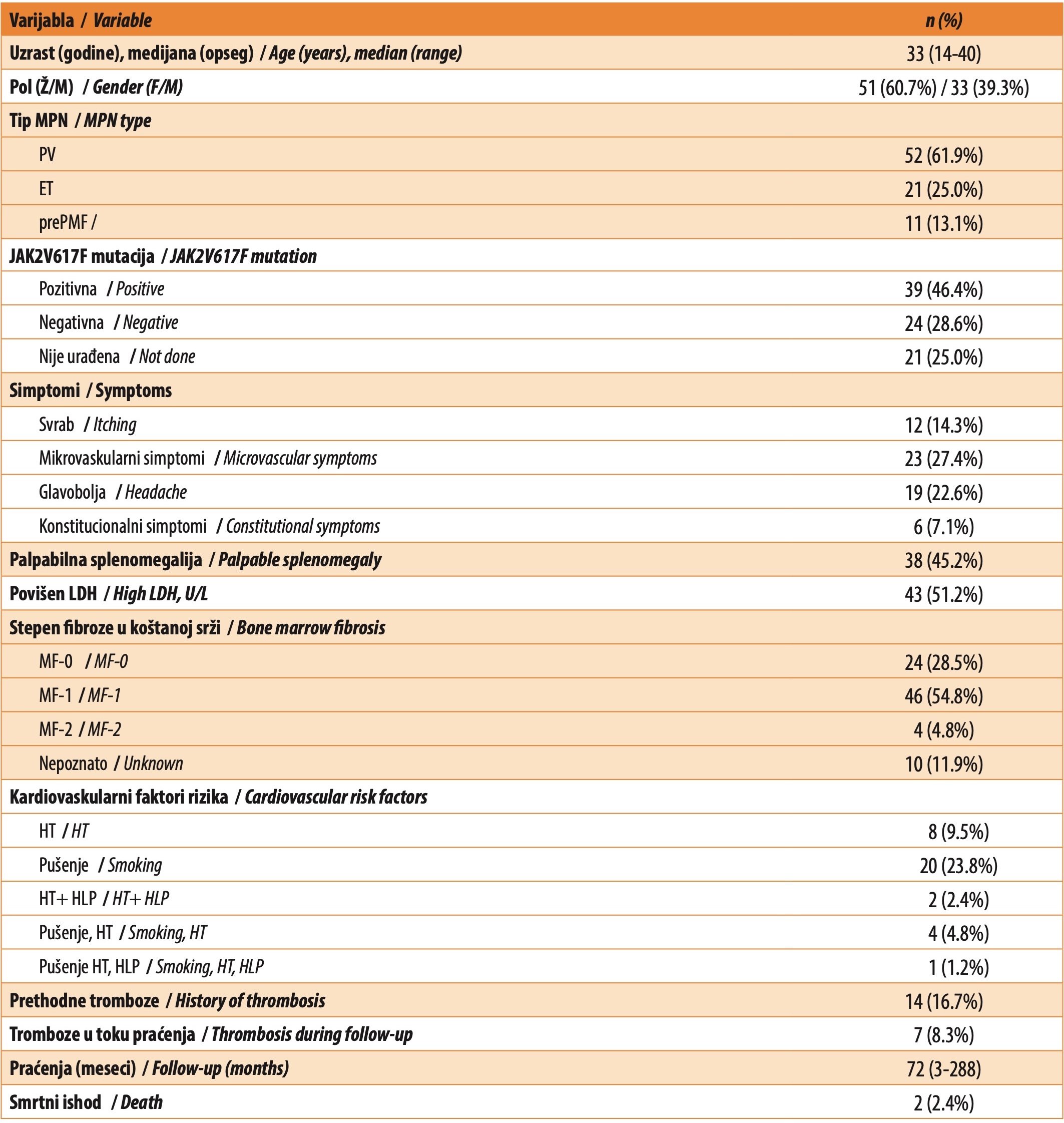
JAK2V617F mutation was found by the Allele-specific PCR method in 39 patients (46.4%), while it was absent in 24 patients (28.6%); this analysis was not performed in 21 patients (25%) (Table 1). In the group with PV, 31 patients (59.6%) had the JAK2V617F mutation, 5 patients (9.6%) did not, while in 16 patients (30.7%), the analysis was not performed. In patients with ET, the presence of the JAK2V617F mutation was confirmed in 6 patients (28.6%), while 10 patients (47.6%) were negative, and in 5 patients (23.8%), this mutation was not examined. This analysis was performed on all patients with prePMF, whereby the presence of the mutation was proven in 2 patients (18.2%), while 9 patients (81.8%) were negative.
Microvascular symptoms at diagnosis were present in 23 patients (27.4%), headache in 19 patients (22.6%), itching in 12 patients (14.3%), and constitutional complaints were present in 6 patients (7.1%). Palpable splenomegaly was found in 38 patients (45.2%) (Table 1).
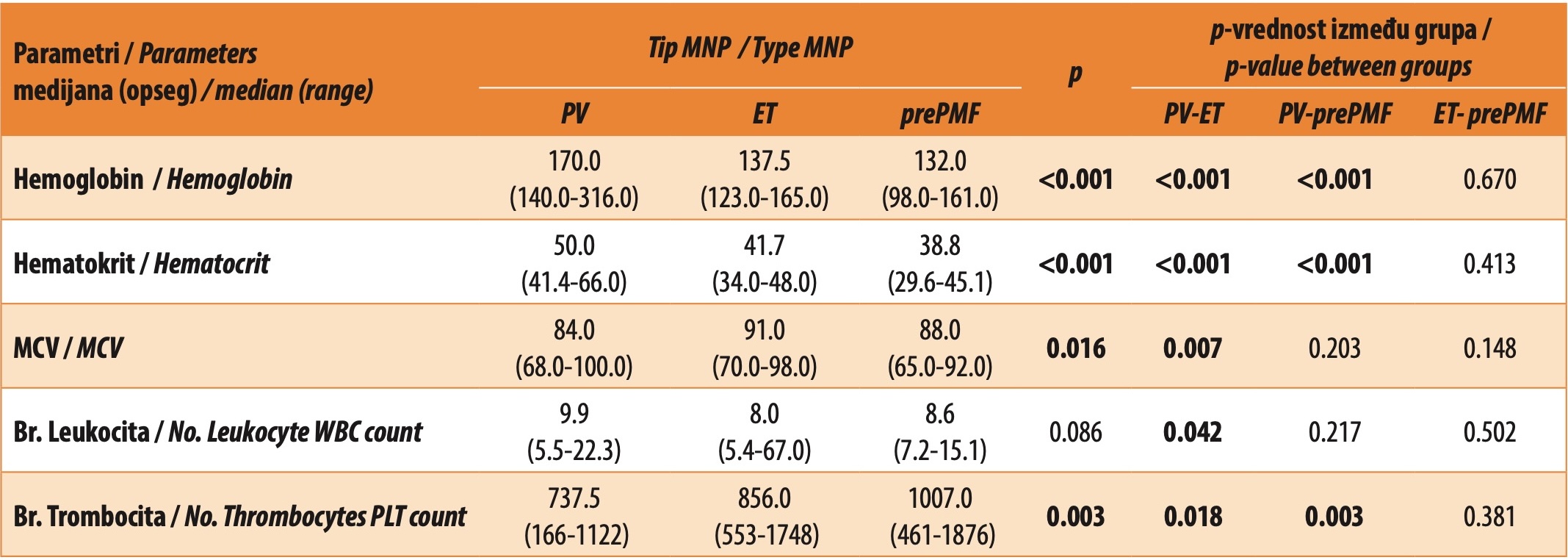
In the examined group of patients, the values of hemoglobin (p < 0.001), hematocrit (p < 0.001), MCV (p = 0.016), and platelets (p = 0.003) statistically significantly differed according to the groups of subjects, while the values of leukocytes did not show a significant difference (p = 0.086). Hemoglobin values were considerably higher in the group of PV patients, 170.0 g/L (range 140.0-316.0 g/L), compared to the ET group, 137.5 g/L (range 123.0- 165.0 g/L), (p < 0.001), as well as in relation to the prePMF group, 132.0 g/L (range 98.0-161.0 g/L), (p < 0.001), while the values hemoglobin did not differentiate between ET and prePMF (p = 0.670). Hematocrit values were also significantly higher in the PV group, 50.0% (range 41.4-66.0%), compared to the ET group, 41.7% (range 34.0-48.0%), (p < 0.001), as well as in relation to the prePMF group, 38.8% (range 29.6- 45.1%) (p < 0.001), while hematocrit values did not differ between ET and prePMF (p = 0.413).
MCV values were statistically significantly higher in ET patients, 91.0 f/L (range 70.0-98.0 f/L), compared to the PV group, 84.0 f/L (range 68,0-100.0 f/L), (p < 0.001), while there was no significant difference between the subjects of the other groups. Platelet values were significantly lower in the PV group, 737.5 x10⁹ /L (range 166.0-1122.0 x109 /L), compared to the ET group, 856.0 x10⁹ /L (range 553.0- 1748.0 x109 /L), (p = 0.018), as well as in relation to the prePMF group 1007.0 x109 /L (range 461.0-1876.0 x109 /L), (p = 0.003), while platelet values did not differentiate between ET and prePMF (p = 0.381) (Table 2).
In the entire group of patients, the value of lactate dehydrogenase (LDH) was elevated in 43 (51.2%). Erythropoietin was decreased in 25 patients (29.8%), normal in 14 patients (16.7%), while in 45 patients (53.6%), it was not done. The degree of fibrosis in the bone marrow was MF 0 in 24 patients (28.5%), MF 1 in 46 patients (54.8%), MF 2 in 4 patients (4.8%), and in 10 patients (11.9%) no data were available (Table 1).
Cardiovascular risk factors were present in 35 patients (41.7%), of which 8 patients (9.5%) had hypertension, 20 patients (23.8%) were smokers, 2 patients had the combined occurrence of hypertension and hyperlipidemia (2.4%), there were 4 (4.8%) smokers who also had hypertension, while all three risk factors were present in only 1 patient (1.2%). The distribution according to diagnoses in relation to the number of cardiovascular risks was as follows: 27 patients with PV (51.9%), 14 patients with ET (66.7%) and 8 patients with prePMF (72.8%) had no CV risk factors, one CV risk factor was present in 20 patients with PV (28.5%), 5 with ET (23.8%) and 3 with prePMF (27.3%), 2 CV risk factors were present in 4 patients with PV (7 .7%), 2 with ET (9.5%) and no patient with prePMF, while one patient with PV had 3 CV risk factors (Table 1, Table 3).
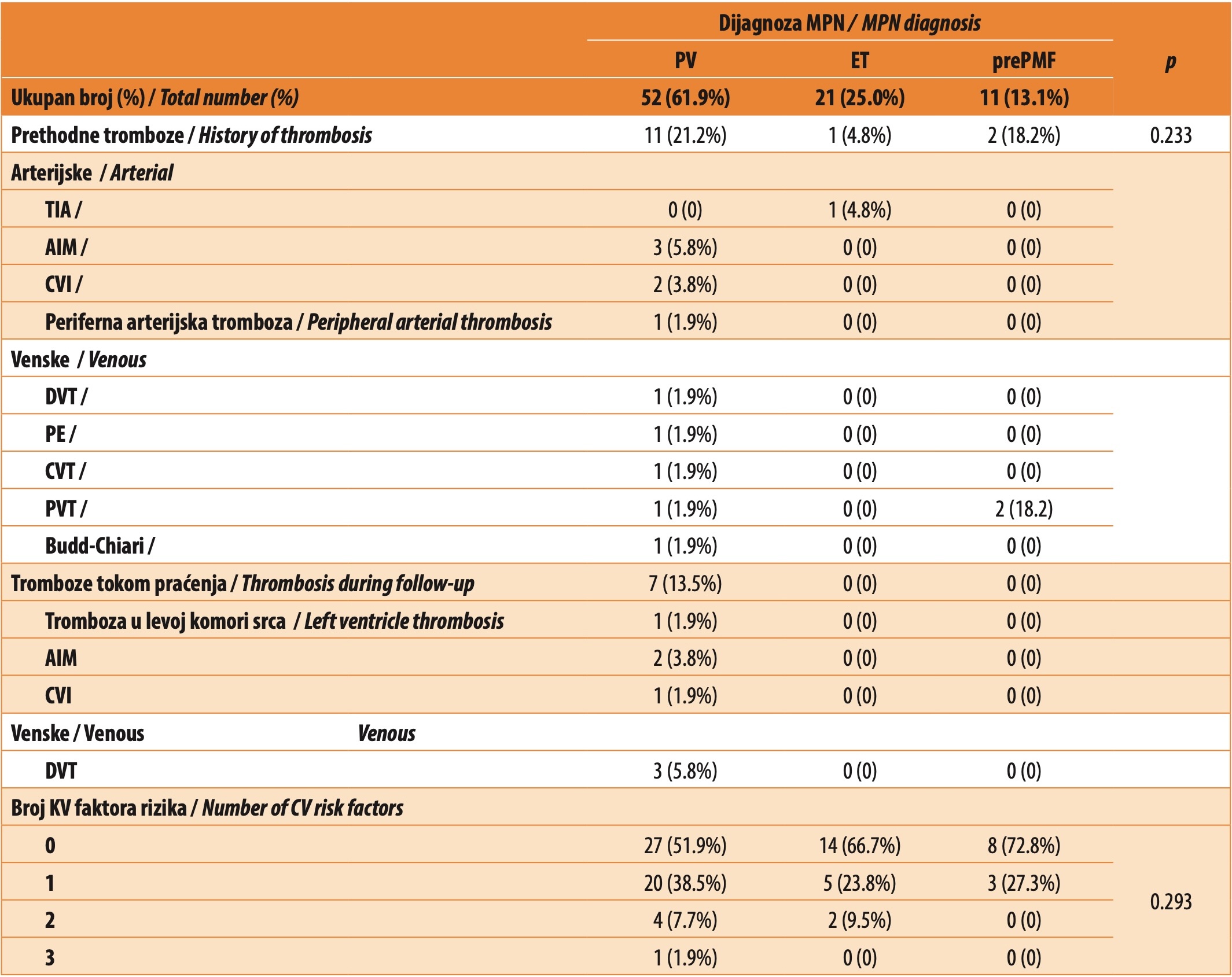
Previous thromboses were present in 14 patients (16.7%), while thrombosis occurred during follow-up in 7 patients (8.3%). Patients with PV had the most thrombosis before the diagnosis of MPN, 11 patients (21.2%), while only 1 patient with ET (4.8%) and 2 patients with prePMF (18.2%) had previous thrombosis. The frequency of thrombosis before the diagnosis of MPN was not statistically significantly different according to the groups of subjects (p = 0.233). Out of 11 patients with PV, 3 (5.8%) had an acute myocardial infarction, 2 (3.8%) had a stroke, while one (1.9%) patient each had peripheral arterial thrombosis, DVT, PE, CVT, PVT, Budd Chiari. The patient diagnosed with ET had a transient ischemic attack, while both patients with prePMF had PVT. During follow-up, thromboses were exclusively found in patients with PV, of which 3 (5.8%) patients had DVT, 2 (3.8%) patients had AMI, while one (1.9%) patient had CVI or thrombus in the left ventricle of the heart. The number of CV risk factors did not differ significantly between diagnostic groups of patients (p = 0.293) (Table 3).
In the entire group of patients, 73 (86.9%) were on ASA therapy, 2 (2.4%) on VKA therapy, one (1.2%) on DOAK, and 3 patients (3.6%) on a combination of ASA and OAK. Within PV, 43 (82.7%) patients were treated with ASA, one (1.9%) patient each with VKA and DOAC, and three patients were treated with the combination mentioned above of ASA and OAK. Among the patients with ET, 20 (95.2%) were treated with ASA, and no patients were treated with another type of antithrombotic therapy. In the group of patients with prePMF, 10 (90.9%) were on ASA therapy, while one was on VKA therapy. The use of ASA in treatment did not differ significantly between the observed groups of patients (p = 0.325). In total, 53 patients (63.1%) were treated with phlebotomies, of which 50 were patients with PV, while 3 patients had ET. Phlebotomy treatment was significantly more frequent in the group of patients with PV (p < 0.001). 37 patients (43.9%) were treated with cytoreductive therapy, while the distribution according to diagnosis was: 24 patients (46.1%) in the group with PV, 9 (42.9%) in the group with ET, and 4 (36.4%) in the group with prePMF, with no significant difference in the application of cytoreductive therapy between patient groups (p = 0.831). In the entire group of patients, 33 patients (39.1%) were treated with one therapeutic line, while 4 patients (4.8%) received two therapeutic lines. Hydroxyurea (HU) was the first line of therapy in 31 patients (36.1%), while 6 patients (7.2%) were initially treated with interferon. In the second therapeutic line, 3 patients received HU (3.6%), while two patients each received INF (2.4%) or ruxolitinib (2.4%) (Table 4).
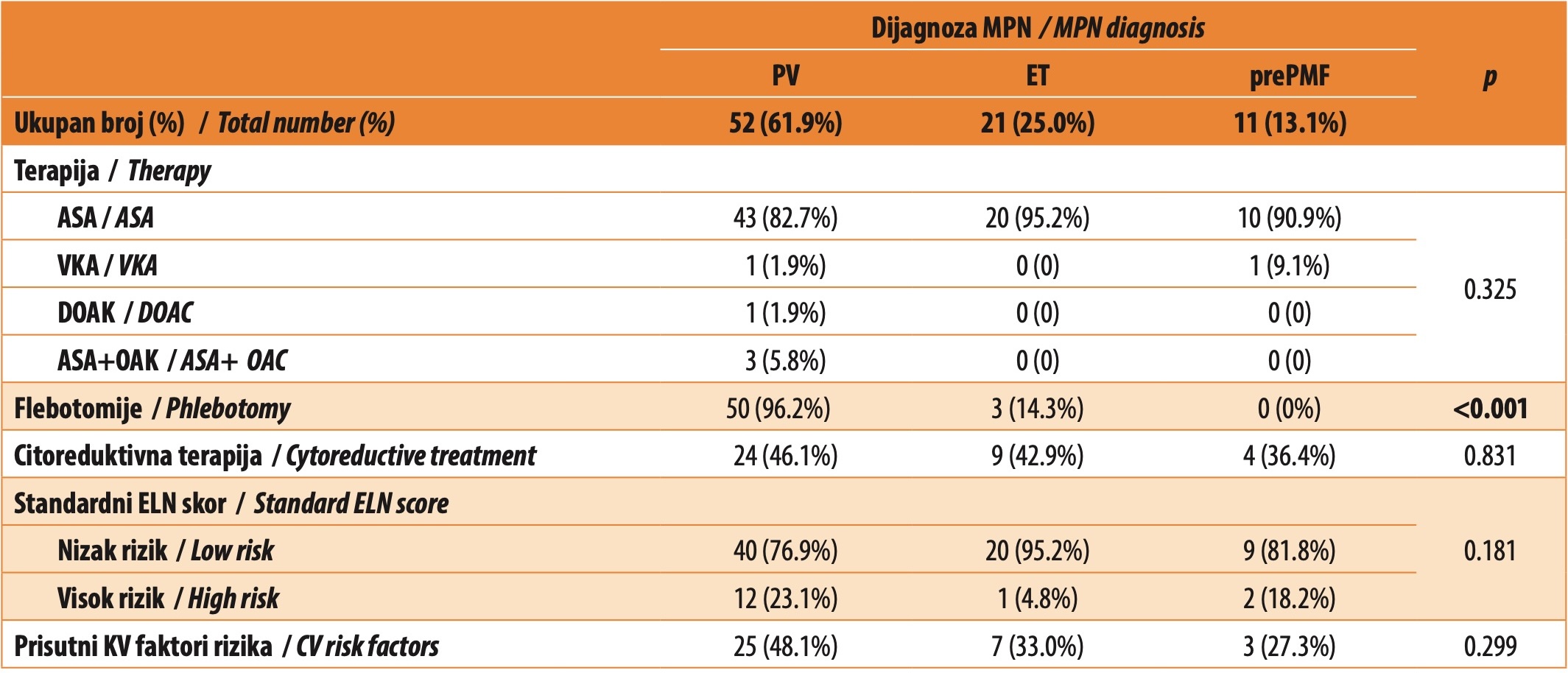
Of the total number of patients, according to the standard ELN score, 15 (17.9%) were at high risk. The distribution within the diagnoses, in relation to the ELN score, was as follows: 12 patients (23.1%) with PV, 1 patient (4.8%) with ET, and 2 patients (18.2%) with prePMF belonged to the group high risk. The frequency of high-risk patients according to the standard ELN score did not differ significantly between diagnoses (p = 0.181). Of the total number of patients who received cytoreductive therapy, 10 of them (26.7%) were classified as high-risk. In the group of patients with ET, according to the IPSET survival score, 16 patients belonged to the low-risk group, 4 patients to the intermediate group, and according to the IPSET thrombosis score, 11 patients belonged to the low-risk group, and 7 patients to the intermediate risk group. In the group of patients with prePMF, according to the IPSS score, 8 patients belonged to the group of low, and 3 patients to the group of intermediate-1 risk. The aforementioned scores used for patients with ET and prePMF did not identify high-risk patients in our cohort (Table 4).
In two patients (2.45%), there was a positive family history in terms of family presence of previous MPN. In one patient with PV, the mother also had PV, and in another patient with prePMF, the uncle had ET.
Two patients with PV (post-PV MF) were transformed to MF, accounting for 2.45% of the total number of patients. The time to fibrotic progression was 6 and 11.5 years.
Median patient follow-up was 72 months (3-288 months). Two patients (2.45%) died during follow-up, and the cause of death in one was post-transplantation complications after allogeneic hematopoietic stem cell transplantation, i.e., secondary malignancy and liver cancer in the other (Table 1).
DISCUSSION
The most frequently diagnosed Philadelphia-negative (Ph-) MPN in young patients is essential thrombocythemia (ET). This type of MPN is most often detected in female respondents, which explains the finding that among young patients with MPN, women are predominantly female (65-71%), while in the elderly, the representation of the female gender is lower and amounts to 46-58% [10],[11]. In our cohort, although polycythemia vera (PV) was found more often, the female gender is still dominant, as women make up almost two-thirds of the total number of patients.
The median age at diagnosis in studies with young patients with MPN ranges between 20 and 36 years, which is consistent with our data, where the median was 33 years, with a range of 14 to 40 years. These studies included patients younger than 45 years of age [10],[18],[19].
Younger patients diagnosed with MPN are generally asymptomatic, similar to the elderly [18]. However, according to the data of Sobas et al., more than one-third of patients had symptoms due to hyperviscosity [13]. In our study, almost a third of patients had microvascular problems, which were the most prevalent. In second place was itching; less than 10% of patients had constitutional complaints. According to data from the literature, which are not numerous, patients with PV more often have constitutional symptoms at diagnosis, 9.2% compared to 3.9% in patients with ET [13]. Splenomegaly was found in almost half of our subjects. According to Szuber et al., an increased spleen diameter was present in a higher percentage of patients younger than 40 years compared to patients older than 60 years [14]. This is particularly significant, considering that splenomegaly has been identified as a risk factor for complications and disease progression, including transformation, bleeding, and thrombosis in this group of patients [12],[13].
As expected, patients with PV had significantly higher hemoglobin and hematocrit values at diagnosis than patients with ET and prePMF (p < 0.001). Median hemoglobin in PV patients was 170 g/L, while in patients with ET and prePMF, it was 137.5 g/L and 132 g/L. Hematocrit was also highest in PV patients, with a median of 50.0%, compared to 41.7% in ET and 38.8% in prePMF. Thrombocytosis was observed in all MPN entities examined, but there were significant differences in platelet counts between PV and ET patients (p = 0.018) and between PV and prePMF (p = 0.003). Patients with prePMF had the highest number of platelets (median 1007x109 /L), followed by patients with ET (median 856x109 /L), while PV patients had the lowest degree of thrombocytosis (median 737.5x10⁹ /L). According to data from the literature, a higher degree of thrombocytosis was observed in the group of young patients compared to the elderly, which could be explained by the increased incidence of the CALR mutation in this group, taking into account that this mutation is associated with thrombocytosis [2],[11],[18]. In our cohort, the JAK2V617F mutation was exclusively examined, and it was positive in about half of the patients. LDH was elevated in about half of the patients. In the most significant number of patients, fibrosis corresponded to MF-1 with more than 50%, while only two patients had MF-2.
According to data from the literature, approximately 10% of patients with MPN show a familial connection (clustering), which indicates the importance of hereditary components in the development of the disease [14]. The frequency of familial MPN is higher in younger patients than in older patients (19% vs 9%) [10]. This is also expected, considering the earlier onset of the disease in the younger group of patients. In our cohort, a familial occurrence of MPN was observed in two patients (2.45%), which the relatively small group of subjects can explain.
Vascular complications are a significant risk, especially for patients with PV, and occur both before diagnosis and during the further natural course of the disease [11],[20],[21]. It has been proven that they are related to the diagnosis of MPN and that sometimes, they can be the first manifestation of the disease for which the patients consult a hematologist [22],[23]. In the literature, previous thrombosis was present in 14- 27% of patients with PV, 6-13% of patients with ET, and 7-16% with PMF [2],[11],[13],[18],[19]. These data correspond to previous thromboses’ prevalence among different MPN diagnoses and in our research. Of all the previous thromboses in our cohort, the most common was thrombosis of the splanchnic circulation, with 28.5% of the total number, while the prevalence of arterial and venous thrombosis was equal. The second most common type of thrombosis, or thrombotic events, was acute myocardial infarction, which occurred in 21.4% of patients. MPN is known to lead to thromboses in unusual locations, such as thromboses of the splanchnic circulation, including Budd-Chiari syndrome (BCS), portal vein thrombosis (PVT), and cerebral vein thrombosis [11],[22],[24]. Thrombosis during follow-up was exclusively present in patients with PV, with a predominance of arterial thrombosis, which accounted for almost 2/3. According to literature data in patients of this age group, venous thromboses were more likely to be present during follow-up and even more often compared to older patients [10]. The authors explain this phenomenon by the higher number of thromboses of the splanchnic circulation during follow-up, with 77% of the total number of venous thromboses [12]. On the other hand, arterial thrombosis during follow-up is generally less common in younger patients. This is thought to be related to lower cardiovascular comorbidities and atherosclerotic changes in blood vessels [14]. However, in our cohort, 41.7% of patients had CV risk factors, where smoking was the most common, and even 8.3% of patients had more than one risk factor. This finding may explain the occurrence of more frequent arterial thrombosis in our study.
According to ELN recommendations, treating patients with PV is based on the risk of thrombosis. Patients who have had previous thrombosis or are older than 60 years belong to the high-risk group, while lowrisk implies the absence of both mentioned factors. By applying this scoring system, all patients in the youth group belong to the low-risk group unless they have had previous thrombosis [16]. The treatment of lowrisk patients with PV involves the use of phlebotomy with the aim of Hct being < 45%, as well as the use of small doses of ASA [16],[25]. Before applying antiplatelet therapy, it is crucial to test the patient for acquired von Willebrand syndrome to identify patients prone to bleeding, bearing in mind that it can occur even in the absence of pronounced thrombocytosis [26]. In our group of patients with PV, most were treated with low doses of ASA, with only a few patients on oral anticoagulant therapy (OAC). The reason for the introduction of OAC in almost all patients was previous thrombosis, except for one patient in whom this therapy was introduced due to atrial fibrillation. Patients with high risk, according to ELN recommendations, require cytoreductive therapy in addition to these two therapies [16]. While HU is standardly used in elderly patients, according to ELN and NCCN (National Comprehensive Cancer Network) recommendations, in young people, the first choice of cytoreductive therapy is recombined or pegylated INF-alpha [16],[27]. In our group of patients, almost half of the patients with PV were treated with cytoreductive therapy, mainly HU, while a smaller number received INF-alpha. The percentage of those treated is exceptionally high, taking into account that less than a quarter of patients were classified as high-risk, and other reasons for the introduction of therapy were high thrombocytosis, splenomegaly, pregnancy, or significant complaints. It is similar to patients with ET, where all but one belonged to the low-risk group, and yet 42.9% of patients were treated with cytoreductive therapy. ELN recommendations regarding the application of cytoreductive therapy in patients with ET do not differ much compared to PV, which cannot be said for the application of ASA [16]. Low doses of ASA are recommended in patients with JAK2 mutation, while caution should be exercised in patients with CALR mutation, given the greater tendency to bleeding [14]. However, in our study, only one patient received ASA, and the CALR mutation was not performed.
In patients with PMF, treatment varies significantly, and if they do not have cytopenia, high-risk molecular mutations are present and have a normal karyotype; observation, clinical studies, or the use of JAK inhibitors (JAKi) are recommended [14]. Otherwise, for highrisk patients, allogeneic hematopoietic stem cell transplantation (HSCT) is recommended [14]. In our group of patients, only prePMF was diagnosed, so the therapeutic approach was similar to that of ET, considering that these two diseases are characterized by a comparable risk of thrombotic complications [28]. Therefore, the treatment involved the use of aspirin, and slightly more than a third of patients were treated with cytoreductive therapy, which is higher than the percentage of patients with thrombosis (18.2%). One patient, with progression to post-PV MF after 11.5 years from diagnosis, was transplanted but died due to post-transplantation complications. Most patients in our group were treated with one line of cytoreductive therapy, and only 4.8% of patients required a second line of treatment, namely HU, INF, or ruxolitinib.
Currently, no prognostic scores are specifically designed or validated for evaluating young MPN patients. In our risk stratification cohort, as previously mentioned, the standard ELN score was used for IPSET survival and IPSET thrombosis for patients with ET and IPSS score for patients with prePMF [15],[29],[30]. According to the IPSET survival and IPSET thrombosis scores, most patients belonged to the low-risk group, and not a single patient belonged to the high-risk group. It is similar to prePMF, where the IPSS identified patients primarily as low-risk.
The most common cause of death in this group of patients is attributed to the underlying disease, transformation, or complications that occur after TMJ [10]. Literature data indicate that, although there is no difference in the frequency of transformation to MF or AML between younger and older patients with MPN, the median length of the period to transformation is significantly longer in younger (< 45 y) compared to older (> 65 y) patients. patients (19-20 or 7-8 years old) due to greater follow-up [11]. Only two patients in our cohort had progression to post-PV MF, which can be explained by the short median follow-up of about 3 years. Data from the literature indicate that > 45% of transformations were recorded after > 10 years from diagnosis, and therefore, the length of follow-up is an essential factor [13]. Death occurred in two patients, as previously stated, in a patient with post-PV PMF due to complications of TMJ and in the second patient due to secondary malignancy.
CONCLUSION
Adolescents and young adults form a particular subpopulation within MPN, showing unique characteristics distinguishing them from older patients. As a result of the long duration of the disease in this age group, there is a higher risk of thrombotic events, especially thrombosis of the splanchnic circulation, but also a higher risk of transformation into a more aggressive form of the disease due to the length of follow-up. Our study shows that most young patients with MPN, according to the standard ELN score, belong to the low-risk group. However, a significant number of them develop serious complications, such as thrombosis (25%), symptoms, thrombocytosis, and splenomegaly (> 18 cm), and as a result, almost half of the patients are treated with cytoreductive therapy.
These data indicate the need for further research to develop prognostic models specific to young MPN patients, enabling more precise risk stratification and an optimal therapeutic approach. The presence of a familial occurrence of the disease indicates the need for comprehensive genetic testing. The use of NGS (next-generation sequencing) in examining epigenetic mutations in young patients can significantly contribute to understanding genetic changes that affect the course of the disease and the response to therapy.
Informations

-
Keywords:
-
Received:
-
Revised:
-
Accepted:
-
Online first:
-
DOI:
-
Cite this article:

Isidora Arsenović
Clinic for Hematology, University Clinical Center of Serbia
2 Dr Koste Todorovića Street, 11000 Belgrade, Serbia
E-mail:
1. Roaldsnes C, Holst R, Frederiksen H, Ghanima W. Myeloproliferative neoplasms: trends in incidence, prevalence and survival in Norway. Eur J Haematol. 2017 Jan;98(1):85-93. doi: 10.1111/ejh.12788. [CROSSREF]
2. Szuber N, Vallapureddy RR, Penna D, Lasho TL, Finke C, Hanson CA, et al. Myeloproliferative neoplasms in the young: Mayo Clinic experience with 361 patients age 40 years or younger. Am J Hematol. 2018 Dec;93(12):1474-84. doi: 10.1002/ajh.25270. [CROSSREF]
3. Najean Y, Mugnier P, Dresch C, Rain JD. Polycythaemia vera in young people: an analysis of 58 cases diagnosed before 40 years. Br J Haematol. 1987 Nov;67(3):285-91. doi: 10.1111/j.1365-2141.1987.tb02349.x. [CROSSREF]
4. Berlin NI. Diagnosis and classification of the polycythemias. Semin Hematol. 1975;12(4):339-51.
5. Randi ML, Rossi C, Fabris F, Girolami A. Essential thrombocythemia in young adults: major thrombotic complications and complications during pregnancy--a follow-up study in 68 patients. Clin Appl Thromb Hemost. 2000 Jan;6(1):31-5. doi: 10.1177/107602960000600105. [CROSSREF]
6. Rollison DE, Howlader N, Smith MT, Strom SS, Merritt WD, Ries LA, et al. Epidemiology of myelodysplastic syndromes and chronic myeloproliferative disorders in the United States, 2001-2004, using data from the NAACCR and SEER programs. Blood. 2008 Jul 1;112(1):45-52. doi: 10.1182/blood-2008-01-134858. [CROSSREF]
7. Palandri F, Polverelli N, Ottaviani E, Castagnetti F, Baccarani M, Vianelli N. Long-term follow-up of essential thrombocythemia in young adults: treatment strategies, major thrombotic complications and pregnancy outcomes. A study of 76 patients. Haematologica. 2010 Jun;95(6):1038-40. doi: 10.3324/haematol.2009.019190. [CROSSREF]
8. Gruppo Italiano Studio Policitemia. Polycythemia vera: the natural history of 1213 patients followed for 20 years. Ann Intern Med. 1995 Nov 1;123(9):656- 64. doi: 10.7326/0003-4819-123-9-199511010-00003. [CROSSREF]
9. Alvarez-Larrán A, Cervantes F, Bellosillo B, Giralt M, Juliá A, Hernández-Boluda JC, et al. Essential thrombocythemia in young individuals: frequency and risk factors for vascular events and evolution to myelofibrosis in 126 patients. Leukemia. 2007 Jun;21(6):1218-23. doi: 10.1038/sj.leu.2404693. [CROSSREF]
10. Harris Z, Kaizer H, Wei A, Karantanos T, Williams DM, Chaturvedi S, et al. Characterization of myeloproliferative neoplasms in the paediatric and young adult population. Br J Haematol. 2023 May;201(3):449-58. doi: 10.1111/ bjh.18650. [CROSSREF]
11. Boddu P, Masarova L, Verstovsek S, Strati P, Kantarjian H, Cortes J, et al. Patient characteristics and outcomes in adolescents and young adults with classical Philadelphia chromosome-negative myeloproliferative neoplasms. Ann Hematol. 2018 Jan;97(1):109-21. doi: 10.1007/s00277-017-3165-9. [CROSSREF]
12. Barzilai M, Kirgner I, Avivi I, Ellis M, Dally N, Rozovski U, et al. Characteristics and outcomes of young adults with Philadelphia-negative myeloproliferative neoplasms. Eur J Haematol. 2019 Jun;102(6):504-8. doi: 10.1111/ejh.13232. [CROSSREF]
13. Sobas M, Kiladjian JJ, Beauverd Y, Curto-Garcia N, Sadjadian P, Shih LY, et al. Real-world study of children and young adults with myeloproliferative neoplasms: identifying risks and unmet needs. Blood Adv. 2022 Sep;6(17):5171- 83. doi: 10.1182/bloodadvances.2022007201. [CROSSREF]
14. Goulart H, Masarova L, Mesa R, Harrison C, Kiladjian JJ, Pemmaraju N. Myeloproliferative neoplasms in the adolescent and young adult population: A comprehensive review of the literature. Br J Haematol. 2024 Jul;205(1):48- 60. doi: 10.1111/bjh.19557. [CROSSREF]
15. Passamonti F, Thiele J, Girodon F, Rumi E, Carobbio A, Gisslinger H, et al. A prognostic model to predict survival in 867 World Health Organization-defined essential thrombo- cythemia at diagnosis: a study by the international working group on myelofibrosis research and treatment. Blood. 2012 Aug 9;120(6): 1197-201. doi: 10.1182/blood-2012-01-403279. [CROSSREF]
16. Barbui T, Tefferi A, Vannucchi AM, Passamonti F, Silver RT, Hoffman R, et al. Philadelphia chromosome-negative classical myeloproliferative neoplasms: revised management recommendations from European LeukemiaNet. Leukemia. 2018 May;32(5):1057-69. doi: 10.1038/s41375-018-0077-1. [CROSSREF]
17. Barbui T, Thiele J, Gisslinger H, Kvasnicka HM, Vannucchi AM, Guglielmelli P, et al. The 2016 WHO classification and diagnostic criteria for myeloproliferative neoplasms: document summary and in-depth discussion. Blood Cancer J. 2018 Feb 9;8(2):15. doi: 10.1038/s41408-018-0054-y. [CROSSREF]
18. Stein BL, Saraf S, Sobol U, Halpern A, Shammo J, Rondelli D, et al. Age-related differences in disease characteristics and clinical outcomes in polycythemia vera. Leuk Lymphoma. 2013 Sep;54(9):1989-95. doi: 10.3109/10428194.2012.759656. [CROSSREF]
19. England JT, Szuber N, Sirhan S, Dunne T, Cerquozzi S, Hill M, et al. Clinical features and long-term outcomes of a pan-Canadian cohort of adolescents and young adults with myeloproliferative neoplasms: A Canadian MPN Group Study. Leukemia. 2024 Mar;38(3):570-8. doi: 10.1038/s41375-024-02155-4. [CROSSREF]
20. Passamonti F, Malabarba L, Orlandi E, Barate C, Canevari A, Brusamolino E, et al. Polycythemia vera in young patients: a study on the long-term risk of thrombosis, myelofibrosis and leukemia. Haematologica. 2003 Jan;88(1):13-8.
21. Ruggeri M, Finotto S, Fortuna S, Rodeghiero F. Treatment outcome in a cohort of young patients with polycythemia vera. Intern Emerg Med. 2010 Oct; 5(5):411-3. doi: 10.1007/s11739-010-0429-y. [CROSSREF]
22. Goldstein G, Maor J, Kleinbaum Y, Palumbo M, Sidi Y, Salomon O. Budd-Chiari syndrome in very young adult patients with polycythemia vera: report of case series with good outcome with direct thrombin inhibitor treatment. Blood Coagul Fibrinolysis. 2013 Dec;24(8):848-53. doi: 10.1097/MBC.0b013e328364b9e6. [CROSSREF]
23. Breccia M, Morano SG, D’Andrea M, Russo E, D’Elia GM, Alimena G. Budd-Chiari syndrome as the first manifestation of polycythemia vera in young women with inherited thrombophilic state: an aggressive form of myeloproliferative disorder requiring multidisciplinary management. Eur J Haematol. 2005 Nov;75(5):396-400. doi: 10.1111/j.1600-0609.2005.00522.x. [CROSSREF]
24. Smalberg JH, Arends LR, Valla DC, Kiladjian JJ, Janssen HL, Leebeek FW. Myeloproliferative neoplasms in Budd- Chiari syndrome and portal vein thrombosis: a meta-analysis. Blood. 2012 Dec 13;120(25):4921-8. doi: 10.1182/ blood-2011-09-376517. [CROSSREF]
25. Clinical practice guidelines in oncology, Myeloproliferative Neoplasms [Internet]. Version 2.2021. Plymouth Meeting (PA): National Comprehensive Cancer Network (US). 2021 Aug [cited 2021 Aug 18]. Available from: https://www.nccn.org/professionals/physician_gls/pdf/mpn.pdf [HTTP]
26. Rottenstreich A, Kleinstern G, Krichevsky S, Varon D, Lavie D, Kalish Y. Factors related to the development of acquired von Willebrand syndrome in patients with essential thrombocythemia and polycythemia vera. Eur J Intern Med. 2017 Jun;41:49-54. doi: 10.1016/j.ejim.2016.11.011. [CROSSREF]
27. Mesa RA, Jamieson C, Bhatia R, Deininger MW, Fletcher CD, Gerds AT, et al. NCCN Guidelines Insights: Myeloproliferative Neoplasms, Version 2.2018. J Natl Compr Canc Netw. 2017 Oct;15(10):1193-207. doi: 10.6004/jnccn.2017.0157. [CROSSREF]
28. Guglielmelli P, Carobbio A, Rumi E, De Stefano V, Mannelli L, Mannelli F, et al. Validation of the IPSET score for thrombosis in patients with prefibrotic myelofibrosis. Blood Cancer J. 2020 Feb 25;10(2):21. doi: 10.1038/s41408- 020-0289-2. [CROSSREF]
29. Barbui T, Finazzi G, Carobbio A, Thiele J, Passamonti F, Rumi E, et al. Development and validation of an International Prognostic Score of thrombosis in World Health Organization-essential thrombocythemia (IPSET-thrombosis). Blood. 2012 Dec 20;120(26):5128-33; quiz 5252. doi: 10.1182/blood-2012-07-444067. [CROSSREF]
30. Cervantes F, Dupriez B, Pereira A, Passamonti F, Reilly JT, Morra E, et al. New prognostic scoring system for primary myelofibrosis based on a study of the International Working Group for Myelofibrosis Research and Treatment. Blood. 2009 Mar 26;113(13):2895-901. doi: 10.1182/blood-2008-07-170449. [CROSSREF]
- Table 1. Clinical and laboratory characteristics of young MPN patients
- Table 2. Blood count parameters by types of MPN in young patients
- Table 3. Thrombosis and CV risk factors in young patients with MPN
- Table 4. Therapeutic approach and stratification according to the ELN score of young MPN patients